In search of new physics for 20 years. Use knowledge from dark matter, @ATLASexperiment, data and machine learning. + Private opinion.
@Radboud_uni and @_Nikhef
[2211.09796] Sascha Caron, Christopher Eckner, Luc Hendriks et al.: Mind the gap: The discrepancy between simulation and reality drives interpretations of the Galactic Center Excess https://t.co/QCXayuyYxZ https://t.co/4lh9Rm5Bgh #astro_ph_HE
https://t.co/Nx2PFsOxtf
Galactic Center GeV Excess (GCE):
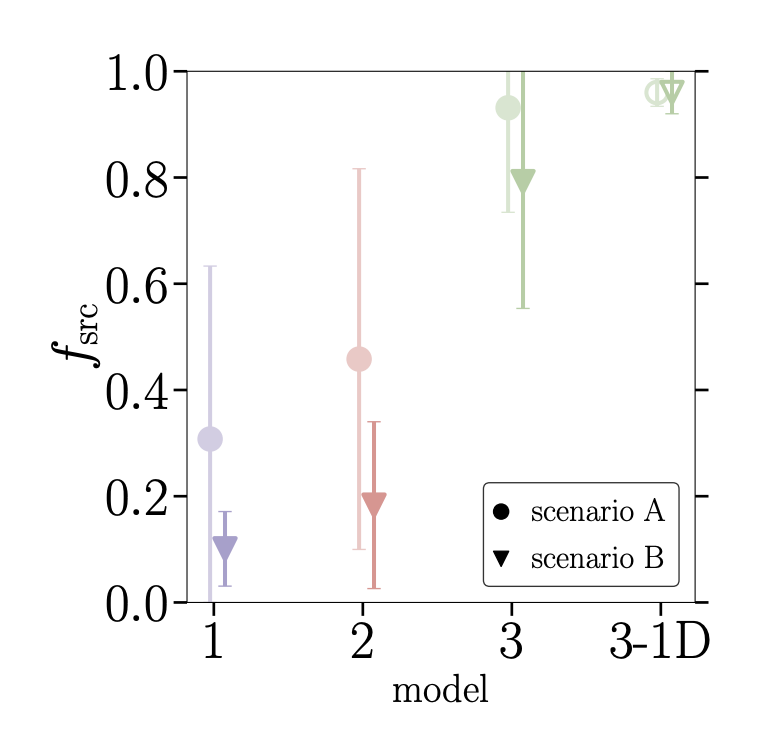
We find that conclusions (dark matter or not, i.e. f_src=0 or 1, graph below) strongly depend on the type of simulation.
+ we find a gap between all models & reality.
Question: Does this apply to all works on the GCE?
For those interested in Dark Matter and the excess of gamma rays in the Galactic Center, I think tomorrow we will have an interesting article on arxiv. This work actually took 5 years...
Try to find 4 top events at LHC ! We present a dataset to compare classifiers and comparisons of classifiers.
Best: transformers+particle net with pairwise interactions.
Compared to performance of baseline (BDT) the improvement is 30−50% in run time.
https://t.co/UE43EbCfsm
Tomorrow I give a talk about: "How machine learning and efficient computing can make data-intensive science more sustainable: examples and ideas from particle physics and astronomy". Would be cool to find collaborators (and yes, this all would need funding...)
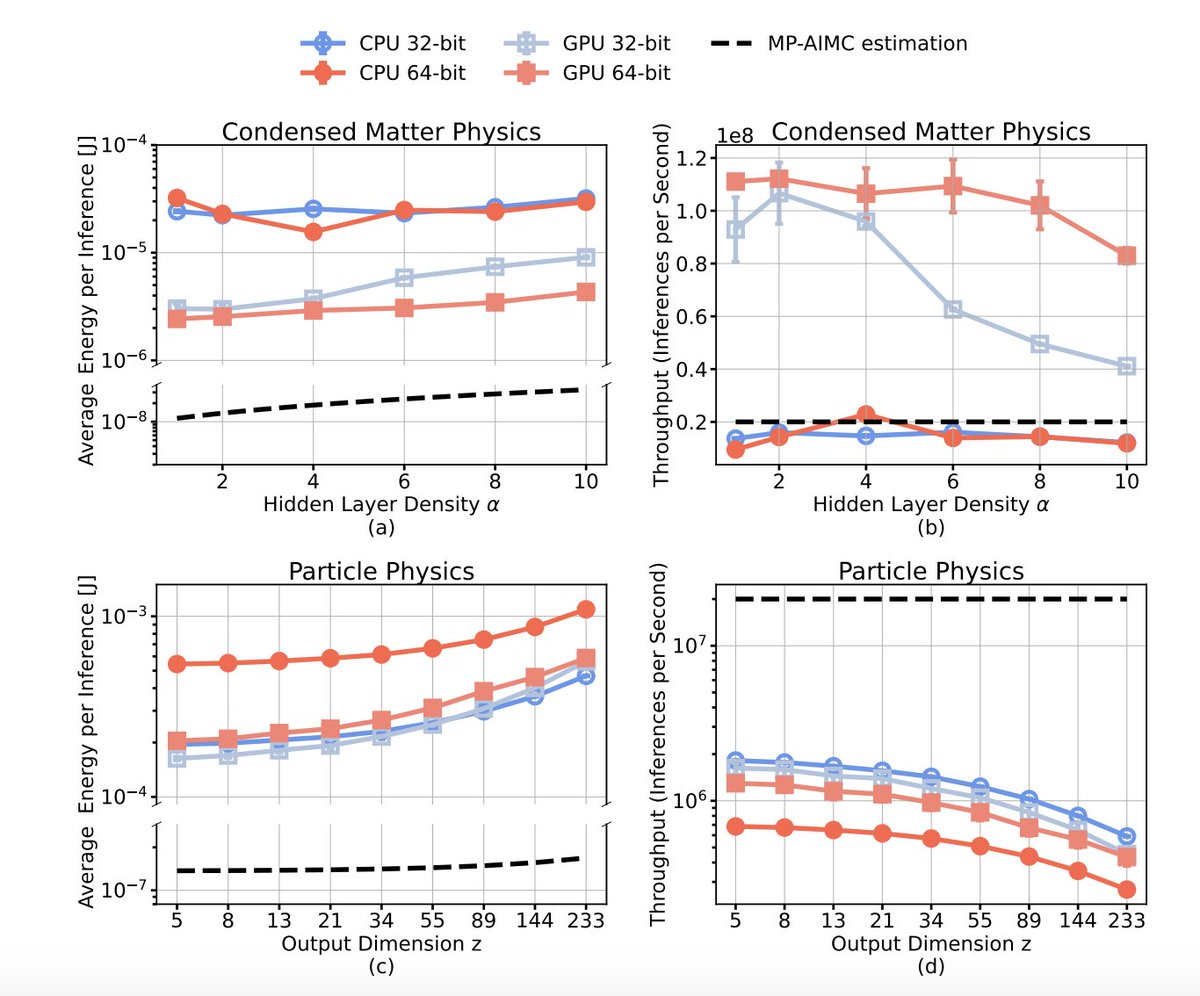
We estimated the speed (latency) and power consumption of running a deep anomaly detection network for LHC on GPUs, CPUs, and a novel analog neuromorphic in-memory architecture. Huge speed gain (50 nanoseconds inference) + minimal power consumption
https://t.co/cJ6nHvvHDD
Die neue Episode unseres Physik-Geplänkel Podcasts ist online! Wie immer, überall wo es Podcasts gibt, oder direkt unter https://t.co/LX4jqRzxwD Viel Vergnügen! https://t.co/uBIajENWlI
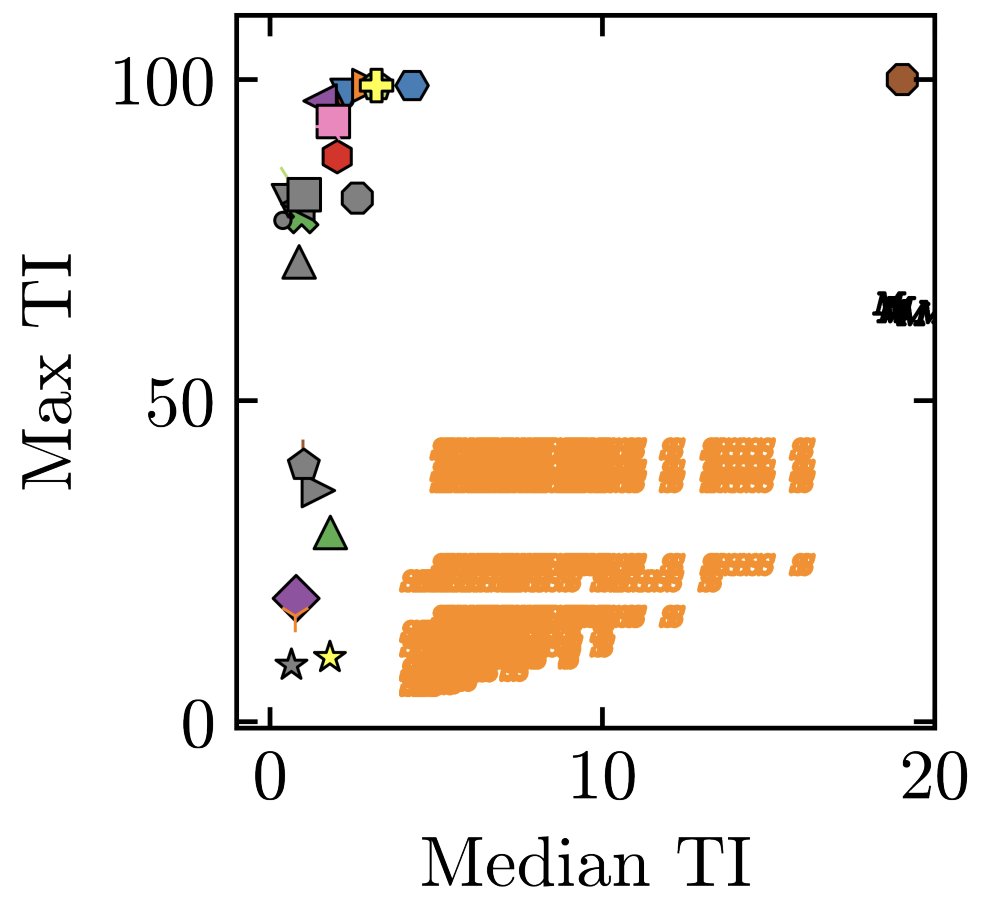
We made an addition to the unsupervised (coloured markers) @dark_machines LHC data challenge asking:
Obvious: How well are supervised methods to search for unknowns signals (in orange) ?
Weird: Can we find unknown signals by *Mixing* random Physical Theories (black M's) ?
Conclusion:
Best performers:
- The best "unsupervised" methods
- The "random mixture of Theories"
Bad performance:
- autoencoders and traditional methods
- supervised methods
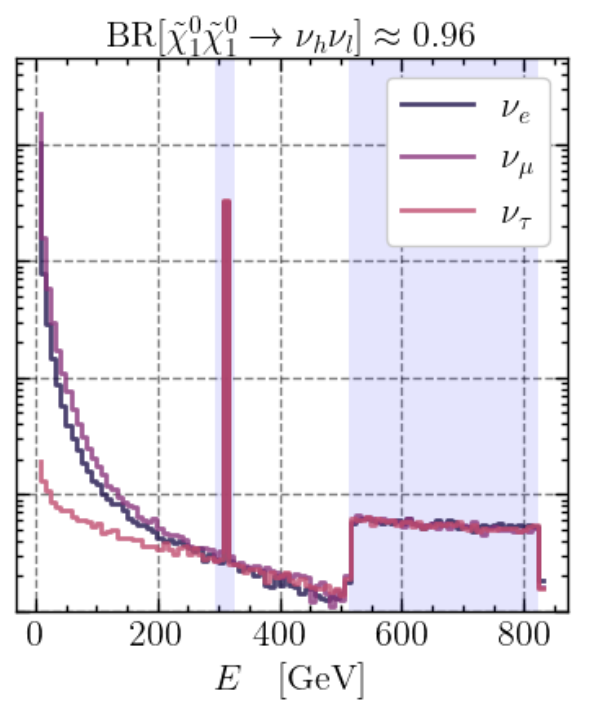
We investigated the interplay of Dark Matter (DM) and Neutrinos and found some interesting (and I think new) phenomena, e.g. DM Neutrino signals can be peaks and boxes (also in combination) , see today's paper https://t.co/Vil182w4QU (work mainly by Jochem Kip & Zhongyi Zhang)
@bob_stienen I have a bit of data, we have two exams in Particle+Cosmos, the correlation is very high, the variance in grades between exam1 and exam2 (quite uncorrelated because done by different lecturers) is about 0.5-1.
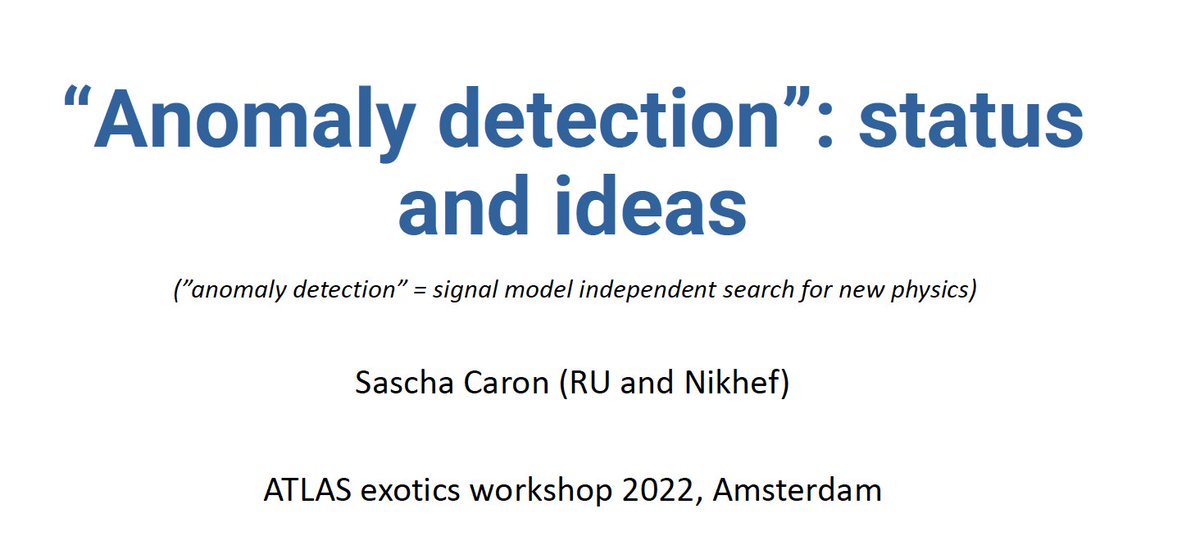
My anomaly detection day ;)
- Very well organised PhyStat workshop
https://t.co/S4nwkPbaKJ
- Nature article on "How the revamped Large Hadron Collider will hunt for new physics"
https://t.co/lR82vmVs2n
I am looking for the first application of a real non-linear multivariate classifier in HEP (beyond Fisher etc.), I know the 1987 paper by B. Denby on NN etc., see https://t.co/iaAGO96fRR, includes also NN triggers in 1987... ). Suggestions ? Thanks.