We are a research collective aiming to answer cutting edge questions about Dark Matter with the most advanced techniques that data science provides us with.
Hello Twitter, this is the account of our brand new "Dark Machines" research collective. Follow us to know more about the application of #MachineLearning to #Physics and #Astronomy, and in particular to #darkmatter studies. More info at https://t.co/cWVZUtnAOK
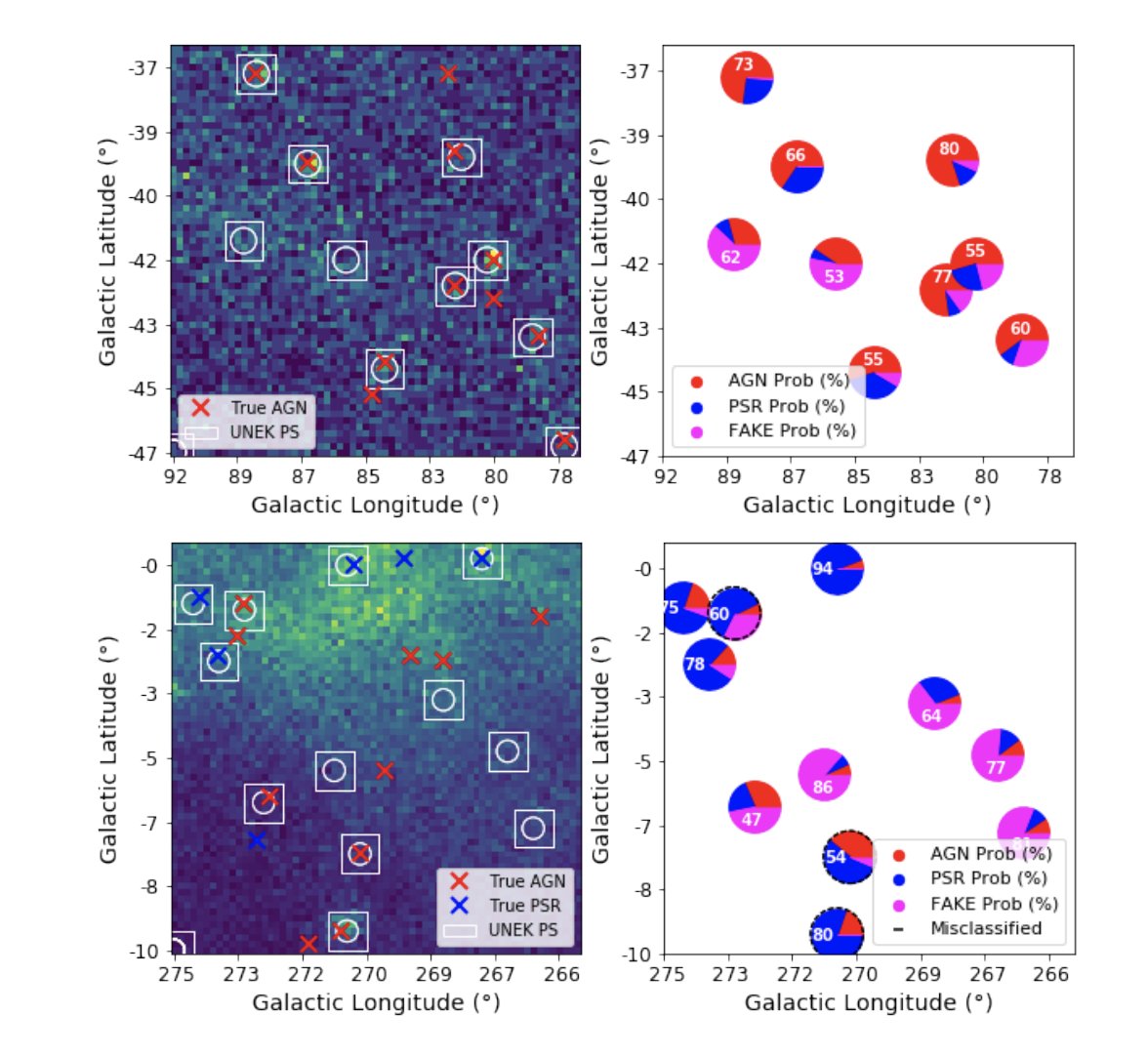
New @dark_machines related paper on automatic source identification.
"Training" on astronomical data from telescope A (Meerlicht) and application to telescope B (Hubble) works very well...
https://t.co/IFNE9uKUS9
This is the link to the nice CERN-Courier article about @dark_machines and LHC Olympics anomaly detection challenges at LHC.
https://t.co/ofvziwJlqR
with e.g. @BPNachman , @MCvBeekveld , @BryanOstdiek , @l_hendriks , @xmpierinix , @CatDogLund, @GregorKasieczka
You are looking for training data for your machine learning model.
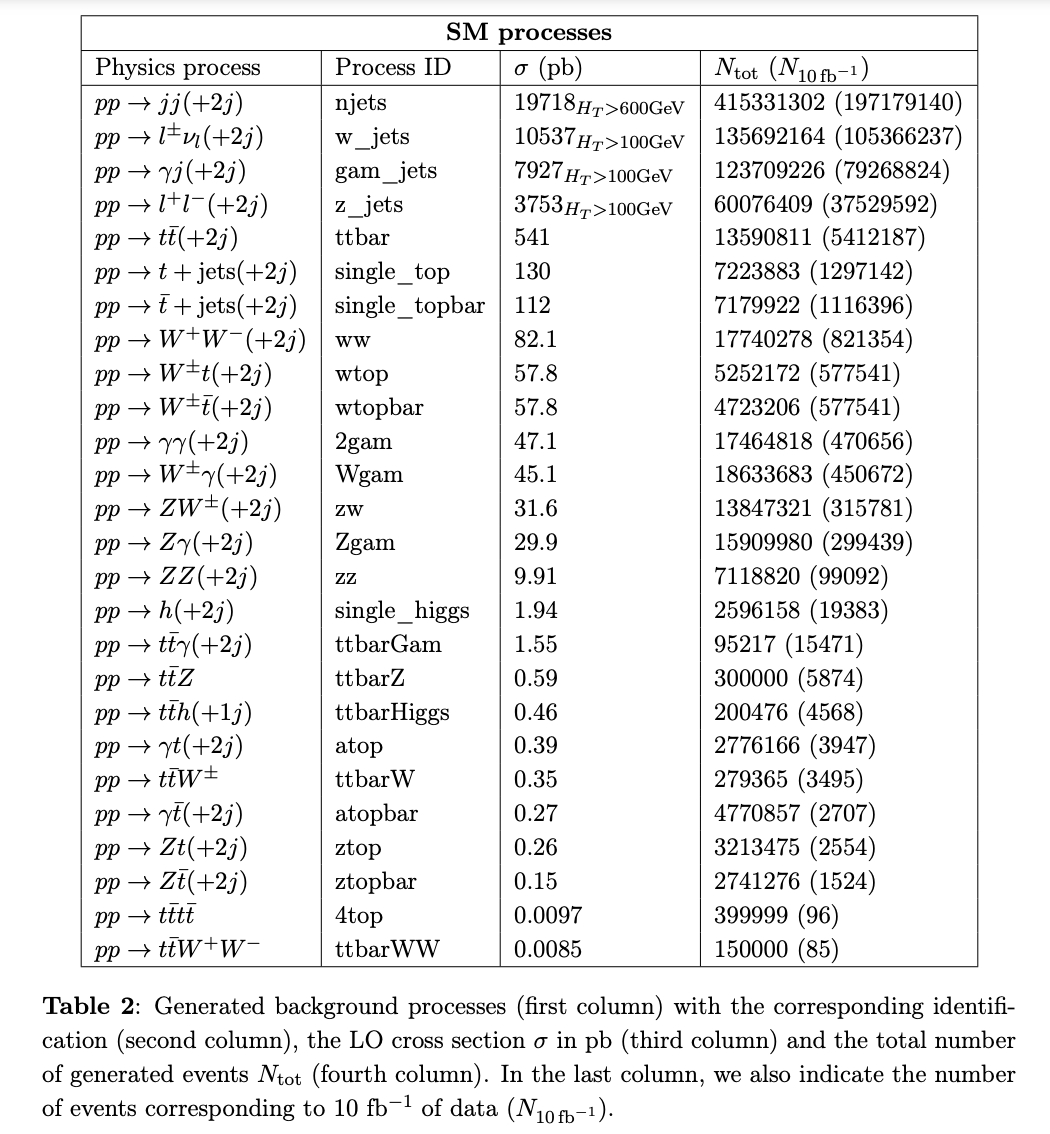
Take the simulated LHC events, full SM background + signal challenge.
> 1000000000 events
https://t.co/Y3zAlv01DO
This project proposes adding such algorithms to LHC searches (and beyond!) to define signal regions based on anomaly score to detect unexpected new physics.
Today on arxiv:
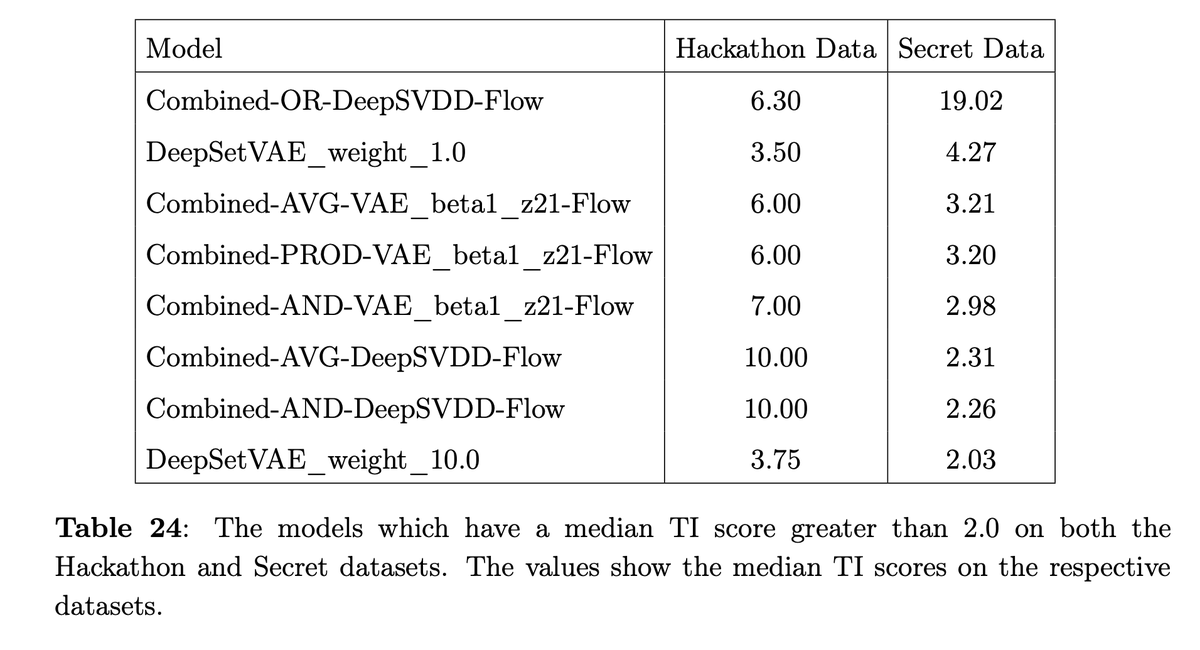
The Dark Machines Anomaly Score Challenge:
Benchmark Data and Model Independent Event Classification for the Large Hadron Collider
https://t.co/j7MyxDLH9T
This work also includes a "data challenge" (like all @dark_machines projects).
All data available on @ZENODO_ORG (see links in paper).
Can you help to (automate) the identification of (astronomical) sources ?
"Automatic" identification/catalog for point sources project
started in @dark_machines made it to arxiv today:
https://t.co/bvduJPG46v
Analysis chain:
gamma ray images
--> u-nets+kmeans or centroid-nets
--> Bayesian classification
--> astro catalogue with posteriors
@GregorKasieczka Two timescales:
a) 1-2 weeks for https://t.co/S7DJCqywwF challenge
b) Indefinitely you can try to find the anomalous events, submit your anomaly score (0 to 1 per event) to the "Secret Dataset Team, Melissa, Zhonghy et al." and use the evaluation (e.g. AUC) for your work.
A new paper appeared! The @dark_machines sampling group has put its latest work on @arxiv: A comparison of optimisation algorithms for high-dimensional particle and astrophysics applications.
Paper can be found at https://t.co/NuuIyTHBkP. Summary thread below 👇
First in a series of 2021 @dark_machines papers:
A comparison of optimisation algorithms for high-dimensional particle/astrophysics applications
Trying to find optimal parameters of your physics model ?
Is your chain of simulators non-differentiable?
->https://t.co/z16bAGymm6
We have decided in a meeting of the organisers to postpone the 2020 darkmachines workshop at CERN until autumn (dates still have to be set) due to the current situation with SARS-COV-2.
Please cancel your CERN hostel on an individual basis.
Sorry !
LES HOUCHES 2019: PHYSICS AT TEV COLLIDERS
NEW PHYSICS WORKING GROUP
is now online
https://t.co/FWx13ArGLB
Comes with 10fb-1 of simulated LHC data for phenomenology from @dark_machines
+ other pheno ML training data
First datasets https://t.co/z5M95kfsUY
We invite all scientists (PhD students, postdocs, and staff) active in theoretical astroparticle physics and cosmology & affiliated to a research institution in a European country, to participate in the 1st EuCAPT census by following this link:
https://t.co/CU00rAvDB9 Please RT