@GadSaad@elonmusk What's sets Vigilante apart from regular people is that he had lots of money for resources, a military background, discipline, and the sheer willpower to carry out the real justice people crave but are afraid to carry out for themselves. Until they learn and act on it.
Why hasn't #India banned Paraquat, a toxic herbicide rejected by much of the world?
https://t.co/TfjUR7pzsV
Paraquat Dichloride continues to be used on Indian farms despite being banned in 74 countries. Its continued approval has intensified questions over pesticide regulation, farm safety and public health safeguards.
#Paraquat entered India during the Green Revolution to lower labor costs. As of 2025, over 1,500 manufacturing and formulation units across the country hold licenses to produce paraquat-based products.
#Agrochemical industry bodies (such as CropLife India) argue against a blanket ban, citing that it could drastically increase cultivation costs for smallholder farmers and disrupt weed management, favoring stricter safety and labeling regulations instead.
Ref: https://t.co/mPDXcj3ST4
#GreenRevolution #Farmers #GMO @awakenindiamvmt
🚨 IVERMECTIN and FENBENDAZOLE Testimonial
53-Year-Old Utah Woman with Stage 4 Breast Cancer Reaches Remission in 11 Months
Trigger Warning: No chemotherapy, no immunotherapy, no targeted therapy, and no hormone therapy. Only palliative radiation was used on a few painful bone spots before starting the alternative protocol.
A 53-year-old woman from Utah was diagnosed with Stage 4 breast cancer.
For 11 months, she followed this protocol:
• Ivermectin: 60 mg/day (~1 mg/kg)
• Fenbendazole: 222 mg with MCT oil or other healthy fats (5 days on, 2 days off)
• Ketogenic diet
For the complete protocol, refer to the source.
“Thank you for your vocal endorsement of alternative cancer treatments. It is partly because of your voice that a friend/patient has achieved these results.”
“She had Stage 4 metastatic breast cancer and, within 11 months, was essentially cancer-free based on her PET scan.”
“Her results are almost miraculous.”
No chemotherapy. No immunotherapy. No targeted therapy. No hormone therapy.
Source: Oncology guidelines and clinical research standards
Disclaimer: This information is for educational purposes only and is not a substitute for professional medical advice.
Shocking clip of Taliban thugs enforcing their barbaric rule. Beating women for "immodesty," banning girls from school, and dragging Afghanistan back to the Dark Ages.
@KabulClowns Evil bastards, why would anyone accept this religion in a modern society, needs to be banned from every first world country to eradicate it from our society. Has absolutely NO place in the modern world!!!
@KabulClowns@mehdirhasan Islam is peaceful, Islam is inclusive, Islam is pro feminist. Islam has no errors, positive role models and a positive good for any society?
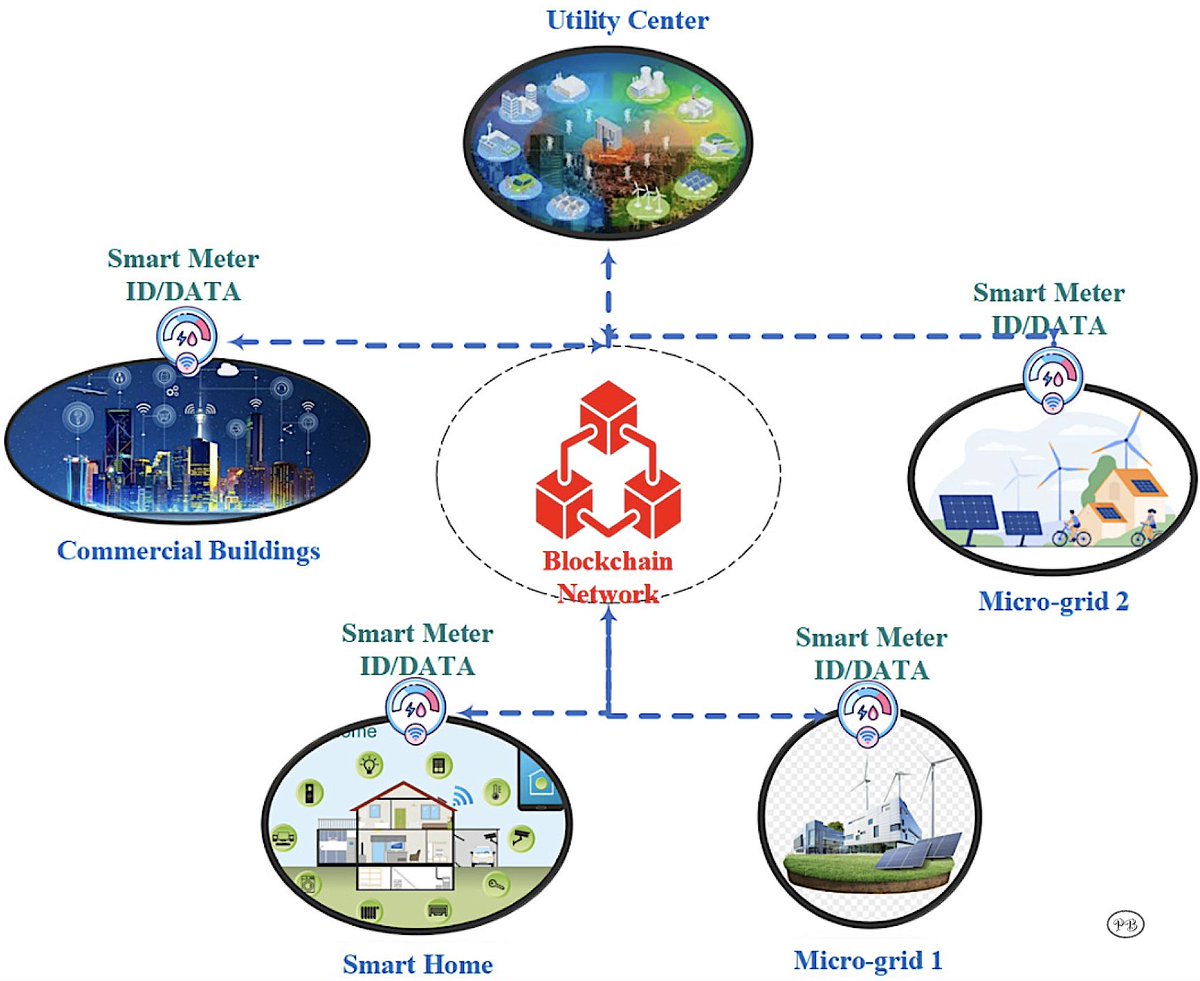
Challenges Associated with Implementing Smart Meters Utilizing Blockchain Technology
The government claims that blockchain-based smart meters enhance transparency and automation in electricity systems, but they also bring along various technical, financial, and social challenges.
1. High Implementation Cost
Blockchain systems require advanced infrastructure (servers, secure networks, IoT integration).
Utilities must upgrade smart meters, communication systems, and data platforms.
These costs often increase electricity tariffs indirectly for consumers.
2. Data Privacy Risks
Smart meters collect high-resolution electricity usage data (hourly or even minute-level).
Even with blockchain security, usage patterns can reveal:
When people are at home or away
Daily routines
Appliance usage behavior
If privacy controls are weak, this data may be misused or accessed by unauthorized parties.
3. Scalability Problems
Blockchain networks struggle when millions of smart meters continuously generate data.
Issues include:
Slow transaction processing
High storage requirements
Network congestion
This makes large-scale national deployment difficult.
4. Energy Consumption of Blockchain
Some blockchain systems (especially older “proof-of-work” models) consume significant energy.
This can partially reduce the environmental benefits of smart grids.
5. Technical Failures and Connectivity Issues
Smart meters depend on stable internet or telecom networks.
Problems include:
Missing or delayed readings
Communication failures between meter and utility
System downtime
In such cases, manual billing may still be required.
6. Cybersecurity Vulnerabilities
Even though blockchain itself is secure, weaknesses exist in:
Smart meter hardware
Communication networks
User interfaces and apps
Hackers may target endpoints rather than the blockchain system itself.
7. Lack of Standards and Regulation
Many countries do not have clear laws for:Blockchain-based electricity trading
Data ownership rules
Consumer protection in digital billing
This slows adoption and creates uncertainty.
Citizens’ Concerns and Problems
1. High or Unexpected Electricity Bills
Many consumers report:
Bills increasing after smart meter installation
Difficulty understanding digital consumption data
Perception of “faster meter running” compared to older meters
This often leads to distrust, even when readings are technically accurate.
2. Privacy Concerns
Citizens worry that:
Detailed electricity data can be used to monitor household behavior
Data may be shared with third parties (utilities, vendors, analytics companies)
Long-term storage of personal consumption patterns could be misused
3. Fear of Remote Control and Disconnection
With smart/prepaid systems:
Users fear electricity can be remotely disconnected
Concerns about automatic shutdown due to payment delays or system errors.
4. Technical Errors and Service Interruptions
Common issues reported in deployments include:
Meter not sending readings
Sudden “no data” errors
Disconnections due to network failures
Delays in complaint resolution.
5. Lack of Awareness and Transparency
Many consumers:
Do not fully understand how smart meters calculate bills
Are not informed about blockchain usage or data flow
Feel excluded from decision-making during rollout.
6. Installation Pressure and Resistance
In some regions, people report:
Forced or rushed installation drives
Lack of proper explanation before installation
Resistance due to trust issues with utilities
7. Dependence on Digital Systems
Citizens face challenges like:
Need for apps or online portals to monitor usage
Difficulties for elderly or rural users
Issues when internet or smartphones are not available
#SmartMeter #SmartGrid #DigitalEnergy #EnergyTechnology #ElectricityManagement #EnergyEfficiency #PowerSector #UtilityTechnology #FutureOfEnergy #Blockchain #BlockchainTechnology #EnergyBlockchain #DecentralizedEnergy #SmartContracts #DigitalTransformation #FinTech #IoT #Industry40 #EmergingTechnology #DigitalIndia #5G #6G
@awakenindiamvmt@Darryl_DSouza_@DrDev7
When butter was demonised, Unilever sold margarine.
When tallow was demonised, Procter and Gamble sold Crisco.
When eggs were demonised, Kellogg's sold cereal.
When red meat was demonised, Cargill sold soy.
When raw milk was demonised, Nestle sold infant formula.
When leather was demonised, BASF sold PVC.
When wool was demonised, ExxonMobil sold polyester feedstock.
When animal fat was demonised, the seed-oil industry grew from a niche product to the most consumed food ingredient on earth.
Every demonisation of an animal product made a specific group of shareholders very rich.
Every one of those products had been eaten by humans for thousands of years without incident.
The science changed the moment a substitute existed to sell.
Follow the money. The advice will start to make a lot more sense.