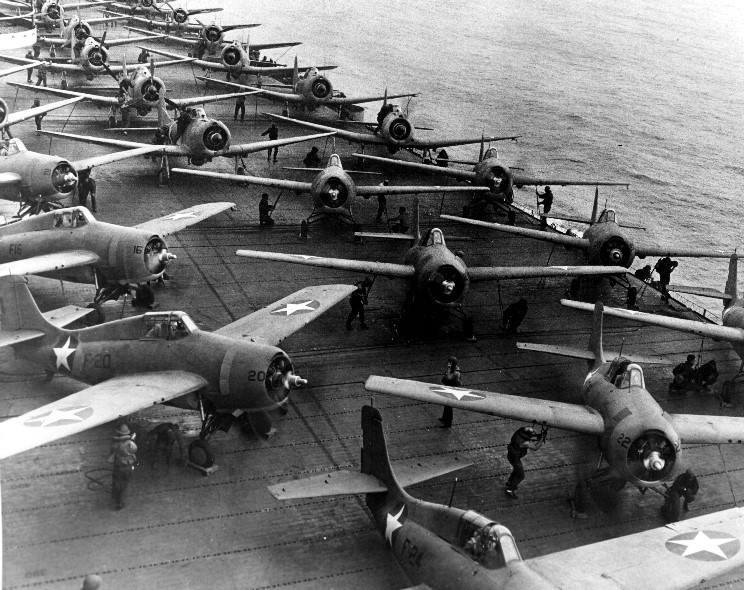
On this day in 1942, U.S. warships ambush a Japanese task force at Midway. Japan loses four carriers and nearly 250 warplanes in the ensuing battle. It's a turning point in the Pacific War.
This Day in History: 5 June 1944 – “Alright, let’s go.”
In the early hours of 5 June 1944, inside a dimly lit room at Southwick House near Portsmouth, the fate of Europe hung on a weather forecast. For days, storms had battered the Channel, threatening to derail the most ambitious military operation ever attempted. The Allied invasion of Nazi‑occupied France, Operation Overlord, was poised on a knife‑edge.
At 04:15, the key figures gathered: General Dwight D. Eisenhower, Admiral Bertram Ramsay, Air Chief Marshal Arthur Tedder, Field Marshal Bernard Montgomery, and the man whose judgement mattered most that morning, meteorologist James Stagg.
Stagg delivered the news with quiet urgency: the storm would ease, briefly, on 6 June. A narrow, fragile window, but a window nonetheless.
Debate flickered around the table. Some feared catastrophic losses, especially among the airborne divisions. Others argued that delay would hand the Germans precious time. Eisenhower listened, pacing, weighing the lives of thousands against the chance to liberate a continent.
Then he stopped, turned back to his commanders, and spoke the words that set history in motion:
“Alright… let’s go.”
Within hours, Admiral Ramsay’s vast armada, nearly 7,000 vessels, began slipping out of English ports. By nightfall, paratroopers were boarding their aircraft. And before dawn on 6 June, the first Allied troops were crossing the Channel toward Normandy.
Lest We Forget.
D-Day in Color: The Filthy Thirteen Prepare for Normandy 🇺🇸
U.S. paratroopers of the 101st Airborne prepare for the Normandy invasion with war paint, heavy gear, and final briefings before boarding their C-47 aircraft.
Featuring the legendary “Filthy Thirteen” of the 506th PIR, with their signature Mohawks, face paint, and fearless reputation before jumping into occupied France.