PhD in molecular biology, IBCh RAS.
Python, docking, deep learning, biotechnology, smFRET, and some super-resolution 🔬 with fluorogen activating proteins.
Decided to try our latest generation FAP-tag DiB3/F53L for labeling thin fibers (tired of vimentin) and this is what happened.
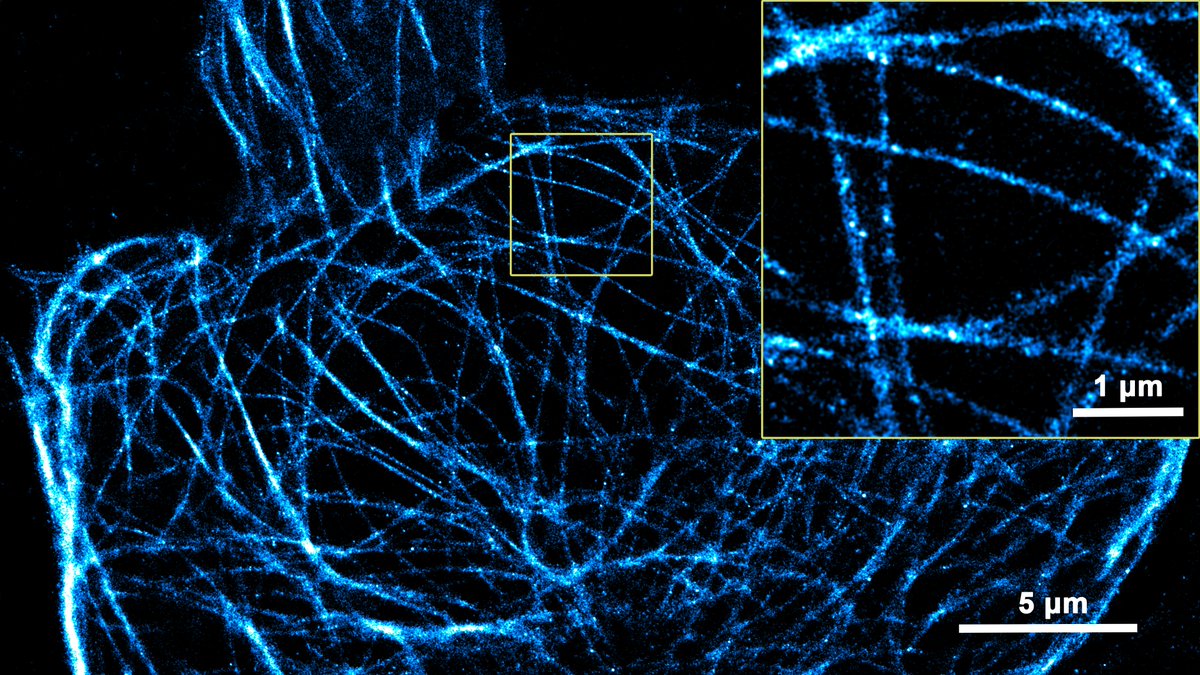
True live-cell (no GLOX, MEA etc) super-resolution of ensconsin (MAP7).
The acquisition took 3.5 minutes, 100 fps, 20k frames. Render drift corrected 1/
New paper! Fast blind structural drug binding using geometry&deep learning.
Understanding how a small drug-like molecule attaches to a target protein is a core problem in drug discovery. By interacting with specific surface areas, drugs can change proteins' functions. 1/
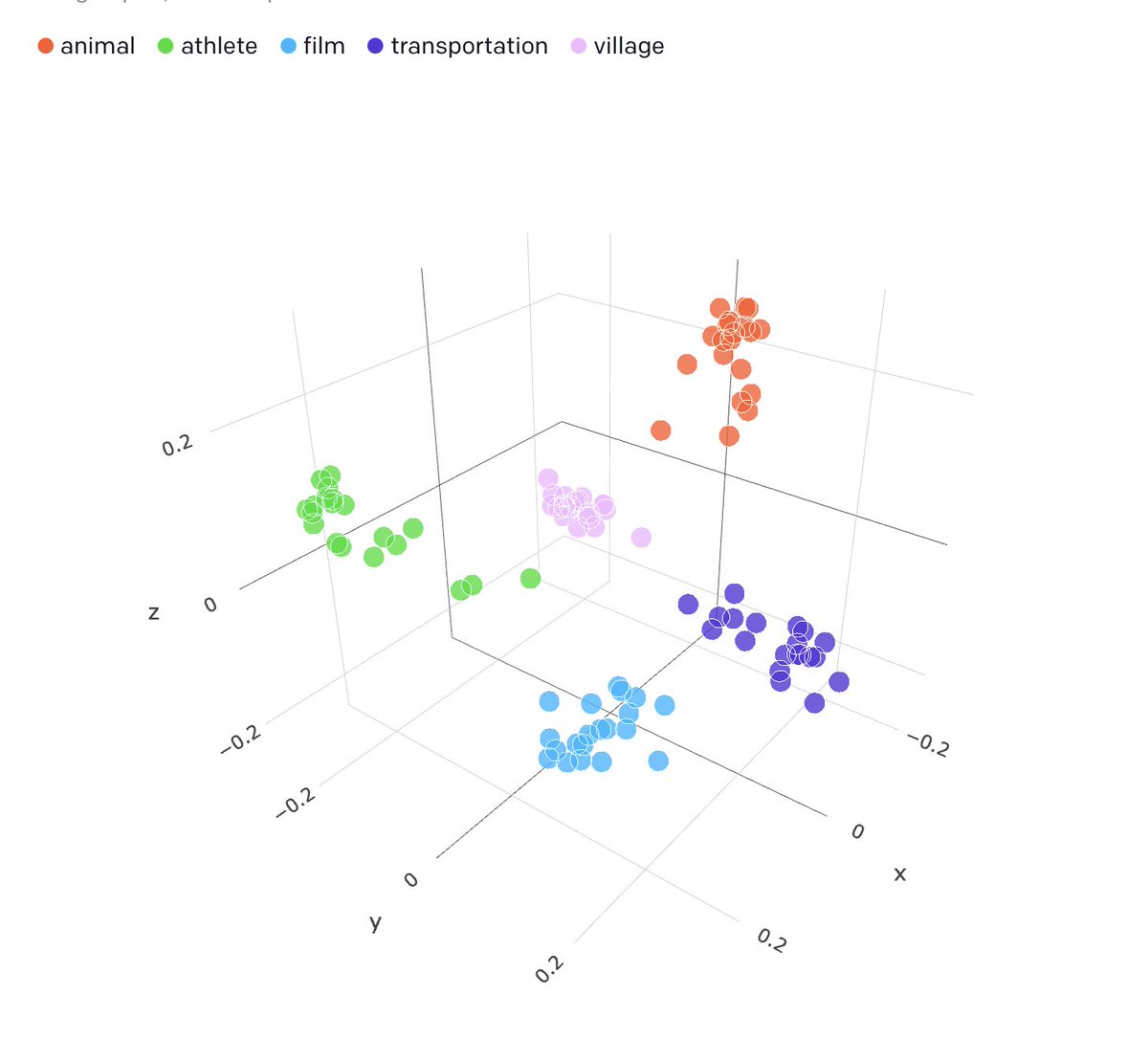
You can now use our best models to produce embeddings (machine-readable representations) of text or code for fast & accurate search, clustering, topic modeling, and classification: https://t.co/OK8SVZTw29
Glowing plants are here! ✨
Bioluminescent petunia is the first product of @light_bio: enchanting everyone who sees it, glows from seeds to flowers, now being grown for commercial sales.
Currently fundrasing – to see these plants in person, DM me or [email protected]
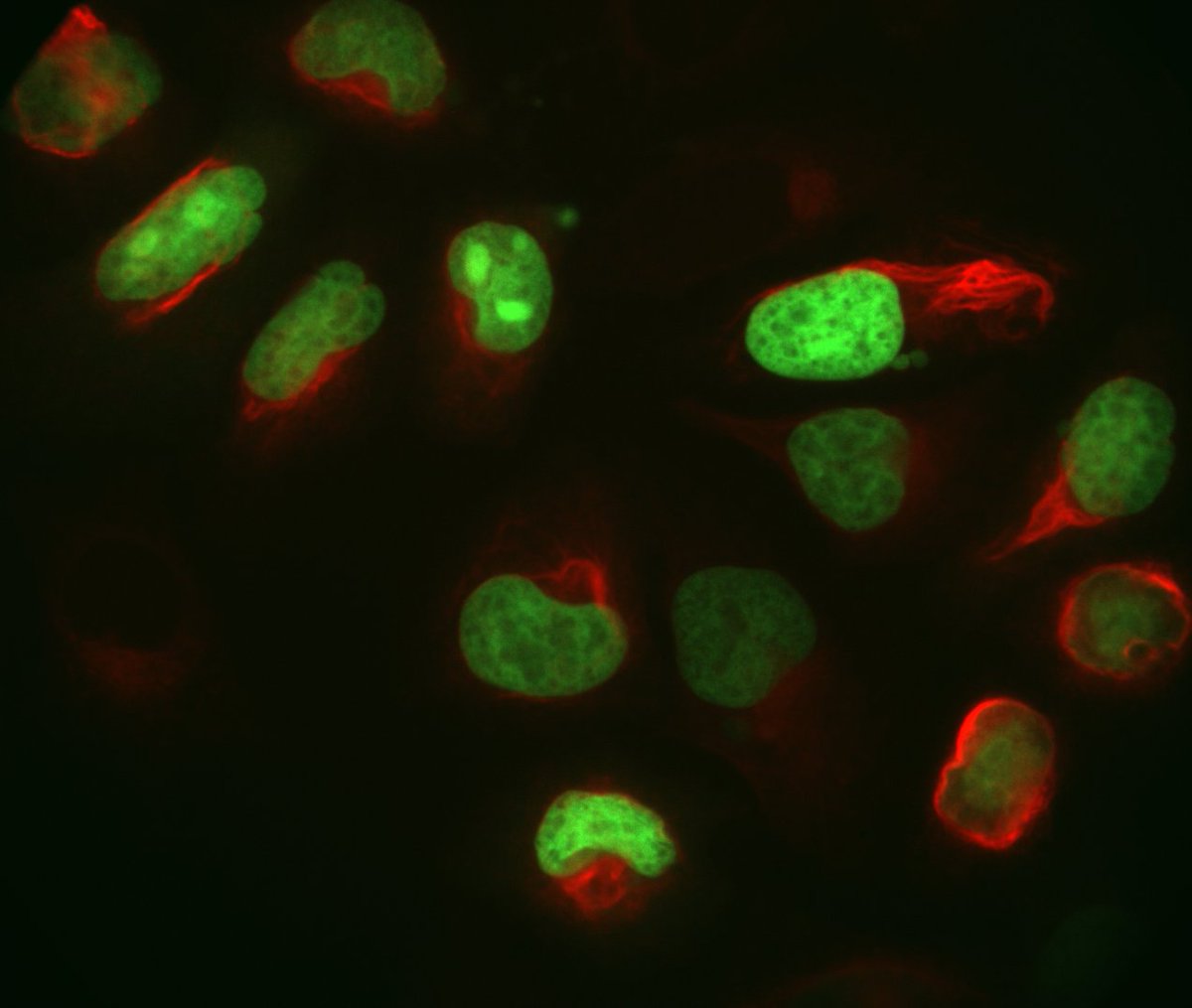
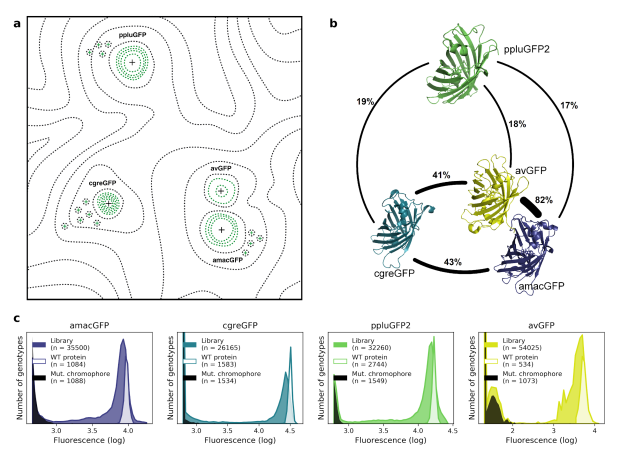
(1) Finally out, after one of the most painful and long reviews (with nitpicky reviews, see my last comment) is a method that I am extremely proud of and excited about. One of the best in my career: https://t.co/H31ZezbA1J
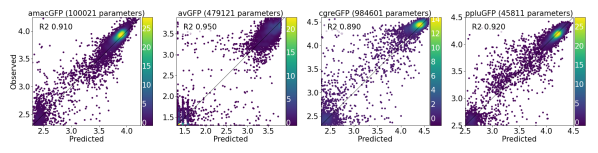
- Comparison of 4 homologous GFP fitness landscapes measured via mutational scanning
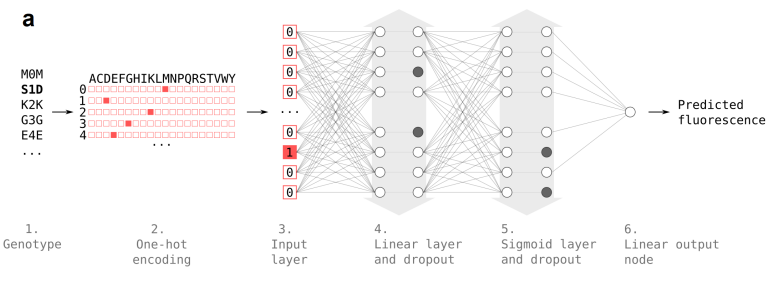
- Use ML to design GFPs with 48 mutations from wild type
https://t.co/C6nZSTcHgW
Louisa Gonzalez Somermeyer, Aubin Fleiss, @fkondras@ktptntsv@a_s_mishin @krnsrksn
Are you curious about using organic dyes in your microscopy experiments but not sure where to start? This Perspective from @rhodamine110 and @jonathangrimm introduces readers to the world of dyes and their pros and cons for biological applications. https://t.co/3Vm8SWB7Yz
One of my best works yet: we show that the fitness landscape of GFP is heterogeneous and use it to accurately predict functional sequences with up to 20% sequence divergence. We were blown away. https://t.co/2IUQx1LTp3
Paw · The most advanced REST & GraphQL API client for Mac https://t.co/9urIFDWKje · Our crazy🤯 2021 Black Friday offer: Retweet this and get a free Paw license (worth $49.99) 💙
New preprint! We came up with 2 methods to design de novo scaffold proteins to hold arbitrary functional motifs: hallucination (optimizing a seq against predictions of RoseTTAFold (RF)) and inpainting (recover masked regions of seq+struc.) 1/n https://t.co/bb0fTELr28
Happy to share that our latest work is published online in @NanoLetters. We report a Small Peptide–Protein Interaction Pair for Genetically Encoded, Fixation Compatible Peptide-PAINT.
With @Fluo_renzo@IKVoets in the @ICMStue
https://t.co/CY0sDguXAz
New fluorogen-activating tag in DiBs family! Computationally designed in Rosetta. Nice live-cell super-resolution and also a split-version. @PLOSCompBiol@MeilerLab
https://t.co/C0Sr0ENIpj
Our review about exchangeable fluorescent tags with a focus on super-resolution microscopy. Various PAINT methods, imaging by peptide-peptide interactions, fluorogen-activating proteins and more.
Pleased to share our new review "Transient Fluorescence Labeling: Low Affinity—High Benefits" with @SayAlexey@a_s_mishin and prof. K.A. Lukyanov https://t.co/KW87UgFR7z @IJMS_MDPI@MDPIOpenAccess
check out our preprint about SPIRO, Smart Plate Imaging Robot: https://t.co/OJjdDB04Y9
Automated time-lapse imaging is now possible inside standard plant growth cabinets.
The robot costs less than 200 Euro and can be built by a common variety biologist (we tested it!)
[LG] Structure-based protein design with deep learning
S Ovchinnikov, PS Huang [Harvard University & Stanford University] (2021)
https://t.co/VwIFDsZO3k
#MachineLearning#ML#AI#Bioinformatics






![fly51fly's tweet photo. [LG] Structure-based protein design with deep learning
S Ovchinnikov, PS Huang [Harvard University & Stanford University] (2021)
https://t.co/VwIFDsZO3k
#MachineLearning #ML #AI #Bioinformatics https://t.co/2CZU7dp7iy](https://pbs.twimg.com/media/FBXo5nKXMAQz2si.jpg)
![fly51fly's tweet photo. [LG] Structure-based protein design with deep learning
S Ovchinnikov, PS Huang [Harvard University & Stanford University] (2021)
https://t.co/VwIFDsZO3k
#MachineLearning #ML #AI #Bioinformatics https://t.co/2CZU7dp7iy](https://pbs.twimg.com/media/FBXo4KcXoAsPqIs.jpg)
![fly51fly's tweet photo. [LG] Structure-based protein design with deep learning
S Ovchinnikov, PS Huang [Harvard University & Stanford University] (2021)
https://t.co/VwIFDsZO3k
#MachineLearning #ML #AI #Bioinformatics https://t.co/2CZU7dp7iy](https://pbs.twimg.com/media/FBXoqzHXMAIa_Cx.jpg)








![fly51fly's tweet photo. [LG] Structure-based protein design with deep learning
S Ovchinnikov, PS Huang [Harvard University & Stanford University] (2021)
https://t.co/VwIFDsZO3k
#MachineLearning #ML #AI #Bioinformatics https://t.co/2CZU7dp7iy](https://pbs.twimg.com/media/FBXo5q7XsAU9wm4.jpg)


