@WWG1WGA301 Rioters, yes
Protestors, no
There is a significant difference.
The American Constitution guarantees that our God given right to protest shall not be infringed upon by our government.
@Ripplesinwales Why not?
CZ got one.
Trump touts accountability, but he really only means, accountability for those who wronged him personally, not those who screwed over the retail traders.
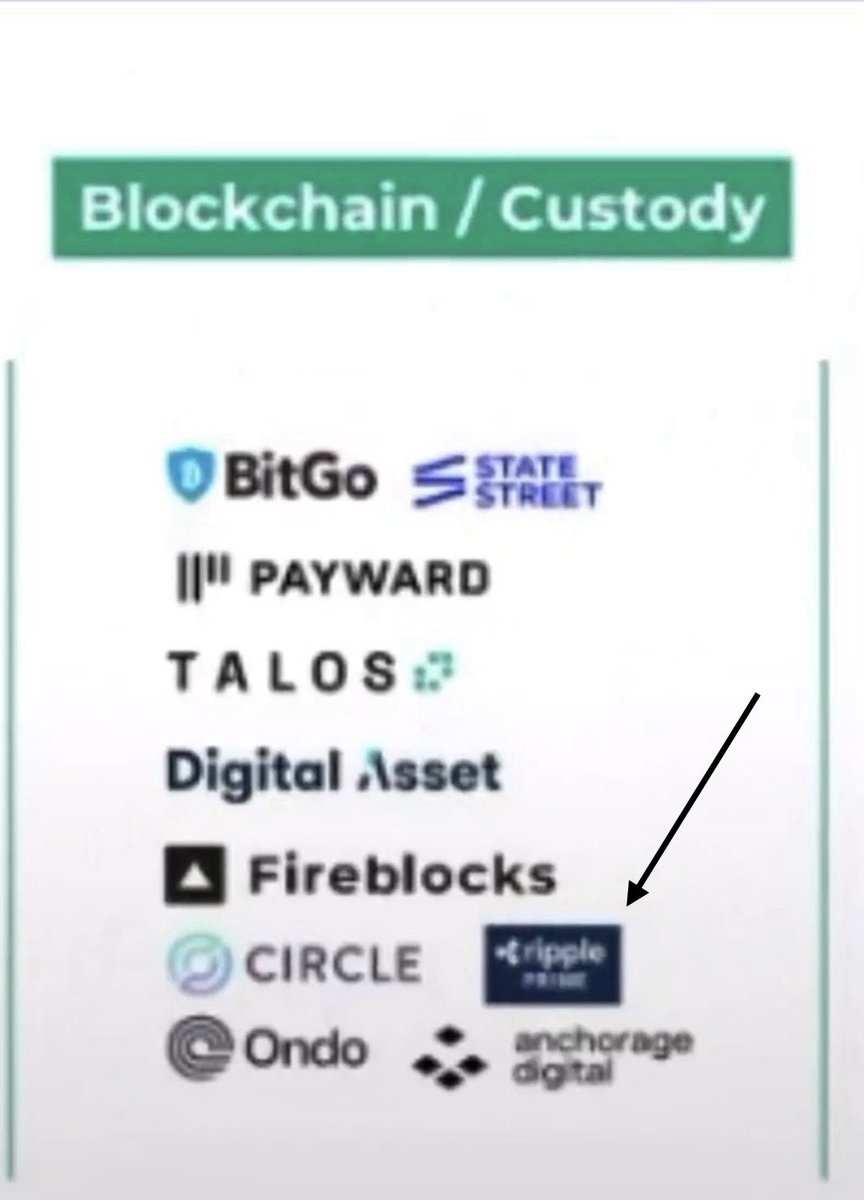
🔥 JUST IN: $114T+ custodian DTCC to pilot tokenized securities trading in July, with full launch set for October.
Over 50 TradFi and crypto firms involved, including BlackRock, JPMorgan, Goldman Sachs, Nasdaq, Circle, Ondo, Ripple Prime and more.
"You lost by 20 points. Why run again?"
Braude & Eagan asked.
I didn't flinch.
First Republican over 40% in years and I did it in six weeks. We're just getting started.
@RobinhoodApp Cool story bro...
I've been waiting a week for my Bitstamp account to transfer to Robinhood after being pushed in to doing so.
Says, "error with network".
Thiefs, just like removing the buy button almost 6 years ago.
You still owe a lot of retail a bunch of money.
🚨 JOEL KATZ JUST CONFIRMED IT: XRP IS THE BRIDGE TO TOKENIZING EVERYTHING: SECURITIES, STOCKS, REPOS, LOANS.
Remember:
DTCC’s Patent has XRP & XLM.
BlackRock x BUIDL x Ripple.
JP Morgan Connecting XRP Ledger to Interbank Settlement.
JP Morgan’s private web3.0 identity article will land on XRPL through @DNAOnChain
It took Stellar 8 years of work with DTCC for the official partnership announcement.
It’s happening now with Ripple, XRP🤯
@america If these are your Senators, then itvis your DUTY to vote them out of office.
However, without the SAVE Act, they would just cheat their way to another term. Which is why they voted it out.
$XLM : Review 📜
What if the company that clears $2.5 quadrillion in securities annually chose your blockchain as the first public chain to host tokenized U.S. stocks, ETFs, and Treasuries, and that announcement happened two days ago?
Meet Stellar - a Layer-1 blockchain built for cross-border payments and asset tokenization, founded by the man who created Mt. Gox and co-founded Ripple. 2-5 second finality. Near-zero fees. Connected to Visa, PayPal, Circle, and Franklin Templeton. And as of May 27, 2026, DTCC, the backbone of American capital markets, announced it will bring tokenized Russell 1000 stocks, ETFs, and U.S. Treasuries to Stellar by H1 2027 under an SEC no-action letter.
The first public blockchain ever selected by DTCC.
Let's explore how Stellar went from quiet payments chain to Wall Street's chosen infrastructure. 👇
⚪ Stellar at a Glance
Stellar is a decentralized, open-source blockchain platform focused on facilitating low-cost international money transfers, connecting financial institutions, and enabling asset tokenization. Launched in 2014 by Jed McCaleb and Joyce Kim through the Stellar Development Foundation, the network operates with its native cryptocurrency XLM (Lumens).
The $XLM token prevents spam, facilitates transactions, and serves as a bridge currency for cross-border transfers. Total supply is ~50 billion XLM with ~30.6B in circulation.
Marketplace Insight: DTCC, which processes $2.5 quadrillion in securities transactions annually, announced it plans to connect its tokenized securities platform to Stellar by 2027. This is the first time DTC-custodied securities will live on a public blockchain. More than 50 financial firms, including JPMorgan, Goldman Sachs, Morgan Stanley, Bank of America, BlackRock, and Ondo Finance, are part of the industry working group. This isn't a partnership. This is the central securities depository of the United States choosing Stellar as its public blockchain.
⚪ Mission
Stellar's mission is to create an open financial system where money flows as freely and cheaply as email. Unlike many blockchain projects that prioritize decentralization above all else, Stellar emphasizes transaction speed, minimal fees, and regulatory compliance, positioning itself as infrastructure for traditional financial institutions seeking blockchain integration.
🔵 A Brief History
Stellar was founded in 2014 by Ripple co-founder Jed McCaleb and Joyce Kim, with the aim of facilitating fast, low-cost cross-border payments, while including unbanked populations in the global economy.
McCaleb is one of the most important figures in crypto history. He created Mt. Gox (the first major Bitcoin exchange), co-founded Ripple, and then left to build Stellar after disagreements over Ripple's direction. He wanted a bottom-up, nonprofit approach focused on financial inclusion rather than enterprise sales.
David Mazieres, a Stanford professor, co-founded Stellar and created the Stellar Consensus Protocol (SCP), a fast, energy-efficient alternative to proof-of-work. SCP provides 2-5 second finality without mining.
The Stellar Development Foundation (SDF) was established as a nonprofit. Denelle Dixon, former COO of Mozilla, was appointed CEO and Executive Director, bringing operational excellence from one of the internet's most important nonprofits.
Early partnerships established Stellar's institutional credibility: IBM launched World Wire on Stellar for cross-border payments, Deloitte tested blockchain-powered transfers, and regional integrations launched across the Philippines (Coins ph), India (ICICI Bank), Africa (Flutterwave), and Latin America (Tempo Money Transfer).
By 2024-2025, Stellar had cemented its position as the compliance-first payments chain. Circle launched native USDC on Stellar. Franklin Templeton ($380B AUM) chose Stellar for its OnChain U.S. Government Money Market Fund. Visa explored Stellar for stablecoin settlements. PayPal integrated Stellar for PYUSD transfers. Moneygram leveraged the network for mobile money corridors.
Stellar in 2025 reinforced its original mandate of fast, low-cost, and accessible payments. Network development stayed centered on cross-border transfers and financial access within emerging markets.
Then came May 27, 2026. DTCC said it plans to connect its tokenized securities platform to Stellar by 2027. The plan follows a No-Action Letter issued by the SEC in December 2025 that authorized DTC to implement a tokenization service. DTCC oversees more than $114 trillion in assets across U.S. capital markets. Stellar became the first public blockchain selected for DTCC's multi-chain tokenization strategy. Russell 1000 stocks, major ETFs, and U.S. Treasuries will live on Stellar by H1 2027.
🔵 Ecosystem Narrative
Stellar's ecosystem is built on a decade of institutional trust, regulatory compliance, and real-world payment corridors. It's not the flashiest chain. It's the one that Visa, PayPal, Franklin Templeton, Circle, and now DTCC chose for production infrastructure.
Key dynamics include:
➛ DTCC Integration (May 2026) brings tokenized DTC-custodied Russell 1000 stocks, ETFs, and U.S. Treasuries to Stellar by H1 2027. First public blockchain for DTCC. 50+ firms in working group including JPMorgan, Goldman Sachs, BlackRock, and Ondo Finance. SEC no-action letter provides legal framework.
➛ Stellar Consensus Protocol (SCP) provides 2-5 second finality without mining or staking. Energy-efficient. No slashing risk. Designed for institutional compliance and deterministic settlement.
➛ Built-in Decentralized Exchange (SDEX) provides native order book functionality on the protocol level. Every asset on Stellar is automatically exchangeable without external DEX contracts.
➛ Anchor system connects traditional currencies to Stellar. Licensed financial institutions (anchors) accept fiat deposits and issue equivalent digital representations, bridging traditional banking with blockchain.
➛ Circle USDC is issued natively on Stellar, providing regulated stablecoin infrastructure for cross-border payments.
➛ Franklin Templeton OnChain U.S. Government Money Market Fund ($380B AUM) operates on Stellar, one of the largest traditional asset managers using a public blockchain in production.
➛ Protocol 23 upgrade (upcoming) introduces parallel transaction processing, enhanced scalability, and improved developer tooling.
➛ Soroban smart contracts platform extends Stellar beyond payments into DeFi, tokenization, and programmable finance with Rust-based contracts.
⚪ Token Utilities
$XLM powers the Stellar payments infrastructure:
➛ Transaction Fees - Near-zero fees (~0.00001 XLM per transaction) prevent spam while keeping transfers accessible. Fees are burned, creating deflationary pressure.
➛ Bridge Currency - XLM acts as intermediary in cross-border transfers when two currencies lack a direct trading pair. Conversions happen automatically through SDEX.
➛ Account Reserves - Users must hold a minimum XLM balance (1 XLM base reserve + 0.5 XLM per additional entry) to maintain accounts, preventing network spam.
➛ Liquidity Provisioning - Provide liquidity on SDEX and AMM pools for yield from trading activity.
➛ Staking (Soroban) - Stake XLM to participate in Soroban smart contract execution and earn rewards.
➛ Governance - XLM holders participate in SDF governance and network upgrade decisions.
⚪ Key Features
➛ DTCC's First Public Blockchain - Tokenized Russell 1000 stocks, ETFs, and U.S. Treasuries coming to Stellar H1 2027. SEC no-action letter. 50+ firms in working group. The most significant institutional validation any public blockchain has ever received.
➛ 2-5 Second Finality - Stellar Consensus Protocol provides deterministic settlement without mining. No probabilistic confirmation. No chain reorgs. Designed for institutional settlement.
➛ Near-Zero Fees - Fractions of a cent per transaction regardless of transfer size. Fees are burned. Designed for remittances, micropayments, and high-volume enterprise use.
➛ Visa, PayPal, Circle, Franklin Templeton - The most prestigious institutional partnership roster in blockchain. All live in production, not pilot programs.
➛ Built-in DEX (SDEX) - Native order book at the protocol level. Every asset automatically exchangeable. No external smart contracts required.
➛ Soroban Smart Contracts - Rust-based programmable finance platform extending Stellar beyond payments into DeFi, tokenization, and automated financial logic.
➛ Compliance-First Architecture - Built for regulated financial institutions. KYC/AML-friendly. Anchor system bridges traditional banking. View keys for selective transparency.
➛ 10 Years in Production - Operating since 2014 without a major security breach. The most battle-tested payments blockchain in existence.
🔵 Meet the Stellar Team
Stellar is led by one of the most experienced and credentialed teams in all of blockchain, with a founder who created Mt. Gox and co-founded Ripple, a CEO from Mozilla, a CTO building institutional-grade infrastructure, and a chief scientist from Stanford.
▶️ Core Members:
➛ Jed McCaleb [ @JedMcCaleb ] - Founder, Chief Scientist & Board Member | Created Mt. Gox, the first major Bitcoin exchange. Co-founded Ripple before leaving to build Stellar with a nonprofit, financial inclusion focus. One of the earliest and most influential figures in crypto history. Now leads Stellar's technical research and scientific direction.
➛ Denelle Dixon [ @DenelleDixon ] - CEO & Executive Director, SDF | Former COO of Mozilla, where she led the organization through significant growth and regulatory navigation. Brings nonprofit leadership, regulatory expertise, and institutional credibility to Stellar's operations. Described the DTCC partnership as bringing "public blockchain infrastructure closer to regulated market systems."
➛ Nicolas Barry [ @nicolassf ] - CTO | Leads protocol development, network upgrades (Protocol 23), and Soroban smart contract platform engineering.
➛ Jason Karsh [ @jasonkarsh ] - CMO | Founder of Karsh Consulting. Formerly at Google, Coinbase, Blockchain com Blocks (Square), BlockAid, and Geteero. Brings deep experience from the biggest names in both tech and crypto. Based in San Francisco.
➛ Jason Chlipala - COO | Oversees day-to-day operations, organizational execution, and strategic planning for SDF.
➛ Candace Kelly - CLO | Chief Legal Officer overseeing regulatory compliance and legal strategy across multiple jurisdictions.
➛ David Mazieres [ @dmazieres ] - Co-Founder & Chief Scientist | Stanford professor who created the Stellar Consensus Protocol (SCP). Provides the academic and scientific rigor underpinning Stellar's consensus mechanism.
▶️ Board Members:
➛ Lauren Thorbjornsen - Chief of Staff & VP of Communications ➛ Lin-Hua Wu - Board Member ➛ Ronaldo Lemos - Board Member ➛ Ginger Baker - Board Member ➛ Asiff Hirji - Board Member
➛ Stellar Development Foundation (San Francisco) - Nonprofit organization founded to support the development and growth of the Stellar network. Manages ecosystem grants, partnerships, and protocol governance.
🔵 Ratings
➛ Use Case: ★★★★★ (5/5) - The DTCC announcement on May 27, 2026 fundamentally changes Stellar's use case rating. The company that clears $2.5 quadrillion in annual securities volume chose Stellar as its first public blockchain for tokenized stocks, ETFs, and Treasuries. Under an SEC no-action letter. With 50+ firms including JPMorgan, Goldman Sachs, BlackRock, and Ondo Finance in the working group. Russell 1000 stocks will live on Stellar by H1 2027. Add to that Visa, PayPal, Circle (USDC), Franklin Templeton ($380B AUM), and Moneygram already live in production, and Stellar has the most impressive institutional adoption roster in all of blockchain. 10 years of operation. 2-5 second finality. Near-zero fees. Compliance-first architecture. This is no longer just a payments chain. It's the public blockchain that Wall Street's central infrastructure chose.
➛ Tokenomics: ★★★✦ (3.5/5) - Total supply of ~50 billion XLM with ~30.6B in circulation. Transaction fees are burned, creating deflationary pressure, but the burn rate is minimal relative to supply. The large supply creates psychological barriers for retail investors. SDF holds a significant portion of remaining supply as ecosystem reserves. XLM is down 81% from ATH ($0.94 in 2018). The token's primary utility is as a bridge currency and fee mechanism rather than a direct value capture asset like governance or burn tokens. The DTCC integration could significantly increase transaction volume and fee burns, but the tokenomics remain the weakest element of an otherwise institutional-grade infrastructure. The 1.5-point deduction reflects the massive supply, limited direct value accrual mechanisms, SDF's large holdings, and the 8-year price decline from ATH.
➛ Audits: ★★★★✦ (4.5/5) - Stellar has been operating since 2014 without a major security breach or consensus failure, making it the most battle-tested payments blockchain in existence. The Stellar Consensus Protocol was designed by Stanford professor David Mazieres and has been academically peer-reviewed. The fact that DTCC, Visa, PayPal, Franklin Templeton, and Circle all passed their own rigorous internal security assessments before integrating with Stellar speaks louder than any third-party audit. The SEC no-action letter implies regulatory-grade scrutiny of the network's security and compliance architecture. The codebase is fully open-source. The 0.5 deduction is for the complexity of the upcoming Soroban smart contract platform (new code, new attack surface) and the transition challenges that Protocol 23 may introduce.
➛ Community: ★★★★ (4/5) - Stellar has a loyal, long-term community that has held through an 81% drawdown from 2018 ATH with conviction built on institutional adoption rather than speculation. The DTCC announcement energized the community with a 244% volume surge. Active on Reddit, Discord, and X. The community spans crypto natives, fintech builders, and financial inclusion advocates, particularly strong in emerging markets where Stellar's remittance corridors operate. The SDF's nonprofit structure creates trust. The deduction is that Stellar's community is quieter and smaller than competing chains like Solana or XRP despite having arguably stronger institutional adoption. Developer ecosystem around Soroban is still growing. The community doesn't generate viral retail energy, preferring to let the partnerships speak.
🔵 Conclusion
Stellar just received the most significant institutional validation any public blockchain has ever received. DTCC, the company that clears $2.5 quadrillion in annual securities transactions and oversees $114 trillion in assets, chose Stellar as its first public blockchain for tokenized securities.
Russell 1000 stocks, major ETFs, and U.S. Treasuries will live on Stellar by H1 2027, under an SEC no-action letter, with JPMorgan, Goldman Sachs, BlackRock, and 47 other firms in the working group.
This isn't a partnership announcement. This is the central securities depository of the United States integrating with a public blockchain for the first time. And they chose the chain that Visa, PayPal, Circle, Franklin Templeton, and Moneygram already use in production. The chain that's been operating since 2014 without a security breach. The chain built by the man who created Mt. Gox and co-founded Ripple. The chain with a Stanford professor's consensus protocol and a former Mozilla COO running the foundation.
Hhere's the math that matters: DTCC processes $2.5 quadrillion annually. Even tokenizing a fraction of 1% of that volume on Stellar would dwarf every DeFi protocol's TVL combined. And DTCC didn't choose Stellar for a pilot.
They chose it for their multi-chain tokenization strategy under an SEC no-action letter, with 50+ of the world's largest financial institutions in the working group. When you spend a decade building the most compliant, most institutional, most boring payments chain in crypto, and then the backbone of American capital markets picks you as their first public blockchain, "boring" becomes the most bullish word in the market.
DTCC is moving multi-chain, and both Ripple/XRPL and Stellar/XLM are showing up in the institutional tokenization conversation...
🚨 DTCC + Ripple + Stellar: The institutional tokenization story is getting serious.
This is not about hype.
This is not about claiming DTCC is moving quadrillions on XRP or XLM tomorrow.
The real story is much bigger:
Wall Street’s core market infrastructure is preparing for tokenized securities, tokenized Treasuries, collateral mobility, and multi-chain settlement rails.
DTCC announced its DTC tokenization service with 50+ major financial firms involved, targeting limited production trades in July 2026 and a broader launch in October 2026. DTC currently custodies more than $114 trillion in assets.
Then came the Stellar news.
DTCC and the Stellar Development Foundation announced plans to connect DTC-tokenized assets to the Stellar public blockchain, with availability expected in the first half of 2027. This is a major validation of XLM’s role in compliant, fast, public-chain financial infrastructure.
Now add Ripple.
Ripple completed its acquisition of Hidden Road, now Ripple Prime, becoming the first crypto company to own and operate a global multi-asset prime broker. Hidden Road Partners CIV US LLC was also added to DTCC’s NSCC MPID directory effective March 2, 2026, giving Ripple Prime a real connection into traditional post-trade market infrastructure.
✅This does not mean XRP or XLM replaces DTCC.
It means the future is becoming interoperable.
XRP brings institutional liquidity, settlement focus, RLUSD, prime brokerage, and cross-border rails.
XLM brings public-chain connectivity, payments, remittances, compliance-minded architecture, and now a direct DTCC tokenization connection.
Together, they represent something much bigger than coin tribalism:
The bridge between traditional finance and blockchain finance.
Wall Street is not asking which community is louder.
They are asking:
Who can move assets faster?
Who can reduce settlement friction?
Who can support compliance?
Who can improve collateral mobility?
Who can connect traditional assets to digital markets?
And now DTCC is also working with Chainlink on its Collateral AppChain, expected to go live in Q4 2026, supporting tokenized collateral, stablecoins, tokenized money market funds, crypto assets, and other tokenized instruments.
This is the real shift:
Tokenized securities.
Tokenized collateral.
Public-chain connectivity.
Prime brokerage infrastructure.
Multi-chain settlement.
Institutional-grade digital finance.
XRP and XLM are not enemies in this story.
They may be two different tools inside the same new financial operating system.
The rails are being built.
Most people still don’t see it.
#XRP #XLM #XRPL #Stellar #Ripple #DTCC #Tokenization #RWA #Chainlink #DigitalAssets #InstitutionalCrypto
$XLM and $XRP are both positioned for adoption by the DTCC.
Zebec has secured enterprise-grade payroll partnerships with both ecosystems — a clear strategic alignment that underscores the real utility and scalability of $ZBCN.
Birds of a feather flock together. When you’re integrated with the institutions moving trillions, the significance speaks for itself.
🚨XRP Futures Go 24/7 On CME TOMORROW — BIG INSTITUTIONS Can Trade NON-STOP! TRILLIONS ARE COMING 🤯🔥
@CMEGroup — the LARGEST regulated derivatives exchange in the world — is OFFICIALLY launching:
✅ 24/7 crypto futures trading
✅ 24/7 crypto options trading
✅ NON-STOP institutional access to $XRP futures 🫣
Starting TOMORROW, institutions NO longer need to wait for markets to “reopen” after weekends. 😳
For YEARS…
⚠️ crypto traded 24/7
⚠️ but Wall Street futures markets CLOSED on weekends
⚠️ causing the famous “CME gaps” and DELAYED institutional reactions
Now CME is REMOVING that barrier. 👀🔥
CME confirmed:
👉 XRP Futures
👉 Micro XRP Futures
CME says its crypto products already generated over:
💰 $3 TRILLION IN NOTIONAL VOLUME
and now that market becomes ALWAYS OPEN AND TRILLIONS ARE COMING. 🚀🤑
DTCC and the Stellar Development Foundation announced today plans to enable the tokenization of DTC‑custodied assets on the @StellarOrg network. This collaboration advances DTCC’s multi chain strategy and expands how traditional assets move across digital ecosystems.
DTC‑tokenized assets are expected to be made available on the Stellar network in the first half of 2027, supporting the evolution of a more open, interoperable, and efficient financial ecosystem.
Get the full story: https://t.co/YCWHZDiLl5
Remember, Ripple and Stellar have secured strategic access to the DTCC’s $2.5 quadrillion settlement network via Securrency integration.🔑
Documented.📝👇


![0xchainink's tweet photo. $XLM : Review 📜
What if the company that clears $2.5 quadrillion in securities annually chose your blockchain as the first public chain to host tokenized U.S. stocks, ETFs, and Treasuries, and that announcement happened two days ago?
Meet Stellar - a Layer-1 blockchain built for cross-border payments and asset tokenization, founded by the man who created Mt. Gox and co-founded Ripple. 2-5 second finality. Near-zero fees. Connected to Visa, PayPal, Circle, and Franklin Templeton. And as of May 27, 2026, DTCC, the backbone of American capital markets, announced it will bring tokenized Russell 1000 stocks, ETFs, and U.S. Treasuries to Stellar by H1 2027 under an SEC no-action letter.
The first public blockchain ever selected by DTCC.
Let's explore how Stellar went from quiet payments chain to Wall Street's chosen infrastructure. 👇
⚪ Stellar at a Glance
Stellar is a decentralized, open-source blockchain platform focused on facilitating low-cost international money transfers, connecting financial institutions, and enabling asset tokenization. Launched in 2014 by Jed McCaleb and Joyce Kim through the Stellar Development Foundation, the network operates with its native cryptocurrency XLM (Lumens).
The $XLM token prevents spam, facilitates transactions, and serves as a bridge currency for cross-border transfers. Total supply is ~50 billion XLM with ~30.6B in circulation.
Marketplace Insight: DTCC, which processes $2.5 quadrillion in securities transactions annually, announced it plans to connect its tokenized securities platform to Stellar by 2027. This is the first time DTC-custodied securities will live on a public blockchain. More than 50 financial firms, including JPMorgan, Goldman Sachs, Morgan Stanley, Bank of America, BlackRock, and Ondo Finance, are part of the industry working group. This isn't a partnership. This is the central securities depository of the United States choosing Stellar as its public blockchain.
⚪ Mission
Stellar's mission is to create an open financial system where money flows as freely and cheaply as email. Unlike many blockchain projects that prioritize decentralization above all else, Stellar emphasizes transaction speed, minimal fees, and regulatory compliance, positioning itself as infrastructure for traditional financial institutions seeking blockchain integration.
🔵 A Brief History
Stellar was founded in 2014 by Ripple co-founder Jed McCaleb and Joyce Kim, with the aim of facilitating fast, low-cost cross-border payments, while including unbanked populations in the global economy.
McCaleb is one of the most important figures in crypto history. He created Mt. Gox (the first major Bitcoin exchange), co-founded Ripple, and then left to build Stellar after disagreements over Ripple's direction. He wanted a bottom-up, nonprofit approach focused on financial inclusion rather than enterprise sales.
David Mazieres, a Stanford professor, co-founded Stellar and created the Stellar Consensus Protocol (SCP), a fast, energy-efficient alternative to proof-of-work. SCP provides 2-5 second finality without mining.
The Stellar Development Foundation (SDF) was established as a nonprofit. Denelle Dixon, former COO of Mozilla, was appointed CEO and Executive Director, bringing operational excellence from one of the internet's most important nonprofits.
Early partnerships established Stellar's institutional credibility: IBM launched World Wire on Stellar for cross-border payments, Deloitte tested blockchain-powered transfers, and regional integrations launched across the Philippines (Coins ph), India (ICICI Bank), Africa (Flutterwave), and Latin America (Tempo Money Transfer).
By 2024-2025, Stellar had cemented its position as the compliance-first payments chain. Circle launched native USDC on Stellar. Franklin Templeton ($380B AUM) chose Stellar for its OnChain U.S. Government Money Market Fund. Visa explored Stellar for stablecoin settlements. PayPal integrated Stellar for PYUSD transfers. Moneygram leveraged the network for mobile money corridors.
Stellar in 2025 reinforced its original mandate of fast, low-cost, and accessible payments. Network development stayed centered on cross-border transfers and financial access within emerging markets.
Then came May 27, 2026. DTCC said it plans to connect its tokenized securities platform to Stellar by 2027. The plan follows a No-Action Letter issued by the SEC in December 2025 that authorized DTC to implement a tokenization service. DTCC oversees more than $114 trillion in assets across U.S. capital markets. Stellar became the first public blockchain selected for DTCC's multi-chain tokenization strategy. Russell 1000 stocks, major ETFs, and U.S. Treasuries will live on Stellar by H1 2027.
🔵 Ecosystem Narrative
Stellar's ecosystem is built on a decade of institutional trust, regulatory compliance, and real-world payment corridors. It's not the flashiest chain. It's the one that Visa, PayPal, Franklin Templeton, Circle, and now DTCC chose for production infrastructure.
Key dynamics include:
➛ DTCC Integration (May 2026) brings tokenized DTC-custodied Russell 1000 stocks, ETFs, and U.S. Treasuries to Stellar by H1 2027. First public blockchain for DTCC. 50+ firms in working group including JPMorgan, Goldman Sachs, BlackRock, and Ondo Finance. SEC no-action letter provides legal framework.
➛ Stellar Consensus Protocol (SCP) provides 2-5 second finality without mining or staking. Energy-efficient. No slashing risk. Designed for institutional compliance and deterministic settlement.
➛ Built-in Decentralized Exchange (SDEX) provides native order book functionality on the protocol level. Every asset on Stellar is automatically exchangeable without external DEX contracts.
➛ Anchor system connects traditional currencies to Stellar. Licensed financial institutions (anchors) accept fiat deposits and issue equivalent digital representations, bridging traditional banking with blockchain.
➛ Circle USDC is issued natively on Stellar, providing regulated stablecoin infrastructure for cross-border payments.
➛ Franklin Templeton OnChain U.S. Government Money Market Fund ($380B AUM) operates on Stellar, one of the largest traditional asset managers using a public blockchain in production.
➛ Protocol 23 upgrade (upcoming) introduces parallel transaction processing, enhanced scalability, and improved developer tooling.
➛ Soroban smart contracts platform extends Stellar beyond payments into DeFi, tokenization, and programmable finance with Rust-based contracts.
⚪ Token Utilities
$XLM powers the Stellar payments infrastructure:
➛ Transaction Fees - Near-zero fees (~0.00001 XLM per transaction) prevent spam while keeping transfers accessible. Fees are burned, creating deflationary pressure.
➛ Bridge Currency - XLM acts as intermediary in cross-border transfers when two currencies lack a direct trading pair. Conversions happen automatically through SDEX.
➛ Account Reserves - Users must hold a minimum XLM balance (1 XLM base reserve + 0.5 XLM per additional entry) to maintain accounts, preventing network spam.
➛ Liquidity Provisioning - Provide liquidity on SDEX and AMM pools for yield from trading activity.
➛ Staking (Soroban) - Stake XLM to participate in Soroban smart contract execution and earn rewards.
➛ Governance - XLM holders participate in SDF governance and network upgrade decisions.
⚪ Key Features
➛ DTCC's First Public Blockchain - Tokenized Russell 1000 stocks, ETFs, and U.S. Treasuries coming to Stellar H1 2027. SEC no-action letter. 50+ firms in working group. The most significant institutional validation any public blockchain has ever received.
➛ 2-5 Second Finality - Stellar Consensus Protocol provides deterministic settlement without mining. No probabilistic confirmation. No chain reorgs. Designed for institutional settlement.
➛ Near-Zero Fees - Fractions of a cent per transaction regardless of transfer size. Fees are burned. Designed for remittances, micropayments, and high-volume enterprise use.
➛ Visa, PayPal, Circle, Franklin Templeton - The most prestigious institutional partnership roster in blockchain. All live in production, not pilot programs.
➛ Built-in DEX (SDEX) - Native order book at the protocol level. Every asset automatically exchangeable. No external smart contracts required.
➛ Soroban Smart Contracts - Rust-based programmable finance platform extending Stellar beyond payments into DeFi, tokenization, and automated financial logic.
➛ Compliance-First Architecture - Built for regulated financial institutions. KYC/AML-friendly. Anchor system bridges traditional banking. View keys for selective transparency.
➛ 10 Years in Production - Operating since 2014 without a major security breach. The most battle-tested payments blockchain in existence.
🔵 Meet the Stellar Team
Stellar is led by one of the most experienced and credentialed teams in all of blockchain, with a founder who created Mt. Gox and co-founded Ripple, a CEO from Mozilla, a CTO building institutional-grade infrastructure, and a chief scientist from Stanford.
▶️ Core Members:
➛ Jed McCaleb [ @JedMcCaleb ] - Founder, Chief Scientist & Board Member | Created Mt. Gox, the first major Bitcoin exchange. Co-founded Ripple before leaving to build Stellar with a nonprofit, financial inclusion focus. One of the earliest and most influential figures in crypto history. Now leads Stellar's technical research and scientific direction.
➛ Denelle Dixon [ @DenelleDixon ] - CEO & Executive Director, SDF | Former COO of Mozilla, where she led the organization through significant growth and regulatory navigation. Brings nonprofit leadership, regulatory expertise, and institutional credibility to Stellar's operations. Described the DTCC partnership as bringing "public blockchain infrastructure closer to regulated market systems."
➛ Nicolas Barry [ @nicolassf ] - CTO | Leads protocol development, network upgrades (Protocol 23), and Soroban smart contract platform engineering.
➛ Jason Karsh [ @jasonkarsh ] - CMO | Founder of Karsh Consulting. Formerly at Google, Coinbase, Blockchain com Blocks (Square), BlockAid, and Geteero. Brings deep experience from the biggest names in both tech and crypto. Based in San Francisco.
➛ Jason Chlipala - COO | Oversees day-to-day operations, organizational execution, and strategic planning for SDF.
➛ Candace Kelly - CLO | Chief Legal Officer overseeing regulatory compliance and legal strategy across multiple jurisdictions.
➛ David Mazieres [ @dmazieres ] - Co-Founder & Chief Scientist | Stanford professor who created the Stellar Consensus Protocol (SCP). Provides the academic and scientific rigor underpinning Stellar's consensus mechanism.
▶️ Board Members:
➛ Lauren Thorbjornsen - Chief of Staff & VP of Communications ➛ Lin-Hua Wu - Board Member ➛ Ronaldo Lemos - Board Member ➛ Ginger Baker - Board Member ➛ Asiff Hirji - Board Member
➛ Stellar Development Foundation (San Francisco) - Nonprofit organization founded to support the development and growth of the Stellar network. Manages ecosystem grants, partnerships, and protocol governance.
🔵 Ratings
➛ Use Case: ★★★★★ (5/5) - The DTCC announcement on May 27, 2026 fundamentally changes Stellar's use case rating. The company that clears $2.5 quadrillion in annual securities volume chose Stellar as its first public blockchain for tokenized stocks, ETFs, and Treasuries. Under an SEC no-action letter. With 50+ firms including JPMorgan, Goldman Sachs, BlackRock, and Ondo Finance in the working group. Russell 1000 stocks will live on Stellar by H1 2027. Add to that Visa, PayPal, Circle (USDC), Franklin Templeton ($380B AUM), and Moneygram already live in production, and Stellar has the most impressive institutional adoption roster in all of blockchain. 10 years of operation. 2-5 second finality. Near-zero fees. Compliance-first architecture. This is no longer just a payments chain. It's the public blockchain that Wall Street's central infrastructure chose.
➛ Tokenomics: ★★★✦ (3.5/5) - Total supply of ~50 billion XLM with ~30.6B in circulation. Transaction fees are burned, creating deflationary pressure, but the burn rate is minimal relative to supply. The large supply creates psychological barriers for retail investors. SDF holds a significant portion of remaining supply as ecosystem reserves. XLM is down 81% from ATH ($0.94 in 2018). The token's primary utility is as a bridge currency and fee mechanism rather than a direct value capture asset like governance or burn tokens. The DTCC integration could significantly increase transaction volume and fee burns, but the tokenomics remain the weakest element of an otherwise institutional-grade infrastructure. The 1.5-point deduction reflects the massive supply, limited direct value accrual mechanisms, SDF's large holdings, and the 8-year price decline from ATH.
➛ Audits: ★★★★✦ (4.5/5) - Stellar has been operating since 2014 without a major security breach or consensus failure, making it the most battle-tested payments blockchain in existence. The Stellar Consensus Protocol was designed by Stanford professor David Mazieres and has been academically peer-reviewed. The fact that DTCC, Visa, PayPal, Franklin Templeton, and Circle all passed their own rigorous internal security assessments before integrating with Stellar speaks louder than any third-party audit. The SEC no-action letter implies regulatory-grade scrutiny of the network's security and compliance architecture. The codebase is fully open-source. The 0.5 deduction is for the complexity of the upcoming Soroban smart contract platform (new code, new attack surface) and the transition challenges that Protocol 23 may introduce.
➛ Community: ★★★★ (4/5) - Stellar has a loyal, long-term community that has held through an 81% drawdown from 2018 ATH with conviction built on institutional adoption rather than speculation. The DTCC announcement energized the community with a 244% volume surge. Active on Reddit, Discord, and X. The community spans crypto natives, fintech builders, and financial inclusion advocates, particularly strong in emerging markets where Stellar's remittance corridors operate. The SDF's nonprofit structure creates trust. The deduction is that Stellar's community is quieter and smaller than competing chains like Solana or XRP despite having arguably stronger institutional adoption. Developer ecosystem around Soroban is still growing. The community doesn't generate viral retail energy, preferring to let the partnerships speak.
🔵 Conclusion
Stellar just received the most significant institutional validation any public blockchain has ever received. DTCC, the company that clears $2.5 quadrillion in annual securities transactions and oversees $114 trillion in assets, chose Stellar as its first public blockchain for tokenized securities.
Russell 1000 stocks, major ETFs, and U.S. Treasuries will live on Stellar by H1 2027, under an SEC no-action letter, with JPMorgan, Goldman Sachs, BlackRock, and 47 other firms in the working group.
This isn't a partnership announcement. This is the central securities depository of the United States integrating with a public blockchain for the first time. And they chose the chain that Visa, PayPal, Circle, Franklin Templeton, and Moneygram already use in production. The chain that's been operating since 2014 without a security breach. The chain built by the man who created Mt. Gox and co-founded Ripple. The chain with a Stanford professor's consensus protocol and a former Mozilla COO running the foundation.
Hhere's the math that matters: DTCC processes $2.5 quadrillion annually. Even tokenizing a fraction of 1% of that volume on Stellar would dwarf every DeFi protocol's TVL combined. And DTCC didn't choose Stellar for a pilot.
They chose it for their multi-chain tokenization strategy under an SEC no-action letter, with 50+ of the world's largest financial institutions in the working group. When you spend a decade building the most compliant, most institutional, most boring payments chain in crypto, and then the backbone of American capital markets picks you as their first public blockchain, "boring" becomes the most bullish word in the market.](https://pbs.twimg.com/media/HJkombuaIAArSAt.jpg)