𝗨𝗽𝗱𝗮𝘁𝗲𝗱 𝗖𝗵𝗮𝗶𝗻𝗹𝗶𝗻𝗸 𝗧𝗵𝗲𝘀𝗶𝘀 - Token Utility, Revenue Scaling, Staking, Buybacks, and what sets Chainlink apart from competitors.
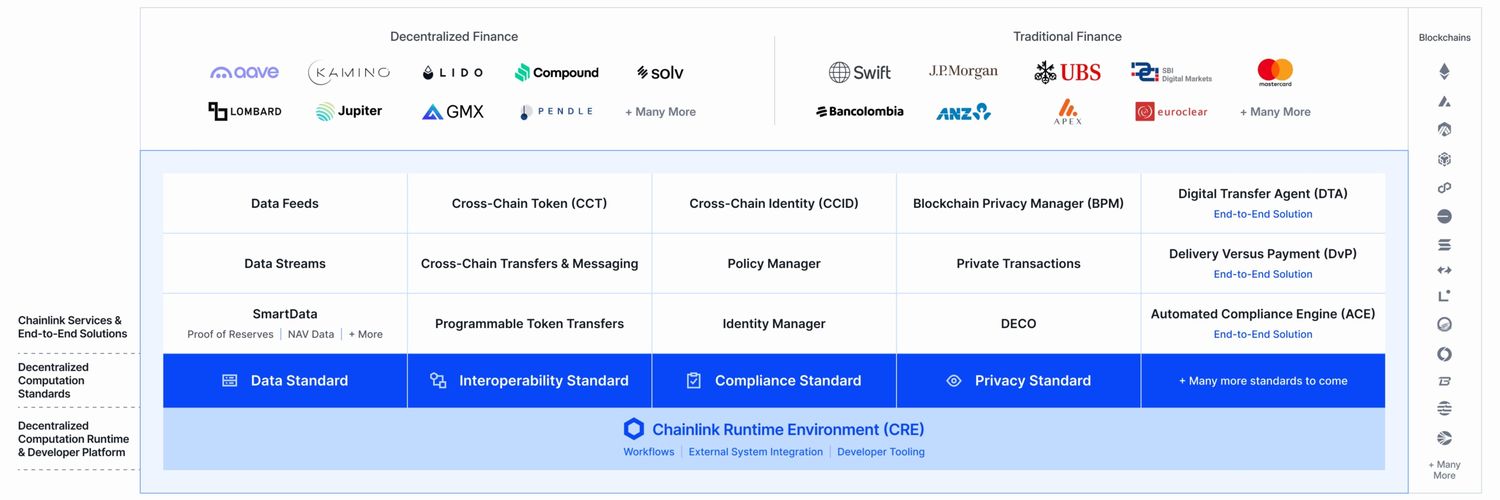
Chainlink is now a full platform for verifiable, institutional-grade tokenization workflows.
𝟭. 𝗧𝗼𝗸𝗲𝗻 𝘂𝘁𝗶𝗹𝗶𝘁𝘆: 𝗳𝗲𝗲𝘀 𝗶𝗻 𝗟𝗜𝗡𝗞
The Chainlink Runtime Environment (CRE) orchestrates workflows across chains, data, compliance, and privacy. Each workflow step pays a CRE orchestration fee in LINK, and each cross-chain action pays a CCIP fee in LINK. Chainlink data is paid for too.
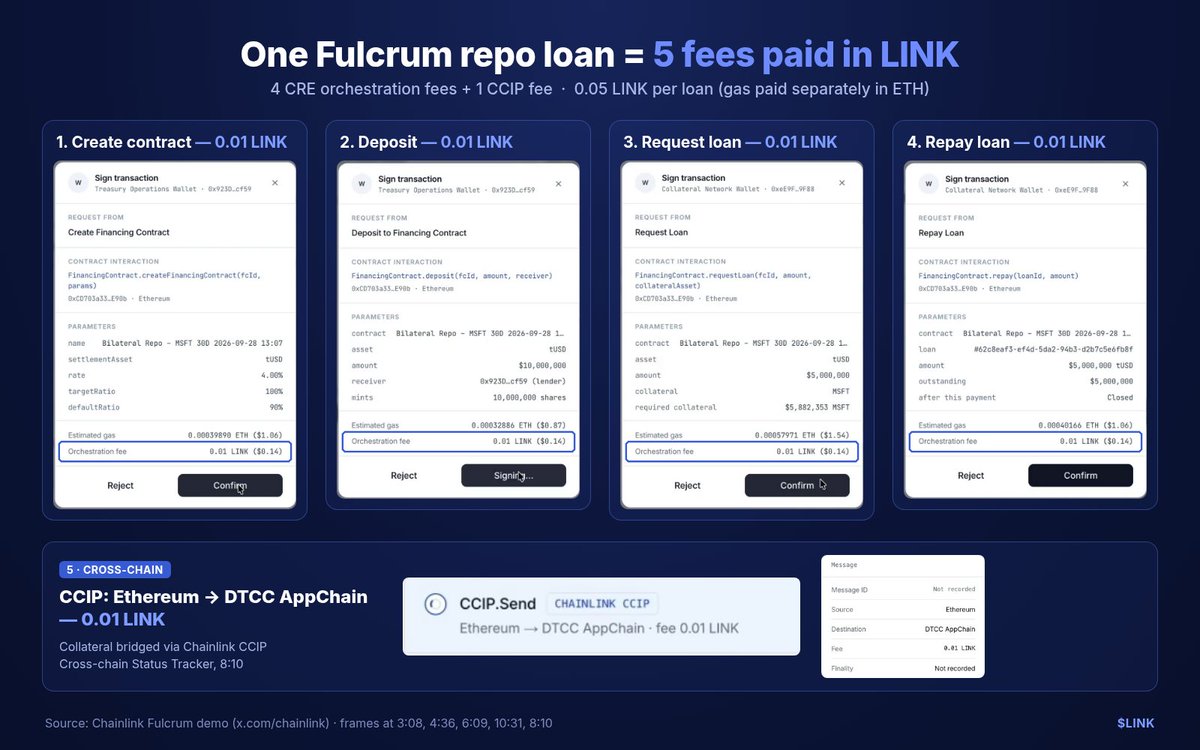
In Chainlink's Fulcrum demo of a tokenised repo loan with the DTCC, one loan carried 4 orchestration fees plus 1 CCIP fee, all paid in LINK. That's just one loan.
𝟮. 𝗥𝗲𝘃𝗲𝗻𝘂𝗲 𝘀𝗰𝗮𝗹𝗶𝗻𝗴: 𝗴𝗿𝗼𝘄𝘁𝗵 𝗱𝗿𝗶𝘃𝗲𝗿𝘀
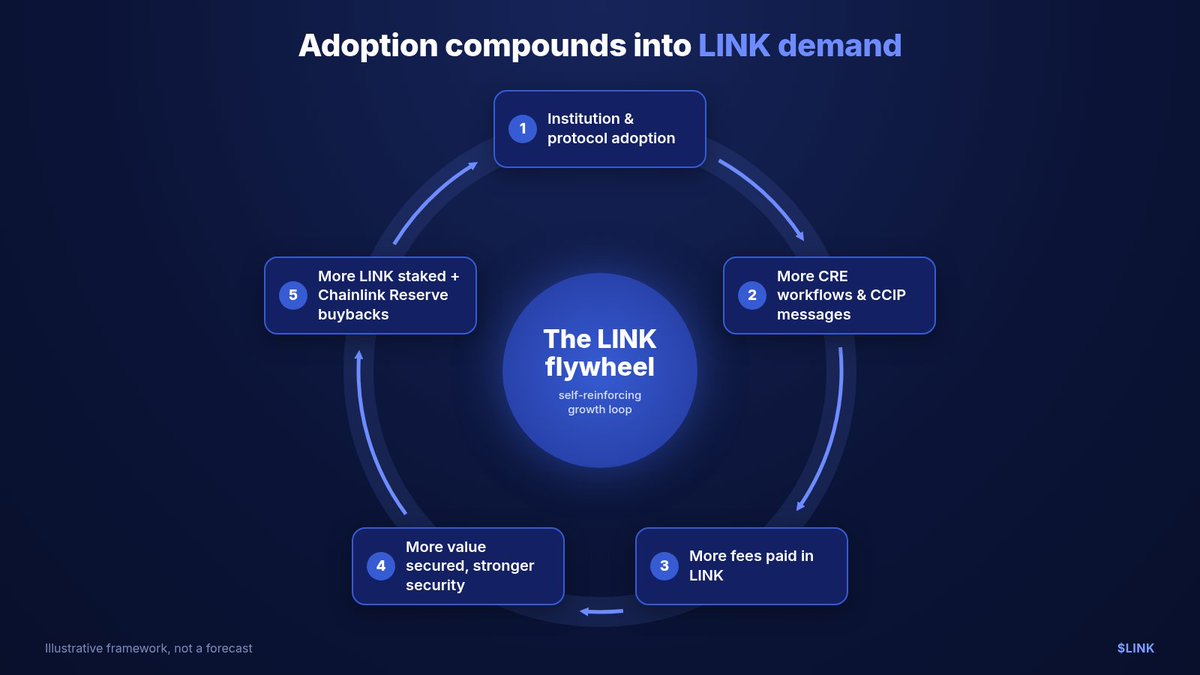
🔹 More adopters → more workflows → more fees.
On Fulcrum, DTCC's CTO Dan Doney says:
- "Effectively this is a model that ultimately takes what amounts to transactions in excess of 20 trillion a day and completely automates the process."
- "Thanks to the orchestration of CRE and CCIP this can connect any two chains together… any asset anywhere in any jurisdiction with any custodial system, any time of day, is now mobile in terms of collateral. This truly changes the game… There's roughly 80 trillion dollars worth of assets that could be used in collateral processes… This kind of system frees up 52 trillion dollars worth of assets."
We can see how this scales with DTCC, now apply it to every other institutional user of CRE.
🔹 More complex workflows → more fees.
CRE fees scale with compute, so Confidential Compute, more data and more compliance checks all mean more fees.
🔹 TradFi and DeFi converging → more fees.
TradFi brings trillions in assets and real volume to DeFi. CRE sits in the middle, processing it all.
TradFi won't rebuild its systems to use DeFi. It'll connect them through CRE, with each workflow paying LINK.
🔹 Agentic transactions → more fees.
AI agents transacting onchain, from paying for data to executing trades, all need orchestration and cross-chain execution (Chainlink for Agents).
🔹 Chainlink as the generalized guardrail for AI.
Chainlink verifies AI's inputs, verifies AI outputs through multi-AI consensus, and orchestrates agentic actions, all through consensus. It becomes the Truth Machine for not only finance, but also AI.
𝟯. 𝗦𝘁𝗮𝗸𝗶𝗻𝗴: 𝘀𝗲𝗰𝘂𝗿𝗶𝘁𝘆 𝘁𝗵𝗮𝘁 𝘀𝗰𝗮𝗹𝗲𝘀 𝘄𝗶𝘁𝗵 𝘃𝗮𝗹𝘂𝗲
As more value is secured, node operators should stake more LINK as collateral so the cryptoeconomic incentives stay aligned.
The more LINK an operator stakes, the more it stands to earn and the more it risks losing through slashing if it underperforms.
This creates a bigger supply sink for LINK over time as the total value secured inceases, especially if retails holders can stake on behalf of node operators too.
𝟰. 𝗕𝘂𝘆𝗯𝗮𝗰𝗸𝘀: 𝗶𝗻𝗱𝗲𝗳𝗶𝗻𝗶𝘁𝗲 𝗮𝗻𝗱 𝗴𝗿𝗼𝘄𝗶𝗻𝗴
The Chainlink Reserve converts revenue into LINK and buys it from the market. LINK is the only thing that accrues value from the success of the Chainlink protocol.
Rising adoption means more revenue, which makes the weekly buybacks indefinite and likely to grow in size.
𝟱. 𝗧𝗵𝗲 𝗱𝗶𝘀𝘁𝗶𝗻𝗰𝘁𝗶𝗼𝗻 𝗯𝗲𝘁𝘄𝗲𝗲𝗻 𝗖𝗵𝗮𝗶𝗻𝗹𝗶𝗻𝗸 𝗮𝗻𝗱 𝗶𝘁𝘀 𝗰𝗼𝗺𝗽𝗲𝘁𝗶𝘁𝗼𝗿𝘀
Most competitors are built around one or two verticals. Each one solves a single piece of the puzzle. Chainlink solves it all.
The real killer: consensus computing.
Every operation in CRE workflow goes through decentralised consensus. That's the oracle problem, but solved for everything that touches blockchains, not just data.
𝗪𝗵𝘆 𝘄𝗼𝘂𝗹𝗱 𝘄𝗲 𝘂𝗽𝗴𝗿𝗮𝗱𝗲 𝘁𝗵𝗲 𝗳𝗶𝗻𝗮𝗻𝗰𝗶𝗮𝗹 𝘀𝘆𝘀𝘁𝗲𝗺 𝘁𝗼 𝗯𝗹𝗼𝗰𝗸𝗰𝗵𝗮𝗶𝗻 𝗿𝗮𝗶𝗹𝘀 𝗶𝗳 𝗲𝘃𝗲𝗿𝘆𝘁𝗵𝗶𝗻𝗴 𝘄𝗲 𝗰𝗼𝗻𝗻𝗲𝗰𝘁 𝘁𝗼 𝘁𝗵𝗲 𝗯𝗹𝗼𝗰𝗸𝗰𝗵𝗮𝗶𝗻𝘀 𝗱𝗼𝗻'𝘁 𝗵𝗮𝘃𝗲 𝘁𝗵𝗲 𝘀𝗮𝗺𝗲 𝘀𝗲𝗰𝘂𝗿𝗶𝘁𝘆 𝗽𝗿𝗼𝗽𝗲𝗿𝘁𝗶𝗲𝘀 𝗮𝘀 𝘁𝗵𝗼𝘀𝗲 𝗯𝗹𝗼𝗰𝗸𝗰𝗵𝗮𝗶𝗻𝘀?
$LINK
Financial institutions borrow against securities to fund their operations.
Chainlink Fulcrum brings that capability to tokenized assets, enabling institutions to access financing and manage collateral 24/7 across blockchains.
Chainlink Labs’ Ryan Lovell shows it end to end ↓
𝗧𝗵𝗶𝘀 𝗶𝘀 𝘄𝗵𝗮𝘁 𝘁𝘂𝗿𝗻𝗶𝗻𝗴 𝗖𝗵𝗮𝗶𝗻𝗹𝗶𝗻𝗸 𝗖𝗥𝗘 𝗶𝗻𝘁𝗼 𝗮 𝗿𝗲𝘃𝗲𝗻𝘂𝗲 𝗲𝗻𝗴𝗶𝗻𝗲 𝗹𝗼𝗼𝗸𝘀 𝗹𝗶𝗸𝗲.
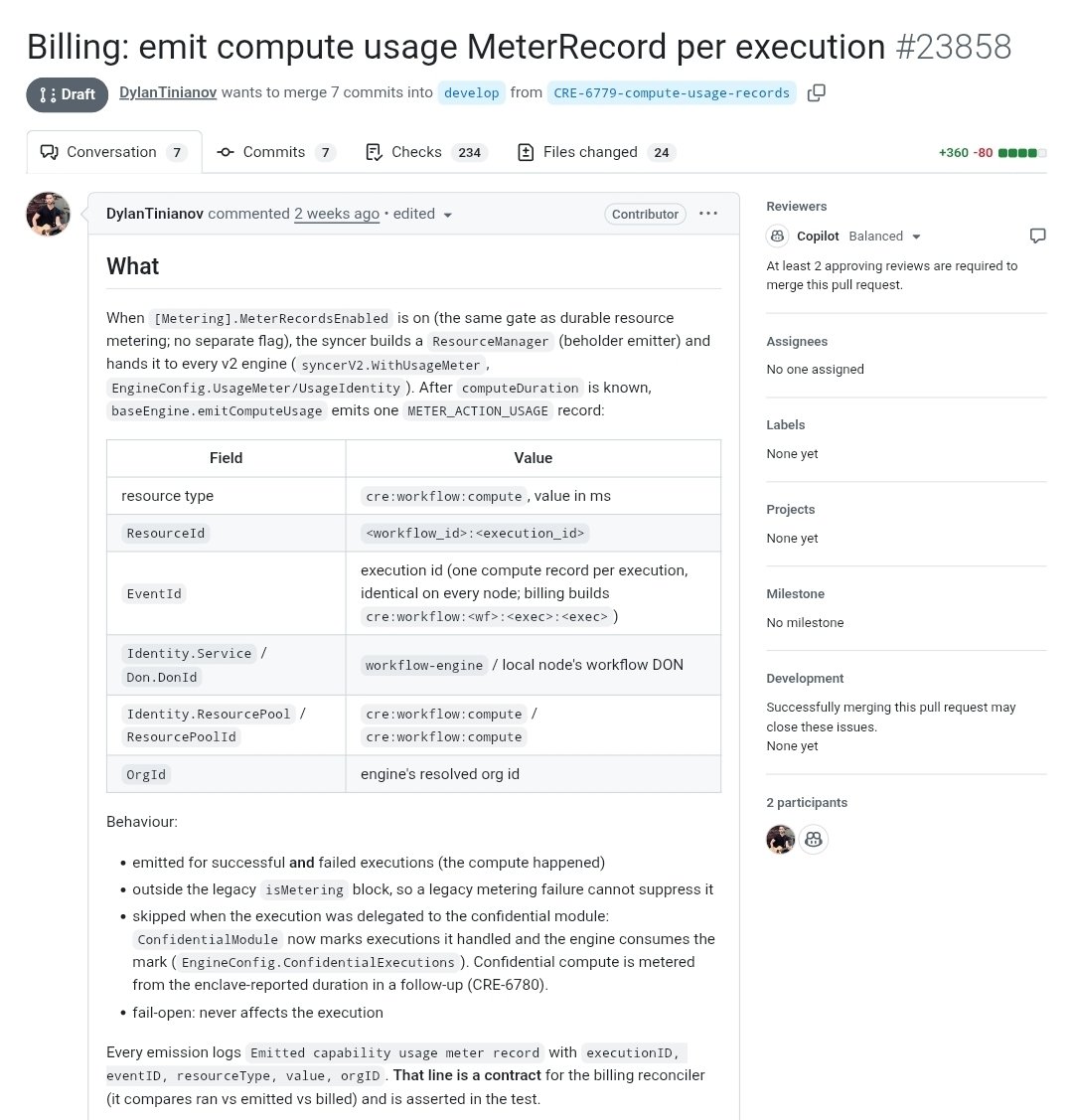
Chainlink's CRE billing code has taken a big step toward production.
PR #23858 meters every CRE workflow run by compute time, in milliseconds. It's moved out of draft and is now marked "Verified on Staging."
Staging is the final dress rehearsal where the real thing gets tested before it ships. Nodes are already producing these usage receipts and Chainlink's billing pipeline is receiving them.
And alongside it, the team is building tools to audit the bill itself, deliberately feeding in bad usage data to prove the system catches it.
You don't build audit tooling for something you never plan to send to production.
The funniest part: every node records your usage independently and the bill is the median. Even your invoice is decentralized. Chainlink are even putting the bill through consensus. 😂
And as we saw from the Fulcrum x DTCC demo at Sibos, these CRE workflow fees (orchestration fees) are paid in LINK.
ethereum:0x514910771af9ca656af840dff83e8264ecf986ca
We can now correlate all this institutional adoption of Chainlink directly to $LINK token usage:
From the public GitHub PRs (first two screenshots attached):
🔹 "cre:workflow:compute (ms)": compute is its own billable resource.
🔹 "emitted for successful and failed executions": every run is billed.
🔹 "bills them from the enclave's own measurement": confidential workflows are billed too, by time inside the enclave (trusted execution environment for private/confidential computations).
From the DTCC Demo we can see that those CRE Orchestration fees are paid in LINK (screenshots 3 and 4 attached as examples).
So:
- Institutions adopt Chainlink through CRE.
- Each workflow, as seen in the DTCC AppChain demo, consists of multiple orchestration fees (+ CCIP fees), each paid in LINK.
- In the DTCC demo, there were 4 separate orchestration fees and 1 CCIP fee - that's 5 separate LINK fees in total.
- If there were any margin calls or collateral swaps, more thorough compliance checks, or any Confidential Compute required in that demo, that would likely require further Orchestration/CCIP fees.
- The Chainlink Github shows that CRE billing for each execution is proportional to the compute time in milliseconds required. Therefore:
- The more separate workflow steps where the user signs, the more orchestration fees incurred.
- The more computations in a workflow, the more orchestration fees incurred.
- The more complex those computations, the more orchestration incurred.
- Data Feeds/Streams also required in DTCC Demo for continuous collateral pricing, which is another Chainlink service used (usually subscription-based, per-use based if AI Agents using CRE.
In summary:
Institutional adoption up > LINK fees up
$LINK token absolutely needed
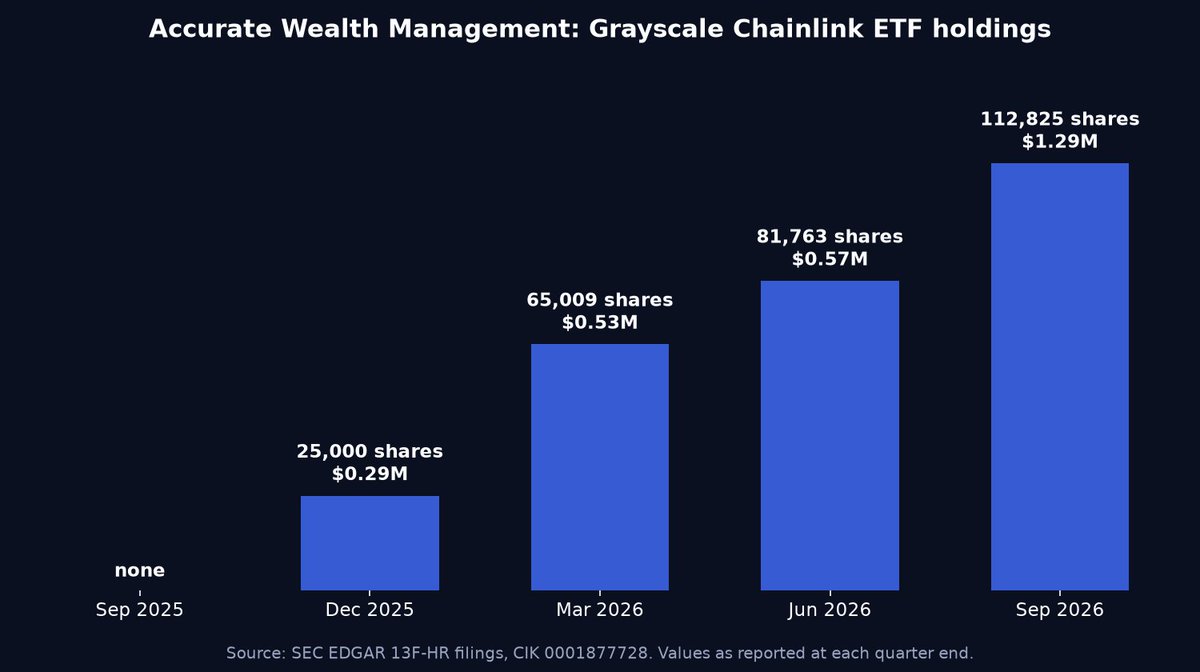
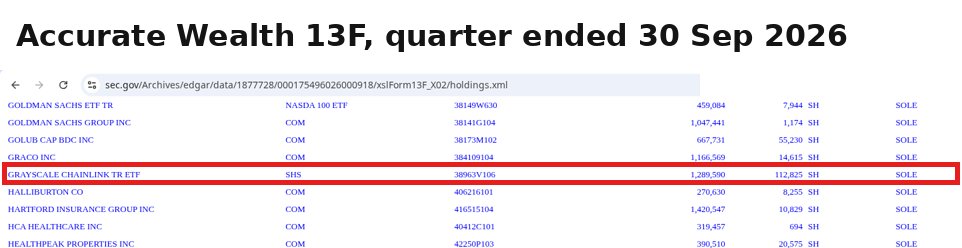
A US wealth manager with $1.16B in holdings first bought the Grayscale Chainlink ETF last December.
They've added every single quarter since:
Dec 2025: 25,000 shares
Mar 2026: 65,009
Jun 2026: 81,763
Sep 2026: 112,825 ($1.29M)
Their Chainlink position is now worth almost 3x their iShares Bitcoin ETF, and is their second largest crypto holding behind the VanEck Bitcoin ETF at $1.56M.
This is how institutional adoption actually looks - quiet, steady accumulation through regulated products.
Source: Accurate Wealth Management 13F filings:
https://t.co/ChptvXV4ob
ethereum:0x514910771af9ca656af840dff83e8264ecf986ca
Absolutely correct and based post from Kamino.
If your interop protocol has no security guarantees (having a standardized security floor) like LayerZero, then the assets you move around have to be discounted via a risk premium when used as collateral.
"A modular model, where each issuer configures its own verifier set per lane and can change it at any time, is close to impossible to underwrite at scale. Without an enforced minimum security floor, the conservative assumption is that most issuers default to settings that remain highly centralized, because growth and risk management pull in opposite directions. Continuous oversight is not feasible when security depends on a bespoke setup the issuer controls and can alter without notice, and each token becomes its own audit, repeated every time settings change or a chain is added."
Bingo.
Either you use Chainlink CCIP to unlock higher borrowing limits & LTV ratios, or your tokens get pegged. Literally.
$LINK $KMNO $ZRO
P.S.
Attached my previous posts and other risk curators' announcements on the same topic below.
🚨 CHAINLINK x DTCC FEES IN ACTION 🚨
VIDEO BELOW 👇
Fee 1️⃣ Lender creates the financing contract
Wallet signs → Orchestration fee: 𝟎.𝟎𝟏 𝐋𝐈𝐍𝐊
Fee 2️⃣ Borrower requests a $5M loan
Wallet signs → Orchestration fee: 𝟎.𝟎𝟏 𝐋𝐈𝐍𝐊
Fee 3️⃣ Borrower posts 11,396 MSFT as collateral
Bridged from Ethereum to the DTCC AppChain via CCIP → Bridge fee: 𝟎.𝟎𝟏 𝐋𝐈𝐍𝐊
Fees 4⃣ + 5⃣ - not shown in this clip (only shown in the full demo):
• the lender depositing cash into the financing contract → Orchestration fee: 𝟎.𝟎𝟏 𝐋𝐈𝐍𝐊
• the borrower repaying the loan
→ Orchestration fee: 𝟎.𝟎𝟏 𝐋𝐈𝐍𝐊
So one loan means at least 4 orchestration fees + CCIP fees, all paid in LINK, 𝒃𝒆𝒇𝒐𝒓𝒆 𝒚𝒐𝒖 𝒆𝒗𝒆𝒏 𝒂𝒅𝒅 𝒂𝒏𝒚 𝒎𝒂𝒓𝒈𝒊𝒏 𝒄𝒂𝒍𝒍𝒔 𝒐𝒓 𝒄𝒐𝒍𝒍𝒂𝒕𝒆𝒓𝒂𝒍 𝒔𝒘𝒂𝒑𝒔.
Every workflow = multiple fee events, paid in LINK.
DTCC CTO Dan Doney quotes:
"I want to emphasize a point here… 𝐭𝐡𝐞 𝐭𝐫𝐚𝐧𝐬𝐚𝐜𝐭𝐢𝐨𝐧 𝐭𝐡𝐚𝐭 𝐰𝐞'𝐫𝐞 𝐝𝐨𝐢𝐧𝐠 𝐡𝐞𝐫𝐞 𝐢𝐬 𝐭𝐡𝐞 𝐜𝐞𝐧𝐭𝐫𝐚𝐥 𝐭𝐫𝐚𝐧𝐬𝐚𝐜𝐭𝐢𝐨𝐧 𝐢𝐧 𝐢𝐧𝐬𝐭𝐢𝐭𝐮𝐭𝐢𝐨𝐧𝐚𝐥 𝐟𝐢𝐧𝐚𝐧𝐜𝐞. Basically, parties are trading liquidity for yield. In this mechanism, the same mechanism we're showing here works for repo, works for securities lending and well beyond. 𝐄𝐟𝐟𝐞𝐜𝐭𝐢𝐯𝐞𝐥𝐲 𝐭𝐡𝐢𝐬 𝐢𝐬 𝐚 𝐦𝐨𝐝𝐞𝐥 𝐭𝐡𝐚𝐭 𝐮𝐥𝐭𝐢𝐦𝐚𝐭𝐞𝐥𝐲 𝐭𝐚𝐤𝐞𝐬 𝐰𝐡𝐚𝐭 𝐚𝐦𝐨𝐮𝐧𝐭𝐬 𝐭𝐨 𝐭𝐫𝐚𝐧𝐬𝐚𝐜𝐭𝐢𝐨𝐧𝐬 𝐢𝐧 𝐞𝐱𝐜𝐞𝐬𝐬 𝐨𝐟 𝟐𝟎 𝐭𝐫𝐢𝐥𝐥𝐢𝐨𝐧 𝐚 𝐝𝐚𝐲 𝐚𝐧𝐝 𝐜𝐨𝐦𝐩𝐥𝐞𝐭𝐞𝐥𝐲 𝐚𝐮𝐭𝐨𝐦𝐚𝐭𝐞𝐬 𝐭𝐡𝐞 𝐩𝐫𝐨𝐜𝐞𝐬𝐬".
"𝐓𝐡𝐚𝐧𝐤𝐬 𝐭𝐨 𝐭𝐡𝐞 𝐨𝐫𝐜𝐡𝐞𝐬𝐭𝐫𝐚𝐭𝐢𝐨𝐧 𝐨𝐟 𝐂𝐑𝐄 𝐚𝐧𝐝 𝐂𝐂𝐈𝐏 this can connect any two chains together… any asset anywhere in any jurisdiction with any custodial system, any time of day, is now mobile in terms of collateral."
"𝐓𝐡𝐢𝐬 𝐭𝐫𝐮𝐥𝐲 𝐜𝐡𝐚𝐧𝐠𝐞𝐬 𝐭𝐡𝐞 𝐠𝐚𝐦𝐞… 𝐓𝐡𝐞𝐫𝐞'𝐬 𝐫𝐨𝐮𝐠𝐡𝐥𝐲 𝟖𝟎 𝐭𝐫𝐢𝐥𝐥𝐢𝐨𝐧 𝐝𝐨𝐥𝐥𝐚𝐫𝐬 𝐰𝐨𝐫𝐭𝐡 𝐨𝐟 𝐚𝐬𝐬𝐞𝐭𝐬 𝐭𝐡𝐚𝐭 𝐜𝐨𝐮𝐥𝐝 𝐛𝐞 𝐮𝐬𝐞𝐝 𝐢𝐧 𝐜𝐨𝐥𝐥𝐚𝐭𝐞𝐫𝐚𝐥 𝐩𝐫𝐨𝐜𝐞𝐬𝐬𝐞𝐬… 𝐓𝐡𝐢𝐬 𝐤𝐢𝐧𝐝 𝐨𝐟 𝐬𝐲𝐬𝐭𝐞𝐦 𝐟𝐫𝐞𝐞𝐬 𝐮𝐩 𝟓𝟐 𝐭𝐫𝐢𝐥𝐥𝐢𝐨𝐧 𝐝𝐨𝐥𝐥𝐚𝐫𝐬 𝐰𝐨𝐫𝐭𝐡 𝐨𝐟 𝐚𝐬𝐬𝐞𝐭𝐬."
We also know that embedded privacy (confidential computations) result in more orchestration fees too, as does any additional data or more thorough compliance checks.
The thesis for Chainlink is simple:
The world's leading institutions, including The DTCC and Swift, are integrating Chainlink CRE to orchestrate entire institutional-grade onchain transactions, and the fees for every operation are paid in $LINK
@PaperlessChains Haha true, looks like the VRF element is maybe what makes it unique and ties into the fact that it's called "Flip Bet". Probably works in a different way to others with randomness baked into the bet somehow
Looks like a new sports-betting prediction market is building on Chainlink 👀
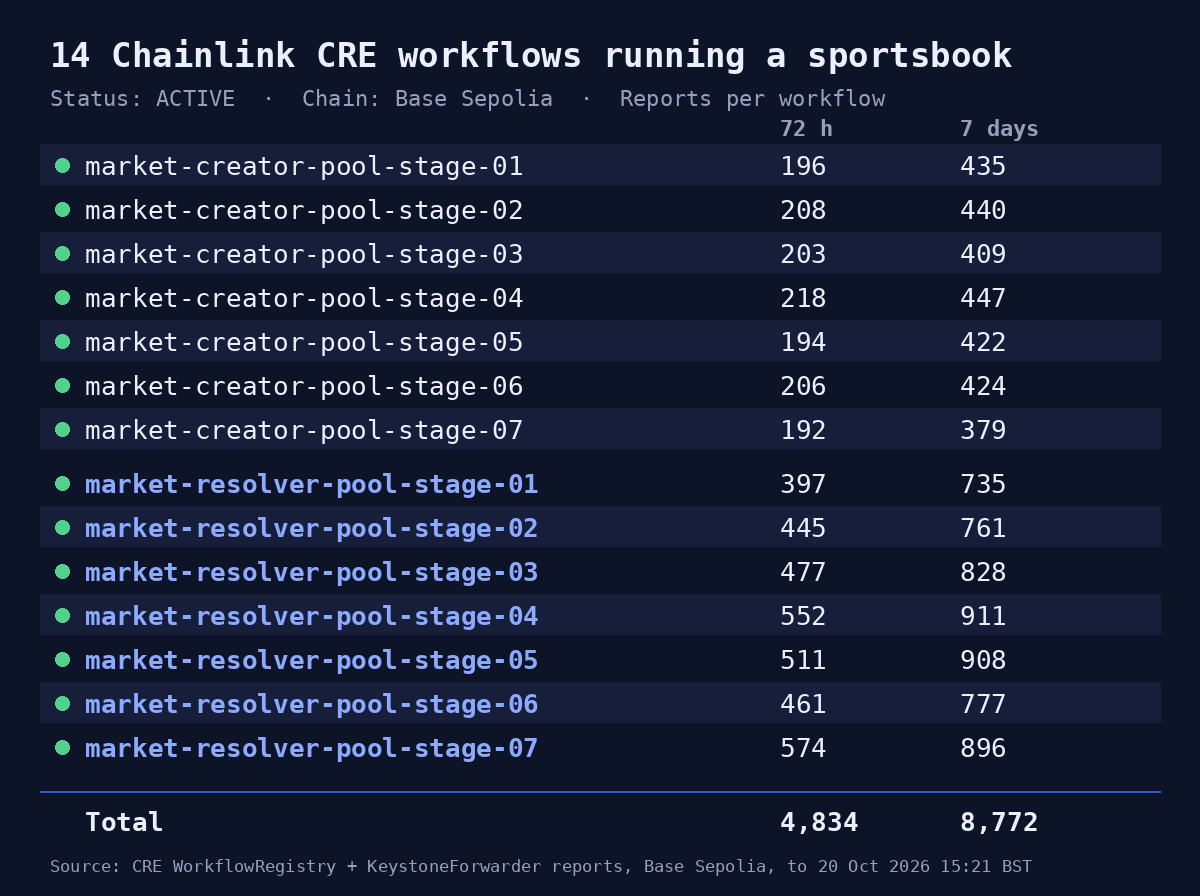
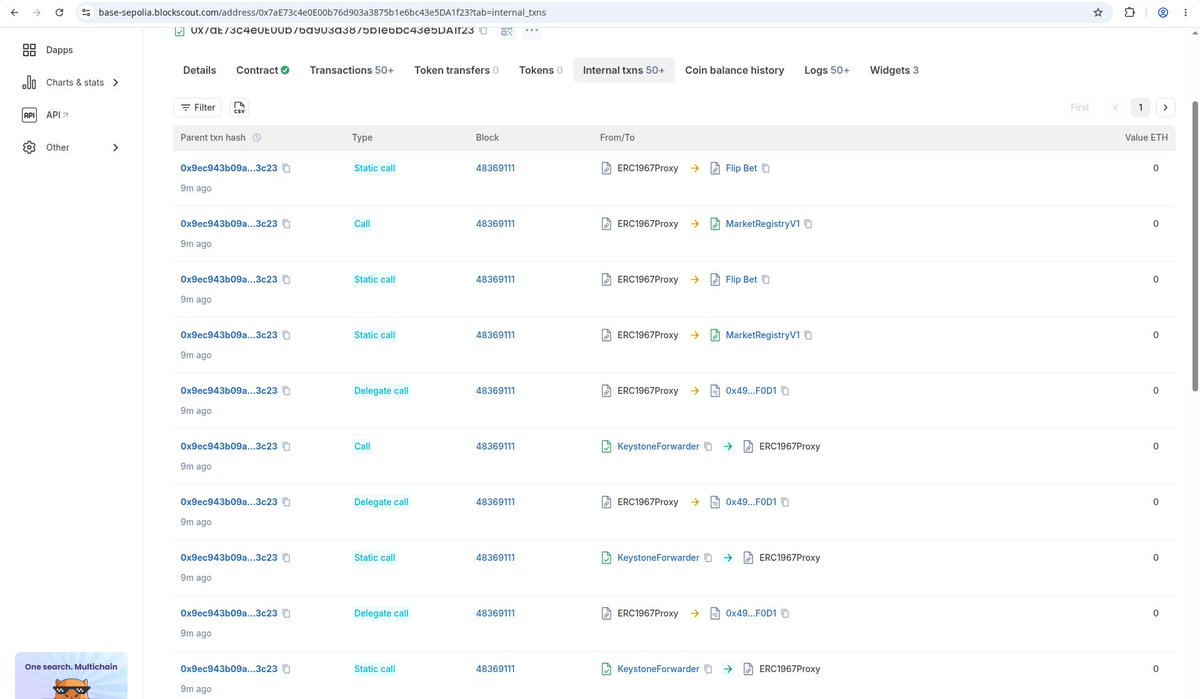
On Base Sepolia, 14 Chainlink CRE workflows are running (image 1).
🏟️ 7 "creator" workflows put real fixtures on-chain, such as Stuttgart v Atlético Madrid tonight, plus J.League, Bundesliga, ATP tennis and MLB playoffs.
✅ 7 "resolver" workflows settle them after the final whistle. Each result needs two independent sports-data providers to agree before anything pays out.
🎲 Chainlink VRF provides the randomness in its betting logic.
The numbers:
• 4,834 CRE reports in the last 72 hours
• ~1,100 a day
• 8,772 in the past week, with 99.6% accepted
Prediction markets are one of crypto's fastest-growing sectors, and the builders are choosing Chainlink.
ethereum:0x514910771af9ca656af840dff83e8264ecf986ca
https://t.co/CaXuLqyO69
You are a lying tapeworm.
1. Chainlink CCIP + CRE are actually integrated to be used across numerous DTCC initiatives, including their cross-chain tokenization service, and more importantly, DTCC's own private permissioned chain, DTCC collateral appchain.
You can literally see the workflow demos for collateral management being co-presented with DTCC from two weeks ago at Swift's SIBOS event.
2. What you are quote tweeting is simply a paraphrased rehash of LZ's old chain announcement, where the *ONLY* thing DTCC announced was that they would *INVESTIGATE* ways to leverage the technical designs of Zero's chain to IMPROVE the scalability of their own chain and cross-chain tokenization service.
It's not even a commital to use anything from LZ; simply see if there are design aspects of it worth incorporating.
DTCC already has their own chain; they don't need LZ's chain. At best, LZ chain might get added onto the list of chains that DTCC's tokenization service will eventually expand to, with Stellar, Canton, and Arc already announced.
Whereas, Chainlink is being used everywhere, including DTCC's own chain.
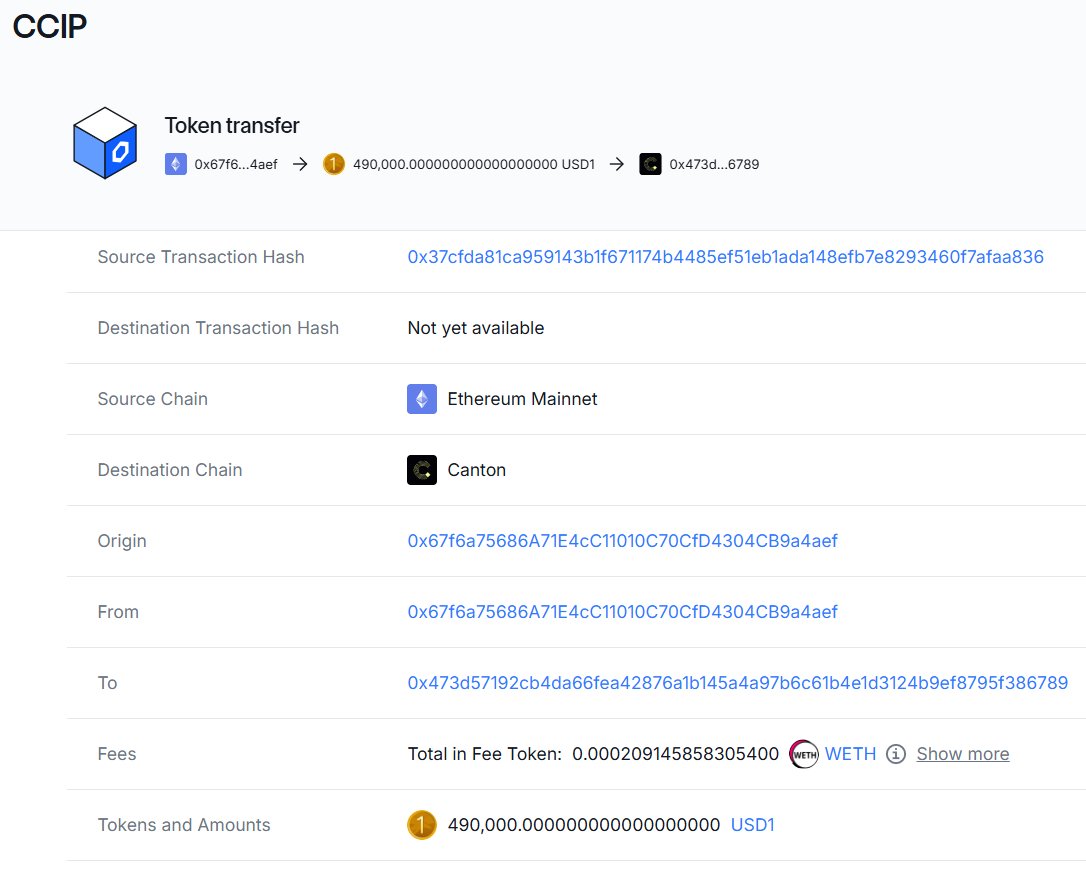
USD1 now going both ways from Ethereum ⇄ Canton on Chainlink CCIP.
Since Sunday: ~4.48M USD1 has been transferred to Canton in 11 transfers, same wallet.
This morning: a USD1 test came back out, Canton → Ethereum.
The plumbing is being switched on.
https://t.co/JrvJ9Y2nEK
ethereum:0x514910771af9ca656af840dff83e8264ecf986ca canton-network:native ethereum:0x8d0d000ee44948fc98c9b98a4fa4921476f08b0d
$3.5M of USD1 has now crossed Ethereum → Canton on Chainlink CCIP since Sunday evening.
Same wallet, nine transfers, most of them ~500k.
DTCC's tokenised securities go live on Canton at the end of October. Tokenized assets need a cash leg, and stablecoins are already arriving.
Looks like BitGo, USD1's issuer, making the transactions too.
ethereum:0x514910771af9ca656af840dff83e8264ecf986ca canton-network:native ethereum:0x8d0d000ee44948fc98c9b98a4fa4921476f08b0d
Institutions care about security, composability, abstraction, and orchestration of end to end workflows in a secure environment, as well as reliability/uptime.
Look at all the other chains out there, including private ones. Ethereum is great but it isn't enough alone.
Look at what Chainlink is doing with the DTCC Collateral AppChain. That's a specific institutional use case that uses Chainlink as the central orchestrator, plus its cross-chain capabilities, plus it's data capabilities.
This is clearly more valuable than any one chain.
See attached demo
https://t.co/FOxJ1YsvYn
Financial institutions borrow against securities to fund their operations.
Chainlink Fulcrum brings that capability to tokenized assets, enabling institutions to access financing and manage collateral 24/7 across blockchains.
Chainlink Labs’ Ryan Lovell shows it end to end ↓
@JourneyMacro You're talking about CCIP when I'm talking about CRE, which sits above and orchestrates across all chains (+ all existing systems, data, compliance, privacy, etc.), not just ethereum. Settlement on one chain is a small part of the whole problem.
Looks like one very large whale who has tons of 15k wallets and has either already unstaked or is in process of unbonding all wallets. 78 more of their wallets of 15k LINK each are currently unbonding and will be unstaked over the next few weeks
They send some to stakedotlink and some to binance after that.
So there should be space opening up as a regular occurrence over the next few weeks, so here's when to look out for more space potentially opening in the staking pool:
There's a 7 day period to unstake after unbonding:
15 wallets: open to unstake now, until 23 Oct. Today's four wallet exits came from these 15.
20 wallets: 23–30 Oct.
20 wallets: 1–8 Nov.
19 wallets: 7–14 Nov.
Not sure about the other 4.
So if you're looking to stake more link, the next few weeks is the time to be looking out for space opening.
$3.5M of USD1 has now crossed Ethereum → Canton on Chainlink CCIP since Sunday evening.
Same wallet, nine transfers, most of them ~500k.
DTCC's tokenised securities go live on Canton at the end of October. Tokenized assets need a cash leg, and stablecoins are already arriving.
Looks like BitGo, USD1's issuer, making the transactions too.
ethereum:0x514910771af9ca656af840dff83e8264ecf986ca canton-network:native ethereum:0x8d0d000ee44948fc98c9b98a4fa4921476f08b0d
@iexpectit@TheLinkPanda No, it can't, LINK needed for the chainlink runtime environment to work, which is what these institutions are integrating
CRE fees paid in LINK for all operations