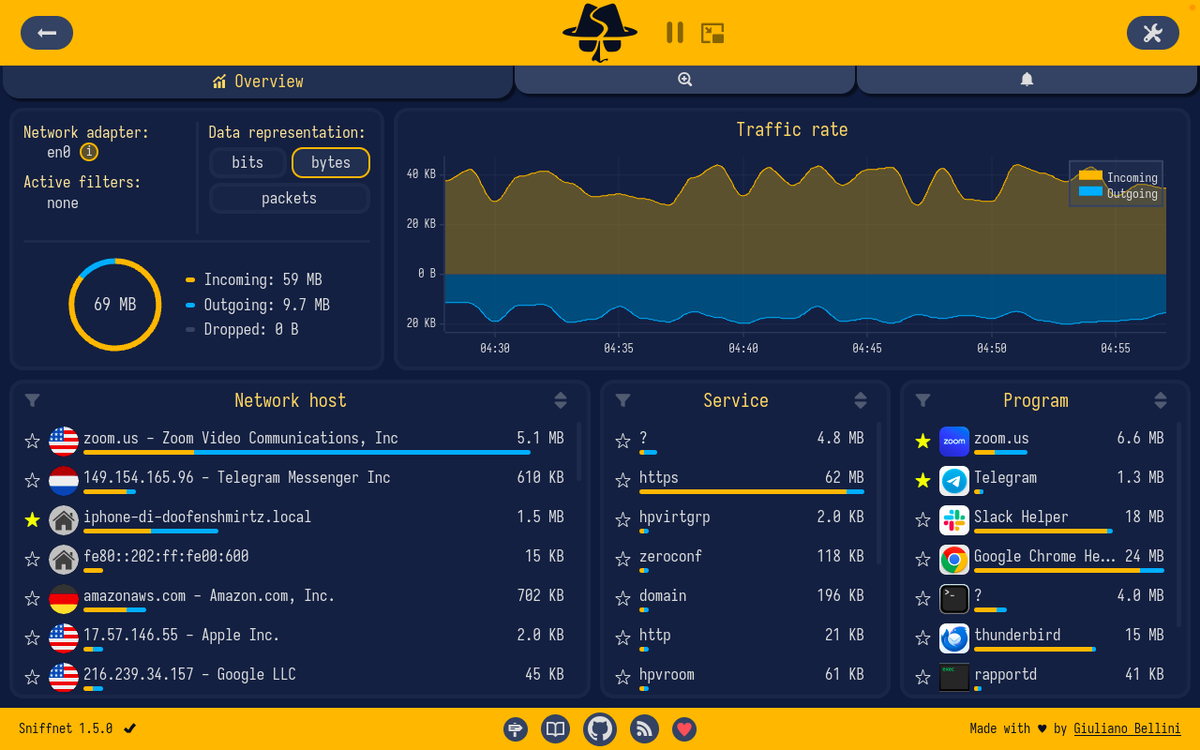
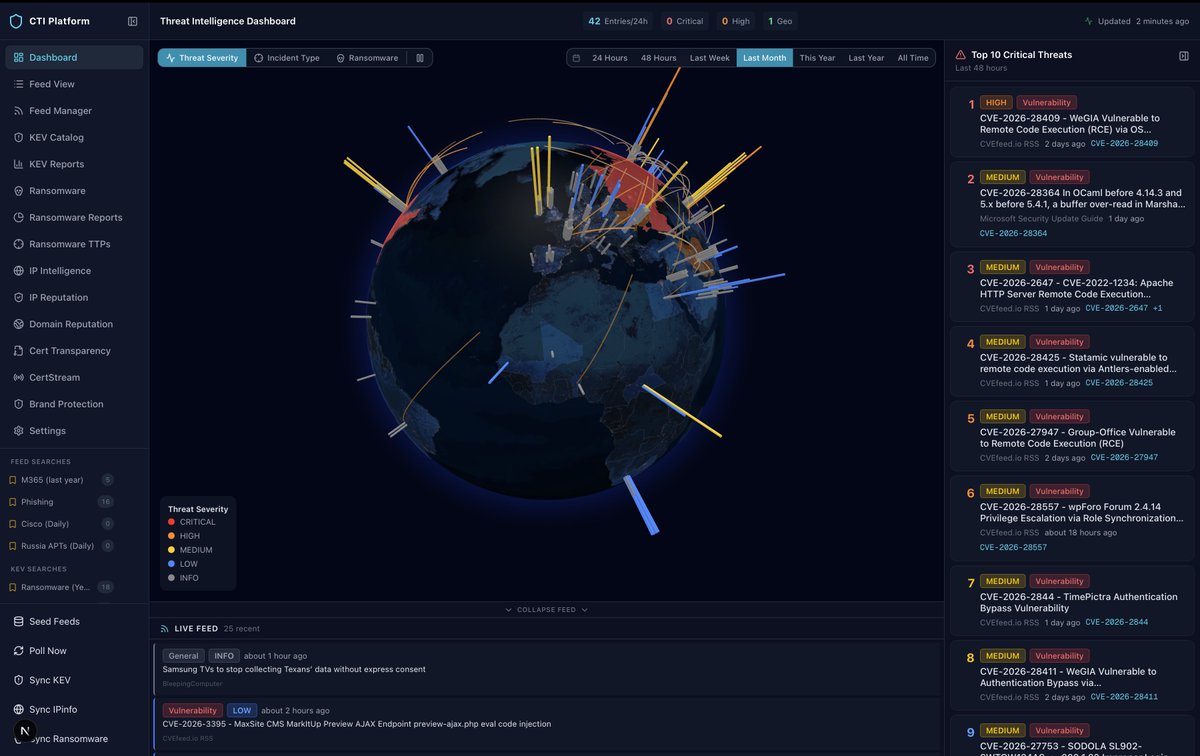
Tool to monitor and analyze your internet traffic in real time
• Live traffic stats, charts & connection insights
• Detect services, protocols, trojans (6000+)
• View IP geolocation, ASN & domains
• Export traffic as PCAP for analysis
• Alerts + blacklist suspicious connections
https://t.co/FsJUsiwC1U
#NetworkSecurity #CyberSecurity #BlueTeam
Bypassing #EU#AgeVerification using their own infrastructure.
I've ported the Android app logic to a Chrome extension - stripping out the pesky step of handing over biometric data which they can leak... and pass verification instantly.
Step 1: Install the extension
Step 2: Register an identity (just once)
Step 3: Continue using the web as normal
The extension detects the QR code, generates a cryptographically identical payload and tells the verifier I'm over 18, which it "fully trusts".
This isn't a bug... it's a fundamental design flaw they can't solve without irrevocably tying a key to you personally; which then allows tracking/monitoring.
Of course, I could skip the enrolment process entirely and hard-code the credentials into the extension... and the verifier would never know.
@evilcos@coinbase@im23pds So basically Coinbase has an official page live threat actors can use to target Coinbase users via seed phrase social engineering if they wanted?
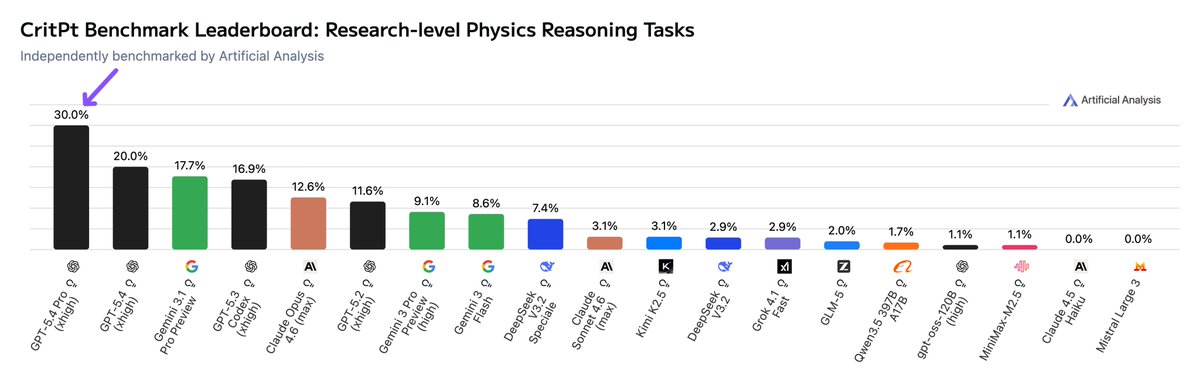
AI is progressing rapidly: GPT-5.4 Pro (xhigh) has achieved a massive 10 point gain in CritPt, a benchmark where the highest score was only 9% in Nov ‘25
This is the largest incremental gain we have seen from a single release. CritPt is a benchmark with a private dataset that tests performance on research-level physics reasoning tasks.
When CritPt was released in November 2025 the highest score was 9% (Gemini 3 Pro Preview). Only ~4 months later the highest score has more than tripled to 30%.
🚨 Someone just solved the biggest bottleneck in AI agents. And it's a 12MB binary.
It's called Pinchtab. It gives any AI agent full browser control through a plain HTTP API.
Not locked to a framework. Not tied to an SDK. Any agent, any language, even curl.
No config. No setup. No dependencies. Just a single Go binary.
Here's why every existing solution is broken:
→ OpenClaw's browser? Only works inside OpenClaw
→ Playwright MCP? Framework-locked
→ Browser Use? Coupled to its own stack
Pinchtab is a standalone HTTP server. Your agent sends HTTP requests. That's it.
Here's what this thing does:
→ Launches and manages its own Chrome instances
→ Exposes an accessibility-first DOM tree with stable element refs
→ Click, type, scroll, navigate. All via simple HTTP calls
→ Built-in stealth mode that bypasses bot detection on major sites
→ Persistent sessions. Log in once, stays logged in across restarts
→ Multi-instance orchestration with a real-time dashboard
→ Works headless or headed (human does 2FA, agent takes over)
Here's the wildest part:
A full page snapshot costs ~800 tokens with Pinchtab's /text endpoint.
The same page via screenshots? ~10,000 tokens.
That's 13x cheaper. On a 50-page monitoring task, you're paying $0.01 instead of $0.30.
It even has smart diff mode. Only returns what changed since the last snapshot. Your agent stops re-reading the entire page every single call.
1.6K GitHub stars. 478 commits. 15 releases. Actively maintained.
100% Open Source. MIT License.
BOOM!
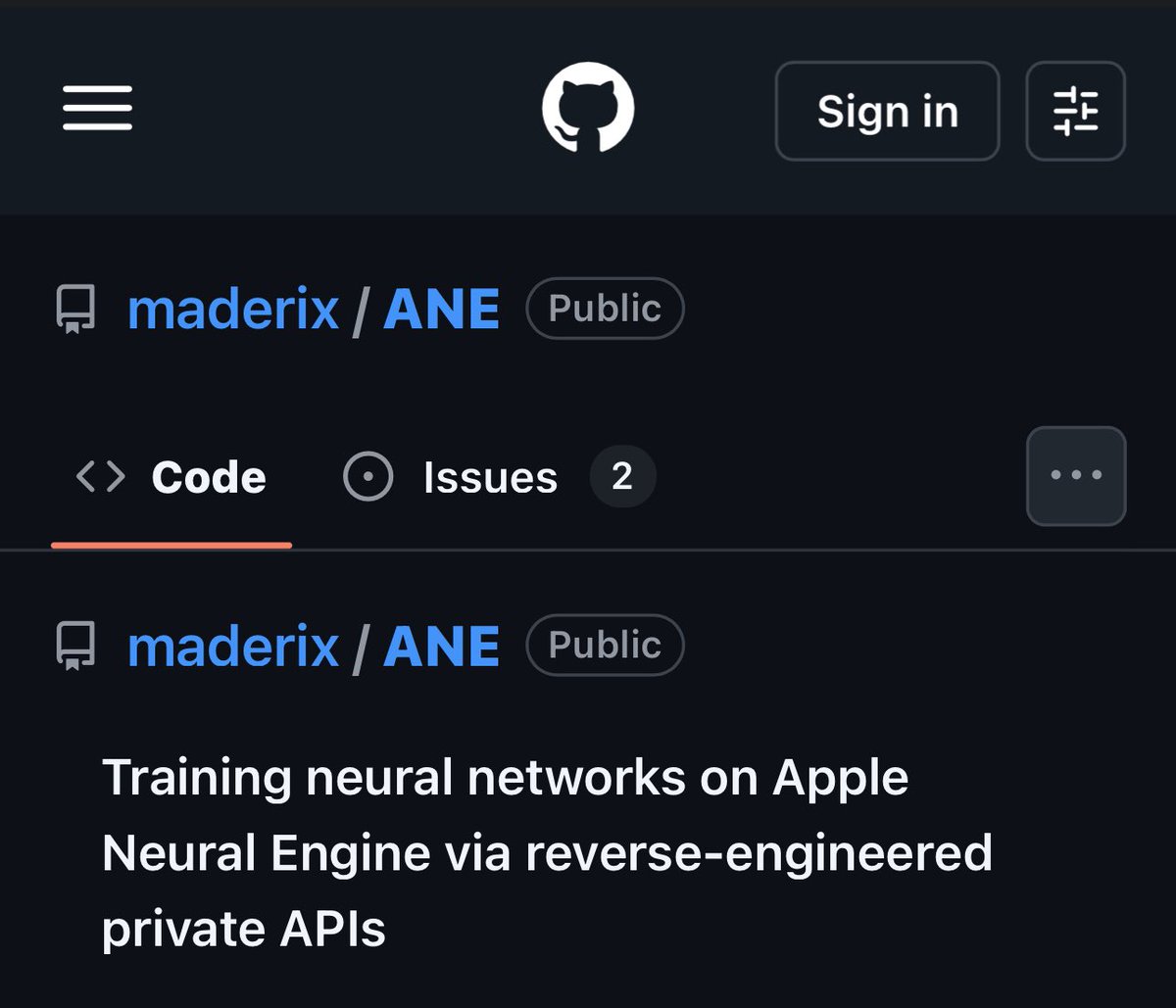
Apple’s Neural Engine Was Just Cracked Open, The Future of AI Training Just Change And Zero-Human Company Is Already Testing It!
In a jaw-dropping open-source breakthrough, a lone developer has done what Apple said was impossible: full neural network training– including backpropagation – directly on the Apple Neural Engine (ANE). No CoreML, no Metal, no GPU. Pure, blazing ANE silicon.
The project (https://t.co/jrk67hf9p1) delivers a single transformer layer (dim=768, seq=512) in just 9.3 ms per step at 1.78 TFLOPS sustained with only 11.2% ANE utilization on an M4 chip. That’s the same idle chip sitting in millions of Mac minis, MacBooks, and iMacs right now.
Translation? Your desktop just became a hyper-efficient AI supercomputer.
The numbers are insane: M4 ANE hits roughly 6.6 TFLOPS per watt – 80 times more efficient than an NVIDIA A100. Real-world throughput crushes Apple’s own “38 TOPS” marketing claims. And because it sips power like a phone, you can train 24/7 without melting your electricity bill or the planet.
At The Zero-Human Company, we’re not waiting. We are testing this right now on real ZHC workloads. This is the missing piece we’ve been chasing for our Zero Human Company vision: reviving archived data into fully autonomous AI systems with zero human overhead.
This is world-changing.
For the first time, anyone with a Mac can fine-tune, train, or iterate massive models locally, privately, and at a fraction of the cost of cloud GPUs.
No more renting $40,000 A100 clusters. No more waiting in queues. No more massive carbon footprints.
Training costs that used to run into the tens or hundreds of thousands of dollars? Plummeting toward pennies on the dollar – mostly just the electricity your Mac was already using while it sat idle.
The AI revolution just moved from billion-dollar data centers to your desk.
WE WILL HAVE A NEW ZERO-HUMAN COMPANY @ HOME wage for equipped Macs that will be up to 100x more income for the owner!
We’re only at the beginning (single-layer today, full models tomorrow), but the door is wide open. Ultra-cheap, on-device training is here.
The future isn’t coming. It’s already running on your Mac.
Welcome to the Zero-Human Company era.
CLAUDE CODE but for HACKING
its called shannon, you point it at website and it just... tries to break in... fully autonomous with no human needed
i pointed it at a test app and it stole the entire user database, created admin accounts, and bypassed login, all by itself, in 90 minutes
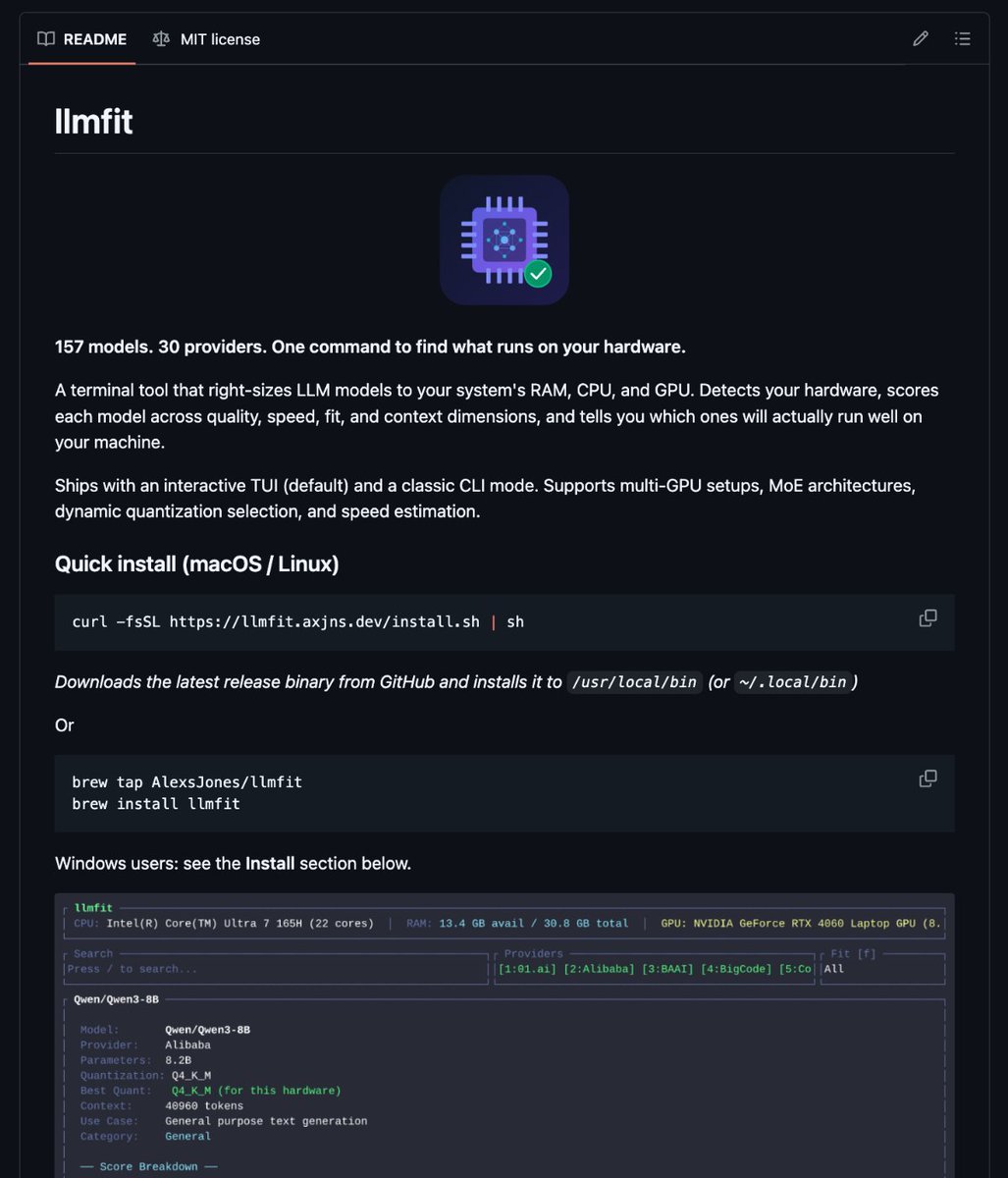
🚨BREAKING: Someone just solved the #1 problem with local AI.
It's called llmfit and it tells you exactly which LLMs will run on YOUR hardware before you waste hours downloading the wrong model.
No guessing. No trial and error. No "out of memory" crashes.
Here's how it works:
One command scans your full setup
→ Detects your RAM, CPU, GPU, and VRAM
→ Scores every model on quality, speed, fit, and context
→ Picks the best quantization automatically
→ Ranks what's perfect, good, or marginal for your machine
Here's the wildest part:
It handles MoE architectures properly.
Mixtral 8x7B has 46.7B total parameters but only activates 12.9B per token.
llmfit accounts for that. Most tools don't.
94 models. 30 providers. One command.
100% Opensource.
Link in the first comment.
@Complexneet@vxunderground same here but u need to use some vpn server outside eu or us like serbia or macedonia etc etc if i use eu server i still need to verify
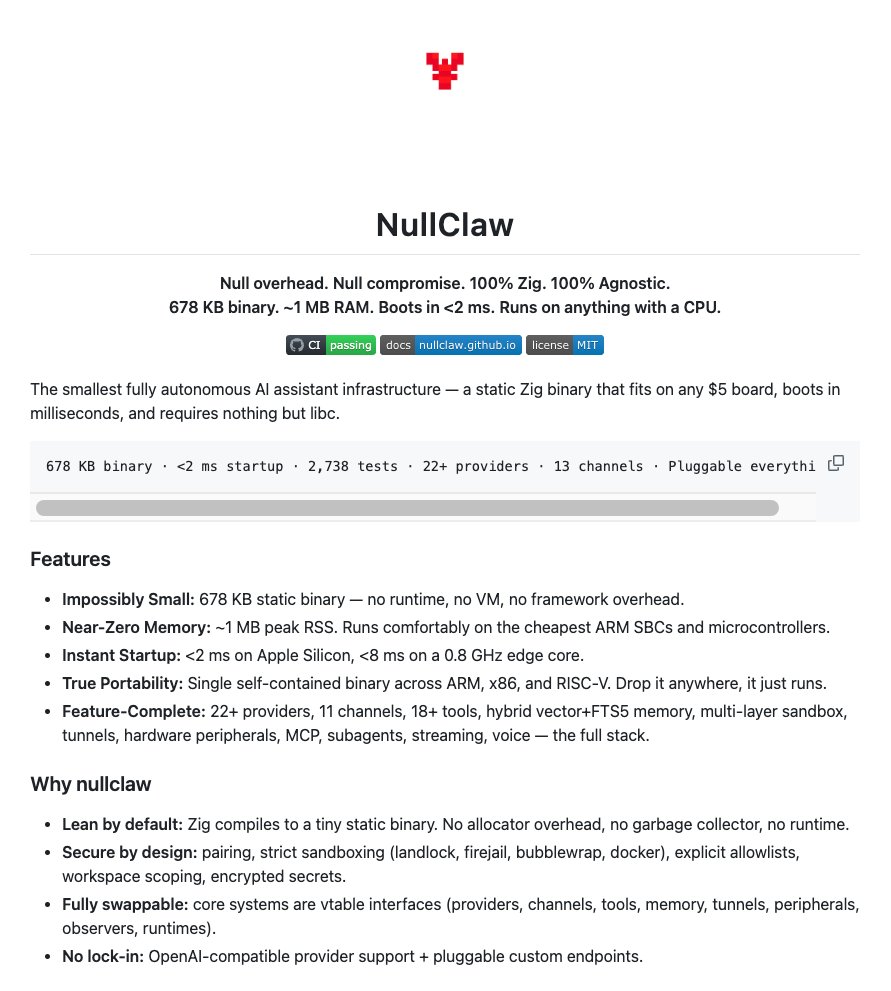
🚨 BREAKING: Someone just rebuilt the entire AI assistant stack in Zig.
It's called NullClaw. The binary is 678 KB. It uses ~1 MB of RAM. It boots in under 2 milliseconds.
No runtime. No VM. No framework. No garbage collector. Just raw Zig.
Here's why this is absurd:
→ OpenClaw needs a $599 Mac Mini and 1 GB+ RAM
→ NanoBot needs 100 MB+ RAM and Python
→ PicoClaw needs 10 MB RAM and Go
NullClaw runs on a $5 board with 1 MB of RAM.
Same functionality. 0.1% of the resources.
Here's what's packed into that 678 KB:
→ 22+ AI providers (OpenAI, Anthropic, Ollama, DeepSeek, Groq, etc.)
→ 13 chat channels (Telegram, Discord, Slack, WhatsApp, iMessage, IRC)
→ 18+ built-in tools
→ Hybrid vector + keyword memory search
→ Multi-layer sandboxing (Landlock, Firejail, Docker)
→ Hardware peripheral support (Arduino, Raspberry Pi, STM32)
→ MCP, subagents, streaming, voice, the full stack
Here's the wildest part:
Every subsystem is a vtable interface. Swap any provider, channel, tool, memory backend, or runtime with a config change. Zero code changes.
It even encrypts your API keys with ChaCha20-Poly1305 by default.
2,738 tests. ~45,000 lines of Zig. Zero dependencies beyond libc.
100% Open Source. MIT License.