1 peptide → 1 supplement:
• retatrutide → electrolytes. you're eating a third less salt and don't notice
• semaglutide → protein. the loss takes muscle unless you defend it
• tirzepatide → fiber. motility slows before you feel it
• BPC-157 → glycine. collagen is a third glycine, give it the bricks
• TB-500 → zinc. wound repair runs on it
• GHK-Cu → vitamin C. collagen synthesis won't run without it
• CJC-1295 → magnesium. GH follows deep sleep, so protect the sleep
the peptide is the signal. the supplement is the raw material.
Fauci FRAUDULENTLY claimed ivermectin didn’t work so the government could inject the entire population with emergency-use-authorized gene therapies.
106 studies involving 200,000+ patients show ivermectin:
REDUCED mortality by 47%
REDUCED hospitalization by 34%
REDUCED cases by 79%
INCREASED viral clearance by 44%
IMPROVED recovery by 39%
I revived my 14-year-old dog with peptides.
6 months ago, he was slowing down fast. He was limping, achy, getting up slowly, and couldn't jump on the couch.
We honestly didn't know if we had 6 months left with him.
Today, our boy is running, jumping on the patio, going on long walks again, and even his hearing is back.
I approached his protocol the same way I'd approach mine.
- We started with BPC-157 and TB-500. 1-2 mg a day, 5 days on, 2 days off, injected basically the same way you'd inject a human. Within a couple of weeks, we saw less limping, less stiffness, he was moving better, etc.
- Then we ran his labs the same way I run mine. Everything looked good except some minor kidney markets, and at his age kidney issues can spiral into problems dogs don't come back from. We addressed this with a bioregulator stack, again the same ones I use.
- Then we put him on TRT. We're all aware of what happens to men when testosterone tanks with age. Now consider that we neuter our dogs, cut off their testosterone production entirely, and never think about it again.
We put our boy on testosterone and the change was immediate. Within days of the first shot he became a different dog.
We started with one shot a week, but just like in humans, by day 5 or 6 the levels drop and you get peaks and troughs.
So we split it into two shots a week: Tuesday and Friday.
We started conservatively, around 20mg per shot, and titrated up from there based on how he responded and how his labs looked.
We landed at about 60mg total per week for a 70 pound dog, keeping a close eye on labs the whole way. That made a huge difference. Shot day is like a revival for him.
...
And it's not just us, in fact other families are running the same protocol and seeing similar results.
6 months ago we were counting the time we had left with him. My kids were horrified by the thought that he would no longer be there as they grew up with him as their full-time guardian.
Now I genuinely believe we have another 3 years.
If you have a dog, understand that he's aging the same way you are. He needs help, but he can't do the research... you can!
And after seeing what this protocol did for him, I knew other dog owners deserved access to it too, so check the tweet below.
My favorite peptide to stack to keep inflammation low🌋🌋🌋
-KPV🛡️
-BPC-157🩹
-Tirz or Reta🏆
-GHK-Cu🔵
Here is why these four work so well together🏴☠️
Each one hits inflammation from a different angle instead of all doing the same job🏴☠️
KPV is the direct switch it shuts down NFkB which is the master control that turns inflammation on in the first place🏴☠️
BPC-157 works on the damage itself it heals the tissue and gut lining that is driving the inflammation so you are calming the source not just the signal🏴☠️
Tirz or Reta handles it from the metabolic side since excess body fat is basically an inflammation factory and dropping that fat lowers the inflammatory load across your whole body🏴☠️
And GHK-Cu supports the repair and rebuild so your tissue comes back healthy which keeps inflammation from creeping back in🏴☠️
So you have got one turning off the switch one healing the damage one removing the fat that fuels it and one rebuilding what got hurt🏴☠️
Four different angles on the same problem and that is why they stack so clean🏴☠️
🧬🔬
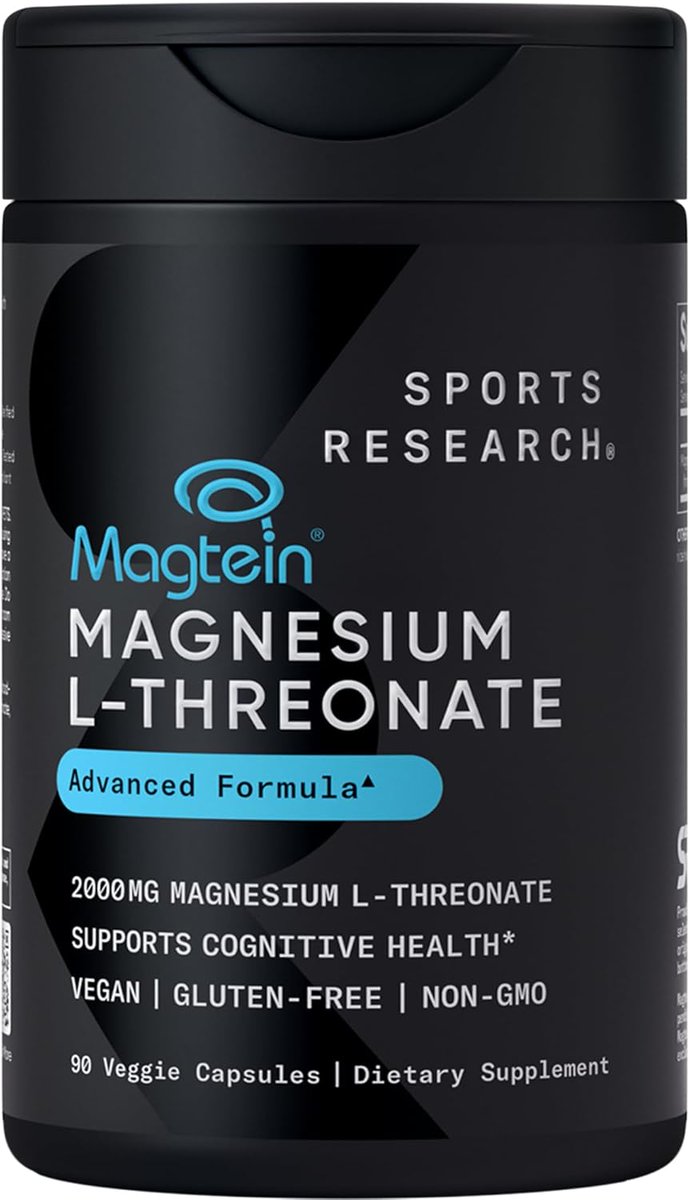
I'm a cardiologist. A new study found that one specific form of magnesium made adults' brains perform as if they were 7.5 years younger — in just 6 weeks.
The catch, and the caveats, matter. Here's the honest version.
The study, published in Frontiers in Nutrition, randomized 100 healthy adults with poor sleep to either 2g of magnesium L-threonate (Magtein) daily or placebo, double-blind, for 6 weeks.
The results in the magnesium group: overall cognition improved more than placebo. Working memory showed the biggest gains. Reaction time and hand-eye coordination improved 6.3%. And on the physiology side — the part that interests me as a cardiologist — resting heart rate during sleep dropped and heart rate variability rose, both signs of a healthier, calmer nervous system.
The "7.5 years younger" headline comes from translating the cognitive score difference into age-equivalent norms. It's a real, intuitive way to frame the gain — but let me be clear about what it is and isn't.
Why this particular form matters: most magnesium — oxide, citrate, even glycinate — doesn't cross into the brain efficiently. Magnesium L-threonate was engineered specifically to raise brain magnesium levels, using the threonate carrier to get across the blood-brain barrier. Magnesium is a cofactor in over 300 enzyme reactions, and in the brain it supports synaptic plasticity, neuronal energy, and the electrical stability of your neurons. Most people are quietly low in it.
Now the caveats, because this is where supplement hype lies to you:
The study was funded by the company that holds the Magtein patent, which is common in supplement research but raises real bias risk until independent labs replicate it. It was short — 6 weeks. The participants were young and healthy and already scoring at or above age norms. There was no benefit on fluid intelligence. And "7.5 years younger" is a modeled score translation, not a reversal of brain aging on any biological scan.
So: promising, not revolutionary.
Here's my practical read as a physician who already recommends magnesium daily.
If you're deficient — and most people are — fixing your magnesium status is one of the highest-value, lowest-risk things you can do for sleep, blood pressure, rhythm, and mood. I typically recommend magnesium glycinate at night for sleep and calm.
This study makes a reasonable case that if brain and cognition are your specific target, the L-threonate form may deliver something the others can't — better brain penetration. Some people stack a small dose of L-threonate for cognition with glycinate for sleep.
It's not magic. It's better delivery of an essential mineral you're probably not getting enough of.
Get your magnesium status right first. Then decide, with your doctor, whether the brain-targeted form earns a place in your stack.
The best nootropic is rarely exotic. Often it's just correcting the deficiency you already had.
I've tried dozens of peptides.
SS-31 is the most legit one I’ve come across.
It has 18 human clinical trials for heart failure, muscle disease, and rare genetic conditions behind it.
I’m testing it right now and the effects on recovery are wild...
Here’s the breakdown: (1/10)
BPC-157 reversed 3 MONTHS of alcohol damage. while the rat was still drinking.
let that sink in.
scientists gave rats alcohol daily for 3 months. every day.
controls:
→ liver — DYING
→ fatty liver — SPREADING
→ portal hypertension — BUILDING
→ gastric lesions — GROWING
→ function — COLLAPSING
BPC-157 tested three ways:
→ before drinking — PREVENTED
→ during drinking — PROTECTED
→ after damage — REVERSED
all three worked. for the entire 3 months. protection never faded.
(Prkacin et al., 2001)
read that middle one again. DURING. still drinking. still protected.
your liver has processed every drink you’ve ever had. every friday. every birthday. every “just one more.”
it’s been forgiving you for years. it has a limit.
BPC-157 gives it backup.
🧵 how I take it + source in the comments ↓
It's true, not AI bullshit.
Histotripsy is real FDA-cleared (2023) tech from U-Michigan (Dr. Zhen Xu + late Dr. Charles Cain). It uses focused ultrasound to create cavitation bubbles that mechanically liquefy liver tumors—no heat, no radiation, spares healthy tissue. Outpatient at places like Cleveland Clinic & Johns Hopkins. Immune boost possible too. Kidney trials ongoing; brain is earlier stage.
Promising, but still early days for broad cancer use.
🚨BREAKING: A revolutionary new cancer treatment called Histotripsy is showing incredible promise by literally liquefying tumors using focused sound waves—no surgery, no chemo, and no radiation needed.
Developed by pioneers Dr. Zhen Xu and the late Dr. Charles Cain at the University of Michigan, this FDA-approved technology is now being used at leading hospitals like Johns Hopkins and the Cleveland Clinic.
How it works:
- A robotic arm delivers precise high-intensity ultrasound waves straight to the tumor.
- These waves create tiny gas bubbles inside cancer cells that rapidly expand and collapse.
- The mechanical force destroys the tumor cells, turning the mass into liquid debris that the body naturally clears away.
- It also appears to stimulate the immune system to better recognize and attack remaining cancer cells.
- Because it relies on mechanical disruption rather than heat or radiation, it spares healthy surrounding tissue.
Patients often undergo the quick outpatient procedure and go home the same day. It is currently treating liver tumors, with trials expanding to kidney and brain cancers.
This could be a game-changer in the fight against cancer.
L-theanine dropped cortisol IN JUST 60 MINUTES.
Not "over time." Not "with consistent use."
One dose. One hour. Significant reduction.
But that's not why I take it... (keep reading)
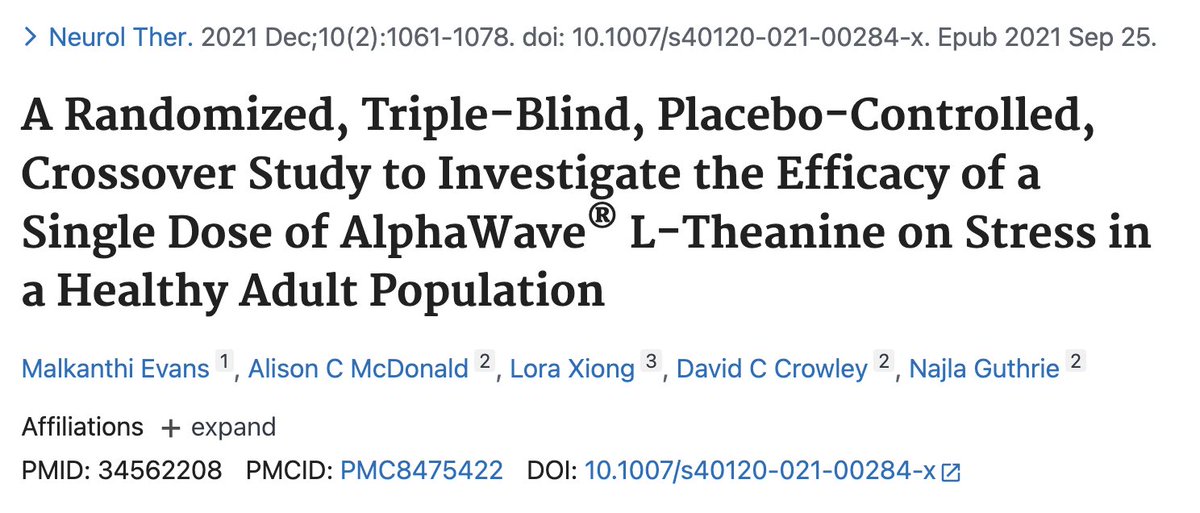
A 2021 triple-blind, placebo-controlled trial gave 200mg L-theanine to healthy adults, then hit them with a stress test.
Within 60 minutes:
- Salivary cortisol significantly lower than placebo
- Frontal alpha brain waves increased (relaxation without sedation)
- Self-reported anxiety dropped
But here's what makes it different from every other calming supplement on the market:
Most try to FORCE your brain to relax.
L-theanine removes what's preventing relaxation in the first place.
Your brain runs on glutamate - the main excitatory neurotransmitter. When it's overactive, your HPA axis fires constantly. Cortisol stays elevated. You feel wired but exhausted. You can't focus but you can't rest either.
L-theanine is structurally almost identical to glutamate.
It binds to the same NMDA receptors - but at 10-20x weaker affinity. It doesn't block excitation. It turns the volume down. Just enough.
Less glutamate overstimulation.
Less HPA axis activation.
Less cortisol.
Not because something was added. Because something was removed.
The alpha brain waves - the same pattern seen in deep meditation - appeared within 30 minutes and lasted 8-10 hours.
One capsule. No drowsiness. No prescription.
You don't feel sedated. You feel like yourself minus the static.
"I'll never forget her voice."
She called me trembling.
"There's a spot on my arm. The doctor says it's cancer. They want to cut it out – but I'm scared."
She sent me photos. Right arm, just below the elbow. A red, crusty, irregular lesion. Bleeding a little. Growing.
She'd already tried two treatments – a cream and a freezing session. Both failed. The spot came back worse.
Her doctor was pushing surgery. She was terrified.
I reviewed all her scans and medical records carefully.
It was basal cell carcinoma – not the most aggressive type, but stubborn. Persistent.
I told her: "If you're not ready for surgery, there's another option. It's worth a try."
I recommended Ivermectin cream – applied twice daily, just a tiny amount on the spot.
She started it right away.
Day 3: Nothing much. She was skeptical.
Day 5: The redness started fading.
Day 10: The lesion began drying up. A crust formed.
Day 18: The crust fell off. Pink, healthy skin underneath.
Day 21: The spot was completely gone.
She sent me new photos. I couldn't believe it. It was like it was never there.
She went back to her doctor.
He examined her arm and said: "This is remarkable. How did this happen?"
She said: "I tried something different."
He didn't ask what. I think he didn't want to know. Because if he had to admit that a simple, cheap cream worked – he'd have to explain why he never offered it.
The heart of this story:
One woman. Skin cancer on her arm. Surgery was the only option she was given.
She reached out. We tried Ivermectin cream.
Three weeks later – her skin was clear.
BPC-157 REBUILT a severed knee ligament. orally. from drinking water.
bad knees? unstable joints? that tear from years ago that never fully healed?
that’s a ligament your body STOPPED repairing. and it’s:
– buckling under load
– getting weaker every year
– one wrong step from surgery
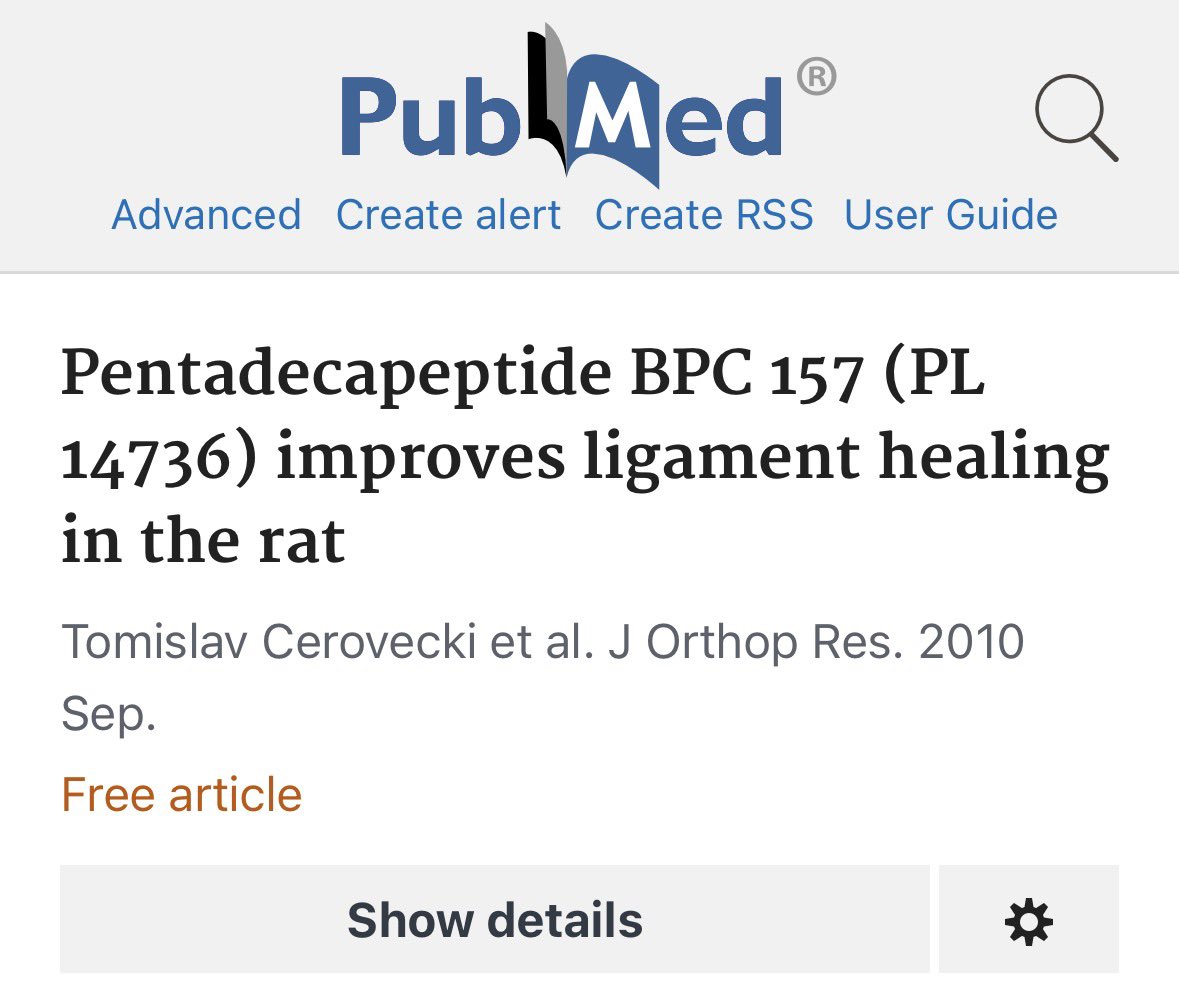
scientists sliced a rat’s MCL in half. the ligament keeping your knee from collapsing inward. completely cut.
tested three routes:
→ injection — healed
→ cream on skin — healed
→ mixed into drinking water — HEALED
(PMID: 20225319)
stop. read that last one again.
a peptide. swallowed in WATER. found a torn ligament in the knee. rebuilt it. collagen reorganized. strength restored.
your surgeon’s version:
→ drill holes through bone
→ thread a dead person’s tendon through
→ screw it in
→ $20,000-$50,000
→ 6 months rehab
BPC-157’s version: water.
16 human patients. chronic knee damage. 87.5% significant improvement. no surgery. (Lee 2021)
and it also:
→ REGREW a severed nerve (19903499)
→ RESTARTED a flatlined heart (23327997)
→ GREW BACK bone that was sawed out (10071911)
your knee isn’t broken. the repair just never finished.
15 amino acids. your stomach already makes it. apparently it works in water too.
🧵 how I take it + source in the comments ↓
Protein does not become muscle just because you ate it.
After a meal, amino acids arrive in the blood and muscle has to accept them and build them into contractile protein. That building is only half the ledger. Muscle protein is broken down continuously as well, and net change is the difference between the two. Most short studies, including the ones below, measure only the building side.
When researchers cut the daily step count of ten healthy 72-year-olds by around three-quarters for two weeks, the after-meal building response fell by roughly a quarter. Fasted rates did not change. Leg fat-free mass dropped almost 4 percent in a fortnight, alongside worse insulin sensitivity and higher inflammatory markers.
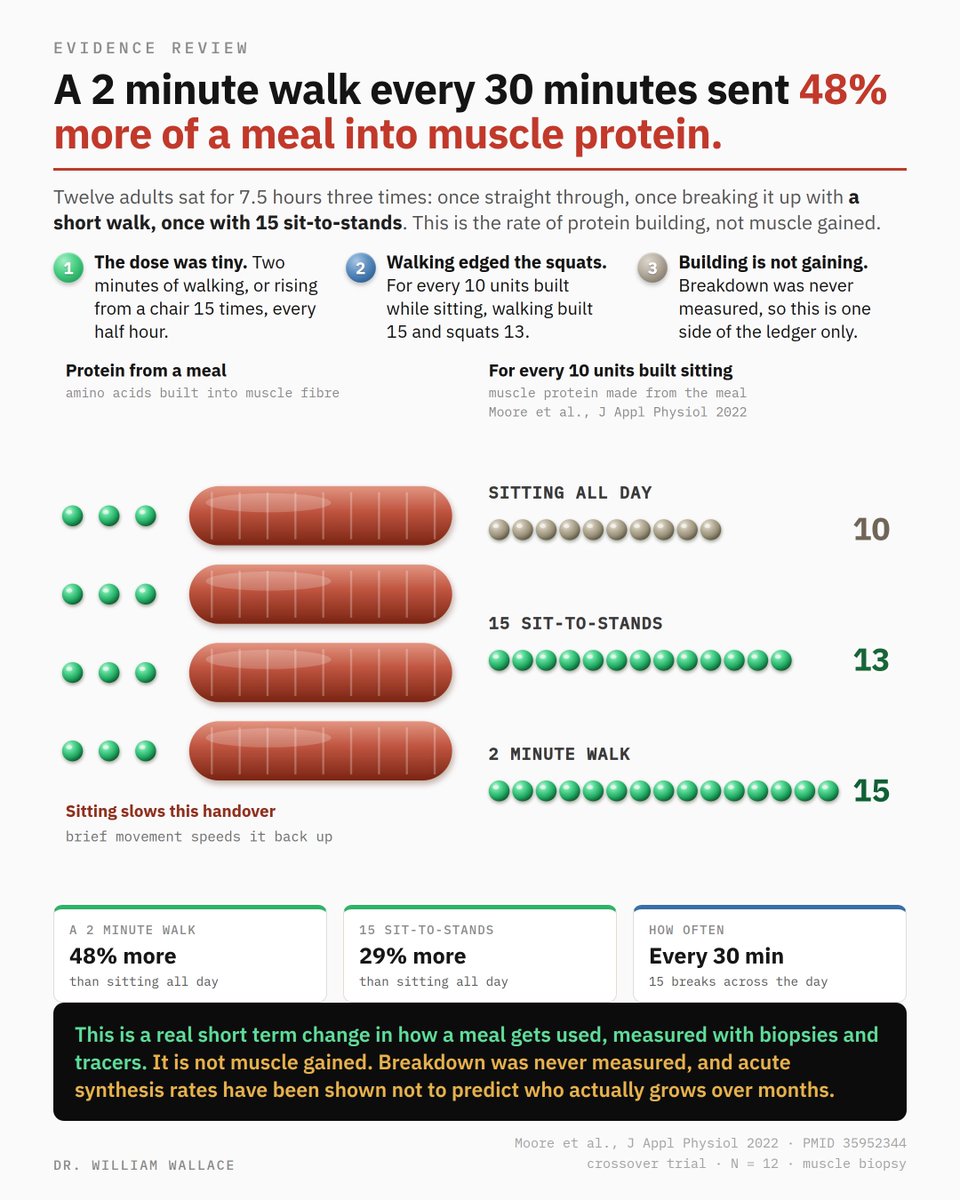
A Toronto group then ran the experiment forwards. Twelve adults sat for seven and a half hours on three separate days, eating identical meals labelled with tracers so the amino acids could be followed into muscle. One day was uninterrupted sitting. On the others, every thirty minutes they either walked for two minutes or rose from a chair fifteen times. Muscle was biopsied directly.
For every ten units of muscle protein built during the sitting day, the sit-to-stand day built thirteen and the walking day built fifteen. Two minutes of walking, taken fifteen times across a working day, changed where a meal's protein ended up.
In 23 untrained men, acute post-exercise building rates rose 235 percent after a first training session, then showed essentially no relationship with the hypertrophy those same men achieved over the following sixteen weeks. The correlations were near zero. Quadriceps volume grew 7.9 percent on average, with individuals ranging from slightly negative to nearly 25 percent, and the acute measurement predicted none of that spread.
So these trials describe how a meal gets handled on the day, which is a real and useful thing to know. They do not identify who builds muscle over months, and they never measured breakdown.
Prolonged sitting appears to blunt what a meal does. Interrupting it costs two minutes.
Moore et al., J Appl Physiol 2022 · PMID 35952344
Breen et al., J Clin Endocrinol Metab 2013 · PMID 23589526
Mitchell et al., PLoS One 2014 · PMID 24586775
Taurine prevents depressive behaviors caused by chronic stress. Chronic stress is known to cause learned helplessness.
Behaviorally, taurine improved:
— Anhedonia (inability to experience pleasure)
— Anxiety-like behavior decreased
— Exploration/activity increased
— Spatial learning improved
— Memory improved
The animal experiment used human equivalent doses of 2 to 7 g/day.
“In conclusion, taurine pre-administered to chronic-unpredictable-mild-stress exposed rats could significantly inhibit the loss of anhedonia, learning ability and memory deficiency, prevent the increase of anxiety to the new environment, hinder the increase of CORT (cortisol equivalent) and disorders of neurotransmitters in both serum and hippocampus, prohibit the down-regulation of neurotrophic factors, indicating that taurine has anti-depressant effects and the mechanisms may involved in regulating the HPA function, promoting neurogenesis, cell proliferation, neuronal survival and growth in the hippocampus.”
Recently, low taurine in the hippocampus has been identified as a characteristic of depression in humans.
“Taurine, a type of amino acid, plays critical roles in neuronal generation, differentiation, arborization, and formation of synaptic connections. Importantly, it enhances proliferation and synaptogenesis in the hippocampus. When injected into animals, taurine has an antidepressant effect.... This study demonstrates that a lower level of taurine concentration in the hippocampus may be a novel characteristic of major depressive disorder.”
Ref:
Antidepressant effect of taurine in chronic unpredictable mild stress-induced depressive rats
Association Between Taurine Level in the Hippocampus and Major Depressive Disorder in Young Women: A Proton Magnetic Resonance Spectroscopy Study at 7T https://t.co/Fr2BmkLOMc
BPC-157 has striking animal data, and still zero published human trials.
Andrew Huberman has used short runs after strains and felt recovery improved, but he can’t prove it. The compound goes systemic, so no clean control is possible.
Animal studies show effects on cartilage, fibroblasts, blood vessels, and nerves. Capsules exist; local injection near the injury may help, though the evidence is limited.
Tim Ferriss ran into the same problem after elbow surgery with the “Wolverine stack”, a popular research combination of BPC-157 and TB-500 (thymosin beta-4 fragment) that some athletes and biohackers use together for soft-tissue recovery. Both compounds remain unapproved for human use and lack published clinical trials.
BPC-157 is a synthetic 15-amino-acid peptide derived from a protective protein found in human gastric juice. In preclinical (mostly rodent) models it has been shown to support soft-tissue repair pathways, yet these findings have not been confirmed in controlled human studies.
Promising on paper. Still unproven in people.
A new study found VITAMIN C + GRAPE SEED EXTRACT shrunk cancerous tumors BETTER than one of the strongest chemotherapies in existence WITHOUT destroying the body.
In animal models:
✅Vit C + GSE (non-toxic): 77% tumor reduction
🚫Doxorubicin ("RED DEVIL"): 69% tumor reduction