In 1983, an 80-year-old Navy admiral held up a piece of wire and proved that almost every engineer in the room had been lying to their bosses about the speed of their own computers.
Grace Hopper cut the wire to 11.8 inches — the maximum distance light can travel in one nanosecond. Anyone who quoted a chip speed in nanoseconds without knowing that number didn't actually understand what they were selling.
The wire wasn't a teaching prop. It was a public test. Generals and executives had been nodding along to "nanosecond" for years without being able to picture one — she made the invisible unit something you could hold, and something you could be caught not understanding in front of a room.
42 years later, computers run in picoseconds, a distance a thousand times shorter than what she was cutting, and nobody hands out the proof on live TV anymore.
In 1963, Delia Derbyshire hand built the Doctor Who theme using only tape loops, oscillators, filters, and razor blades, long before techno existed.
[📽️ BBC Archive]
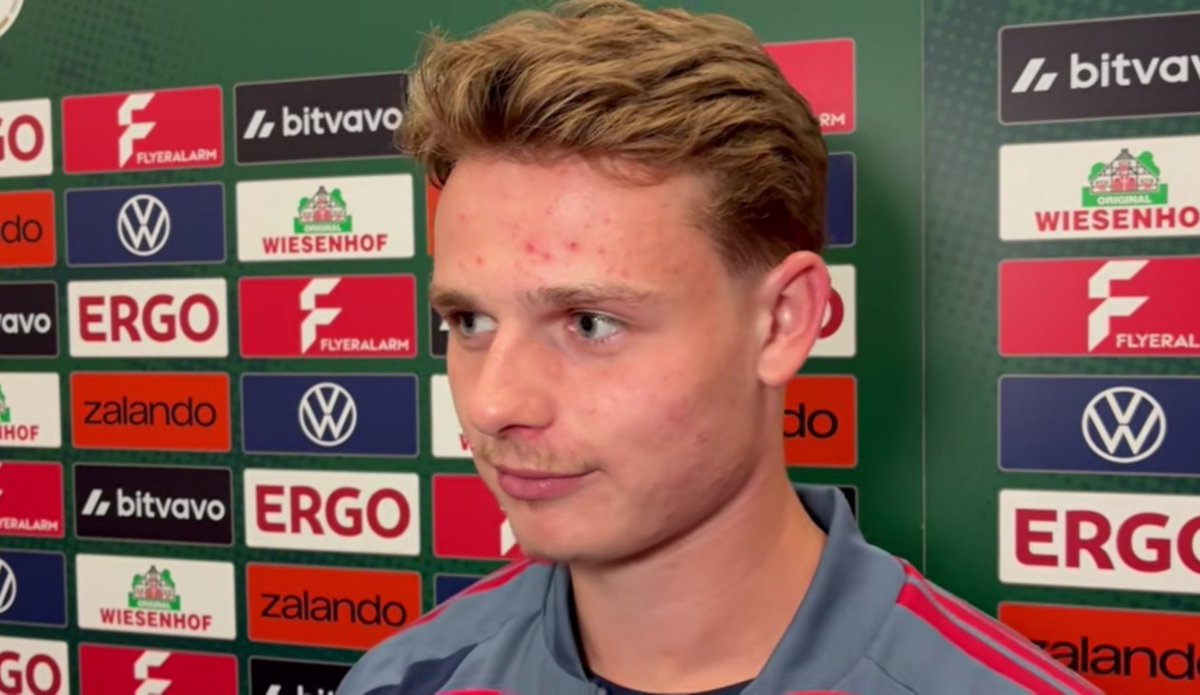
Jonas Urbig asked whether something could've been done about Osnabrück's goal: "Have you ever been a goalkeeper? He shoots, the ball drifts a bit and hits the top corner. I'm very, very self critical, but in this case congratulations to him. That was unstoppable"
When Classical Music Stops Being Serious: Salut Salon and the Battle That Made the Whole Audience Laugh🎻🔥
Four female musicians from Hamburg, Germany, step onto the stage with two violins, a cello, and a piano. At first glance, it looks like a very serious chamber music concert. But within moments, the stage turns into a playful “competition,” as the musicians constantly try to outdo one another through music, facial expressions, and movements that seem almost impossible.
The first thing that made me laugh was the way they played with one another. One musician uses another’s bow, another reaches through her partner to play the violin, and all four constantly change positions as if they were part of an artistic circus performance. The moment when the pianist lies on her back, reaching her arms behind her to play the piano while still coordinating with her partner’s instrument especially made me wonder: how could they possibly come up with movements like that and still hit every note correctly?
But the more I watched, the more I realized that this was far more than a comedy performance.
Behind all the laughter is an astonishing level of technical skill. Fast passages such as Summer – Presto from Vivaldi’s The Four Seasons already demand tremendous speed, precision, and control. Now imagine having to play them while moving, changing positions, interacting with the other musicians, and performing for an audience. If even one person lost the rhythm, the entire performance could quickly fall apart.
But that almost never happens.
For me, this is the most impressive part. They are not using comedy to hide their technical ability. Quite the opposite. They have mastered their instruments so thoroughly that they can turn that mastery into a game.
I also love the way Salut Salon challenges the familiar image of classical music. Many people still associate chamber music with formality, silence, and a certain distance from the audience. This performance proves otherwise. Classical music can be playful, funny, and incredibly approachable.
And perhaps that is what I like most about this performance: they are not simply playing music; they are genuinely having fun with it.
After years of training to achieve almost perfect precision, they still have the freedom to play as if they were children discovering a new game.
Maybe great art does not always have to leave us sitting silently in admiration. Sometimes, it only needs to make us smile and remind us that even things we consider deeply serious can bring us something wonderfully human: joy.
In 1951, Adelbert Ames created the mind-boggling ‘Ames Window’. It’s so effective that even when you know how it works you can’t break the illusion
[📹 The Curiosity Show]
Rita Moreno’s unforgettable performance of “Fever” on The Muppet Show originally aired in 1976, with Animal wildly backing her on drums. The performance became one of the most memorable moments of her appearance—and it ultimately earned Moreno a Primetime Emmy Award in 1977. 🎶❤️
Ich habe mich heute stapelweise durch Dokumente und Texte gelesen, die den Terroristen Abdul Ballout, seine Familie, deren Machenschaften und die Tat von Berlin beschreiben und beleuchten.
Es ist bemerkenswert, wie viele das Problem Islamismus und, ja, auch Islam, denn die Grenzen sind fließend, nicht benennen, sondern stattdessen von „Rechtsextremismus“ und „Islamisten sind Rechtsextremisten!“ reden.
Es ist auffällig, wie viele so tun, als habe das mit Islam und der Zuwanderung bestimmter Leute nichts zu tun, und wer das erwähnt, ist ein „Rechtsextremist“ oder „Zionist“ oder „Faschist“.
Es fällt ins Auge, wie viele jetzt plötzlich so tun, als könne man diesen Terror leider, leider nicht verhindern, man müsse das wohl oder übel hinnehmen, andernfalls müsse man die freie Gesellschaft opfern.
Es ist irre, wie sehr manche versuchen, Leute, die das Problem analysieren und benennen, zu diskreditieren oder lächerlich zu machen und ihre Expertise infrage zu stellen.
Es ist schockierend, wie sie völlig unterschiedliche Maßstäbe ansetzen, wenn es um Rechtsextremismus einerseits geht (was zu Recht scharf kritisiert werden muss!), oder wenn es um Linksextremismus oder Islamismus andererseits geht; oder wie man, wenn es grad blöd kommt und man aus der Nummer nicht mehr rauskommt, Islamismus plötzlich, siehe oben, zu „Rechtsextremismus“ erklärt.
Es ist inakzeptabel, wie wenig wir als Staat und Gesellschaft mit der gebotenen Härte gegen Extremismus im Allgemeinen und Islamismus im Besonderen vorgehen. Typen wie Abdul, Familien wie die Ballouts - in der Schule mobbend, gewalttätig, aggressiv, kriminell, islamistisch und sich mit anderen Extremisten verbündend - gibt es leidet nicht wenige. Man müsste etwas gegen sie tun. Die Gesetze geben es her. Stattdessen schieben wir seit Jahrzehnten die Falschen ab, bloß um Quoten zu erfüllen und zu zeigen: ‚Seht her, wir tun doch was!‘ Familien wie die Ballouts, islamistisch, fanatisch und gewalttätig, bürgern wir ein.
Völlig irre.