Foundation models, the AI-type that includes LLMs, could help fight future infectious threats. @arvindr_ of @argonne and his team are building on COVID-19 success to better understand how viruses and bacteria evolve. https://t.co/jYUS4YbboN #HPC#INCITE
Superdiamond simulations on @OLCFGOV's Frontier are helping @USouthFlorida researchers study how this novel carbon structure assembles and informing @lasers_llnl experiments to study how carbon-rich planetary interiors form. https://t.co/NM113BSiKj #HPC#INCITE@Livermore_Lab
Rahul Sahay of @Harvard is using #quantum behavior to understand matter's phases and develop strategies to create new ones in the laboratory. Read more about his @doecsgf-supported research: https://t.co/CPyN0CXU3J @argonne
Cosmic rays provide ways to study how galaxies evolved. Using #exascale computing and an #INCITE award researchers modeled large- and small-scale behavior and developed a new model that accounts for unexplained turbulence. https://t.co/lwCD6q0KML @OLCFGOV@argonne_lcf#HPC
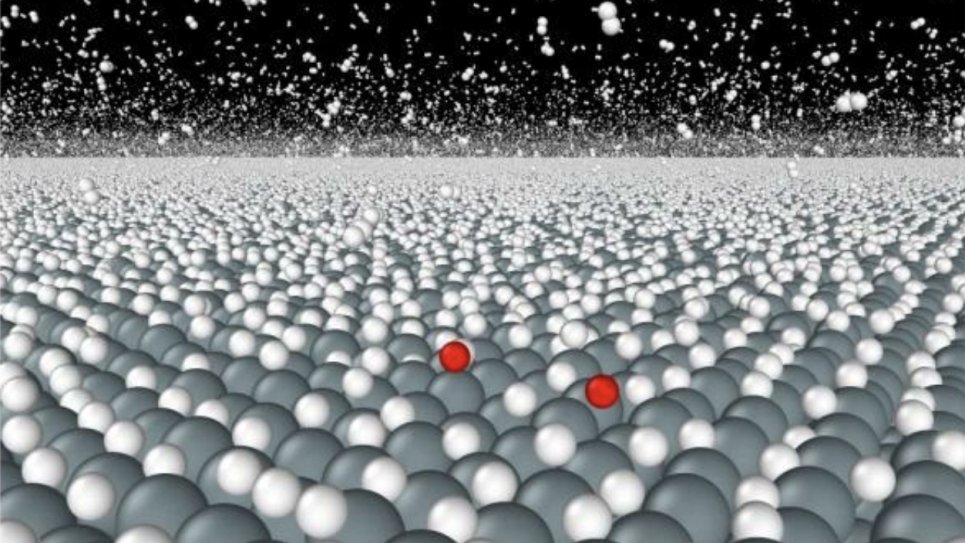
Simulations to study new ways to catalyze hydrogen production could help with energy storage. @Harvard's Boris Kozinsky and his team are using machine learning to accelerate these complex calculations. https://t.co/YFngG2UtXD #HPC#INCITE@argonne_lcf@OLCFGOV
Alex Ballow of @montanastate uses category theory, a form of universal mathematical language, to probe patterns in physics that could advance #quantum computing, condensed matter physics and more. https://t.co/6MQ2hlymmp @doecsgf@ORNL
Attention potential #DOECSGF applicants: Yesterday's webinar recording is now available at https://t.co/VH5KHeo0wP. Topics include program benefits, applicant eligibility, and Science/Engineering vs. Math/Computer Science Track options; plus insight into application components.
New episode 🎙️with @anilananth discussing the math, science and challenges of #AI, the 2024 physics @NobelPrize and his book, Why Machines Learn. https://t.co/BXWAIO3GmY #HPC#AI
The human brain's trillions of connections remain largely uncharted. But an @argonne-@Harvard team is using advanced electron microscopy and #ALCF's hardware and machine learning tools to map neurons' links to better understand how they interact https://t.co/gUBdCUh8kH #HPC
Exploring cars ultimately led @zendejas_hugo to study turbulence using computational fluid dynamics at @Caltech and @Livermore_Lab. Read more about his @doecsgf research and mentoring's central place in his career. https://t.co/hs22D2oyp7 #HPC
If your life depended on it, would you want treatment options in hours or days? HarVI cuts planning time from 48 hours to just 74 minutes—helping doctors explore options faster. #HealthTech#AI#DigitalTwins
Read the paper for more: https://t.co/mYxToioBar
During the pandemic, @MARGARETSCHEUNG@PNNLab pivoted to modeling molecular mechanisms of disease transmission. Using a digital twin, she's grappling with complex biological data and finding new strategies to disrupt infections. https://t.co/VLkL9FbQLU #HPC@OLCFGOV@NERSC
New 🎙️episode: Paulina Rodriguez of @GWtweets discusses her quest to become an authentic scientist and her applied math career focused on the credibility of computational models. Check out the whole episode: https://t.co/nKLh6cVXkH @doecsgf#HPC@SandiaLabs@US_FDA@SACNAS
During her @CUBoulder Ph.D., Rachel Robey used her computational skills to tame scale-based challenges in modeling wind-energy generation and climate modeling. Read more about her @doecsgf-supported #HPC research: https://t.co/herth5uBWJ
Luis Rangel DaCosta of @UCBerkeley used machine learning to speed up the analysis of high-resolution molecular images. The work led to Construction Zone, a software package that is "like computer-aided design, but for atoms." https://t.co/2l0kc7UAlE #HPC@doecsgf
Ariel Kellison of @Cornell combined her love of mathematics and computational physics to work on verification, building methods to ensure that software functions as expected in medicine, the military and more. https://t.co/uYEWLqLLTX @Cornell_CS@DavidBindel@doecsgf
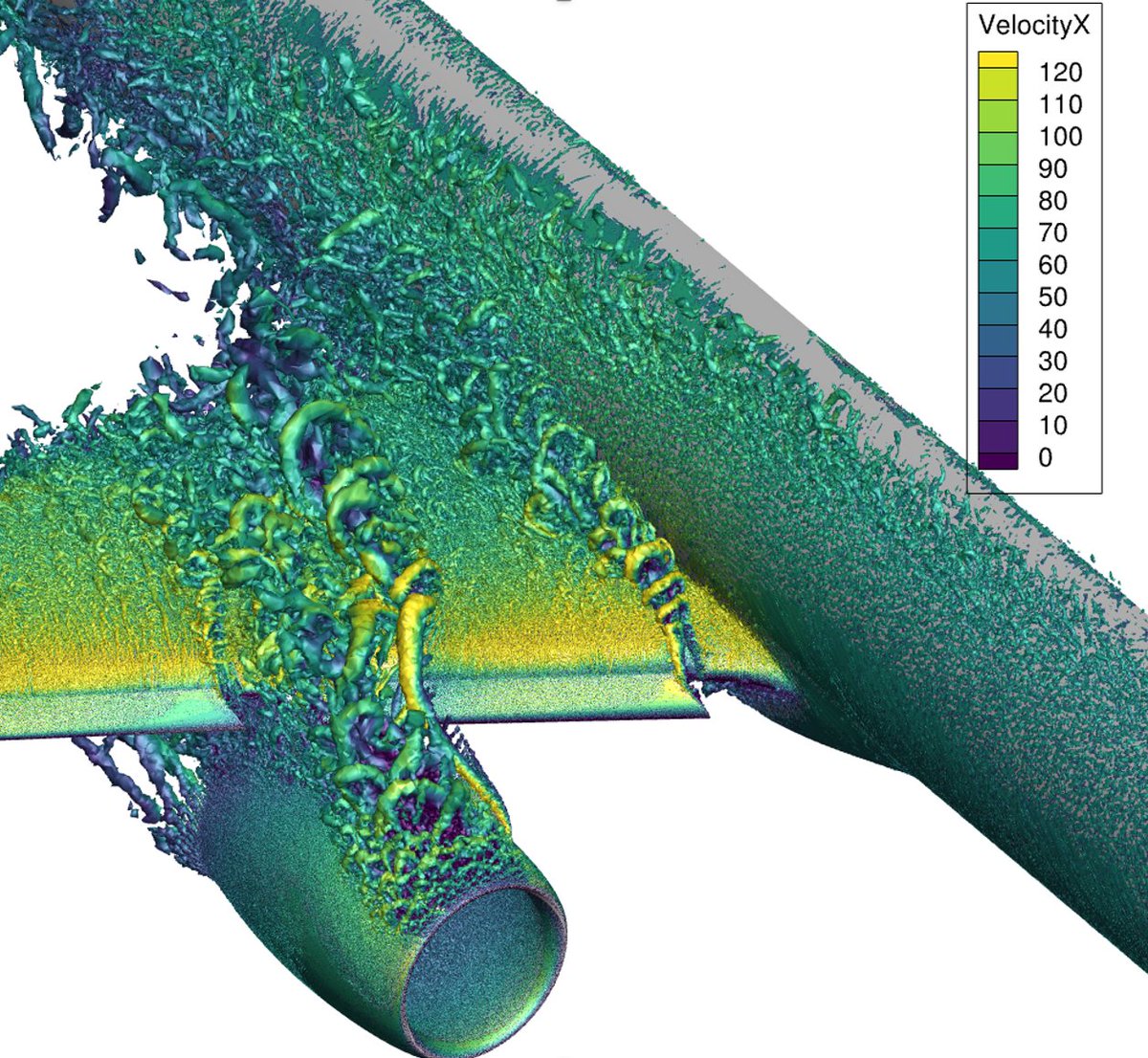
Modeling maximum lift to improve aircraft involves understanding the complexities of eddies and airflow. @ZJWang1 of @UnivOfKansas has used an INCITE allocation at @OLCFGOV to tackle these challenging problems. https://t.co/AEBhPJjwkc #HPC@doescience