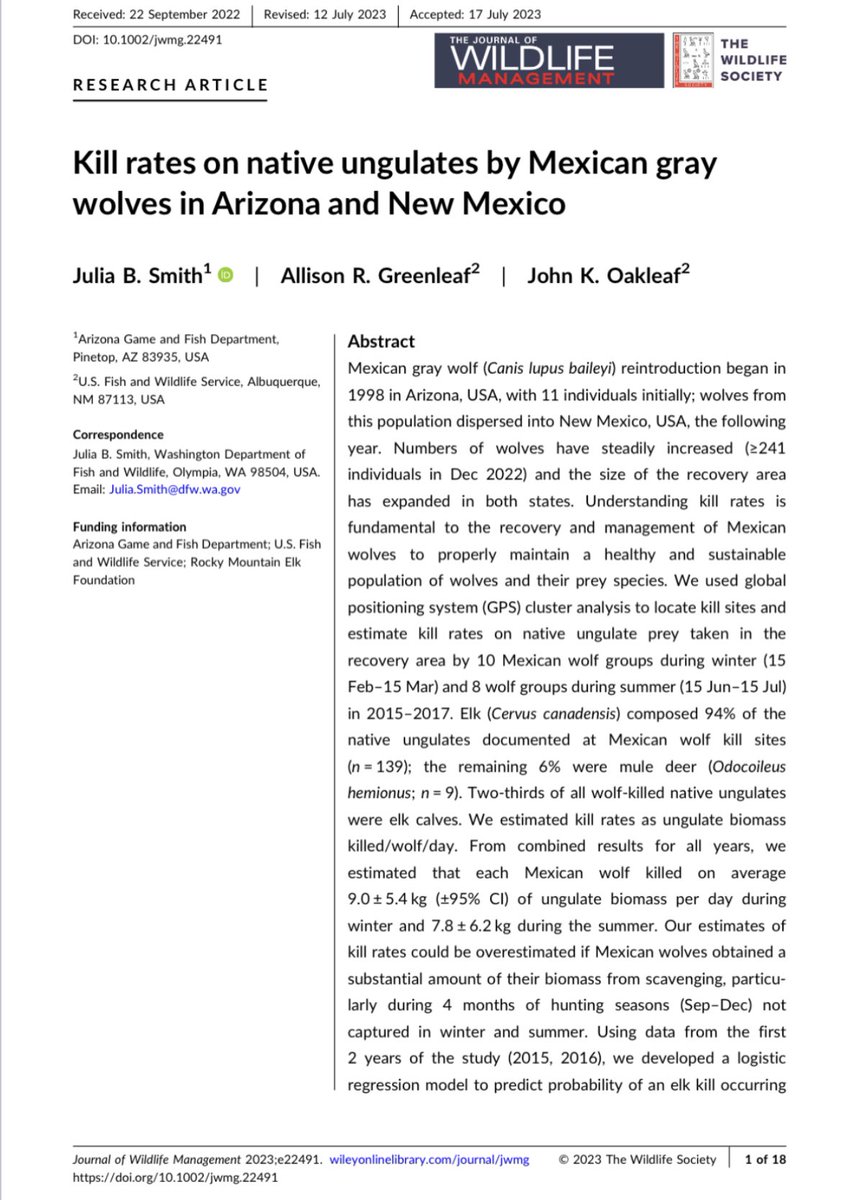
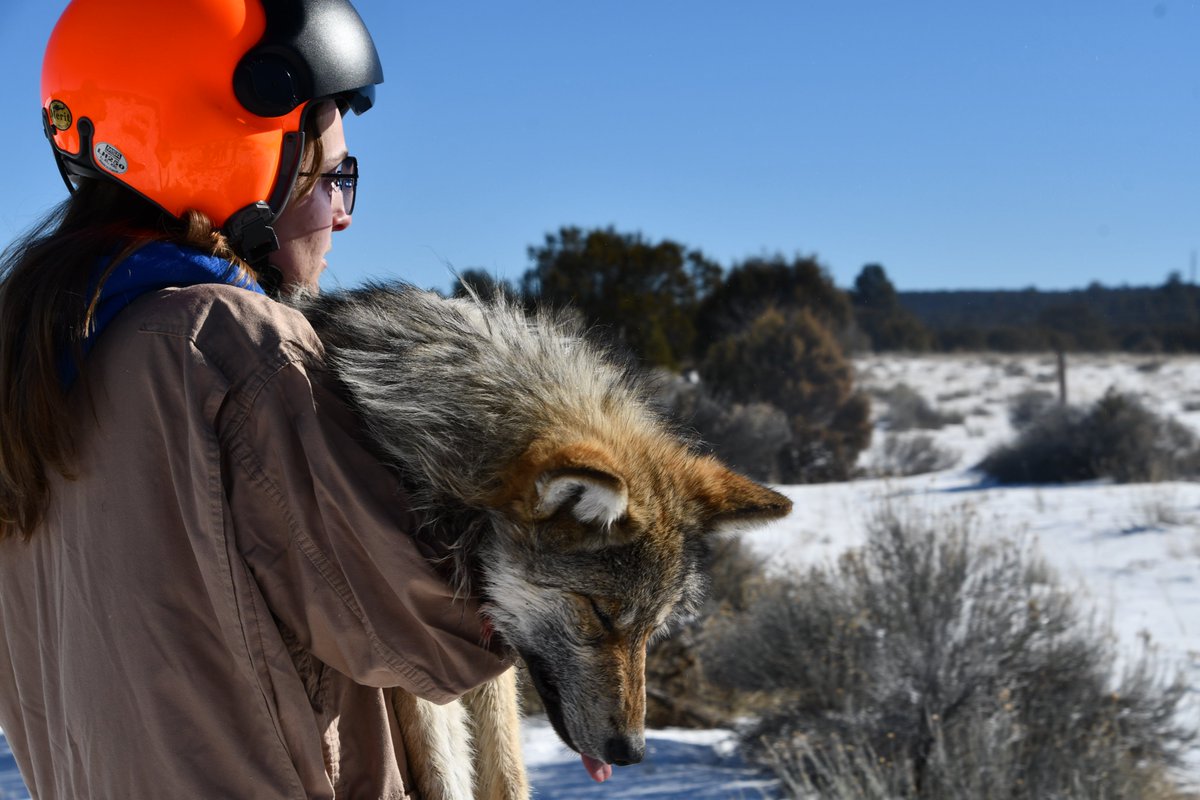
Mexican wolf numbers have grown in Arizona recently. Researchers collared a number of wolves to determine what their diet mainly consisted of. https://t.co/KUVI91WFIv
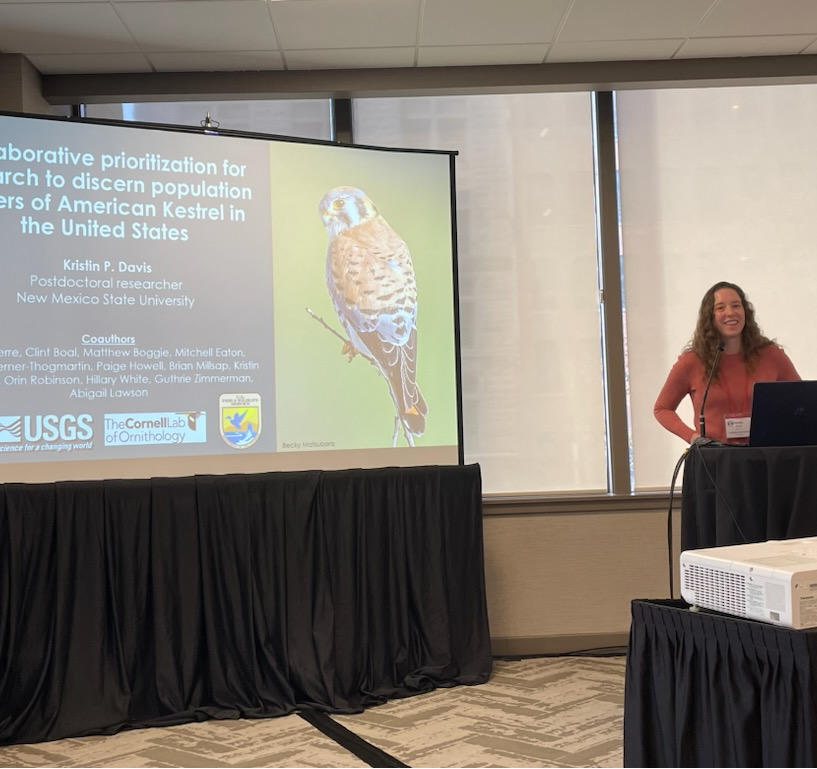
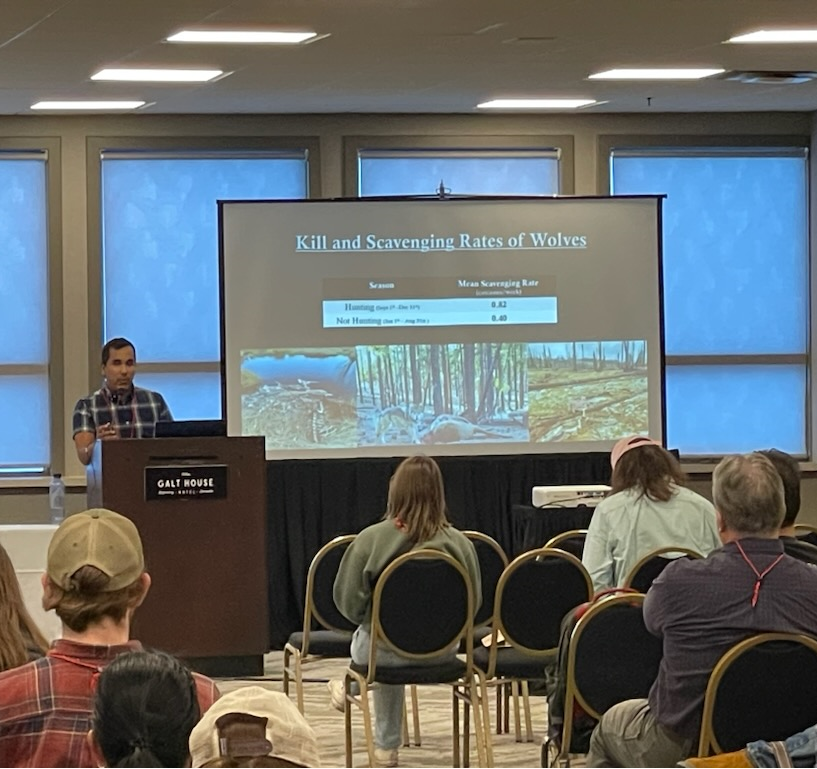
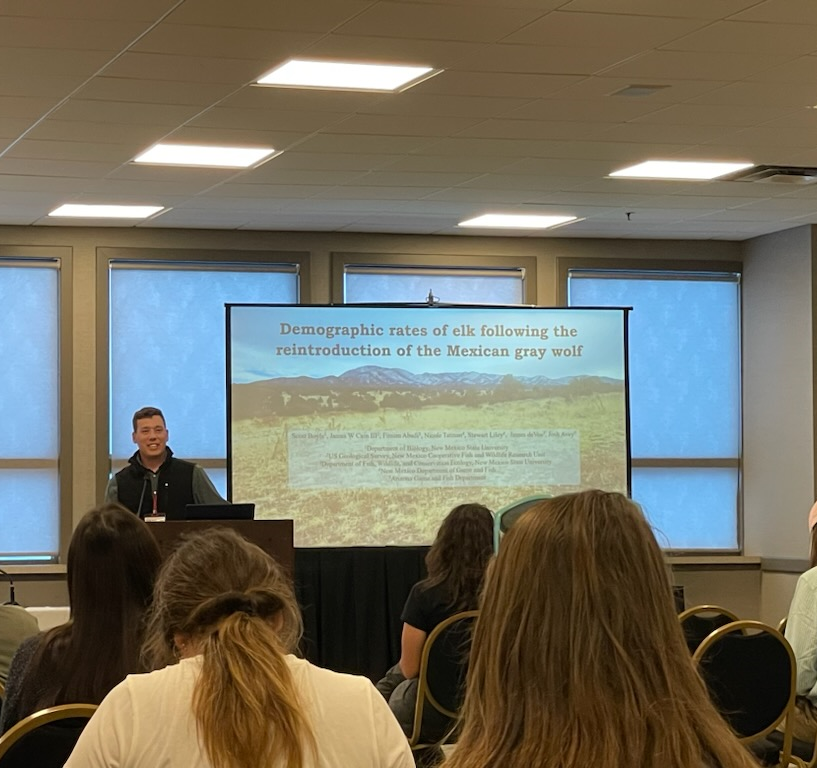
Lots of presentations by FWCE folks this past month. For instance, FWCE students, postdocs & faculty gave 15 talks at the annual meeting of The Wildlife Society in Louisville. Here are Scott Boyle, Sam Martinez, Kristen Davis & Erica Christensen presenting their research
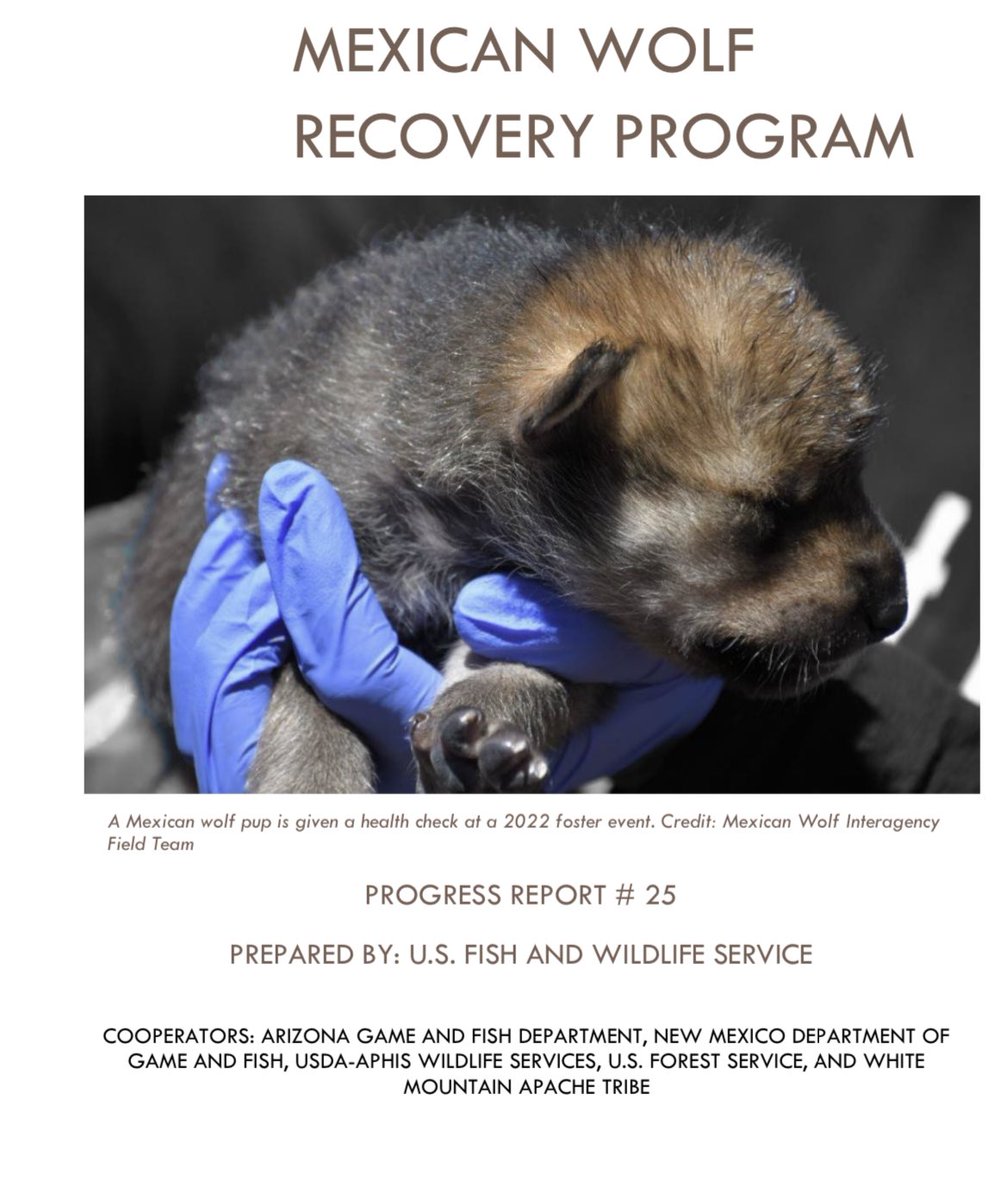
The captive population of Mexican wolves has more genetic diversity than the wild population. That's why cross-fostering captive-born pups into wild dens has become a valuable tool for the recovery of endangered Mexican wolves. #WolfWeek
https://t.co/nOk49CbcN1
Proud of my wife for her first publication! Also congrats to all the author co-authors on finally getting this paper out in literature. Hope everyone enjoys reading about bot flies and rabbits.
New paper from the Gompper lab includes 2 undergrad co-authors (Bethany Bridges & Jaidyn Armijo-Sonnenberg), 2 grad student co-authors (Anna Boyle & Colton Padilla), a post-doc coauthor (Jess Martin) & an alum co-author (Charles Britt).
In case you missed it and are interested in what is happening with the Mexican Gray Wolf population here in the southwest. The @USFWS released their annual report a few weeks ago. Go check it out.
Find it at: https://t.co/MuPGurKNoL
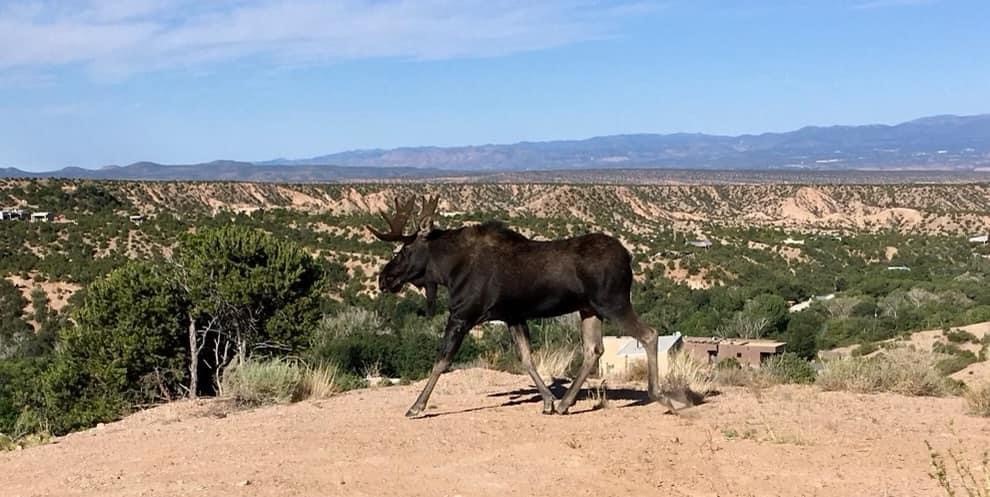
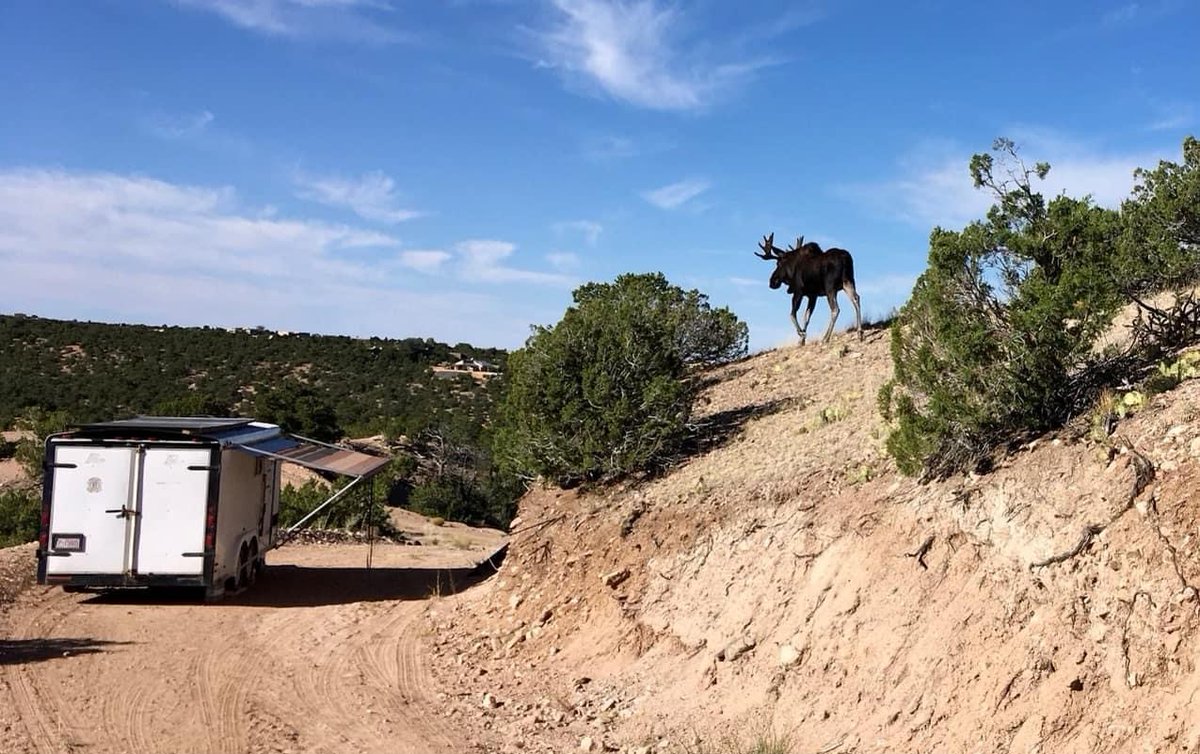
After working a few years on a moose research project in Colorado, it is very interesting to see a moose in a habitat such as this, not the high elevation riparian areas that I am use too. This has been 1 of 2 recent moose sightings in NM within the past year.
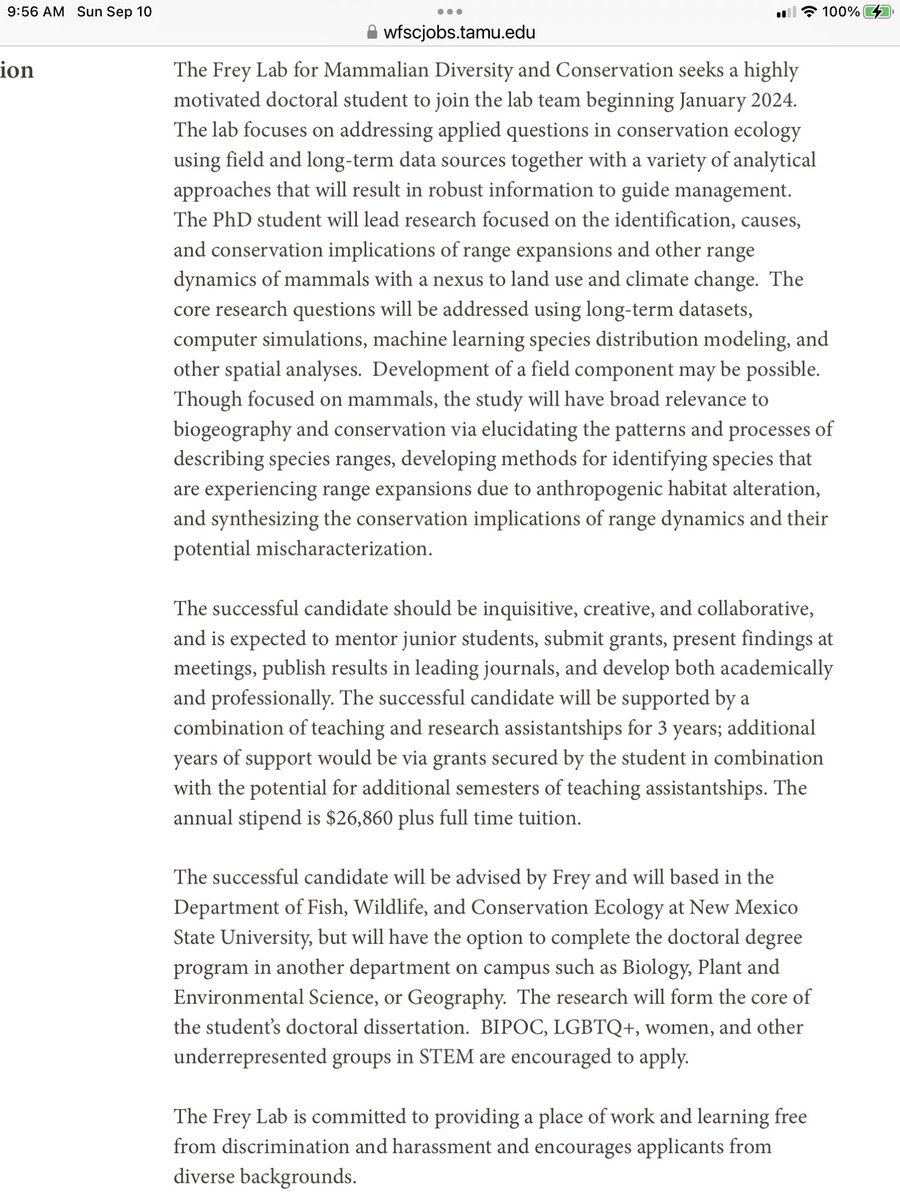
Frey lab is seeking a PhD student to investigate biogeography of mammal range expansions and their conservation implications. Come join our growing and dynamic department at New Mexico State University. Please share!
https://t.co/ZStzTG83DG
Despite their smaller body and pack sizes, Mexican wolves still depend on elk as their primary source of food. Excited to further contribute to this body of literature from the prey’s viewpoint in the near future.
https://t.co/S0EPPNpgHK
New FREE online book on Rangeland Wildlife Ecology & Conservation - with a great chapter on elk & rangeland management by some former @umontana @FCFCMontana #wildlifebiology students Shawn Cleveland & @micheltkohl https://t.co/c2Av794fbV
The Lincoln NF in southern NM is a unique sky island where desert meets ponderosa forest. I got a chance to tag along and learn about the exciting research being conducted by @JenniferKFrey to understand the underlying mechanisms driving populations of the peñasco least chipmunk
Snow depth has been a commonly cited as having an important role in predator-prey dynamics,especially in elk-wolf systems, here is a newly published paper actually quantifying the characteristics of the snow. Also it was a great talk at #IMC13
https://t.co/c8uuQqGM8W
Last week in Alaska at the #IMC13 was a blast! It was great catching up with old colleagues and meeting new ones. Thanks to everyone that attended my talk and to my co-authors, donors, and field technicians that have made the research possible.
Alternative energy sites are increasing across the country, especially here in the desert. Studies are showing that solutions to certain problems are causing problems for others. Requires further research on community level impacts and site identification https://t.co/UaYdvQsC1M
The answer to this - and others - question(s) is perhaps too long for a tweet. We hope to give a @BCWildlife webinar soon on this topic. But the short answer is not really. See our meta-analysis of predator control studies here https://t.co/xtChSP23jy
When we first started researching elk-Mexican wolves interactions in NM and AZ, there was an estimated 109 wolves. 5 years later wolves have a minimum count of 241. Pretty impressive growth and good timing of our research project!
WE HAVE GOOD NEWS!
For the first time since reintroduction into the wild, the population of Mexican wolves in Arizona and New Mexico has surpassed 200!
Photo credit: Mexican Wolf Interagency Field Team
We've been working on this paper out today (and open access) for over 7 years, so bear with me while I tell you the story of how we discovered that wolves kill and eat sea otters (Panels A-D) and what this means for wolves, otters, and deer. /1
https://t.co/mGbOeNtNVv
This short video does a nice job explaining the intrinsic value of wildlife. It doesn’t matter if you are a hunter, angler, avid bird watcher, etc. Having the opportunity to see wildlife within the natural landscape is meaningful to all people! https://t.co/RHldnYAJeX