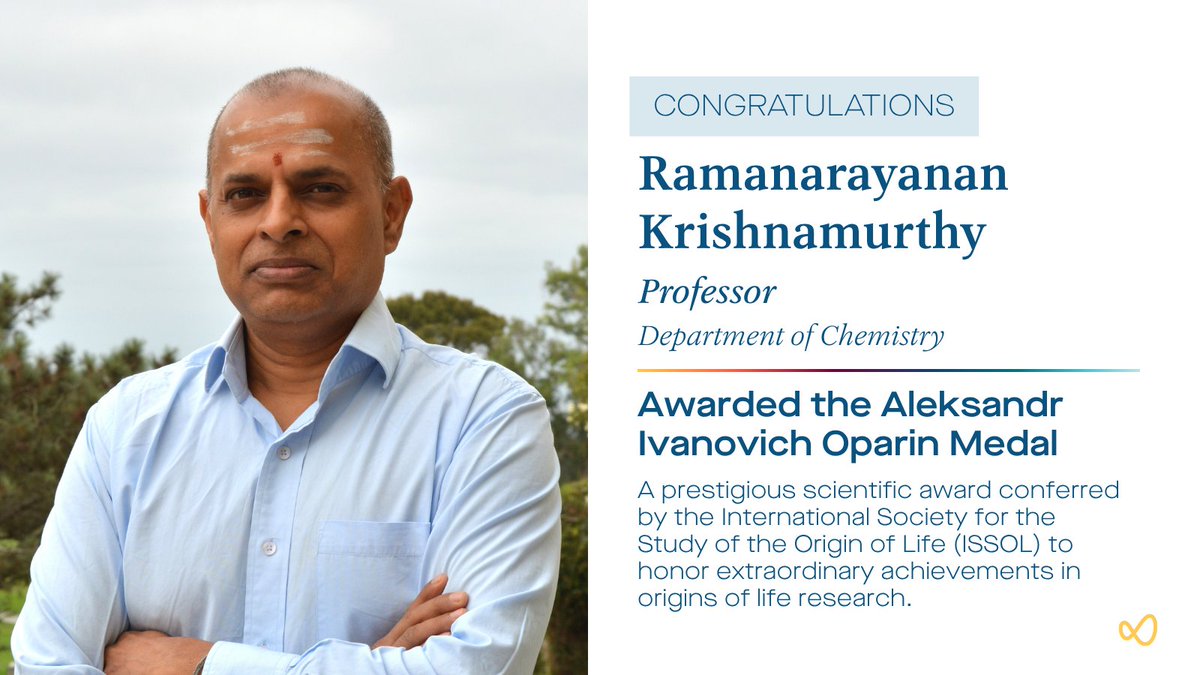
Scripps Research professor of chemistry Ramanarayanan Krishnamurthy has been awarded the Aleksandr Ivanovich Oparin Medal!
The International Society for the Study of the Origin of Life (@issol_society) - The International Astrobiology Society bestowed its highest recognition on Krishnamurthy for “best sustained scientific research in the origin of life field.”
The Oparin Medal was awarded to Krishnamurthy at the Origins 2026 meeting earlier this month in Paris, France.
Watch the acceptance speech: https://t.co/dRGpQ1WVdg
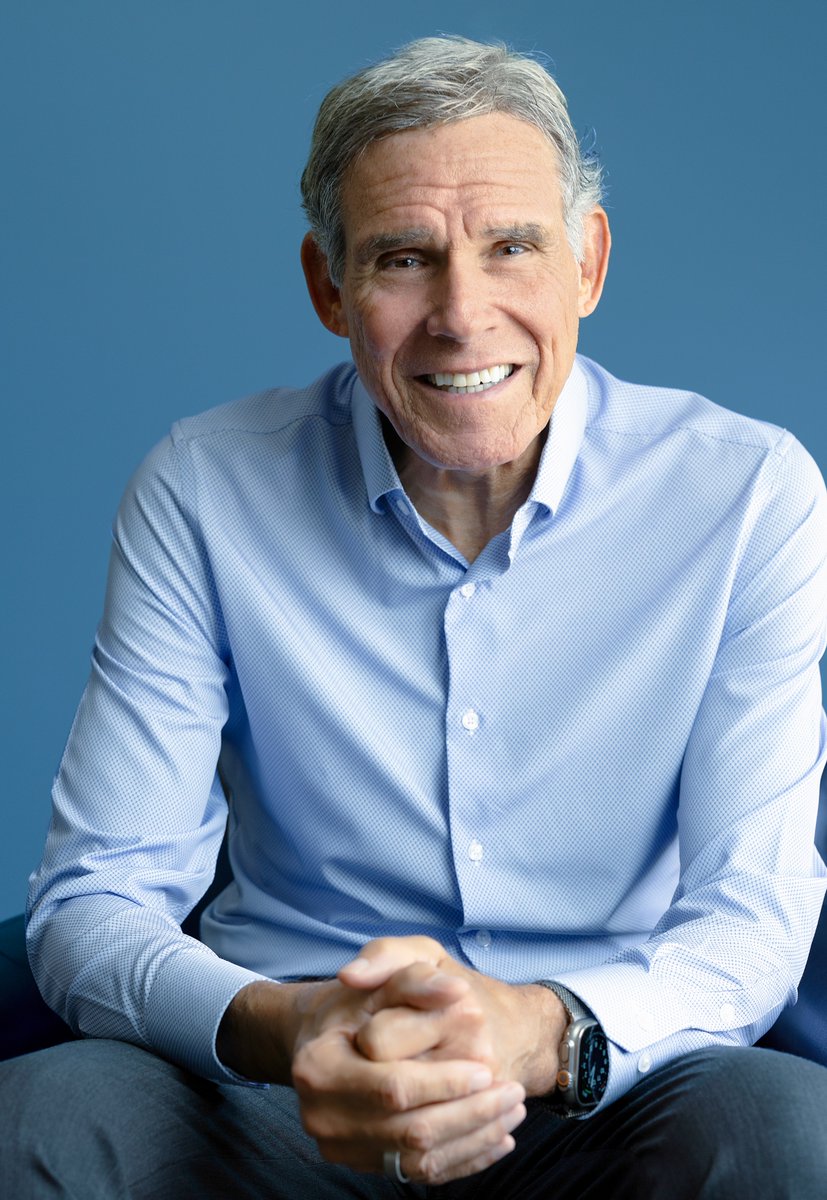
.@EricTopol has spent his career asking a simple question: Why does medicine wait for people to become sick?
His work in genomics, digital health, and precision medicine has helped shift healthcare from reacting to disease toward preventing it.
https://t.co/hNmcNZSbTN
@theNASEM@scrippsresearch
Have you ever heard of a superbug? It's an informal term used for bacteria that have mutated to resist the antibiotics once used to treat them.
The Moses Laboratory is fighting these superbugs with chemistry!
Using a methodology known as diversity oriented clicking (DOC), developed in the Moses laboratory, researchers have synthesized a molecular library of more than 150 compounds.
Now, in collaboration with @scrippsresearch, this library has now helped restore the activity of vancomycin, an antibiotic widely used to treat serious conditions such as staph infections and C. diff.
To learn more about this discovery and how this chemistry could change modern medicine, follow the link here: https://t.co/pqCoWUOWNd
#InspiringDiscovery #SuperBug #ModernMedicine #ScienceMakesLifeBetter
Congratulations to @BaranLabReads, recipient of the 2026 Mitsui Chemicals Catalysis Science Award for pioneering catalytic radical cross-coupling methods that enable efficient construction of complex molecules using abundant metals and readily available starting materials. More: https://t.co/nnmuJ21c5g
John Diekman is a founding partner of 5AM Ventures, a firm that funds and builds next-generation life sciences companies. He is also a valued advisor to Scripps Research, where he is in his second term as Chair of the Board of Directors.
Sue Diekman, after heading the philanthropic division of a major corporation, now lends her expertise as a board member to several nonprofits. While their charitable interests are diverse, the energetic couple always takes a hands-on approach with their giving.
More: https://t.co/mmF9U2tQG3
M. Reza Ghadiri, the Darlene V. Shiley Chair in Chemistry at Scripps Research, has spent decades asking how life’s complexity can arise from basic chemical building blocks.
But behind the elegant theories and years of pioneering work is a story that begins much earlier—inside a childhood bedroom filled with improvised experiments, walls stained with chemicals and the unmistakable smell of sulfur.
In a conversation with Scripps Research Magazine, Ghadiri reflects on the formative moments that set him on his scientific path and influenced his unwavering commitment to making the impossible a reality.
More: https://t.co/kmy1qXYVQt
Chloe Erikson joined the Roberto lab to tackle a critical gap in addiction medicine: understanding how alcohol use disorder (AUD) affects women’s brains. 🧠🔬
Her research focuses on the noradrenergic system in the central nucleus of the amygdala (a brain region that processes stress and emotional responses), and she’s finding that the female brain responds to alcohol dependence in fundamentally different ways than the male brain.
“I was fascinated to learn how the brain processes stress and drives different behaviors like addiction,” says Erikson. “The female brain is significantly understudied, and we can’t just assume that men and women have the same biological mechanisms. I want to be part of the team that brings better therapies to women with alcohol use disorder.”
Read more about how Erikson is working to close gaps in addiction medicine: https://t.co/iRo1lG849S
The science of human aging is flourishing, perhaps best exemplified by remarkable advances in organ and cellular clocks, tracked from proteins in the blood. These clocks tell us about the pace of aging within an individual and are linked to healthspan, longevity, and diseases.
@wysscoray and I reviewed the field of biological clocks, published today @NatureMedicine
free access
https://t.co/2PDZOgUmLu
When chemists struggle to connect carbon-based molecular fragments—the building blocks of drugs—into the right 3D shapes, promising medicines get stuck on the drawing board, never progressing beyond the lab.
Yet back-to-back studies from Scripps Research in @ScienceMagazine and @Nature reveal a faster, cleaner way for chemists to build complex, 3D molecules, including shapes once considered impossible to assemble using straightforward radical methods.
Such techniques harness short-lived, highly reactive molecules called radicals to form chemical bonds. By simplifying the tools needed to join carbon atoms and preserve a molecule’s delicate 3D structure, this work lays out a practical blueprint for making drugs more easily at a lower cost and with less waste.
“This chemistry is a step in the direction of democratizing access to the most complicated molecules,” says Professor Phil Baran (@BaranLabReads), the Dr. Richard A. Lerner Endowed Chair and the senior author of both studies.
More: https://t.co/8znSSk702o
Germline-targeting sequential immunization generated functional bnAbs in serum that neutralize many strains of HIV in lab tests.
Published in @Nature in collaboration with @ljiresearch, @EmoryUniversity, @IAVI and others, the study provides proof of principle that the vaccine strategy can guide antibody evolution. More: https://t.co/yYXfG20u4g
We’re excited to welcome Joan Pulupa to Scripps Research as an assistant professor! Using smell-sensing neurons and advanced microscopy, including MINFLUX, Pulupa’s lab will explore how genome organization shapes brain cells and what it may reveal about neurodegenerative conditions. More: https://t.co/jUpJZsJnC7
Growing up in rural Littlerock, CA, Alexandra Salazar didn’t picture herself becoming a scientist. Today, she's studying in the @LanderLab, developing new cryo-EM approaches to visualize proteins inside mitochondria and better understand disease. More: https://t.co/8qljvGbhRX