Accountant in Practice, Devoted to Mrs N & growing boy living with Autism, Likes Sailing Offshore. Chair NS BOM, Follow Rugby loosely. Mostly Humour here!
Falling births makes it much harder if you want to become a teacher.
RTE news: Primary school enrolment decline impacts teacher numbers
https://t.co/uJ9gtegYsx
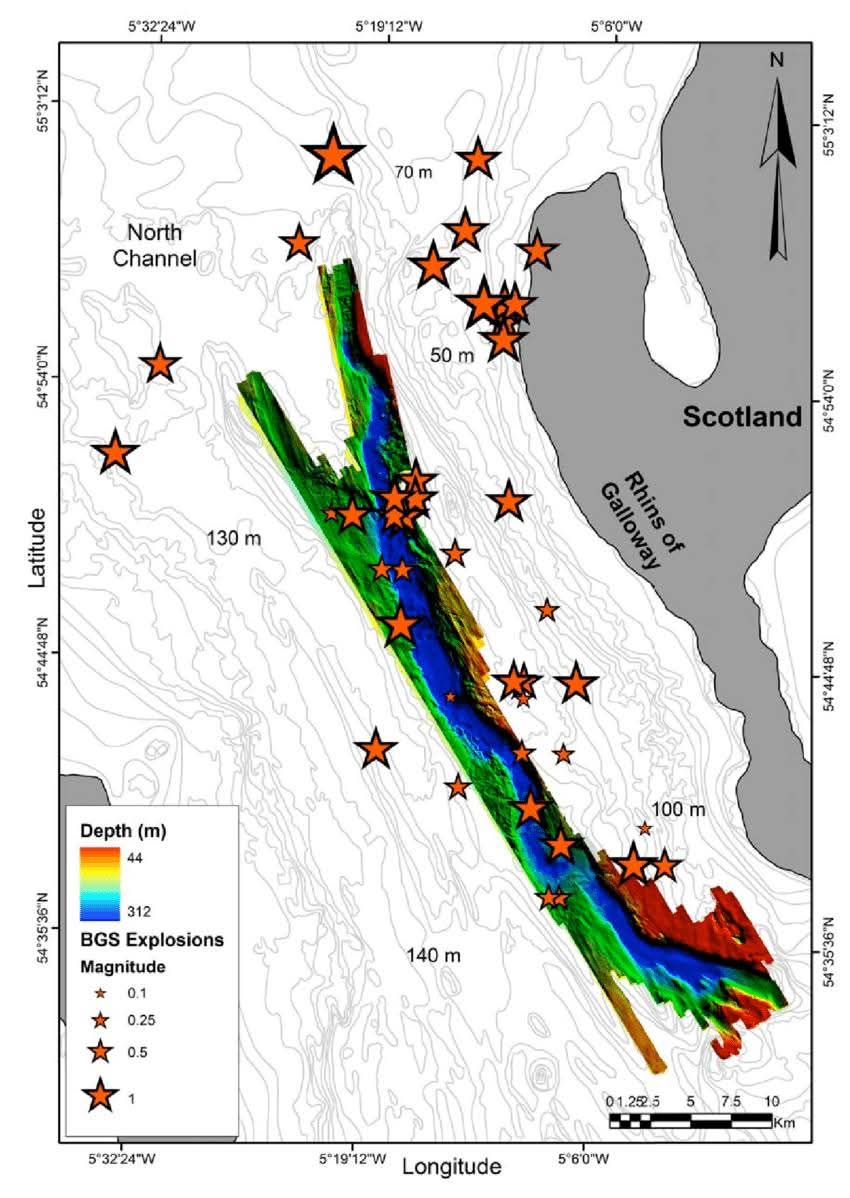
Between Northern Ireland and Scotland, hidden beneath the North Channel of the Irish Sea, lies one of the most alarming and least discussed environmental scandals in Europe.
Beaufort's Dyke is a natural glacial trench, 50 kilometres long, 3.5 kilometres wide, and plunging to depths of over 300 metres. It is also the United Kingdom's largest offshore munitions and chemical weapons dump!
Dumping began after the First World War and continued well into the 1970s. Over a million tonnes of surplus and decommissioned munitions were thrown in, including conventional explosives, artillery shells, radioactive rubbish and chemical weapons!
In July 1945 alone, 14,500 tonnes of artillery rockets filled with phosgene, a lethal choking agent used in the trenches, were disposed of there. Mustard gas shells, a horrific blister agent dating back to the Western Front, were also among the cargo dumped in the Dyke's early years.
For thirteen years, British government ministers flatly denied that any radioactive material had ever been deposited there. They were lying. Secret documents discovered in the Public Record Office revealed that approximately two tonnes of concrete-encased metal drums filled with radioactive laboratory waste and luminous paint were dumped in the Dyke during the 1950s. Officials had been calling environmentalists "scaremongers" and "conspiracy theorists" for raising the possibility.
When the idea of a Scotland-to-Northern Ireland fixed crossing bridge was floated in 2020, the Dyke immediately emerged as the principal obstacle. Explosive ordnance advisers warned that any piling work near it would pose an unacceptable level of risk. Britain built its bomb skip in exactly the wrong place.
The munitions have been corroding for decades. Fishermen pull unexploded ordnance in their nets. Phosphorus bombs washed up on Scottish and Northern Irish coastlines in 1995. An underwater explosion on 8 February 1986 registered as a 2.5 magnitude earthquake. According to independent disposal experts, sporadic explosions occur two or three times a month in the Irish Sea! The dyke has never been fully surveyed. The records are incomplete, destroyed, or still classified.
Buy the Dublin Time Machine a pint and support the DTM Book https://t.co/U7jtCrOTtb
36 years ago today, the greatest moment in Irish football happened
We beat Romania on penalties to reach the World Cup quarter-final
“The Nation holds its breath”
Spine-tingling 💚🇮🇪
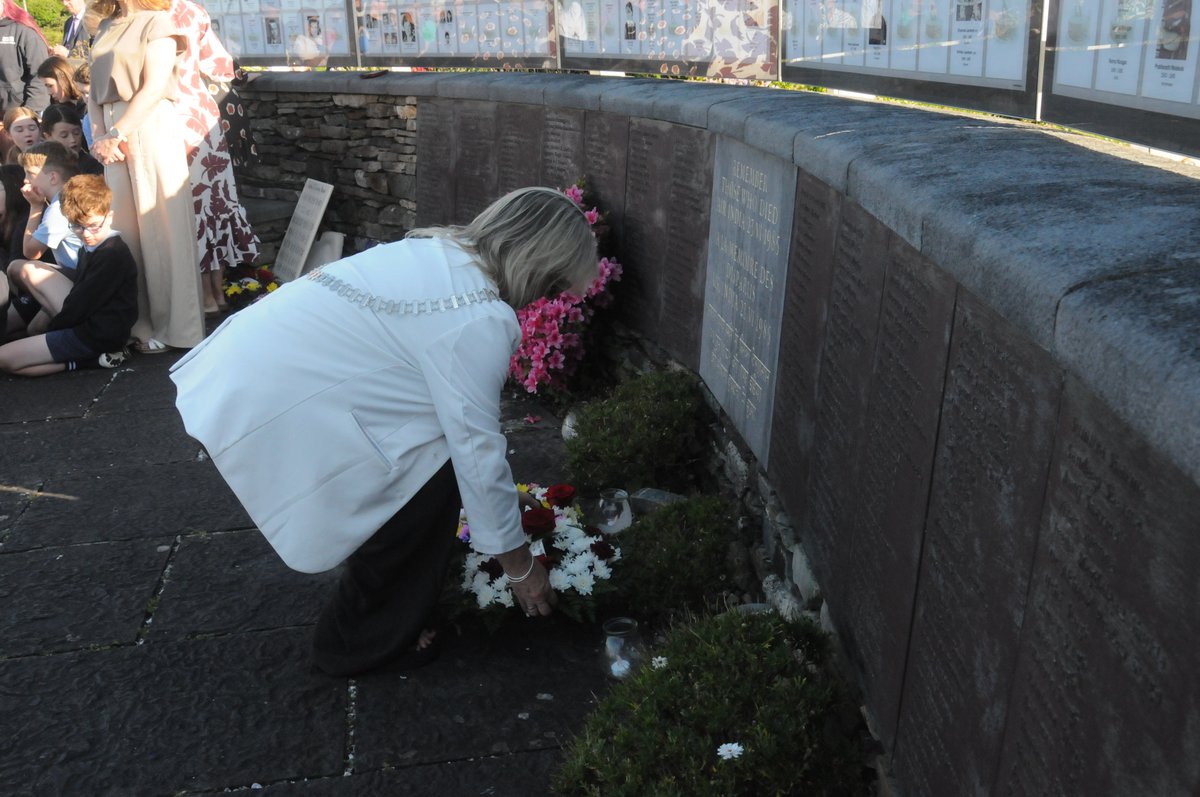
Cork County Council joined families, dignitaries and the local community at the Air India Memorial in Ahakista to mark the 41st anniversary of the Air India Flight 182 tragedy.
The ceremony honoured the 329 lives lost in 1985, with a minute of silence, tributes, wreath-laying and reflections from international representatives.
Wreaths were laid by family members and dignitaries including the Mayor of the County of Cork, Cllr. Mary Linehan Foley; The Honourable Gary Anandasangaree, Canadian Minister of Public Safety; Indian Ambassador to Ireland Manish Gupta; representatives from the Royal Canadian Mounted Police; the Naval Service, An Garda Síochána and Coláiste Pobail Bheanntraí.
The memorial in West Cork continues to stand as a lasting tribute, ensuring the victims are never forgotten.
Read more: https://t.co/Ue2YlHjIHj
@CanadaIreland@IndiainIreland
The biggest submarine graveyard on Earth is just off our coast and is full of priceless Nazi materials! When Germany surrendered in May 1945, the Allies had a problem on their hands. Some 156 Kriegsmarine U-boats were sitting in ports, potentially dangerous if the wrong people got ideas about a resurgence.
The bulk of them were moored at Lisahally in Lough Foyle, Northern Ireland, and Loch Ryan in Scotland, gathered in deep, sheltered anchorages well away from major commercial shipping routes while the great powers argued over what to do with them.
At Potsdam that summer, the Big Three haggled. The Soviets wanted an equal three-way split of the fleet. The Brits and Yanks, watching the Cold War take shape in real time, had no intention of handing Stalin a crash course in submarine technology. The compromise gave each major Allied power ten boats for technical evaluation, thirty in total, with the remainder to be sunk.
Personally I doubt Stalin genuinely accepted this, he likely reckoned he'd already had what he needed from the eight advanced Type XXI boats his forces captured in the eastern Baltic.
The British codenamed the disposal operation Deadlight. The plan was to tow 116 submarines to three designated zones in the Atlantic, roughly 100 miles northwest of Ireland, codenamed XX, YY and ZZ. Zone XX was the main scuttling area. Zone ZZ was set aside for aerial target practice, with 36 boats earmarked for the RAF and Fleet Air Arm to use for attack training.
Zone YY was a reserve position where naval forces could conduct gunnery practice if conditions allowed. For the rest, demolition charges were the intended method.
Didn't exactly go to plan though. Losds of these boats were sitting in exposed harbours for months and were in bits, and the North Atlantic in winter is lethal. Tow cables snapped and hulls that survived years of war gave up the ghost on the way out.
Fifty-six submarines foundered before reaching the target zones, sinking along the approach routes off the Irish and Scottish coasts. The ones that made it were mainly dispatched by gunfire rather than the planned explosive charges, because boarding them in rough water was suicide.
So now Ireland has one of the largest concentrations of submarine wrecks on the planet, scattered across the seabed at depths of between 50 and 200 metres off the northwest coast. Their ordnance is still live, but it's the other gear that's really priceless to scientists (and time travallers).
Because they were built before the atomic age, their steel isn't contaminated with the atmospheric radionuclides that taint all post-1945 metal. This makes them invaluable for making sensitive scientific instruments, and the salvage rights have been fought over ever since.
Buy the Dublin Time Machine a pint and support the DTM Book https://t.co/U7jtCrOTtb
Today in 1985, Air India Flight 182 disappeared from radar screens 90 miles off the coast of Ireland. The Boeing 747, named the "Kanishka", had originated in Toronto, taking on passengers and luggage at Mirabel Airport in Montreal before continuing as Flight 182 on the London leg of its journey to Delhi and Bombay. It was 45 minutes from Heathrow when a bomb detonated in the cargo hold. All 329 people on board were killed, 268 of them Canadian citizens.
The following day, 131 bodies were recovered in a search-and-rescue operation involving Irish, British and American vessels. Taoiseach Garret FitzGerald travelled to Cork with the Indian Ambassador, telling reporters that Indian authorities would lead the investigation.
Though no group ever claimed responsibility, it is widely accepted that the attack was the work of Sikh extremists linked to Babbar Khalsa, a militant organisation seeking to establish an independent Sikh homeland called Khalistan.
The bombing is considered an act of retaliation for India's 1984 military assault on the Golden Temple in Amritsar, the holiest site in Sikhism. The attack remains the deadliest act of aviation terrorism in history outside of the September 11 attacks.
The people of County Cork responded with extraordinary compassion. Families of victims arriving in the area were accommodated by local households, and the Gardaí ensured continuity of care, with the same officer assigned to each family throughout.
A permanent memorial was unveiled at Ahakista near Bantry on the first anniversary of the bombing. At its heart is a sundial, sculpted by Cork artist Ken Thompson, positioned so that the sun strikes it at exactly 7:13am in the morning, the precise moment of the explosion. A stone wall bears the name of every person who died.
Dr. Bal Gupta, Coordinator and Chair of the Air India Victims' Families Association, lost his wife of 20 years in the bombing and has visited the Ahakista memorial more than a dozen times. He has spoken warmly of the welcome extended by the people of Cork, saying the families were always grateful for their compassion and understanding.
In 2005, Canadian Prime Minister Paul Martin, Irish President Mary McAleese and around 180 family members gathered at Ahakista for a ceremony marking the twentieth anniversary. It was the first time a Canadian Prime Minister had attended the Ahakista commemoration.
Buy the Dublin Time Machine a pint and support the DTM Book https://t.co/U7jtCrOTtb
Let's tag along with our elite Army Ranger Wing for one of their most exciting unclassified missions, Operation Piano. It's September 2023, soldiers from Ireland's secretive military unit, the ARW aka Na Fianóglach, fast-roped from a helicopter onto a rolling cargo ship in the Atlantic.
What they found in her hold was 2,253 kilograms of cocaine with an estimated street value of €157 million, the largest drugs seizure in Irish history. Or as we call it in Blanch, a long weekend.
The ship was a bulk carrier called the MV Matthew who had discreetly changed her name and ownership in the summer of 2023. Until August of that year she'd been the MV Honmon, with a 20 odd tear clean record. Incidentally MV just means motor vessel, basically the ship has a diesel internal combustion engine. 21st century Earth is nasty.
Anyway, MV Matthews new owners registered through what intelligence analysts suspected was a Marshall Islands shell company, and sent it to South American waters to load cargo. Them shell companies act as anonymous, paper-only fronts that hides the true identity of a ship's owner. The Marshall Islands corporate registry guarantees absolute anonymity, allows instant online setup, and refuses to disclose the true identities of ship owners to foreign law enforcement or tax authorities.
Then for fifteen days crossing the Atlantic, MV Matthew falsified her position at sea, broadcasting a fake course while tracking a very different route toward Ireland. The US Drug Enforcement Administration (DEA) had already tipped off the GardaÍ through MAOC-N, the European maritime drug intelligence hub in Lisbon.
The dastardly drug dealers who ran MV Matthews plan was to transfer the cocaine to a fishing trawler called the Castlemore, bought for €200,000 cash by two gobshites who knew feck all about boats cause she collapsed when the Castlemore ran aground on a sandbank off Wexford in a storm.
Castlemores crew were rescued by the Coast Guard and arrested. The Matthew, with its captain medically evacuated after what appeared to be a crew dispute, and with nowhere to deliver its cargo, drifted erratically off Waterford. Someone in Dubai was attempting to direct the ship remotely via encrypted messaging apps.
The Naval Service vessel LÉ William Butler Yeats moved to intercept. When the Matthew refused to stop and swung erratically toward her, the Navy fired a warning shot across the bow. Then the Air Corps AW139 helicopter came in low, and our Rangers dropped.
They met resistance near the bridge. Crew members burned bales of cocaine as the boarding party moved through the ship. And unlike what your mate down the pub might tell ye, that wouldn't have caused our lads to get off their faces high. Inhaling the fumes would cause acute chemical poisoning and severe respiratory distress.
Luckily within minutes the ARW had control. The Matthew was piloted into Cork Harbour to a crowd of onlookers who had gathered on the quays. Eight men, from Ukraine, Iran and the UK, were later jailed for between 13 and 20 years. The people directing the operation from Dubai remain free. In November 2025, the ARW were honoured at a ceremony in Lisbon for Operation Piano by MAOC-N.
Buy the Dublin Time Machine a pint and support the DTM Book
https://t.co/U7jtCrOTtb
Why do I have the suspicion that Sioux Falls has a sign somewhere proudly proclaiming that they are the number 10 financial centre of the US? Source: https://t.co/eJBE2JFrey
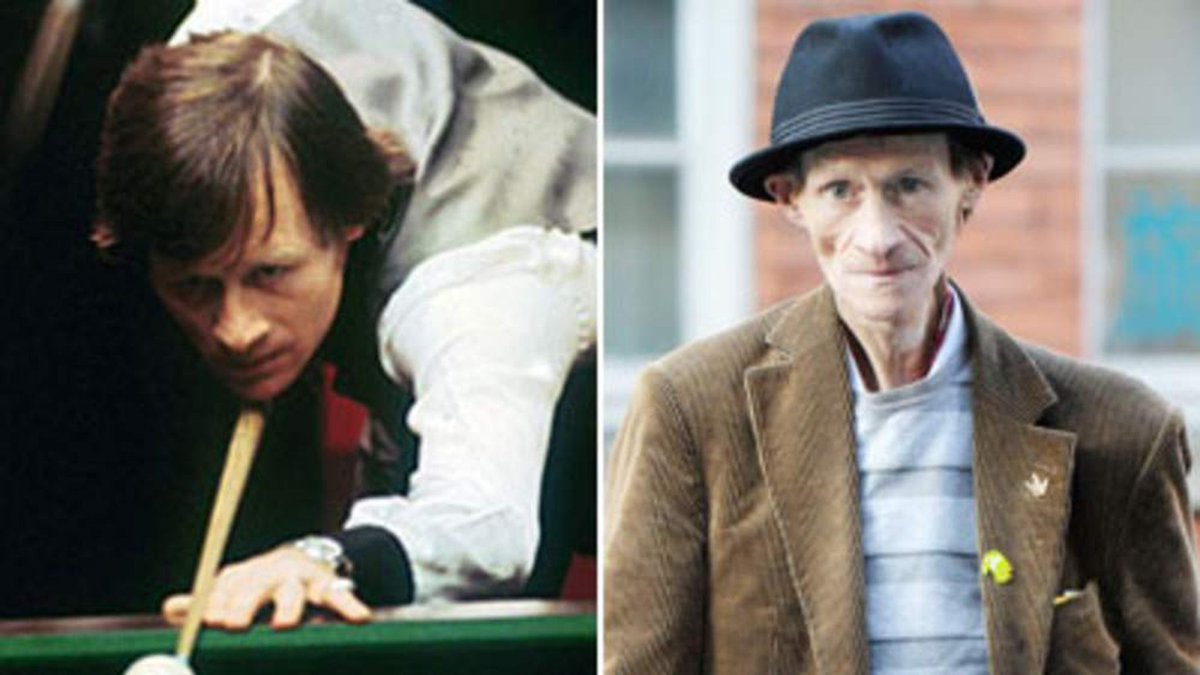
Alex "Hurricane" Higgins was born in Sandy Row, Belfast in 1949, and discovered snooker at 11 at a local club called the Jampot. But it wasnt his only love as a boy, at 14 he briefly moved to England to become an apprentice jockey but he got too heavy to ride and came home.
By 16, he had compiled his first maximum break. Higgins won the Northern Ireland Amateur Championship and the All-Ireland Amateur Championship in 1968, both on his first attempts. Three years later, he turned pro bringing his aggressive, high speed game when players then were slow strategists. A deadly quote about him at the time, which was probably meant as an insult, was Higgins played it like a man with somewhere better to be.
In 1972, in his first season as a professional, Higgins won the World Snooker Championship defeating the reigning champion John Spencer 37-32 in the final. He was 22 years old. He became the first qualifier to win the title and the youngest world champion in history, until Stephen Hendry in 1990. In the 1970s, Higgins was the sport's biggest draw but actually embarrassed and irritated the more reserved figures who governed snooker.
He reached the world final in 1976 losing to Ray Reardon, and again in 1980 losing to Cliff Thorburn. That didnt dent his popularity though people just loved to watch him play and he was electric on BBC's snooker coverage as it expanded through the late 1970s.
He was a badboy with hunched shoulders, legging it around the table, a smoke and a jar and the kind of jerky energy that made you think he might batter someone. For younger readers rightly shocked you could be a sportsman on telly then with a cancer stick hanging out of your lip, cigarrette brands Embassy and Benson & Hedges bleedin sponsored the yoke!
Anyway Higgins second world title, won at the Crucible Theatre in Sheffield in 1982, produced one of snooker's defining moments. In the semi-final against his mate Jimmy White, Higgins found himself trailing 15-14 in frames and down 59 points with the match on the line. What followed was a 69 break compiled under almost unbearable pressure, one of the most celebrated clearances the sport has ever seen.
He won the frame, won the match, then defeated Ray Reardon 18-15 in the final to claim his second world title. It was iconic how a tearful Higgins got his wife Lynn and baby daughter Lauren onto the arena floor to join him. She would later divorce him and prevent him seeing his daughter. As did his second wife Cara.
Higgins record included World Championship in 1972 and 1982, Masters in 1978 and 1981, the UK Championship in 1983 recovering from 0-7 down to beat Steve Davis 16-15 in a match that had the crowd in uproar.
He also won the World Doubles alongside Jimmy White in 1984 and captained the all-Ireland team to three consecutive World Cup victories between 1985 and 1987. His Irish Masters victory in 1989, defeating a young Stephen Hendry 9-8 in what commentators called "The Hurricane's Last Hurrah".
As is so often the case with talent, Higgins drank heavily, gambled recklessly, and seemed chronically unable to stop self destruction. In 1986 he was fined £12,000 and banned from five tournaments after headbutting an official who had requested a drug test.
In 1990, following an incident in which he punched a press officer, he was banned for the entire 1990-91 season. And those werent isolated incidents like. His ranking fell away through the 1990s as his lifestyle took its toll on his game and his health. His ranking collapsed. The sport he had transformed got all professionalised and the new generation were sober and clean cut and sponsor friendly.
Tragically in 1998 he was diagnosed with throat cancer. Treatment left the already slim man an absolute shadow of himself. He even lost the ability to eat solid food for long periods. The Hurrican who thrilled millions lived out his final years in sheltered accommodation in Belfast. He died on 24 July 2010, aged 61, alone in his flat.