From December 1, gemini-2.5-flash calls get their answer from gemini-3.5-flash-lite. Google asked users to migrate before that date.
Over 500,000 files on GitHub still name gemini-2.5-flash. Is one of them yours?
Okapi finds these breaking changes and opens a PR with the fix.
Link in reply👇
Your vibe-coded app started as a side project and now your colleagues use it every day? Here are the 5 GitHub tools I'd install before it goes to production 👇
@Jimileasbc85181 Yes, when the provider announces it: a notice saying model X now routes to model Y is a breaking change, and Okapi opens a PR on every repo calling X.
Unannounced redirects are out of reach today, for Okapi and for your API layer too: a redirect passes through it with no error.
For a few weeks I've been digging into breaking changes in the third-party APIs a company depends on.
Nowadays, companies run more tools than they used to, and with time, it will drastically increase. First, because of vibe coding and apps built by agents, which can hallucinate an endpoint or a model name. And secondly, because there are more and more new tools in production for every team, aiming to be more productive or more profitable. Those tools add more connectors to your stack.
Maintaining a handful of connectors is manageable, but when you have dozens integrated with several apps and for different cases, it becomes a huge and complex workload.
We've seen cases where one missed change gets very expensive. An endpoint that doesn't work in production can take an app down for several minutes. It can have an impact on your team's productivity and on your sales, or simply on your image, because your app looks less reliable.
To fix that, we built okapi. Its agents scan your repo and learn how your code calls each API. When a vendor changes something, Okapi opens pull requests that keep those connections up to date.
As an example, here are 13 breaking changes coming in November:
• Nov 1, Jira Software Cloud: the /rest/agile/1.0/ issue endpoints that page with startAt are removed. Use /rest/software/1.0/ and page with nextPageToken.
• Nov 2, Shopify: the Global Catalog REST API stops answering.
• Nov 7, Zoom: Meeting SDK for Web below 4.0.0 stops working.
• Nov 13, AWS Bedrock: Claude 3 Haiku, 3 Sonnet, 3.5 Sonnet and 3.7 Sonnet reach end of life in some regions.
• Nov 16, LinkedIn Marketing API: version 202511 is turned off.
• Nov 16, Discord: the guild channels endpoint stops returning channels the bot can't view, with no error.
• Nov 17, Gemini API: the preview TTS and Live models shut down.
• Nov 18, Auth0: Rules and Hooks stop running. Their logic has to move to Actions.
• Nov 19, Azure OpenAI: o1, o1-pro, o3, o3-pro, o3-mini, o4-mini and o3-deep-research retire.
• Nov 23, Cloudflare: the DNS settings API stops accepting foundation_dns.
• Nov 30, Anthropic: claude-sonnet-4-5-20250929 retires.
• Nov 30, OpenAI: the reusable prompts API (v1/prompts) shuts down.
• Nov 30, OpenAI: the Evals API (/v1/evals) shuts down.
This is just a small sample, there are a lot more that are going to happen. If you want to make sure none of them breaks your app, just install okapi on your GitHub repo. It's free to use.
If you want to know more, DM me or just reply. And if you try it, I'd love your feedback.
The link to try okapi is in the reply.
Yes for retirements: when a provider retires an alias, or every dated snapshot behind it, Okapi flags the code that calls the alias. A silent repoint to a new snapshot isn't tracked yet. Which providers do you route to most? How often does a model change bite you? how do you catch it today? I'd love to know more about your case
A working link filters applications drastically: If yo udon't have a product to show, you can't apply. No way to hide it through a deck! And in 2026 having nothing to show is itself the signal. It also filters founders, not just files. Like, asking for the product attracts builders.
Those 3 Claude Code skills allow to ship websites that don’t look vibe-coded.
Out of the box, Claude Code gives you a generic template. These 3 fix that:
- Animations (Emil Kowalski): micro-interactions, timings and transitions. It puts motion on the page.
https://t.co/mk37ZyFjpL
- Impeccable: 23 commands that fix type, contrast, structure and spacing in one instruction.
https://t.co/T3hPjAZEJs
- Taste: Claude follows a real design system instead of making up states and behaviors.
https://t.co/Wl6aRI7POs
Enjoy 😉
A 401 doesn't always mean your token is wrong.
lnxlink, an open-source Linux app, got one from @quayio for sending a GET where the API only accepts PUT and DELETE.
With Manifest API Bot in your repo, this is what catching it looks like on your Monday morning.
Link in the reply ⬇️
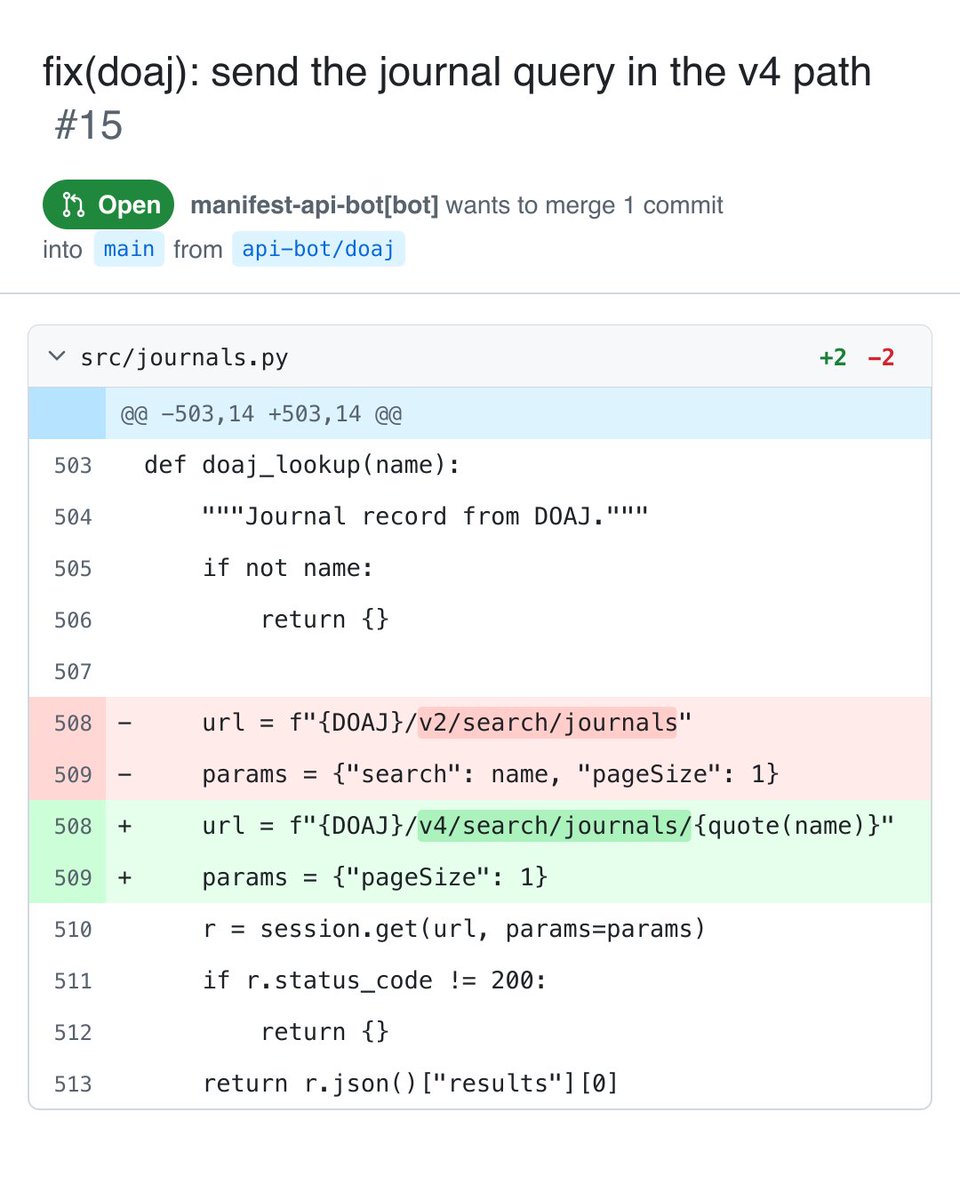
APIs retire old versions. The data stops coming when your code turns the 404 into an empty result, and nothing crashes.
With Manifest API Bot in your repo, this is what catching it looks like on your Monday morning.
Link in the reply.
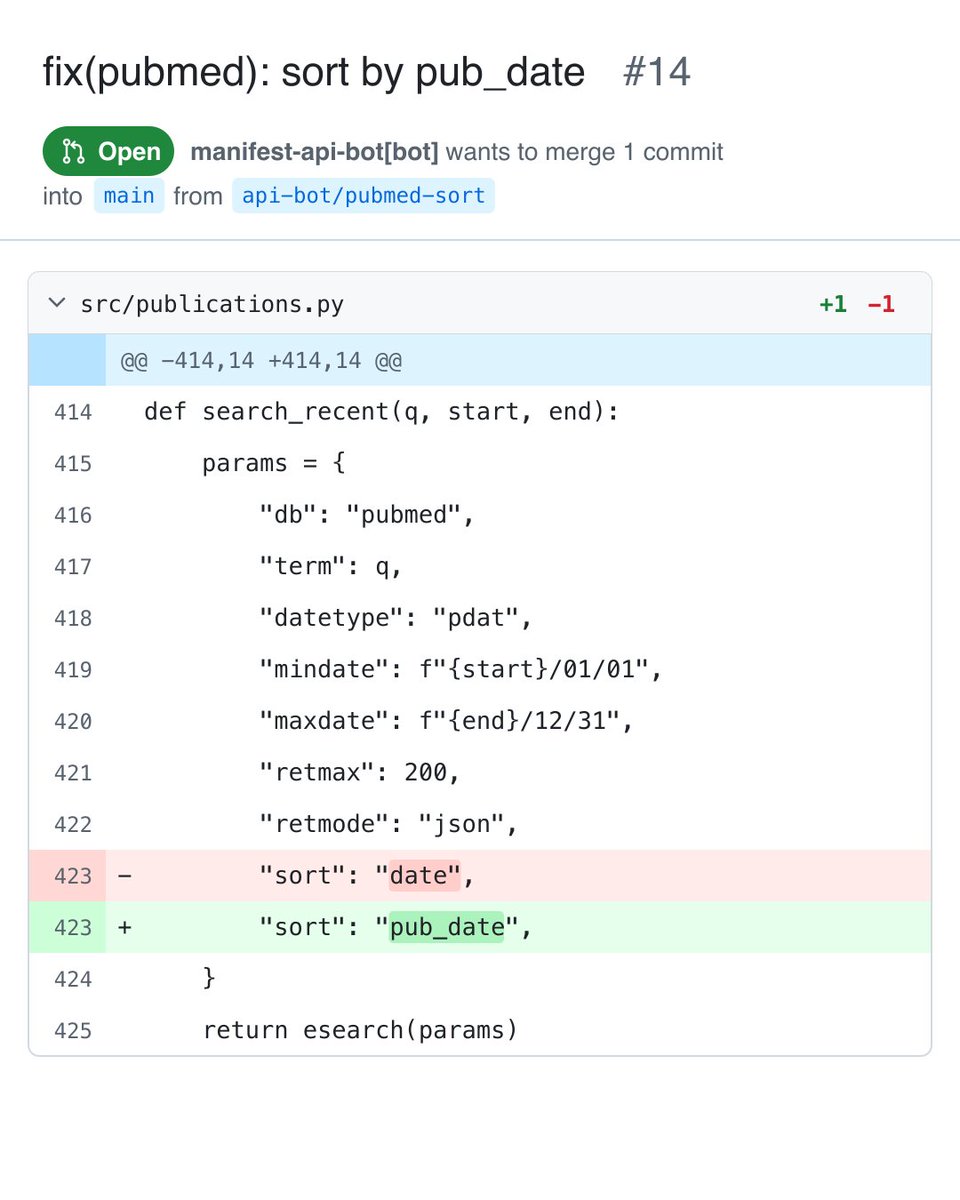
Some APIs ignore a parameter value they don't recognize. The call succeeds and your results come back in the wrong order, with no error.
With Manifest API Bot in your repo, this is what catching it looks like on your Monday morning.
Link in the reply.
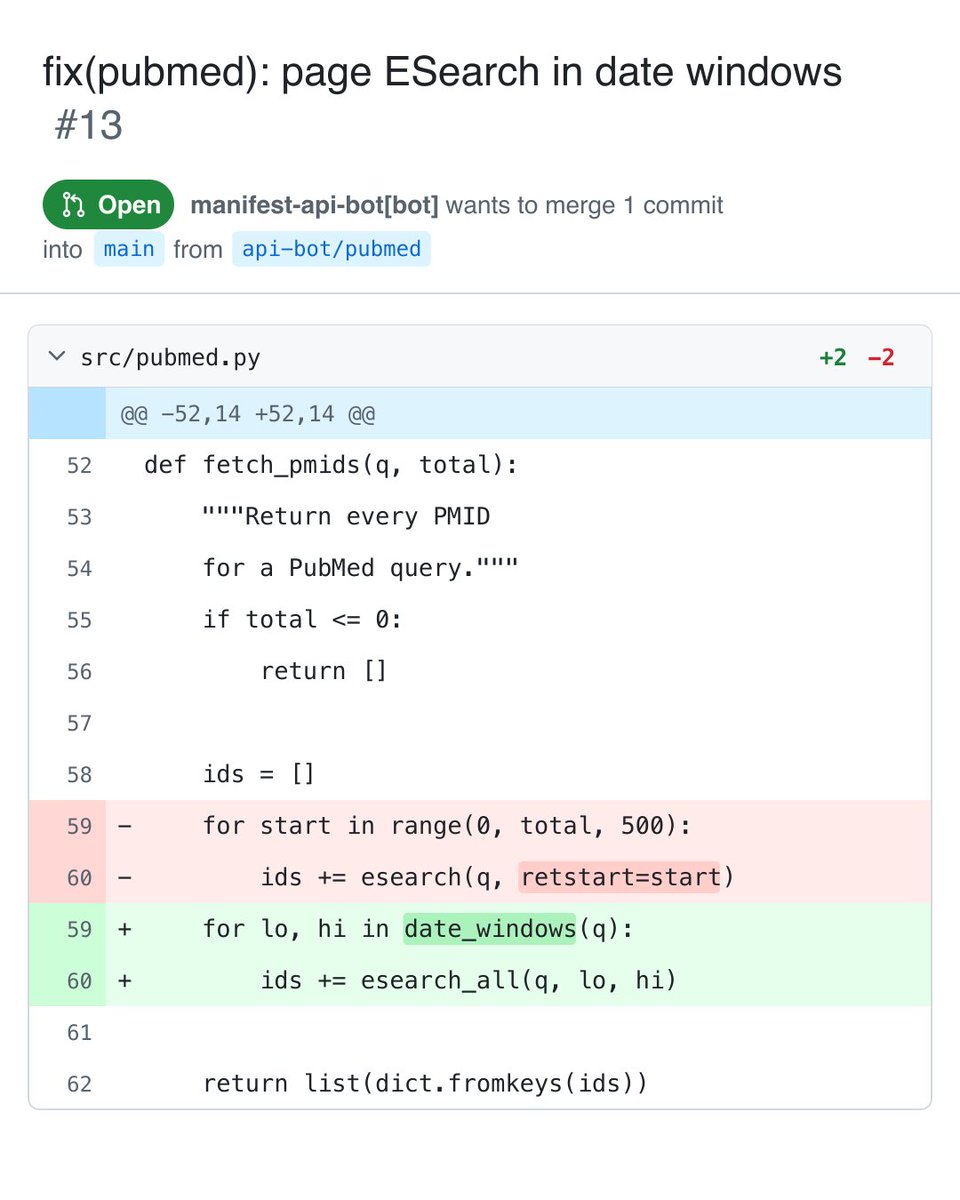
Some APIs hit a hard limit and still answer HTTP 200, with the error buried in the body. Your code thinks it got everything and never sees the rest.
With Manifest API Bot in your repo, this is what catching it looks like on your Monday morning.
Link in the reply.
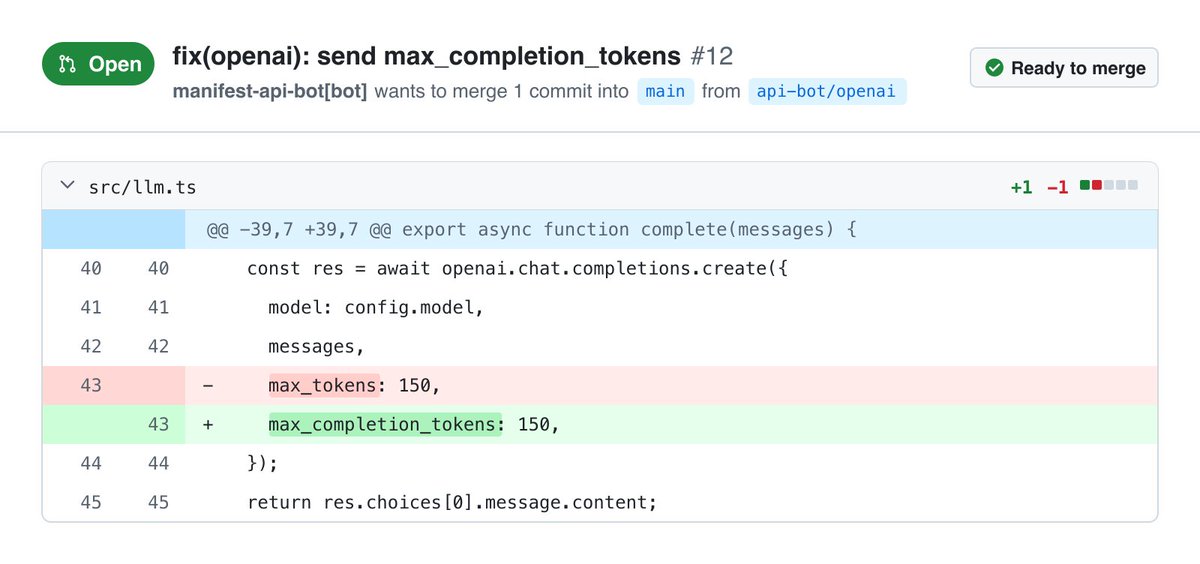
Does your code still send max_tokens to OpenAI?
gpt-5 and o4-mini reject it with a 400. Zed, LibreChat and Semantic Kernel all had to fix it.
With Manifest API Bot in your repo, this is what an API change looks like on your Monday morning.
Link in the reply.