Only two years ago Labour pledged to allow 1.5 million homes to be built during this Parliament. Among people I know, one of the main reasons to vote Labour was the hope that they would build some houses.
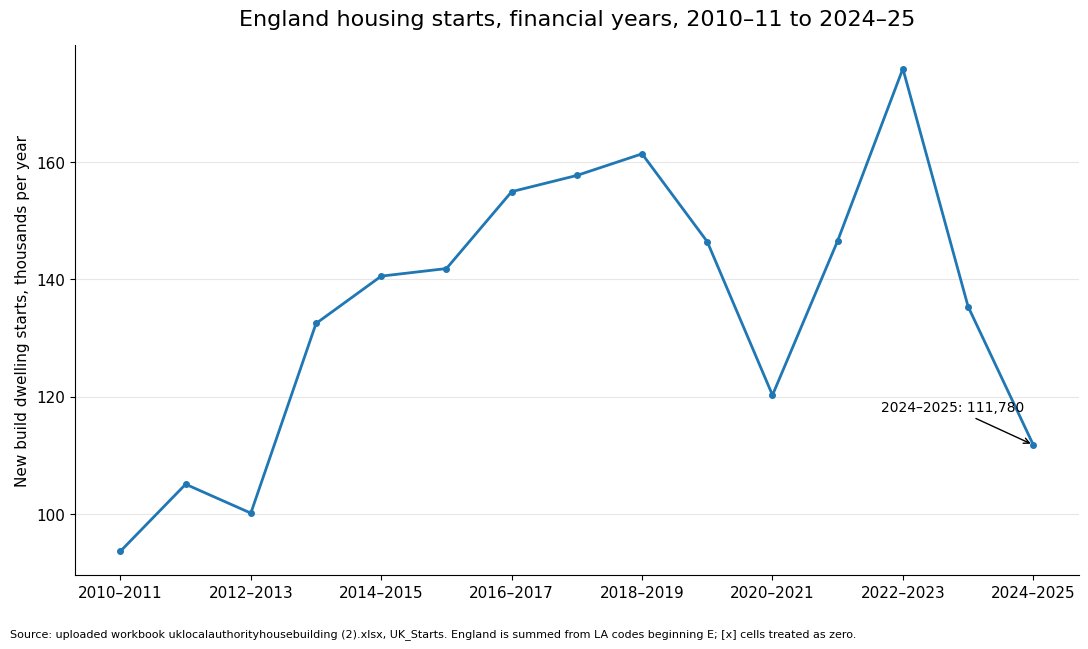
Since then, only ~217k new homes have been completed in England. Housing starts have fallen to their lowest in over a decade – even lower than during Covid. Housebuilding in London is down by 75% – to 5,891 starts in 2025 compared to a target of 88,000.
This failure is shared by the Conservatives, who introduced a swathe of terrible building safety regulations after Grenfell that have made it impossible to build in London (and have, incidentally, helped to ruin many leaseholders as well). But Labour hasn't touched these rules. And it has done nothing of note to make it easier to build in other ways.
It has also passed a Renters' Rights Act that locks landlords into tenants indefinitely unless they sell or move back in to the property. Tenants can challenge any rent rise, and face no penalty for wrongful claims (under the old system, they faced the risk of their rent being raised, which cannot happen anymore).
The law even introduces de facto rent controls by allowing new tenants to immediately challenge rents they have just agreed to. It is designed to clog up the tribunals, and tenants have every incentive to challenge rent rises under any circumstance.
The natural response of landlords has been to leave the market ever since these rules were first floated (again, under the Conservatives). That has driven rents up even higher and made it harder to find places to rent.
Today the trend is so obvious that the government is now floating *explicit* rent controls, on top of the de facto ones introduced in the Renters' Rights Act.
The doom spiral we are in is pretty clear:
- Do nothing significant to expand housing supply;
- Introduce "renters' rights" that make it much riskier and costlier to be a landlord;
- When landlords sell their properties, driving up rents and the scarcity of rented homes, introduce 'temporary' rent controls. ← You are here
- With an election looming, extend the rent controls so they are de facto permanent.
- As even more landlords sell to flee the market, introduce a ban on selling rental properties into owner-occupation.
- You have now expropriated 19% of the English housing market, and destroyed the build-to-let sector altogether.
If I was a landlord, I would sell to get out of the market ASAP while it's still possible. For renters, this will make it even harder to find decent places to live and move around when circumstances change (eg, you have a new job or want to start a family).
Much of the British left seems intent on destroying the private rental market. But Labour has also managed to preside over the worst collapse in housebuilding in modern times, apart from the financial crisis, after campaigning on promises to expand it. An abject failure in almost every way.
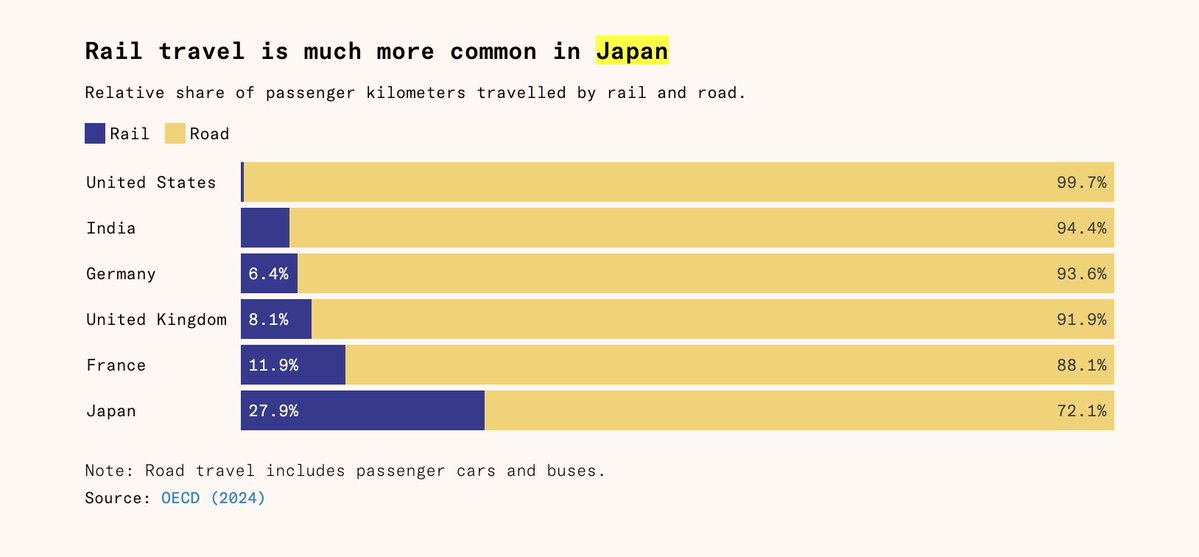
Japan has the world’s best railway system. 28% of Japanese passenger-kilometers are by rail. Germany manages 6.4%, and the USA manages 0.25%. Just one Japanese company, JR East, carries more passengers than China’s entire railway system, and four times as many than Britain’s.
What is the secret of its success?
https://t.co/rLumhzU3of
Part of the answer is that Japanese railway companies don't just operate trains. They run hospitals, supermarkets, department stores, amusement parks, office complexes, and retirement homes around their railway stations. One of them co-built Tokyo Disneyland. Another owns a baseball team. A third created its own all-women musical theater in 1914, which is still running today.
The logic is elegant: a railway increases the developable value of land around its stations, but normally that value accrues to landowners, not the railway operator. Japanese railway companies captured this value by owning and developing the land themselves.
About half of the revenue of Japanese railway companies comes from ‘side businesses’ like these. Allowing railway operators to capture more of the value they created meant that more lines were profitable, making a far larger system financially viable.
This may sound like a radically novel approach. But in fact, an exactly similar system existed in nineteenth-century America. The success of Japanese railways does not lie in some unreplicable feature of Japanese culture: it lies in good policy. If they learnt the right lessons from it, many countries could replicate Japan’s success.
Read more (much more) in @Borners1's & @carto_graph's new piece for @WorksInProgMag Issue 23.
@HMRCcustomers Hi,
I am employed and self-employed (using cash basis). In tax year 23/24 I made a profit. Paid the tax (from 23/24 profit) in tax year 24/25. Can this paid tax be treated as expense in tax year 24/25? Thx
The Solskjaer bounce was so great that he took over a team in 6th … & finished the season in 6th.
My memory is less of those 14 wins in his first 19 games in all comps & more the deeply concerning results/displays from mid March onwards.
But hey let’s revise the past
#mufc
In Westminster I often hear people say they want an “industrial strategy like China’s”. What they usually mean is subsidise my preferred industry.
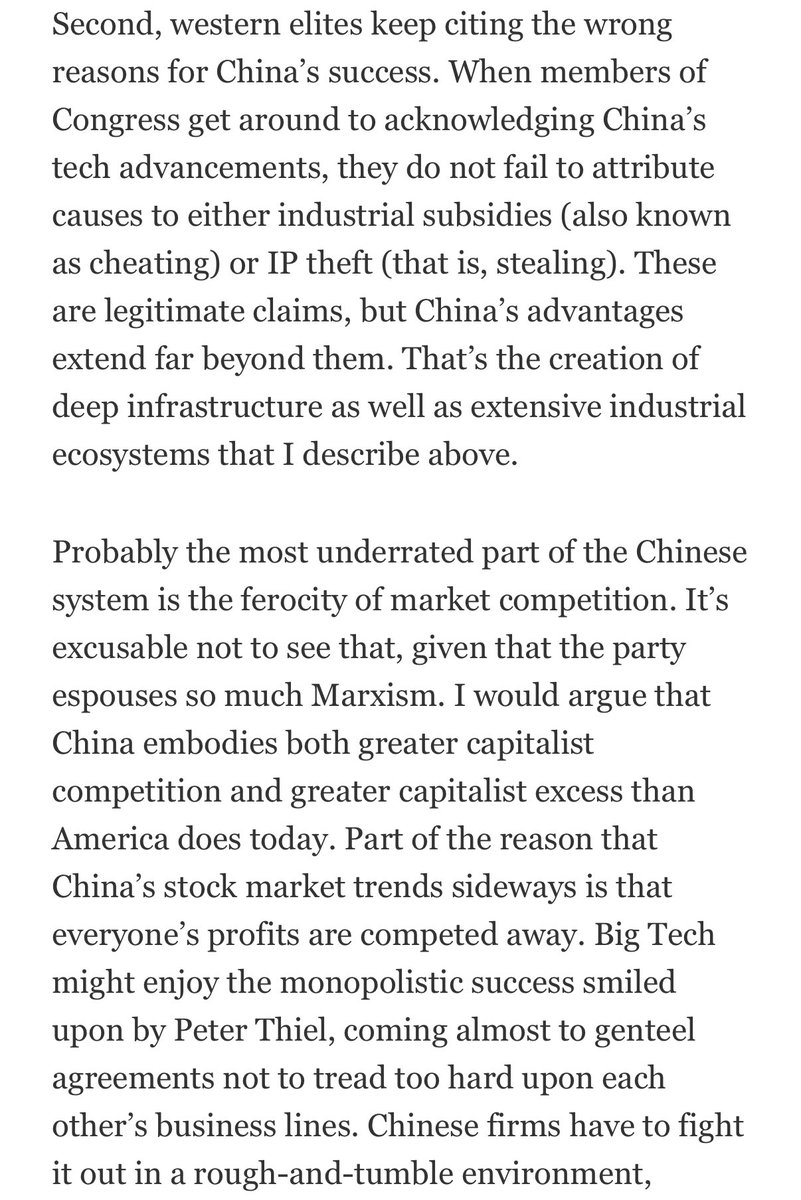
That misses what actually explains China’s success. I think @danwwang’s analysis here is right. Western elites keep citing the wrong reasons (subsidies, IP theft). But China’s advantage isn’t just state support; it’s an unusually hard-edged supply-side system.
Competition is intense. Inefficient firms are allowed to fail. Profits are competed away. Labour and capital move quickly. People are fired mercilessly for not delivering. Firms scale fast or disappear. Things get built.
In many sectors, China looks more market-driven than Western economies that describe themselves as capitalist. Entry and exit are easier, firm churn is high, and there’s far less protection of incumbents. That’s how whole industries get taken over.
The tension is that most people advocating “China-style industrial strategy” are very comfortable with subsidies, but much less comfortable with the reforms that would actually move Britain in a Chinese direction: more dynamism, faster reallocation, easier hiring and firing, fewer barriers to building, and a greater tolerance for firms failing.
It’s revealing that “learn from China” almost always translates into “give me money,” never “unleash competition.” No one wants to do the thing that actually made China win.
From: https://t.co/S7SLGvV2qV
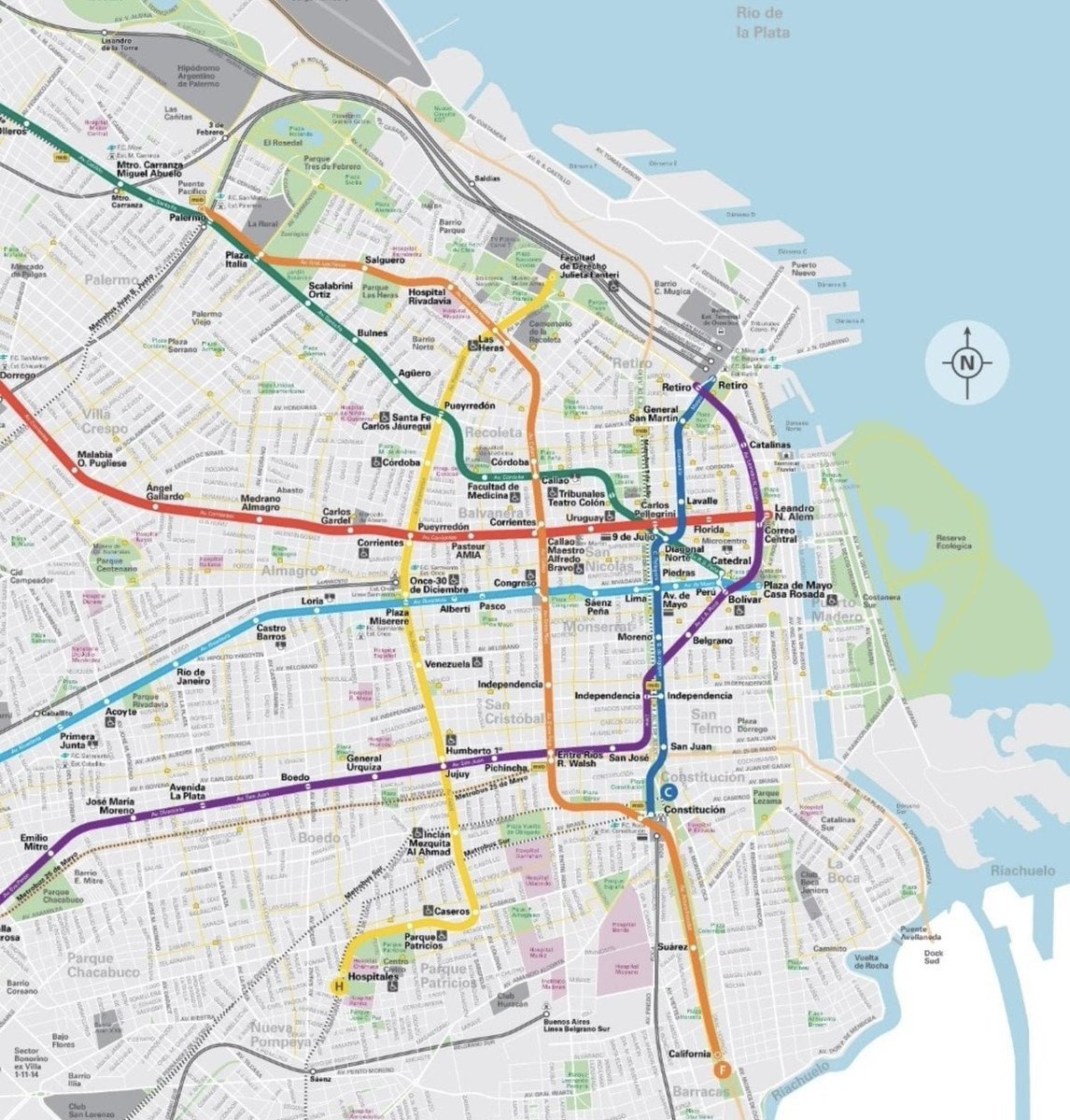
Buenos Aires is the most walkable city in the Western Hemisphere.
But nobody talks about the city’s subway system.
If you live anywhere near a stop, you can get downtown in 25 minutes for 50 cents. Safe. Clean. Fast. Not ruined by constant delays. Tons of commuters use it daily.
When foreigners show up, they just use Uber for everything. But if you live near the subway, use it. it is often faster than driving.
The only city in the USA with a comparable system is NYC.
Truly the most livable city on this side of the world.