Starship V4 is gonna be a giant ass ship 🚀
Elon says the V4 ship will be about 70 m long. That's roughly 40% longer than today's ship, with over 60% more propellant 🔥
Engines go from 6 to 9, with 3 more Raptor Vacuums, and they'll be higher thrust V4 engines.
Here's what that looks like next to V2 and V3 👇
(concept image, V4 isn't built yet)
Starship V4 will be ~70m long, which is roughly a 40% length increase and allows >60% more propellant load.
Engine count will be raised to 9, with 3 more Raptor-Vacuum engines added, and these will be higher thrust V4 engines.
NASA's new Moon plan has Starship pushing Orion all the way to the Moon 🌕 The catch: Orion has to ride backward 🔄
Its fuel tanks were built for the fuel to settle at one end. Pushed from the other side, the liquid slides to the wrong end. ESA and Airbus are reworking the tanks.
It's also a much harder shove. Orion was built for about 0.1 to 0.15 g on the way to the Moon. With Starship it's close to 1 g, from the opposite direction, so the structure needs new certification.
Source: Lockheed Martin's Kirk Shireman via Ars Technica
NEW: NASA's Orion spacecraft will have to fly backward to the Moon while attached to SpaceX's Starship, requiring major changes to its original design
Under NASA's revised Artemis plan, Starship will dock with Orion in high Earth orbit and propel both spacecraft toward the Moon, with Orion's service module facing forward
This sends propellant toward the wrong end of Orion's tanks, requiring ESA and Airbus to modify them
Starship could also subject Orion to nearly 1 g of acceleration, up to 10 times what it was originally designed to experience
Separately, the revised Artemis III mission will keep Orion in low Earth orbit for two weeks, creating new thermal and orbital debris risks
Lockheed Martin is now working three shifts to meet its 2027 launch target, on a schedule it says already has "zero margin"
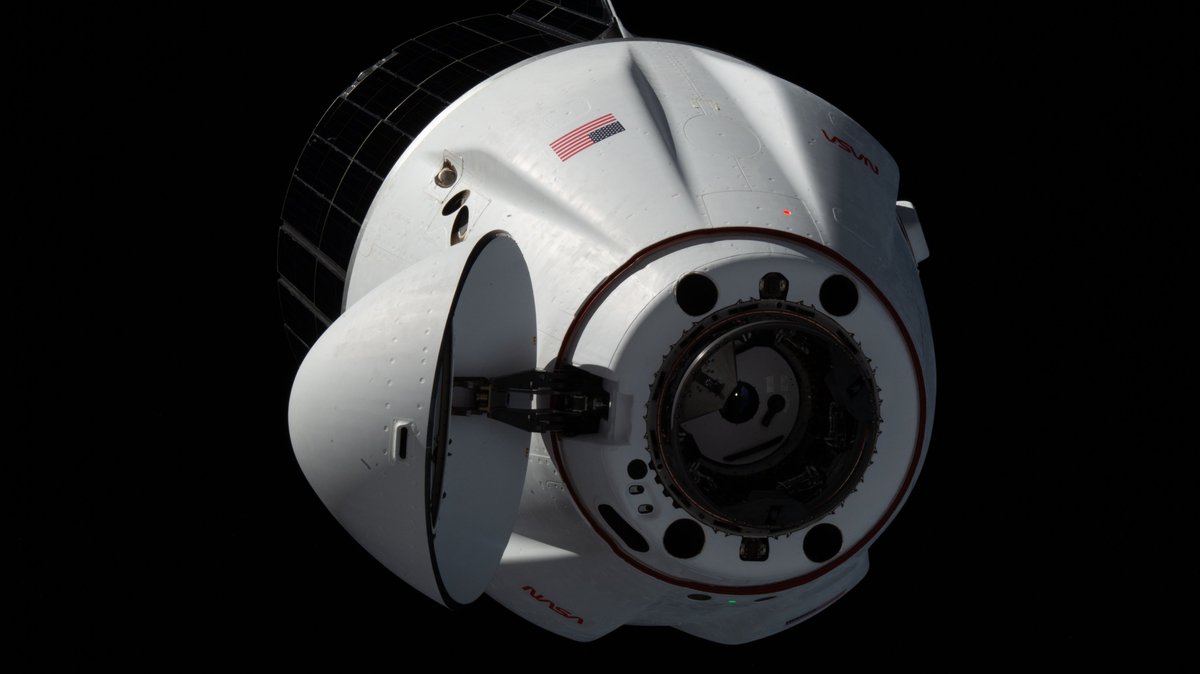
The rocket that launched the first piece of the ISS flew once and was thrown away. The one that launched Dragon there in October came back and landed.
• Nov 20, 1998: Zarya launches and circles Earth alone for 16 days
• Dec 6, 1998: Endeavour catches it and mates it to Unity in the payload bay
• September 2000: The station is already four pieces
• November 2000: People move aboard and never leave
• October 2026: A Falcon 9 booster lifts Dragon to the station and comes back to land
• Today: That Dragon undocks on its fourth trip
From my years as a gas turbine tech: hardware you inspect, fix and run again teaches you something every cycle. Hardware you throw away teaches you once. That is how reuse turns into reliability and faster turnaround.
Then and now:
• Zarya in 1998: ~43,000 lb, ~1,650 cu ft of living space
• ISS today: ~925,000 lb, ~13,700 cu ft of living space
One module. 26 years of continuous crew. Now the rockets come back too.
Sources: NASA, SpaceX #ISS
@sciam 167 years of the best minds in math, and now a claim that AI helped crack it. If the proof holds up under review, this is one of the biggest moments math has ever had. Worth letting the experts check every line first.
@StarWalk Happy birthday ISS. Zarya circled Earth alone for 16 days before Endeavour brought Unity up to meet it. I put the 1998 to today timeline side by side here:
The rocket that launched the first piece of the ISS flew once and was thrown away. The one that launched Dragon there in October came back and landed.
• Nov 20, 1998: Zarya launches and circles Earth alone for 16 days
• Dec 6, 1998: Endeavour catches it and mates it to Unity in the payload bay
• September 2000: The station is already four pieces
• November 2000: People move aboard and never leave
• October 2026: A Falcon 9 booster lifts Dragon to the station and comes back to land
• Today: That Dragon undocks on its fourth trip
From my years as a gas turbine tech: hardware you inspect, fix and run again teaches you something every cycle. Hardware you throw away teaches you once. That is how reuse turns into reliability and faster turnaround.
Then and now:
• Zarya in 1998: ~43,000 lb, ~1,650 cu ft of living space
• ISS today: ~925,000 lb, ~13,700 cu ft of living space
One module. 26 years of continuous crew. Now the rockets come back too.
Sources: NASA, SpaceX #ISS
🇹🇷 History today: Türkiye became the first country in the world to put an unmanned fighter jet into service.
Baykar delivered the first 3 KIZILELMA jets to Turkish security forces, a dream the company says it set out to build 20 years ago.
In 1925, Atatürk ordered the founding of the Turkish Aeroplane Society and told its first president to dream big, even of building planes. A century later, the jet has no cockpit at all.
Proud day to be a Turk. ✈️🍎
#KIZILELMA #Türkiye #Baykar #Aviation #NATO
KIZILELMA insansız savaş uçağı, Türk Silahlı Kuvvetleri'nin envanterine girdi.
— İlk 3 uçak teslim edildi.
— Türkiye, tarihte insansız bir savaş uçağını envanterine alan ilk ülke oldu.
Btw Zarya means "Sunrise." The U.S. paid for it and Russia built it. Khrunichev made it under a subcontract to Boeing for NASA, which is why NASA counts it as a U.S. component of the station even though Russia launched it.
The rocket that launched the first piece of the ISS flew once and was thrown away. The one that launched Dragon there in October came back and landed.
• Nov 20, 1998: Zarya launches and circles Earth alone for 16 days
• Dec 6, 1998: Endeavour catches it and mates it to Unity in the payload bay
• September 2000: The station is already four pieces
• November 2000: People move aboard and never leave
• October 2026: A Falcon 9 booster lifts Dragon to the station and comes back to land
• Today: That Dragon undocks on its fourth trip
From my years as a gas turbine tech: hardware you inspect, fix and run again teaches you something every cycle. Hardware you throw away teaches you once. That is how reuse turns into reliability and faster turnaround.
Then and now:
• Zarya in 1998: ~43,000 lb, ~1,650 cu ft of living space
• ISS today: ~925,000 lb, ~13,700 cu ft of living space
One module. 26 years of continuous crew. Now the rockets come back too.
Sources: NASA, SpaceX #ISS
@latestinspace In gas turbines we fought FOD at a few hundred mph and it still chewed up blades. At 16,000 mph a paint fleck carries about 6x the energy of the same mass of TNT, which is why shields use a thin outer layer to shatter it first.
@SPACEdotcom Star Citizen already offers that life among the stars. Piracy, bounty hunting, smuggling, all in one huge persistent universe. New ships just keep coming too o7
@wonderofscience Voyager 1 took the original Pale Blue Dot from about 6 billion km away in 1990. Cassini brought it back with Saturn's rings in the frame. Same tiny speck, same humbling feeling 🌍
📡 Voyager 1 (ボイジャー1号) just hit one light day (1光日) from Earth.
At 4:16 AM CT this morning, it crossed the point where a radio message needs a full 24 hours to reach it. The answer takes another 24 hours to come back.
It launched Sept 5, 1977. Started with 470 watts. Loses about 4 watts every year.
I spent 10+ years around gas turbines making megawatts. Voyager is still doing science from 16 billion miles out on less power than a microwave 🤯
ボイジャー1号、まだ現役。
@BowieHole Nothing happened to it! Ship 43 is reportedly lined up for Flight 16 and still needs its static fire, per public reports. Ship 44 is just next in line 🚀
Good Friday ☀️ Here's what matters in tech and space today.
🚀 SpaceX rolled Starship Ship 44 out to its Massey's test site at Starbase for cryogenic testing, less than a week after Ship 42 became the first Starship upper stage caught by the tower. Cryo testing fills the tanks with super cold liquid nitrogen to prove they hold pressure before real propellant goes in.
⚖️ At the DealBook Summit, Elon Musk said SpaceX files only defensive patents and doesn't place "patent landmines" in competitors' way. He compared it to Tesla open sourcing its patents to help EVs, and said SpaceX simply built a better system.
🚗 Tesla opened orders in Argentina, its fourth South American market after Chile, Colombia and Uruguay. Model 3 starts at $40,990 before fees, with first deliveries expected March to April 2027.
🛰️ Google picked Blue Origin's New Glenn to launch satellites for Project Suncatcher, its long term plan to run AI computing in orbit on solar power. The launch is targeted for early 2029.
The common thread: the AI and space race is now about who can build and fly hardware fastest.
Facts, not hype. ✅
AI image: electric car near a rocket launch site at sunrise 👇🏽