@JamesOKeefeIII It comes across as such an immature attempt to diminish a glaring problem.
It's like watching a kid covering his ears and declaring "I can't hear you"... don't tax-paying Californians *want* accountability? Politicians should feel compelled to answer to their voters.
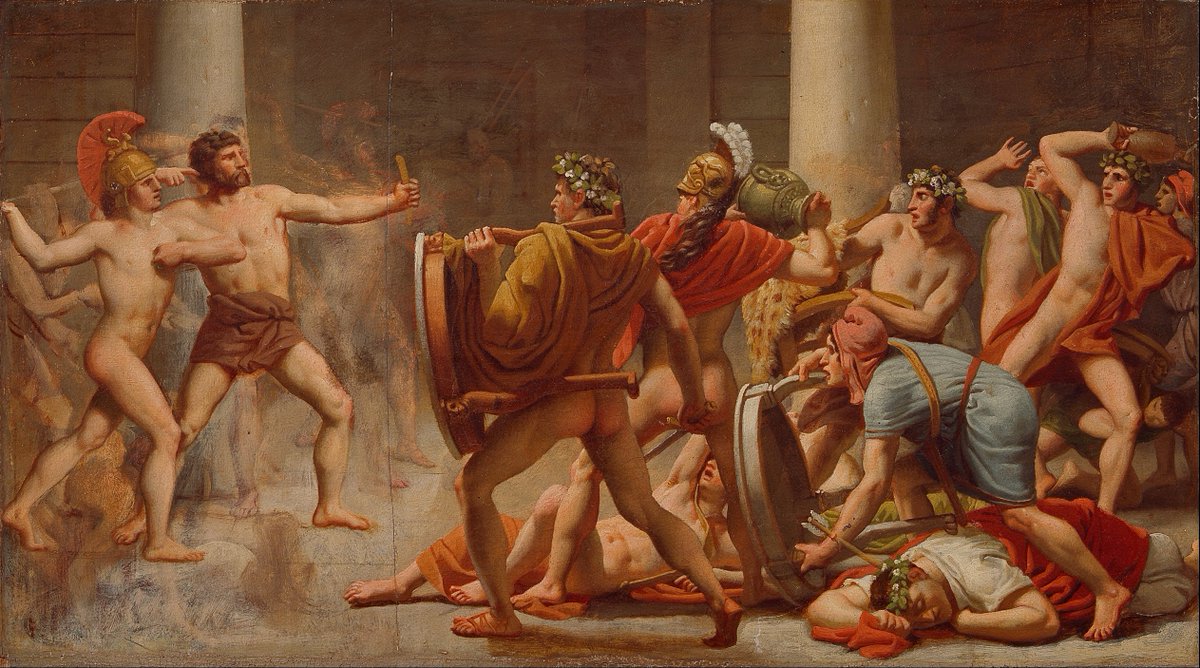
A powerful scene in the Odyssey happens when Odysseus finally returns to Ithaca after twenty years of war and wandering.
You would expect the story to end with celebration, with the hero coming home, the family reunited, and order restored.
Homer does something far stranger.
Odysseus arrives disguised as a beggar, because Athena warns him that the palace has been taken over by more than a hundred suitors who have been living there for years, eating his food, drinking his wine, and pressuring his wife Penelope to marry one of them.
They believe Odysseus is dead and in their minds the kingdom is already theirs.
So the king of Ithaca walks through his own halls dressed in rags while the men stealing his house sit comfortably at his tables. They mock him, throw scraps at him, and one of them even strikes him, and Odysseus takes it. That is the remarkable part, because the same man who blinded the Cyclops and survived twenty years of disasters now stands quietly while strangers insult him in his own home. Homer tells us his heart burns inside his chest and that he wants to attack them immediately, yet he restrains himself and waits.
Instead of striking, Odysseus studies the room carefully. He counts the men, watches their habits, and quietly observes which servants remain loyal and which have betrayed him. The hero of the Odyssey does something most people cannot do, which is delay revenge until the moment is right.
Eventually Penelope announces a contest and brings out Odysseus’ great bow, declaring that she will marry the man who can string it and shoot an arrow through twelve axe heads lined up in a row. One by one the suitors try and fail, because none of them can even bend the bow. Then the beggar asks for a turn. The suitors laugh at first, but the bow is eventually handed to him.
Odysseus takes it in his hands and strings it effortlessly. Homer says the sound of the bowstring tightening rings through the hall like the note of a swallow. Then he places an arrow on the string and sends it cleanly through all twelve axe heads.
In that moment the beggar disappears. Odysseus turns the bow toward the suitors and reveals who he is.
What follows is one of the most brutal scenes in Greek literature. The doors are sealed and the suitors realize too late that they are trapped inside the hall. Odysseus, his son Telemachus, and two loyal servants begin killing them one by one. There is no escape, no mercy, and no negotiation. The men who spent years consuming another man’s house die inside it.
It is a violent ending, but Homer wants you to understand something important. The real danger to Odysseus was never just the monsters and storms on the long journey home. It was the possibility that someone else might take his place while he was gone. When Odysseus finally returns, he reminds everyone in Ithaca of a simple truth: a man’s home is not truly his unless he is willing to fight for it.
Shocking: Time Magazine reports 30,000 killed in Iran on Jan. 8-9 alone, citing health ministry sources. If confirmed, this is among the worst massacres in modern history.
Equally shocking: the silence. A people defying Islamist tyranny doesn't fit the ideology—so it is ignored.
At least 12,000 people were killed in the largest killing in Iran’s contemporary history, carried out largely over two consecutive nights on January 8 and 9, Iran International’s editorial board concluded, based on a review of sources and medical data.
Iran is under a coordinated blackout aimed not only at security control but at concealing the truth, reflected in internet cuts, crippled communications, media shutdowns, and the intimidation of journalists and witnesses.
Publication was delayed until the evidence converged.
The assessment is based on a multi-stage review of information from a source close to the Supreme National Security Council; two sources in the presidential office; accounts from several sources within the Islamic Revolutionary Guard Corps in Mashhad, Kermanshah and Isfahan; testimonies from eyewitnesses and families of those killed; field reports; data linked to medical centers; and information provided by doctors and nurses in multiple cities.
https://t.co/EPjCpZlr2p
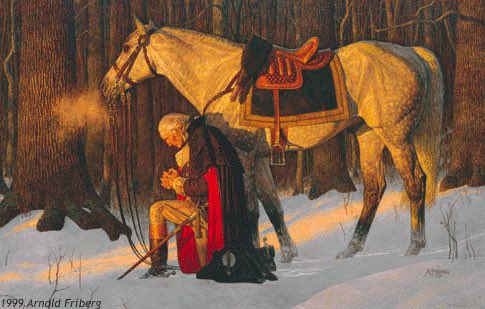
George Washington’s Thanksgiving Proclamation in 1789:
"By the President of the United States…
Whereas it is the duty of all Nations to acknowledge the providence of Almighty God, to obey his will, to be grateful for his benefits, and humbly to implore his protection and favor— and whereas both Houses of Congress have by their joint Committee requested me to ‘recommend to the People of the United States a day of public thanksgiving and prayer to be observed by acknowledging with grateful hearts the many signal favors of Almighty God especially by affording them an opportunity peaceably to establish a form of government for their safety and happiness.’
Therefore, I do recommend and assign Thursday the 26th day of November next to be devoted by the People of these States to the service of that great and glorious Being, who is the beneficent Author of all the good that was, that is, or that will be.
May we all unite in rendering unto him our sincere and humble thanks— for his kind care and protection of the People of this Country previous to their becoming a Nation— for the signal and manifold mercies, and the favorable interpositions of his Providence which we experienced in the course and conclusion of the late war— for the great degree of tranquillity, union, and plenty, which we have since enjoyed— for the peaceable and rational manner, in which we have been enabled to establish constitutions of government for our safety and happiness, and particularly the national One now lately instituted— for the civil and religious liberty with which we are blessed; and the means we have of acquiring and diffusing useful knowledge; and in general for all the great and various favors which he hath been pleased to confer upon us.
And also that we may then unite in most humbly offering our prayers and supplications to the great Lord and Ruler of Nations to render our national government a blessing to all the people, by constantly being a Government of wise, just, and constitutional laws, discreetly and faithfully executed and obeyed— to promote the knowledge and practice of true religion and virtue, and the encrease of science among them and us— and generally to grant unto all Mankind such a degree of temporal prosperity as he alone knows to be best.
Under my hand at the City of New-York, 3rd of October in the year of our Lord 1789."
Socialism always sounds good until your fridge is empty.
In a few days, SNAP will end and millions will find out what happens when you trust politicians to feed you.
@Riley_Gaines_@elonmusk When you want to shut someone up fast and create clickbate while doing it, this thoughtless rhetoric is often enlisted. It frightens people into submission and cuts off opportunity for peaceful dialogue
@ScottJenningsKY The women on this panel come across as entirely out-of-touch with reality. Hearing this exchange widens an existing rift that is moving away from politics and into differentiating thoughtfulness and consistency vs. vacancy and brain rot in the name of party loyalty.