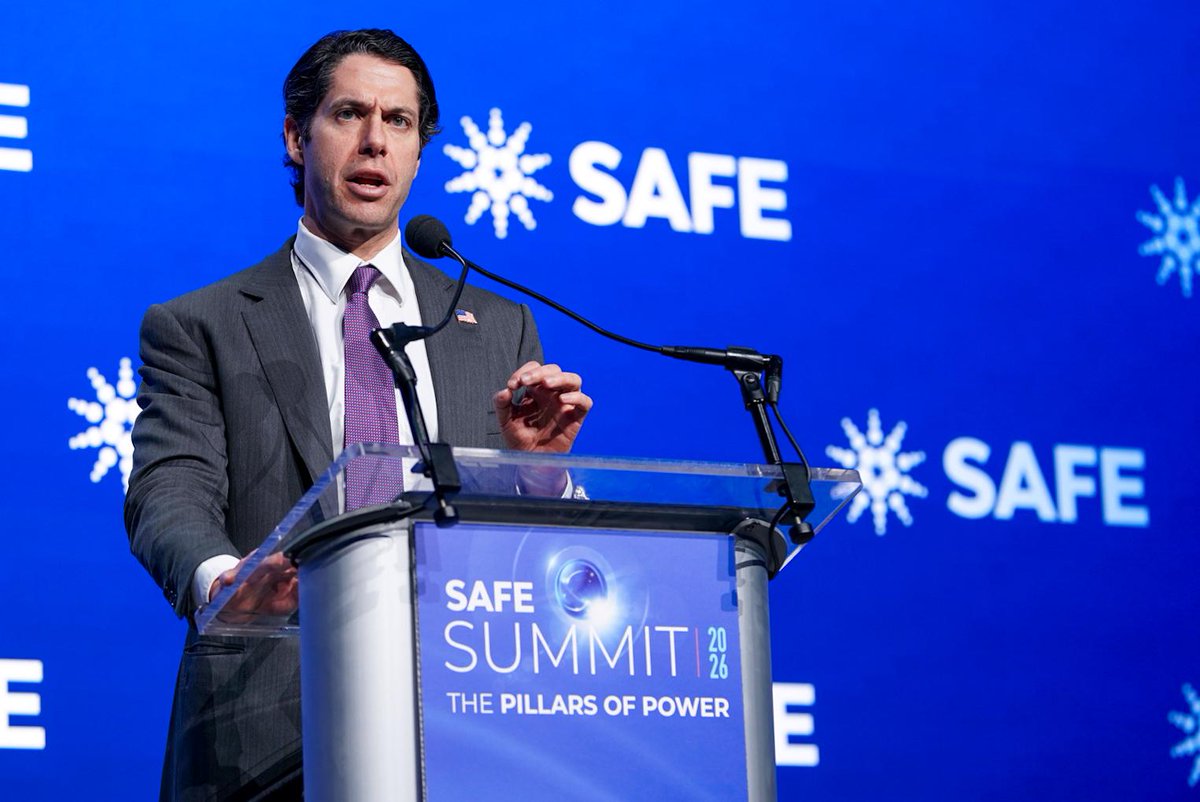
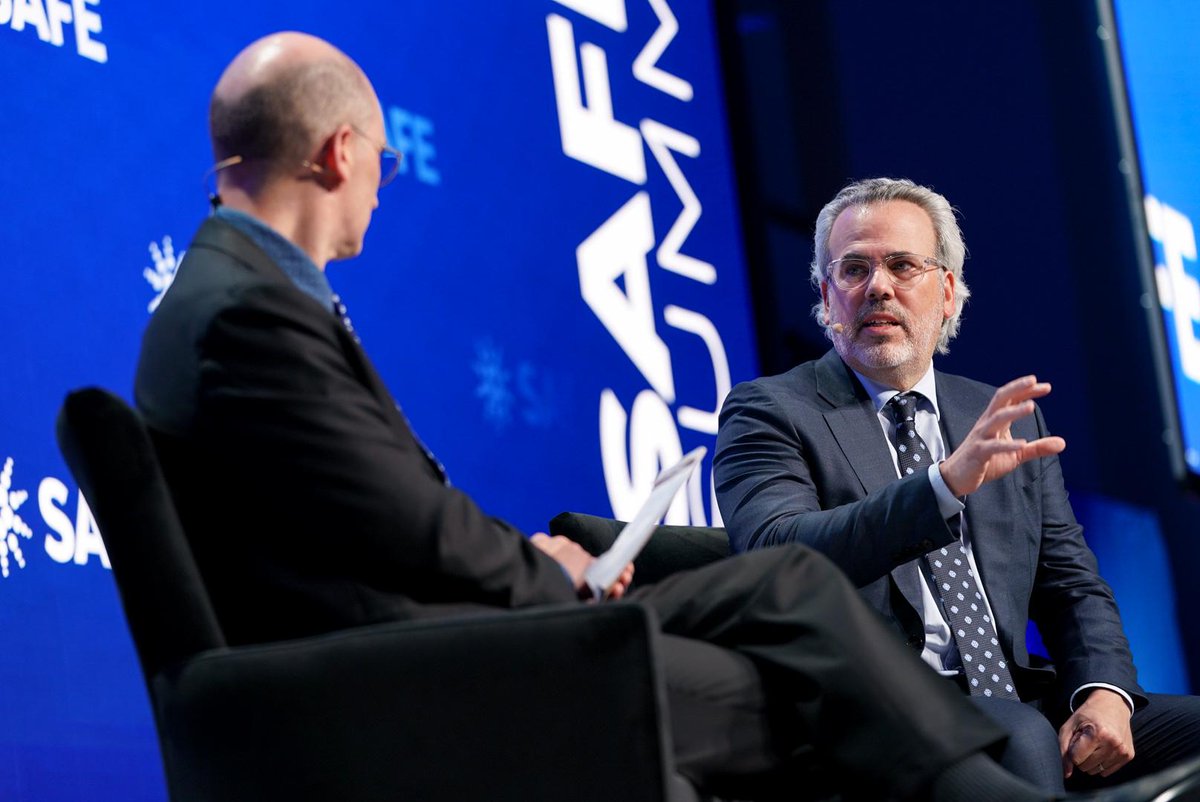
Thank you to everyone who joined us for this year’s #SAFESummit2026. Over two days, we tackled a wide spectrum of challenges—from energy and critical minerals to supply chains, infrastructure, and industrial capacity.
One theme was clear: the systems underpinning our energy security are being fundamentally redefined.
How have export restrictions and domestic allocation requirements affected the recovery of critical minerals from scrap and strategic recyclable feedstocks? Join SAFE's Center for Critical Minerals Strategy next Wednesday, October 28 for a webinar launching its upcoming issue brief, “Retain, Recycle, Secure: The Role and Limits of Export Restrictions.”
Discussions will focus on battery black mass, tungsten waste and scrap, copper-bearing scrap, and rare earth magnet materials, and how restrictions on exports may support or disrupt collection markets, established recycling networks, and supply chains with allies and partners.
Register: https://t.co/c7wO2FsChM
Speakers:
- @AveryAAsh, Chief Executive Officer, SAFE
- Jessica Curyto, Deputy Assistant Secretary for Technology Security, @BISGov, @CommerceGov
- @SF_Matt, Executive Vice President, Corporate Affairs & Chief Communications Officer, @MPMaterials
- Paul Sedor, Vice President, Member & Industry Relations, Metal Powder Industries Federation
- Dr. Elsa Olivetti, Professor at @MITEngineering and @mit_dmse
- Zoe Oysul, Policy Manager, SAFE’s Center for Critical Minerals Strategy (moderator and presenter)
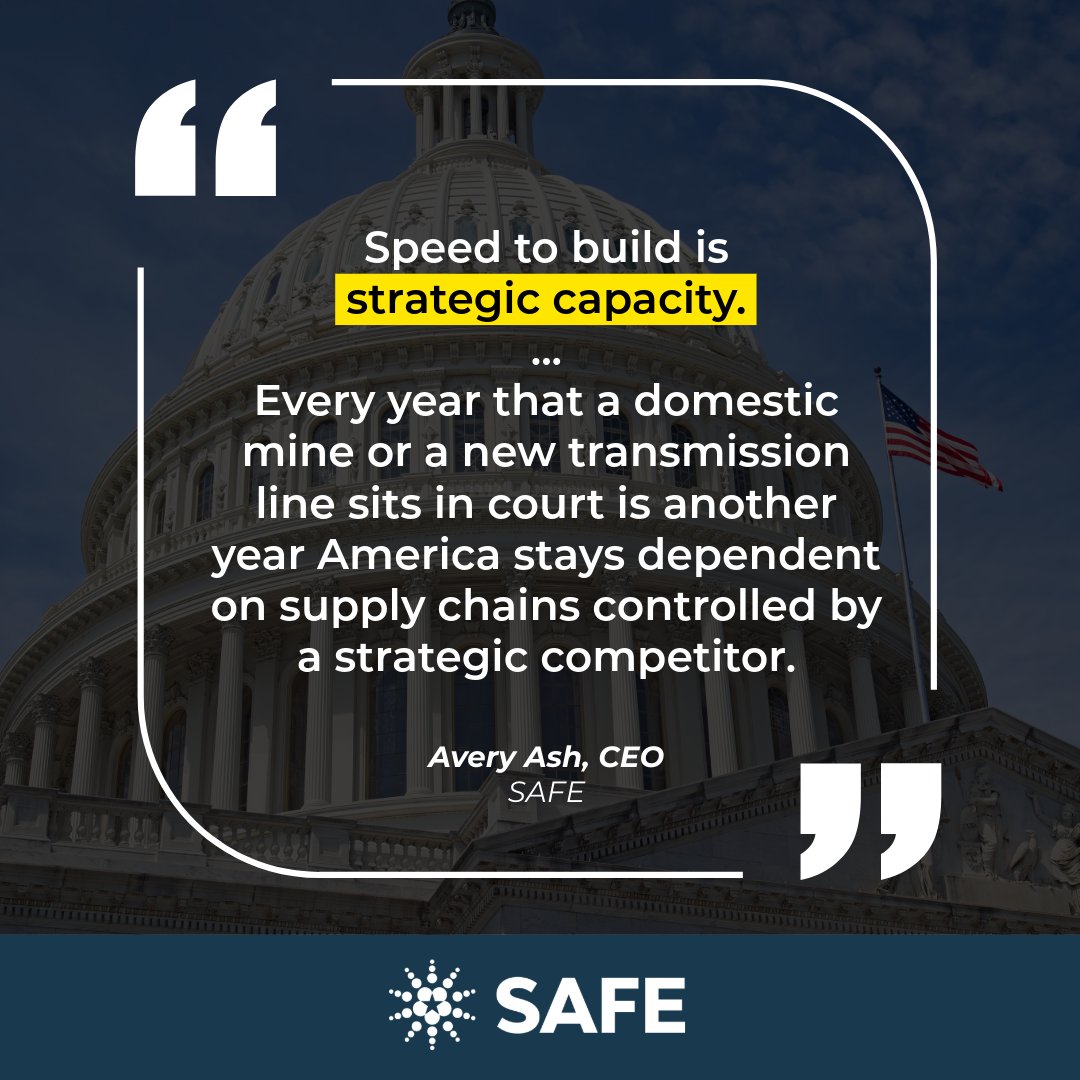
The topline from SAFE’s Energy Security Leadership Council to the Senate and House leaders: There’s a dangerous mismatch between strategic necessity and permitting reality today.
SAFE’s coalition of 21 retired 4-star admirals and generals and business leaders made the national security case for passing the permitting bill.
Letter here, shared with @SiegelScribe at Punchbowl >> https://t.co/5fQwcDlcAw
@SenCapito, @SenMikeLee, @SenWhitehouse, @SenatorHeinrich
And there's more (letters) in @PunchbowlNews am: A coalition of retired four-star military leaders and business execs is endorsing the Senate’s bipartisan permitting reform bill, in a letter organized by @Securing_Energy shared first w/me https://t.co/PkFEoLkr0f
💯💯💯Yes, permitting reform IS a national security issue. If we can't build, we are beholden to adversaries for energy, materials, and tech.
The names are the headline here, but the rationale on everything from transmission to mining is worth policymaker attention.
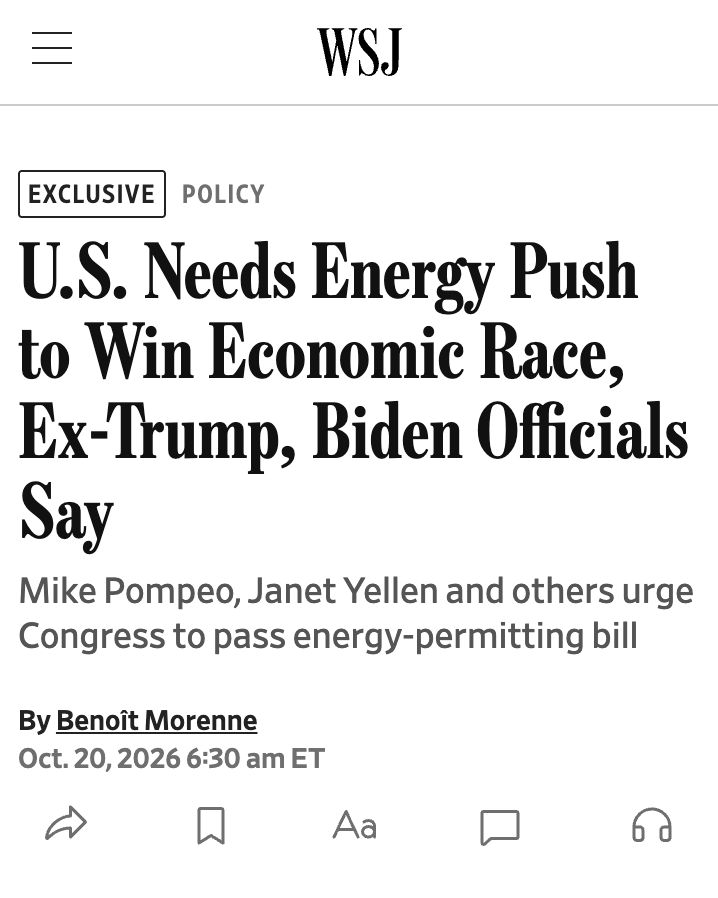
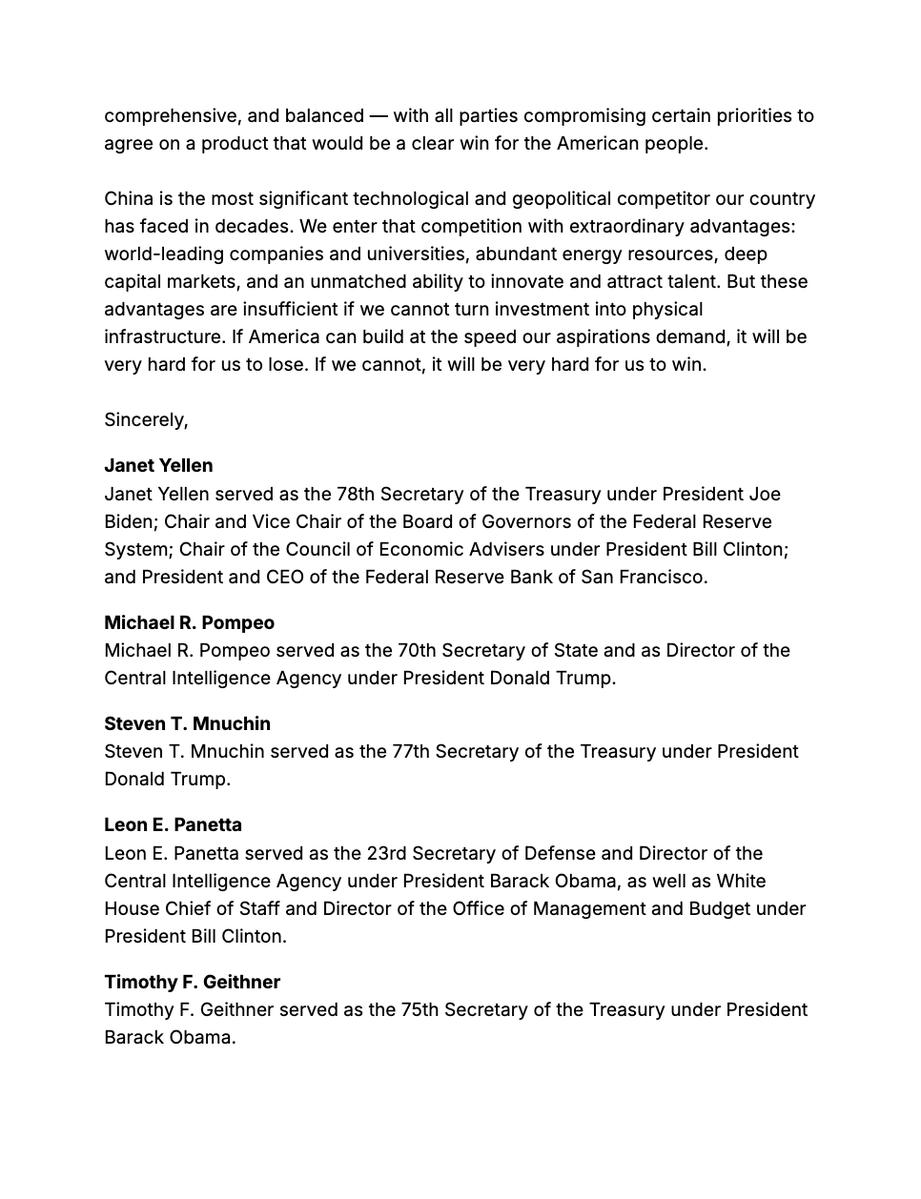
NEWS: 19 FORMER ECONOMIC AND NATIONAL SECURITY LEADERS ENDORSE THE BIPARTISAN PERMITTING REFORM BILL
Today, a group of former Cabinet members and White House principals across seven Democratic and Republican administrations sent a letter calling on Congress to pass BAAJA. Here are the signatories:
Janet YELLEN, Michael R. POMPEO, Steven T. MNUCHIN, Leon E. PANETTA, Timothy F. GEITHNER, Henry M. PAULSON, Jr., Robert E. RUBIN, Stephen MIRAN, Jared BERNSTEIN, Tyler GOODSPEED, Jason FURMAN, Glenn HUBBARD, Laura D’Andrea TYSON, Michael J. BOSKIN, Jeffrey ZIENTS, Jake SULLIVAN, Brian DEESE, Larry KUDLOW, Allan B. HUBBARD
Key highlights from the letter:
1. “We are not building infrastructure fast enough to remain globally competitive… The median time for a new power plant to move from an interconnection request to commercial operation has more than doubled, from less than two years for projects built between 2000 and 2007 to more than four years for projects built between 2018 and 2024.
2. China has built more high-voltage transmission in the last fifteen years than the U.S. has built in all of its history... In 2024, China accounted for 31.5% of global knowledge- and technology-intensive manufacturing value added, compared with 20.7% for the United States.
3. Federally funded or permitted projects require NEPA review, but private projects often do not, creating a threat of failure precisely where the government is trying to be proactive, strategic, and engaged.
4. A project that spends years awaiting approval must continue carrying development and financing costs while remaining exposed to rising input costs. The IEA reports that prices for utility-scale transformers increased 26% in 2024, while lead times for some transformers have stretched as long as six years.
5. Mining projects also face tremendous uncertainty: a 2026 study by researchers at the Colorado School of Mines found that permitting for modern mining projects takes an average of 5.5 years, rising to 8.9 years for contested projects. The U.S. currently has the second-longest mine development timeline in the world.
6. The Bipartisan American Affordability and Jobs Act is the most significant bipartisan legislative effort that Congress has undertaken in decades to tackle these challenges.
7. BAAJA addresses key constraints stifling American industry by requiring interregional transmission planning, strengthening the federal backstop for nationally significant transmission lines, and creating a faster, more predictable process for connecting new generation to the grid.
8. BAAJA also makes permits more durable by imposing tighter timelines for litigation and limiting frivolous lawsuits that can halt projects indefinitely, while preserving community input and judicial review of substantive agency decisions.”
The letter was organized by @arnabdatta321 on behalf of @IFP and covered exclusively by the WSJ this morning.
The U.S. has an aluminum deficit problem, and recycling is part of the solution. “There are environmental benefits all day long” to recycling, SAFE’s Joe Quinn told @CanaryMediaInc, but “it’s a secure supply chain issue.”
As the situation stands, the U.S. will only produce 16% of primary aluminum domestically by 2029, leaving it overwhelmingly reliant on imports.
Not only does recycling aluminum use 95% less energy than producing primary aluminum, but it also frees up supplies of the high-purity aluminum that is needed for military defense and aerospace applications, SAFE's Ben Carlson said.
The state of aluminum recycling in the U.S., the barriers, and how a combination of advanced sorting technologies and federal incentives can move us in the right direction ⬇️
https://t.co/5npOZbSD7w
@mariagallucci
Honored to join Congressman @repbera, Dr. @apolyakova & Joe Quinn of @Securing_Energy at the #MeridianSummit today. 🇳🇱 & 🇪🇺 are key partners for the 🇺🇸 in building resilient supply chains for critical raw materials. We are stronger when we innovate together.
The senate permitting bill introduced 2 weeks ago was a bargain of bipartisan compromise. What the bill has for both Republicans and Democrats, quickly broken down by SAFE's Government Affairs, Skip Estes and Devon Lammert ⬇️
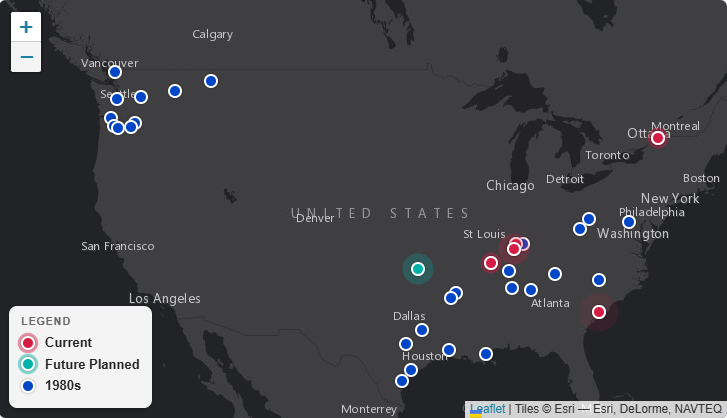
SAFE is excited to share an interactive map visualizing the aluminum smelters in operation in the U.S. today versus decades when it was once the world’s leading producer of primary aluminum: https://t.co/hrGTOi1zTZ
Many factors have led to the U.S. importing a hefty 84% of its needed primary aluminum today, including federal energy policy that gradually made the electricity smelters depend on too expensive, and concerted efforts by competitors like China which has provided their smelters with below-market rates for both energy and interest rates for loans.
This map complements the report SAFE’s Center for Strategic Industrial Materials released last week, which found that the decline of U.S. primary aluminum production is fundamentally a challenge of electricity cost and reliability, and that sustaining domestic production will rely on affordable energy on top of appropriate trade tools.
Report here: https://t.co/9pMfx7QNmO
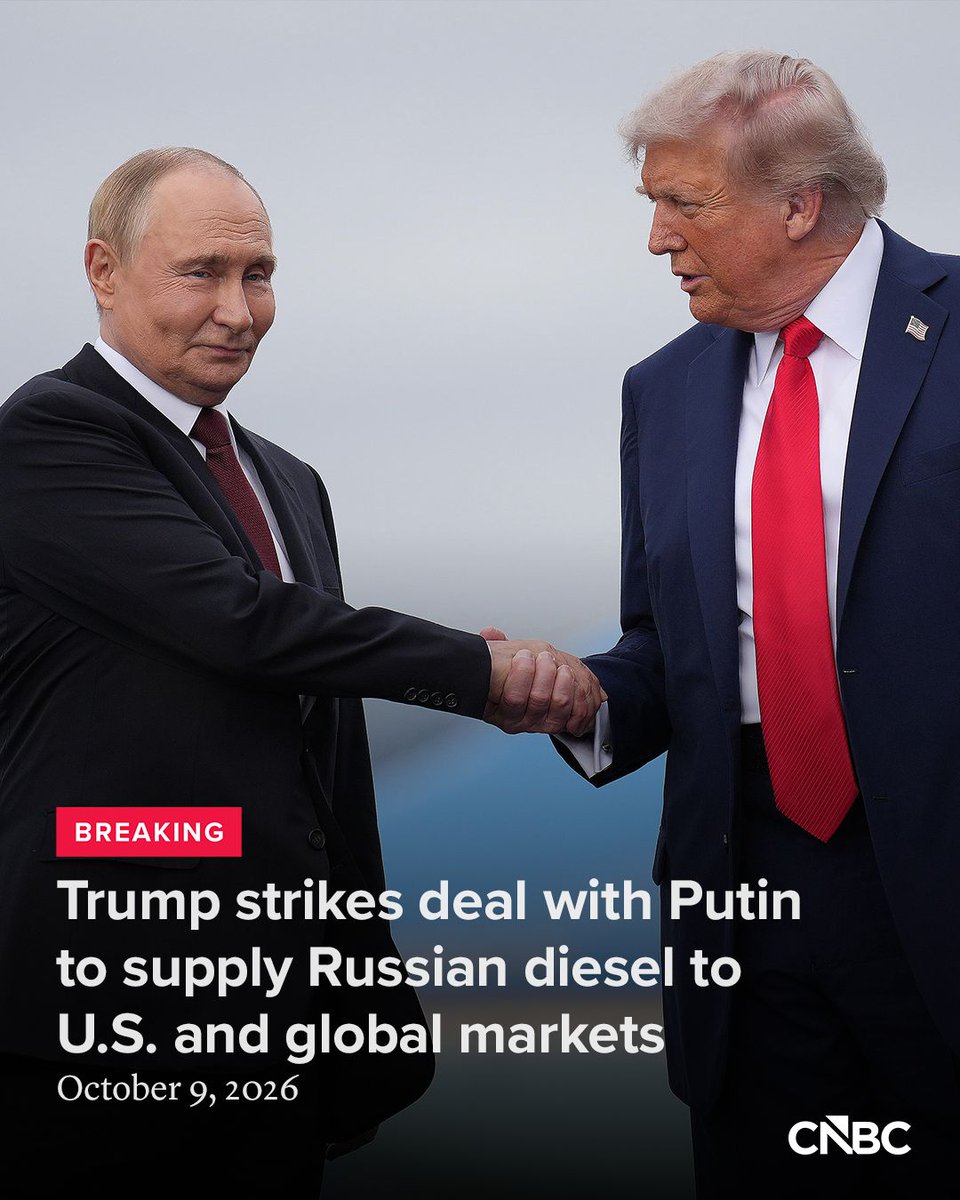
This is a perfect illustration of how oil dependence compromises our national security and foreign policy options. Short-term solutions to high fuel prices are few and far between. So the choices are to either accept high prices... or take extreme measures like allowing petrodollars flow to our adversaries.
President Donald Trump said Friday that Russia will supply millions of tons of diesel to the global market under a deal he struck with President Vladimir Putin.
Russia will immediately supply more than 300,000 tons of diesel, followed by 500,000 tons in November, and 1 million tons immediately thereafter, Trump said in a post on Truth Social. Moscow will then deliver another 3 million tons of diesel based on the condition of Russia’s refineries, Trump said.
Read more: https://t.co/QouiiXxt34
Power accounts for roughly 40% of the cost of making aluminum.
A new smelter needs electricity near $40/MWh. U.S. industrial rates averaged $81 in 2024.
Findings from SAFE’s Center for Strategic Industrial Materials’ latest report: https://t.co/hKDYQpi6x2
84% of the primary aluminum the U.S. consumes is imported. By 2029, only 16% will be produced domestically.
SAFE's new report finds energy policy changes are fundamental to reviving the United States aluminum smelters: https://t.co/hKDYQpi6x2
The Department of @ENERGY announced an up to $4.2B conditional loan commitment to Vistra to modernize and uprate (increase power output) their nuclear fleets in Pennsylvania and Ohio.
Ken Peters, Chief Nuclear Officer of @VistraCorp, joined SAFE at our Summit earlier this year and discussed expanding nuclear through a combination of methods: uprating existing plants, restarting some retired plants, and building new large and small reactors.
Watch the Summit session: https://t.co/8P7zhYuEGX
American Autos. American Steel.
This morning, SMA joined @Securing_Energy on the Hill to brief House staff on the Connected Vehicles Security Act and what Chinese automakers entering the market would mean for U.S. supply chains.
https://t.co/gXJYErt980
Permitting reform is at the goal line.
It’s time for Republicans and Democrats to make one final push and unleash American energy, build essential infrastructure, and lower the cost of living for families across the nation.
Proud to introduce the Bipartisan American Affordability and Jobs Act of 2026.
This landmark legislation will reform federal environmental permitting and review processes to expand reliable energy and infrastructure, create good-paying jobs, and lower costs for Americans.
More on the bill here:
https://t.co/OkABHTbQz7
The Senate text for a permitting reform deal is finally out. The Bipartisan American Affordability Act of 2026 has been released by @SenCapito, @SenMikeLee, @SenWhitehouse, and @SenatorHeinrich.
Response from @AveryaAsh, SAFE’s CEO: https://t.co/n3f4FDGwok
U.S. projects for direct lithium extraction are gaining momentum as lithium prices rebound and battery demand endures. Several companies are pushing previously delayed ventures and oil giants like Exxon and Chevron are advancing rival projects, @amenasaiyid and @cm_energyintel report. SAFE’s Zoe Oysul tells @energyintel that future periods of oversupply “are likely,” and that making greater predictability and revenue certainty particularly will be important for long-term investment decisions.
https://t.co/OqIOa8No3a