I am super happy to share our new preprint on the regulation of seed dormancy by the DOG1-PP2C module. Here we uncover that DOG1 prevents the activation of AFPs by the PP2C AHG1. This is the result of a great team effort led by Guillaume Née. Summary of key findings below🧵
Excited to announce our story on dormancy control by DOG1-PP2C is now published in @ScienceAdvances . We found that DOG1 prevents the activation of AFPs by AHG1. This is the result of a great team effort led by Guillaume Née. Key findings below🧵 https://t.co/vOSY4we8Ut...
Exciting collaborative review from @lewseylab's lab: 'Deciphering Seed Development and Germination in the Single-Cell Era' 🌱 Led by student Paul Schouveiler, this paper explores how single-cell technologies are advancing our understanding in seed development and germination.
Excited to announce our story on dormancy control by DOG1-PP2C is now published in @ScienceAdvances . We found that DOG1 prevents the activation of AFPs by AHG1. This is the result of a great team effort led by Guillaume Née. Key findings below🧵 https://t.co/vOSY4we8Ut...
I am super happy to share our new preprint on the regulation of seed dormancy by the DOG1-PP2C module. Here we uncover that DOG1 prevents the activation of AFPs by the PP2C AHG1. This is the result of a great team effort led by Guillaume Née. Summary of key findings below🧵
We’re happy to share our latest @biorxivpreprint led by @manugonfu “Effector-triggered processing body formation attenuates host translation via ER stress responses and autophagy upon bacterial infection”#proteostasis#plantimmunity 🌱 🦠♻️
🧵(1/16)
https://t.co/I2tHRU7ZK9
#theustunlab had a fantastic christmas potluck/ party yesterday - happy to have this amazing crew around! we wish everyone happy holidays #merrychristmas 🎄
Happy to share our latest small contribution (with @manugonfu @MargotRaffeiner @LinusBoernke) how an effector targets ER-PM contact sites: XopM, An FFAT Motif‐Containing Type III Effector,Suppresses MTI Responses at the Plasma Membrane by @brinkcharly
https://t.co/p7pnMyFNf3
Happy to share our story on evolution of protein quaternary structure!
We discover an astounding variation in assembly across evolutionary timescales contrasted by strong functional conservation suggesting a significant role of non-adaptive processes https://t.co/81PXFUJqyc
👇🧵
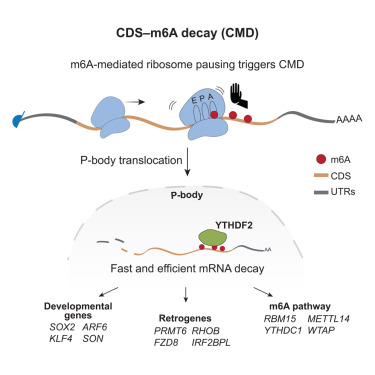
📢 Our work on CDS #m6A mediated RNA decay (CMD) is out in @MolecularCell ! Decay relies on ribosome pausing at m6A containing codons. Great collab with the Zarnack lab & colleagues. Check it out here: https://t.co/KSi8SdR91i
Thank you @imbmainz@Uni_WUE@ItsRMaP1 🥳
#fluorescencefriday : a recent pic of Arabidopsis root cells expressing two fluorescent proteins that I took this week with our amazing @LeicaMicro stellaris 8 🔬🌱 any guess what it could be? 🤓🤔 #proteostasis
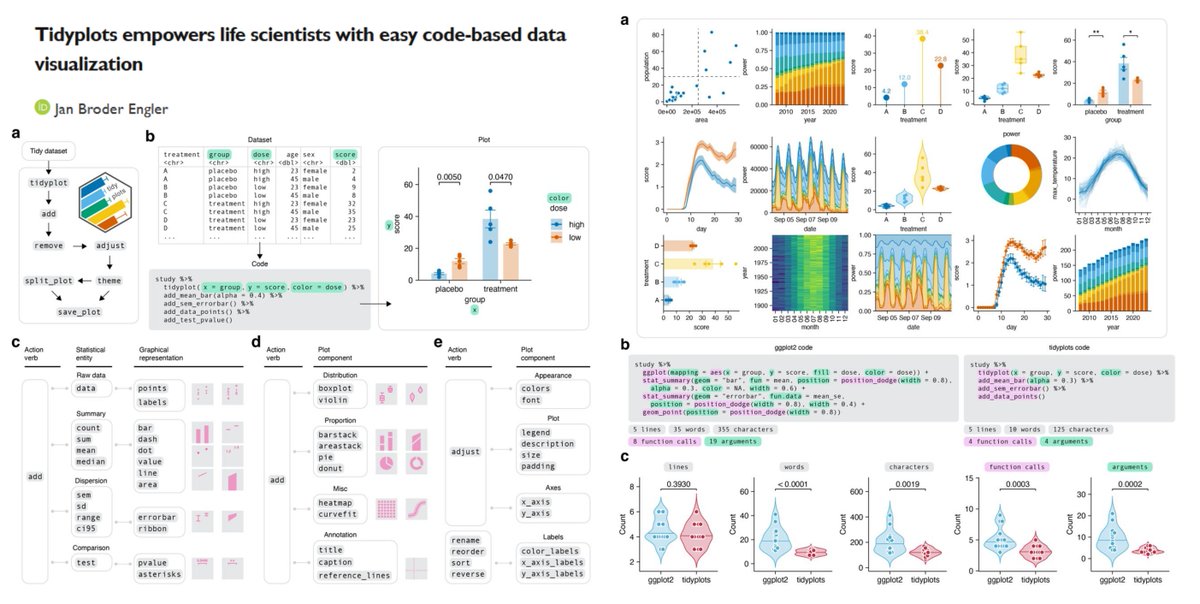
tidyplots
Time to say goodbye to ggplot2?🫡
"a significant reduction of code complexity" vs ggplot2
https://t.co/6wKFnRrjMn
@JanBroderEngler bioRxiv 2024
https://t.co/rqvyMsj5JK
The Rowe lab is recruiting a #PlantScience PhD student for 2025! You'll use our new ABACUS FRET biosensors to map the dynamic leaf #AbscisicAcid accumulations at low humidity in Arabidopsis, wheat and rice. #PhDposition
https://t.co/MTK9heyyR3
Great to have @SuayibUestuen visiting @UoBbiosciences to talk to us about all the fantastic work he and his group are doing looking at “toxic relationships” and plant stress responses 🌱 🧬 🦠
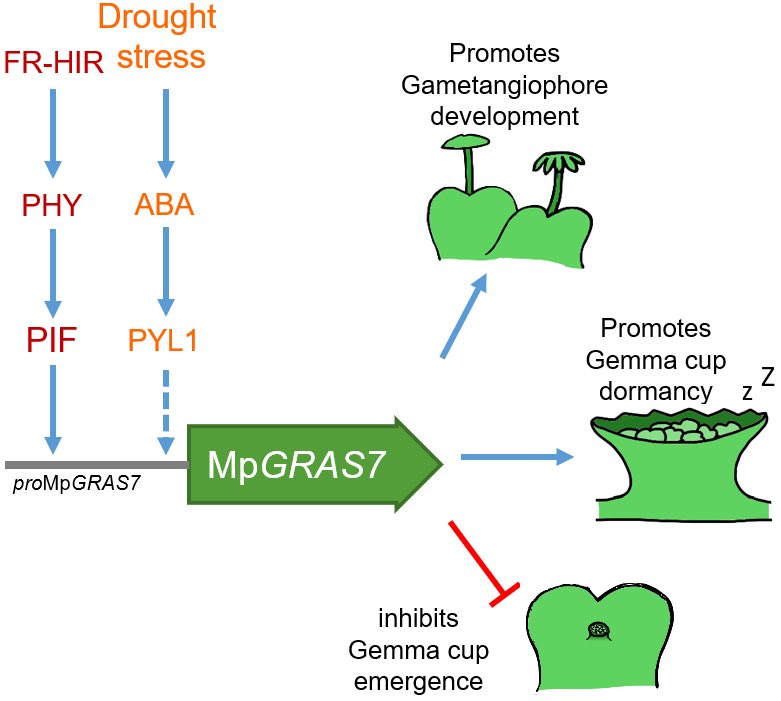
I am very excited to be sharing our new @dromius lab pre-print on a Marchantia gene MpGRAS7, with contributions from @Phil_Carella and @YangWeibing https://t.co/Ga8YX6yCEd
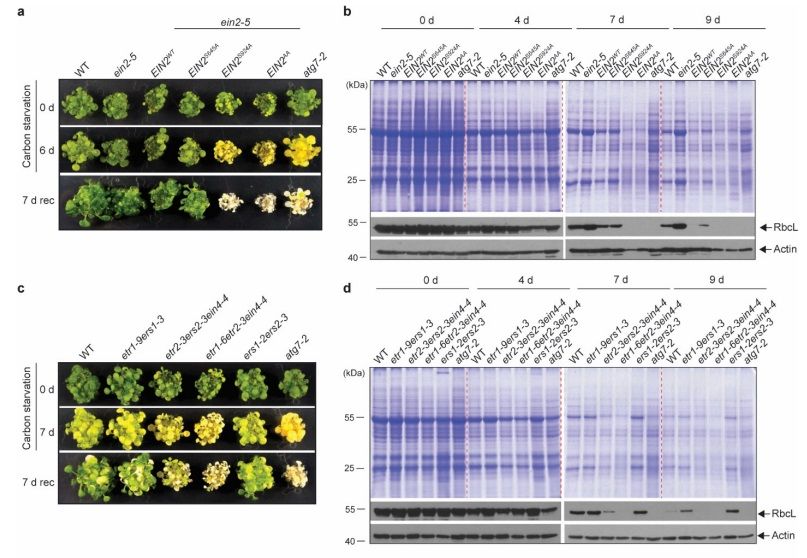
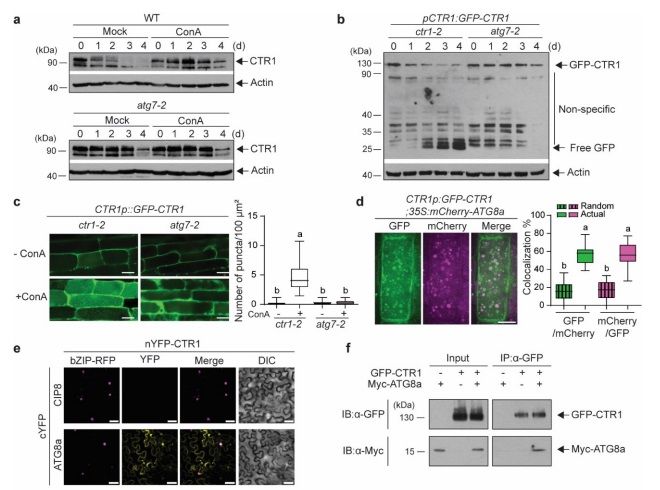
Autophagy-mediated CTR1 turnover orchestrates the reciprocal interaction between autophagy and ethylene signaling
https://t.co/T2KvhynG5E
#plantscience ♻️
I'm hiring a postdoc. The pay is average, but the biological question and preliminary data on the project are outstanding. I will gladly share more to those who are seriosuly considering. https://t.co/WKg1whHKpB
1. Check out our MS just out! Amazing Mauricio Aguilar developed a new ML pipeline that identifies ribosome pausing sites as an Anomaly Detection problem to overcome spurious signals that arise when analyzing RiboSeq data. https://t.co/Or8syfc6n6