Debunking the myth: #Ethiopia did not lose access to the #RedSea simply because #Eritrea became independent in 1993. Ethiopia chose to use Djibouti ports instead.
In 1997, Ethiopia warned Assab authorities in writing that it would stop using the port over unfavorable business conditions. It then shifted trade towards Djibouti. It should be noted here that the accusation of "unfavorable business conditions" was tied to Eritrea delinking its fiscal and monetary policies from Ethiopia by issuing its own currency, the Eritrean Nakfa.
There is a fundamental difference between being landlocked, having access to maritime trade, and possessing sovereign ownership of a coastline. The history of Eritrea and Ethiopia illustrates why this distinction matters.
Access is not ownership. Choosing to stop using a port does not confer a right to own another country's coastline.
🇪🇷 Eritrean sovereignty is not negotiable.
Source: https://t.co/Rttr13hKHx
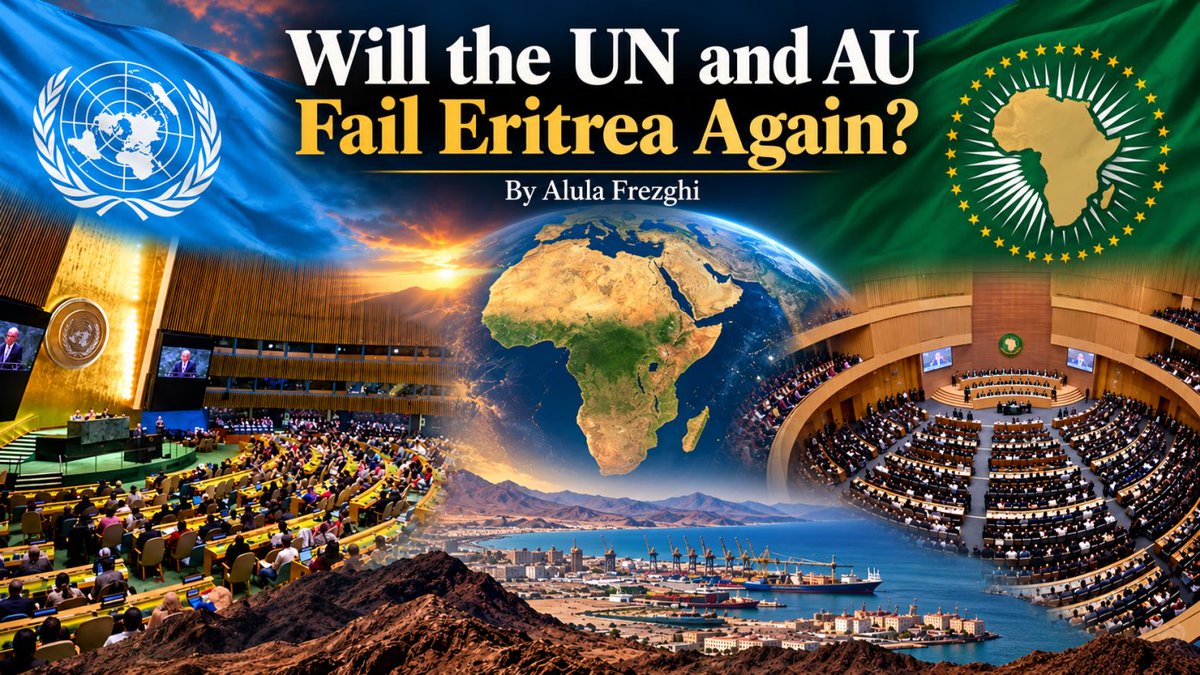
Will the UN and AU Fail Eritrea Again?
October 22, 2026
By Alula Frezghi
@RedSeaBeacon
Eritrea’s history presents an enduring challenge to the credibility of the international order: what value do sovereignty, self-determination, and territorial integrity possess when the institutions established to protect them fail to act? From the troubled international handling of Eritrea’s decolonization to the prolonged non-implementation of the Eritrea–Ethiopia boundary ruling, the record reveals a consequential gap between international principles and their enforcement. Today, renewed tensions between Eritrea and Ethiopia place that gap under another test.
The question is no longer merely historical. It concerns whether the United Nations (UN), the African Union (AU), and their member states will defend the rules governing relations among sovereign nations before another regional confrontation escalates.
From Denied Self-Determination to Independence
Following the Second World War, Eritrea’s political future became entangled in the geopolitical calculations of the victorious powers. UN General Assembly Resolution 390 A(V), adopted in 1950, established a federal arrangement between Eritrea and Ethiopia, which entered into force in 1952. Rather than achieving independence, Eritrea was denied its legitimate right to decolonization and was force to enter a federation that was subsequently dismantled by Ethiopia’s imperial government, culminating in annexation in 1962.
The international system failed to prevent that outcome or restore Eritrea’s political rights. The consequences were devastating: three decades of armed liberation struggle, immense human sacrifice, and a prolonged conflict that ended with Eritrea’s independence in 1991.
The lesson is unmistakable. When international commitments yield to geopolitical expediency, the costs are borne by populations whose rights those commitments were intended to protect.
Africa’s own institutional record also demands scrutiny. The Organization of African Unity’s 1964 Cairo resolution affirmed the principle of respecting borders inherited at independence. Eritrea’s subsequent experience demonstrated the enduring difficulty of translating declared principles into consistent protection of national sovereignty.
The Boundary Decision and the Cost of Non-Implementation
The Eritrea–Ethiopia border war of 1998–2000 presented another defining test of the international system’s willingness to uphold agreements it had helped broker. The Algiers Agreement of December 2000 established a binding legal mechanism for resolving the dispute through international arbitration. On April 13, 2002, the Eritrea–Ethiopia Boundary Commission (EEBC) issued its unanimous delimitation decision, which both parties had expressly agreed in advance would be final and binding.
Yet the decision remained unimplemented on the ground for years because Ethiopia refused to honor its commitment to the Algiers Agreement and final and binding ruling of a neutral panel of international jurists. In November 2007, the UN Security Council called for its immediate implementation without preconditions. The Council’s own intervention underscored the troubling gulf between securing a binding legal determination and ensuring that the parties actually complied with it.
ReadMore @RedSeaBeacon@UNSC_Reports@AfricaUnion@EU_Commission@shabait@hawelti@Ghidewon@ForeignPolicy@TheAtlantic@MFAEthiopia@CanadaFP@EliasAmare@GhideonMusa@Yehdavid@EmbassyEritrea@AmbStesfamariam@FT@FikreJesus@AlAhram@b_nick@Sharronyemane@moi_eritrea@ERiTV_Official@shabait@AmbassadorEstif@ytmn2@alazarabrah1991@biniamb@zerai_biniam@addisstandard@BBCWorld@nytimesworld@FT@MesobJournal@NewYorker@latimes@TheEconomist@washingtonpost@WashingtonTime@Eritrea_UN@NationsCouncil@AJEnglish@etisalatUAE@Sudan_tweet@tewerwari_1@tberhan0437898
https://t.co/jFWtIz4Bqa
ABIY’S RED SEA AMBITIONS WILL SHATTER AGAINST ERITREAN RESILIENCE
By Mhretab Andebrhan
…Ethiopia faces serious internal challenges, including armed conflicts, political fragmentation, and the unfinished work of national reconciliation. These problems require effective governance, inclusive political dialogue, and accountable institutions.
It is evident that the regime manufactures external conflicts specifically to divert domestic focus. Using foreign territorial ambitions as a tool for internal consumption allows the government to consolidate support while masking severe domestic instability.
…Eritreans have every reason to insist that the independence achieved through decades of sacrifice be respected without qualification. The country must protect its territorial integrity while preserving diplomatic channels and supporting a regional order based on international law.
Read more: https://t.co/ATvSaaFOU9
#RespectEritreasSovereignty #Enough2PPsWarmongering #UAEStopWarFinancing #UAEBloodInYourHands #AfricanUnion @hawelti@shabait@EmbassyEritrea@Eritrea_UN@AmbStesfamariam@hadnetkeleta@SirakBahlbi@EliasAmare@Tedllam@GhideonMusa@Ternafi@DahlaKib@FarahMaalimM@Landofcandoppl@ETMissionUN@PMEthiopia@MFAEthiopia@MofaSudan@MfaEGYPT@_AfricanUnion@StateDept@AJEnglish@BBCWorld@AFP@TheEconomist@PressTV@Telegraph@nytimes@UN@Sec_Council@TheReporterET@gulf_news
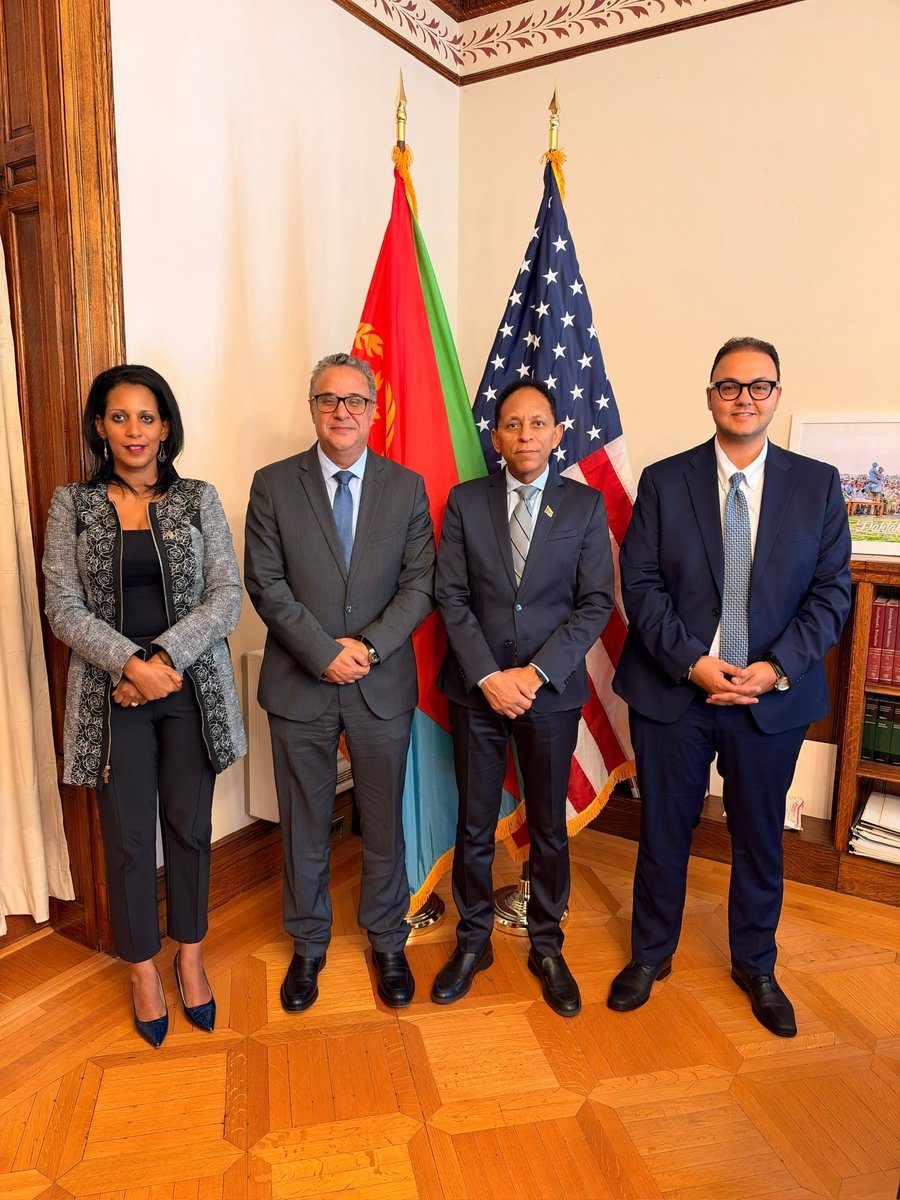
It was an honor to receive H.E. Mohamed Hamdy El-Molla, Ambassador of the Arab Republic of Egypt to the #UnitedStates.
We had a productive discussion on the excellent bilateral relations between #Eritrea and #Egypt, as well as developments across the #RedSea Basin and the #HornOfAfrica, with a focus on advancing bilateral and multilateral cooperation to achieve our shared goals.
We also agreed to strengthen our coordination and joint efforts to deepen understanding among relevant #US government officials, lawmakers, and other stakeholders, encouraging constructive engagement and a positive role in promoting #peace and #stability in our region.
#EritreaPrevails
☀️☀️☀️ON The LIGHTER SIDE☀️☀️☀️
Public speeches may be hazardous at times. Indeed, one has to choose one's words carefully.
As it happens, the omission of this clause: "In the famous words of President Kennedy..." by the speaker seems to be main reason behind the uproar that has gone viral in social media in past two days!
https://t.co/bJ2uC5JqQY
Thank you @US_SrAdvisorAF and @EUSR_Weber for being proactive in our region & work with stakeholders hand in hand. Regional peace & stability in the Horn of Africa is vital for world peace and stability. Especially related to Red Sea & its safety, world leaders & especially those with political/ economic leverage is so important. #Eritrea sings peace, & calls for respect of international law. And respecting sovereignty & territorial integrity is a “must”. @StateDept & @EU_Commission should stand firmly in restraining @AbiyAhmedAli@MFAEthiopia & pressuring them to respect the sovereignty & territorial integrity of their neighbors.
@MFA_China@mfa_russia@antonioguterres
On October 19, Abiy Ahmed warned Eritrea in a Tigrinya-language interview that ignoring Ethiopia’s demands would bring “very, very, very severe consequences.” At a time of rising regional tensions, such language raises serious concerns about the risk of another devastating war. Meanwhile, Ethiopian civilians continue to face deadly violence, including reported drone strikes in Amhara and Tigray. Innocent children and other civilians must not become casualties of political and military ambitions.Where are the African Union, United Nations Security Council, and international community? Ethiopians deserve peace. Eritreans deserve peace. The people of the Horn of Africa deserve peace. How many more lives must be lost before the world acts decisively? Silence and delayed diplomacy risk allowing this crisis to escalate. The African Union, United Nations Security Council, and international community must act immediately to prevent war, protect civilians, and ensure that threats of force do not go unanswered.
@StateDept@WhiteHouse@EUSR_Weber@antonioguterres@BBCWorld@CNN@AJEnglish@dwnews@Chinamission2un@franceonu@RussiaUN@UKUN_NewYork@USUN@BahrainMsnNY@ColombiaONU@RDCongoONU@Denmark_UN@GRUN_NY@LatviaUN_NY@LibMissionUN@PakistanUN_NY@panamaonuny@SomaliaatUN@_AfricanUnion@UN@UNSC_Reports
#Eritrea: Congrats to All! Africa's Cycling Powerhouse in Action Again!
Yafet Mulgeta wins Gold in the U23 Time Trial, while Merahwi Kudus takes Silver in the elite category (TT) at #2026AfricaCycling in Kenya!
https://t.co/4U9a0vjh2J
Will the UNSC and the AU Rein in Ethiopian’s Expansionism and Aggression?
by Adulis Tewolde
*...Today, the Horn of Africa confronts another dangerous juncture. The current Ethiopian ruling party has explicitly framed 'sovereign access to the sea' as a 'strategic imperative', that must be 'ascertained through negotiations if possible and by force if necessary'. Ethiopia’s intensive and provocative pronouncements conducted for over three years now as well as associated acts are indeed tantamount to a declaration of war. And finally, on 9 October this month, Ethiopia formally notified the UN Security Council that it has declared war against Eritrea under the preposterous allegations of 'Eritrea’s invasion''.
*"...Both the UN and the AU are intergovernmental organizations designed to reflect the collective position of their member states. In this context, it is imperative that these institutions uphold, without any equivocation, the fundamental pillars of the UN Charter and the AU’s Constitutive Act on the full respect of sovereignty, territorial integrity and political independence of all Member States. Indeed, respect for these principles is sine qua non for peaceful relations between States".
*"...Eritrea has already paid a heavy price for the international community’s past failures. Its long struggle for independence and its insistence on the implementation of the EEBC decisions underscore the importance of defending sovereignty, territorial integrity, and the peaceful settlement of disputes".
*"The question now is whether the institutions established to safeguard international peace and security will fulfill their responsibilities. Will the Security Council, the African Union, and the wider international community rein in Ethiopia’s Prosperity Party expansionist ambitions and deter aggression? Or will the defense of the UN Charter’s most fundamental principles once again be left to Eritrea alone, with all the catastrophic costs that such a failure entails".
https://t.co/MF4VJnafRw
#Eritrea’s Principled Position Regarding the Ongoing Situation with Ethiopia
"Sustainable peace and genuine security in the Horn of Africa is predicated on, and only when the international community insists upon, absolute compliance with international law. Expansionist doctrines, unilateral demands to forcefully incorporate foreign sovereign territory, and revisionist border claims must be permanently repudiated in favor of absolute respect for the sovereign equality of all states".
https://t.co/qINbBuELiO
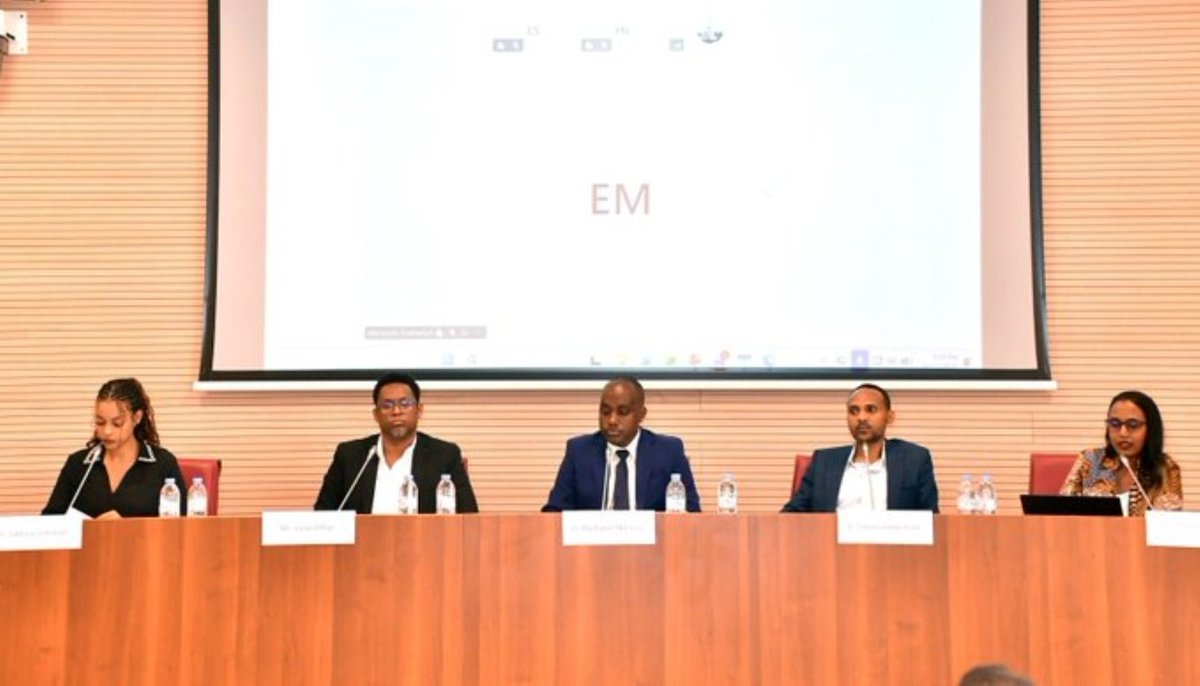
Building Artificial Intelligence Capabilities for Eritrea’s Development: Reflections from UN Day 2026; by Mussie Efriem
"The high-level dialogue in Asmara offered an opportunity to examine Artificial Intelligence in relation to Eritrea’s development priorities, emphasizing the importance of capability-building, relevance to the local context and responsible engagement. Its central themes extended beyond the adoption of new technologies to include education, research, connectivity, data quality, institutional readiness and collaboration. These considerations are essential to determining where AI can make a meaningful contribution and how its potential can be explored without losing sight of the needs it is intended to serve".
https://t.co/Un6pfTVi9l
When a nation is built on sacrifice, its spirit cannot be conquered. The story of #Eritrea is forged in the courage of its leadership, the resilience of its army, and the unwavering determination of its people. Through 30 years of liberation struggle, unity turned sacrifice into victory and determination into independence. From the battlefields to the defense of national sovereignty, Eritrea’s enduring strength lies in the bond between leadership, army, and people. United in purpose, unbroken in spirit, unwavering in defending their destiny. 🇪🇷 #EritreaPrevails #DefendEritrea
Welcomed @UN based journliasts, Alexey Alekseev of RIA Novosti, Celhia de Lavarene of Africa Confidential, and Matsumoto Yasuji of Kyodo News to @Eritrea_UN.
Briefed them on #Eritrea’s priorities for the 81st Session of the UN General Assembly (#UNGA81), as well as recent political and security developments in the #Horn of #Africa.
The discussions provided an opportunity to articulate #Eritrea|s perspectives on regional peace and security, the imperative of respecting sovereignty and territorial integrity, and the growing concerns arising from #Ethiopia|s sustained rhetoric and campaign concerning the #RedSea, including threats against #Eritrea’s sovereign territory.
The engagement also underscored the importance of examining developments in the #Horn within their broader political and security context, including the internal challenges confronting #Ethiopia and their implications for regional stability.
Emphasis was placed on the importance of diligent, independent fact-finding and critical scrutiny of the deluge of information, commentary, and competing narratives circulating in cyberspace.
The journalists were encouraged to look beyond prevailing narratives, verify claims against credible evidence and primary sources, and resist the temptation to reproduce unsubstantiated allegations or politically motivated messaging.
Stressed the need for accurate and responsible reporting to ensure that international assessments and policy responses are grounded in facts rather than misleading narratives or political assumptions.
Failure to establish the facts can obscure the real sources of tension, encourage miscalculations, and lead to skewed policy choices with potentially serious consequences for regional peace and security.
The breakfast meeting provided an opportunity to communicate #Eritrea|s positions to media outlets with distinct regional and international audiences, contributing to a more informed understanding of #Eritrea’s priorities and its assessment of the situation in the #Horn region...
Such engagments with @UN jouranlist will continue...
Had constructive engagements with H.E. Mike Waltz, Permanent Representative of the United States to the United Nations, and Ambassador Jeffrey Bartos, U.S. Representative to the UN for Management and Reform.
Discussed recent developments in the #Horn of #Africa and presented #Eritrea’s perspective on the evolving regional situation. Reiterated that there is no "crisis" between #Eritrea and #Ethiopia, and underscored the need for the international community to pay closer attention to the worrisome developments within #Ethiopia. The most important issue is for #Ethiopia to respect #Eritrea's sovereign territories and stop diverting attention from its domestic issues.
Outlined #Ethiopia|s three-year-long campaign concerning the Red Sea and its continued threats against #Eritrea’s sovereignty and territorial integrity, including threats to annex sovereign #Eritrean territories. Urged those with leverage to use it responsibly and proactively, to prevent unnecessary wars in the region. To refrain from making statments that embolden #Ethiopia's leadership.
Also briefed them on #Ethiopia’s expulsion of #Eritrea’s representatives accredited to the @_AfricanUnion Union and the @UN Economic Commission for #Africa, as well as the breakdown of diplomatic relations initiated by #Ethiopia and reciprocated by #Eritrea.
#Eritrea’s sovereignty and territorial integrity must be respected. Preventing renewed conflict requires addressing the underlying threats, upholding international law, and acting before issues escalate...
@AbiyAhmedAli The Chameleon who Changes colors shifting positions & changes the lies to suit the his political agenda. But history has a long memory & actions speak louder than words. #Eritrea’s sovereignty is not negotiable. No political maneuver can change that. #Ethiopian