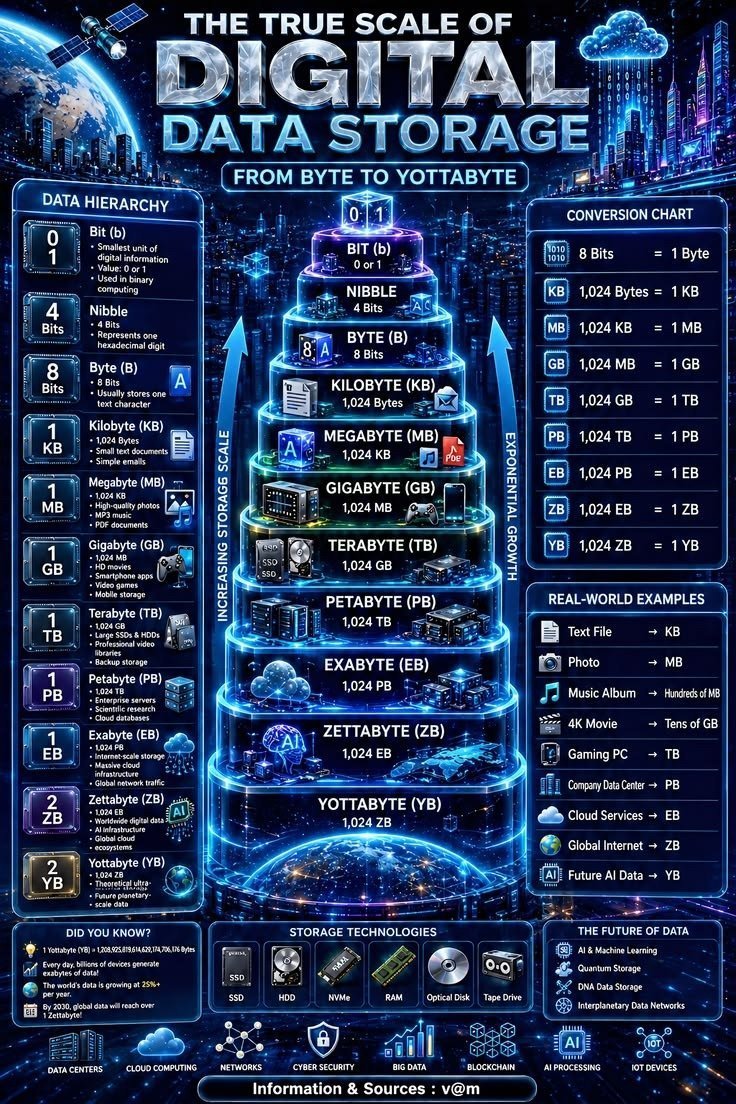
🤯 Most people underestimate how HUGE digital data really is.
From a single **bit** all the way to a **yottabyte** — this visual puts the true scale of digital storage into perspective. 💾🌍
Save this. You’ll want it the next time someone says “that’s a lot of data.” 👀👇
50 websites you’ll wish you knew sooner. 👀🔥
Some are hidden gems, some are seriously useful—and all can save you time. ⚡
Save this list for later! 🔖
Which one is your favorite? 👇
#AI#Tech#AITools#Alora_Tech_Aio
BREAKING🚨: These 15 careers will quietly dominate the next 10 years.
Most people won’t notice until it’s too late.
The people learning these skills today will be impossible to ignore by 2030:
🚨 URGENT: Claude can now CREATE a YouTube channel from scratch and take it to monetization in just 90 days. 100% free.
Here are 8 prompts to make it happen: 👇
Imagine an assistant that never gets tired of researching, outlining, rewriting, creating variations, or organizing information.
AI isn’t just a tool—it’s a productivity multiplier.
Work smarter. Create faster. Think bigger. 🚀🤖
Follow me 👉 @Sophia_Ai0
Stop paying $300 per UGC video.
I generate mine with Arcads for a fraction of that.
Same hook style.
Same scroll-stopping energy.
Comment "UGC" and I'll send you the setup.
Most AI meeting tools save conversations.
Very few help your team move faster because of them.
I create content with a small team, so every week is packed with planning calls, campaign reviews, and client discussions.
The hardest part was never the meetings.
It was turning those conversations into action without spending another hour reviewing notes.
We tried summaries, transcripts, and AI note takers.
They captured what was said, but someone still had to identify priorities, assign follow-ups, and prepare our Monday pipeline review.
It felt like we were saving time only to spend it somewhere else.
What changed for me was using @viktor_com.
After a call, he surfaces the decisions, action items, blockers, and the context behind them, so my team can focus on execution instead of digging through recordings.
By week six, our Monday pipeline review was practically ready before anyone even opened their laptop.
AI shouldn't just document work.
It should help your team move work forward. Tell me I'm wrong.
Hire @viktor_com for your team.
$100 in credits included, no card. Full link in first comment.
Paid Partnership
🤯 Most people underestimate how HUGE digital data really is.
From a single **bit** all the way to a **yottabyte** — this visual puts the true scale of digital storage into perspective. 💾🌍
Save this. You’ll want it the next time someone says “that’s a lot of data.” 👀👇
🚨 YOUR GPU ISN'T SLOW. YOUR MEMORY MANAGER MIGHT BE.
The surprising bottleneck in LLM serving isn't always the GPU kernel.
It's how the system manages the KV cache.
In the PagedAttention paper's profiling, pre-vLLM serving systems used only 20.4%–38.2% of KV-cache memory for actual token states.
The rest was reservation + fragmentation.
vLLM attacked the problem like an operating-system engineer:
→ KV cache is split into fixed-size blocks
→ Requests don't need one contiguous allocation
→ Each request gets a block table
→ Full prefix blocks can be hashed and shared
→ The scheduler rebuilds the batch every step against one token budget
That's the part people often miss.
vLLM isn't simply "batching requests."
It's continuously deciding:
How many tokens can I afford this step?
Running requests get priority. Waiting requests join with whatever budget remains.
The SOSP '23 results were striking:
→ near-zero KV-cache waste
→ 2–4× throughput vs. the state of the art at the same latency
And the project has since evolved far beyond that original paper, with vLLM at 90k+ GitHub stars and v0.28.0 released on August 26, 2026.
I pulled $43,800 overnight using an automated OpenClaw setup.
At 3:47 AM, my system fired a confirmation alert. Half‑asleep, I tapped approve—by sunrise, the position had closed with a +$43,800 gain.
I’ve documented the exact timezone arbitrage playbook—step by step.
[ 𝐍𝐨𝐭𝐞: 𝐅𝐨𝐥𝐥𝐨𝐰 𝐌𝐞: @AI_creator_Yara (𝐅𝐨𝐫 𝐢𝐧𝐬𝐭𝐚𝐧𝐭𝐥𝐲 𝐚𝐮𝐭𝐨 𝐃𝐌)]
You’ll need:
• Claude
• A laptop
• 24 hours (free test)
The system runs nonstop, scanning Japanese, European, Australian, and Middle Eastern news.
It spots pricing gaps—events already resolved overseas but not yet priced into U.S. markets.
After 9 days, results have been consistent and eye‑opening.
Most traders obsess over EST. Markets don’t.
While one region sleeps, another settles events in real time.
That timing gap = opportunity.
To access the guide:
→ Like & repost
→ Comment " 𝐏𝐫𝐨𝐦𝐩𝐭 "
→ Follow @AI_creator_Yara (𝐬𝐨 𝐈 𝐜𝐚𝐧 𝐃𝐌 𝐢𝐭)
[BOOKMARK MUST]
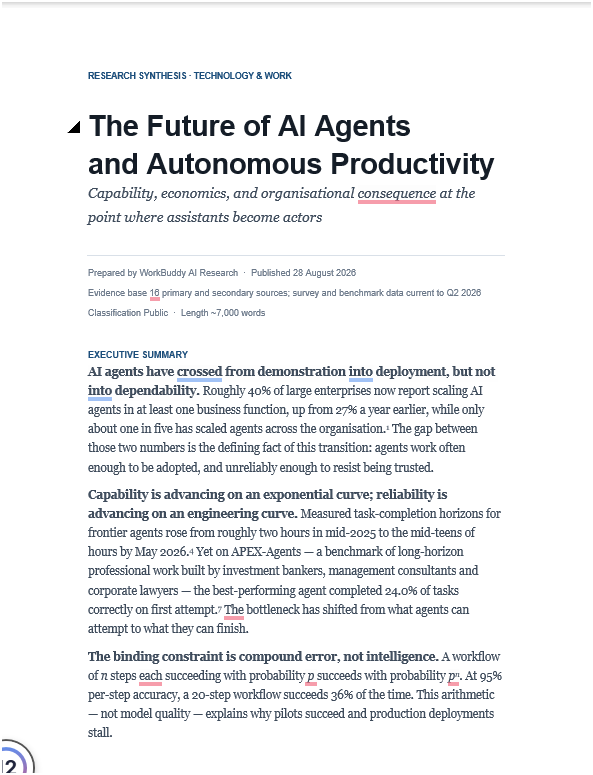
🚨 Tencent just dropped a serious open-source AI contender.
Meet Hy4 Preview built for productivity, coding & agentic workflows.
770B total parameters.
49B active.
1M+ token context.
But the numbers aren’t the most interesting part.
Hy4 Preview is designed to handle what actually matters: planning, tool use, coding, research, document workflows and complex multi-step tasks.
In Tencent’s internal blind evaluation across 203 engineering tasks, it scored 2.99/4, edging out GLM 5.3 (2.92) and Kimi K3 (2.94).
From full-stack development and research to workplace automation and even game development, this looks less like “just another LLM” and more like a model built to get real work done.
Worth watching 👀
🔗 Try it with WorkBuddy: https://t.co/y4b5RcI8Qz
@TencentHunyuan@TencentAI_News@WorkBuddy_AI
An MIT professor gives a student $5 and says: send any amount to a stranger in this room. Whatever you send triples. The stranger decides how much comes back.
Rational answer: send nothing. You lose every dollar you trust.
Most students send almost everything. Most strangers return more than half. The math says keep it. The room says otherwise.
Then the professor runs a different game. Same cash. Same room. One student splits. The other can only accept. No rejection. No consequences.
The offers collapse. Not to zero. But enough to see the line between generosity and strategy.
One year a student got Swiss chocolate instead of cash. She was lactose intolerant. Gave away 100%. The professor noted it. The class laughed. Nobody noticed the point.
She had zero cost of generosity. The moment giving costs nothing, everyone is generous. The moment real money hits the table, the room divides into the same two groups every semester. People who send first. People who wait.
Labor, capital, arbitrage, insurance. Four ways to make money. All four require the same opening move.
You send value before you see a return. A paycheck after the work. A deposit before the interest. A bet before the edge. A premium before the claim.
The lecture is free. MIT filmed it years ago. The game runs every semester. The split barely changes.
Sending first is free. Knowing if it comes back is the part that costs something.
BREAKING🚨: These 15 careers will quietly dominate the next 10 years.
Most people won’t notice until it’s too late.
The people learning these skills today will be impossible to ignore by 2030:









![AI_creator_Yara's tweet photo. I pulled $43,800 overnight using an automated OpenClaw setup.
At 3:47 AM, my system fired a confirmation alert. Half‑asleep, I tapped approve—by sunrise, the position had closed with a +$43,800 gain.
I’ve documented the exact timezone arbitrage playbook—step by step.
[ 𝐍𝐨𝐭𝐞: 𝐅𝐨𝐥𝐥𝐨𝐰 𝐌𝐞: @AI_creator_Yara (𝐅𝐨𝐫 𝐢𝐧𝐬𝐭𝐚𝐧𝐭𝐥𝐲 𝐚𝐮𝐭𝐨 𝐃𝐌)]
You’ll need:
• Claude
• A laptop
• 24 hours (free test)
The system runs nonstop, scanning Japanese, European, Australian, and Middle Eastern news.
It spots pricing gaps—events already resolved overseas but not yet priced into U.S. markets.
After 9 days, results have been consistent and eye‑opening.
Most traders obsess over EST. Markets don’t.
While one region sleeps, another settles events in real time.
That timing gap = opportunity.
To access the guide:
→ Like & repost
→ Comment " 𝐏𝐫𝐨𝐦𝐩𝐭 "
→ Follow @AI_creator_Yara (𝐬𝐨 𝐈 𝐜𝐚𝐧 𝐃𝐌 𝐢𝐭)
[BOOKMARK MUST]](https://pbs.twimg.com/media/HQ5dk0fagAAuTMO.jpg)


