Around $3 Trillion dollars were laundered through banks in 2025 and they want you to believe that a bill in Congress that clearly applies AML/BSA obligations to crypto exchanges is somehow the problem. Literally nonsense.
Wake up, Europe.
You have exactly two choices: America’s tech stack or China’s.
You cannot build your own. You cannot complete anything at scale. All you do is pass legislation, issue fines, write stern letters of concern, and hold press conferences about “digital sovereignty” while your cloud infrastructure, AI models, semiconductors, and platforms remain overwhelmingly dependent on foreign technology.
Pretending you’ll magically “build European champions” by taxing, fining, and hamstringing the only people who actually ship product at global scale is delusional. Decades of evidence prove it. Brain drain continues. Investment gaps widen.
We know what the data says: Europe lags behind in AI, cloud, semiconductors, and consumer platforms because of the regulatory moat you build and maintain around mediocrity.
So you can push for sovereignty but it will not materialize because you’re unwilling to do what it takes to get there.
Around $3 Trillion dollars were laundered through banks in 2025 despite the warrantless surveillance regimes they facilitate for governments. And they want you to think that people making peer-to-peer transactions on chain are the problem that needs to be outlawed.
Self-custody must be protected. The United States was founded on the principle of private property, and the seizure of assets is something we must guard against. At the @CFTC, that means protecting Americans’ ability to hold and control their own digital assets.
A French tax official was caught selling crypto investor declaration data to criminals who then conducted kidnappings and home invasions. The state that requires you to declare your digital assets employed a person who sold that declaration data to the people who held knives to your throat to take them.
This is not a hypothetical. It is a verified finding reported by French media in June 2025 and confirmed through April 2026 by CoinDesk, CertiK, and multiple outlets. In the same period, Waltio, France’s crypto tax reporting service, was itself hacked, exposing additional holder data. The tool built to help you comply became the tool that helped attackers find you.
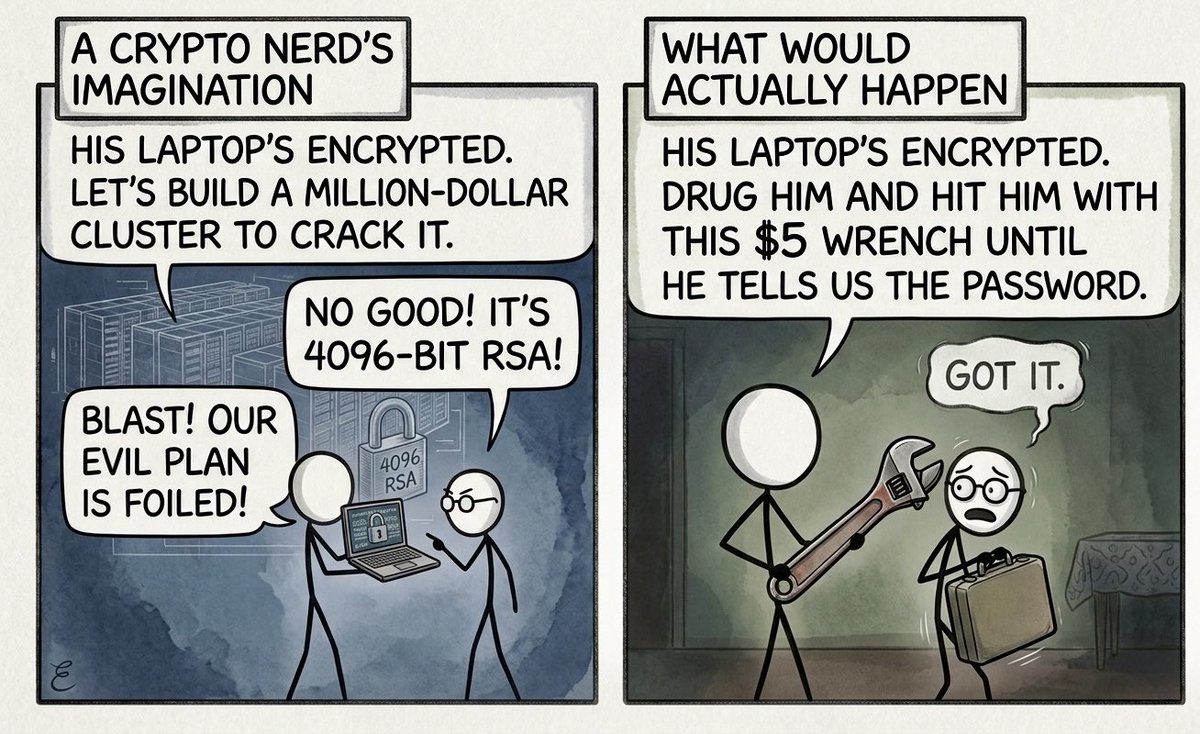
France has recorded 41 crypto kidnappings since January 2026. One every two and a half days. At Paris Blockchain Week this week, police motorcades escorted VIPs to dinner at the Palace of Versailles while the Interior Minister announced new prevention measures from the conference stage. On April 13, GIGN commandos rescued a crypto entrepreneur’s wife and eleven-year-old son after a twenty-hour hostage ordeal. In January 2025, Ledger co-founder David Balland had a finger severed during a ransom negotiation. CertiK data shows wrench attacks rose 75% globally in 2025. France accounted for roughly 40% of European incidents.
Now hold the compliance trap in both hands.
If you declare your crypto to the tax authority, your data enters a system staffed by humans who can be bribed, hacked, or coerced. A French tax official proved this by selling declaration records to criminals. Waltio proved it by getting breached. Your compliance creates the reconnaissance layer for your own physical attack. The act of obeying the law manufactures the target on your back.
If you do not declare, the IRS will not help you when robbed. Under US tax law, crypto theft losses are deductible only for profit-motivated transactions under IRC Section 165(c)(2), per IRS Chief Counsel guidance issued March 2025. Personal robbery losses have been non-deductible since the Tax Cuts and Jobs Act, made permanent July 2025. If your undeclared Bitcoin is stolen at knifepoint, you cannot claim the loss, and you face back taxes plus twenty to forty percent penalties if the undeclared status surfaces. Robbed by the criminal, then penalised by the state.
Declare and become a target. Do not declare and lose all legal recourse when targeted anyway.
This is the compliance trap, operating at the intersection of three crises that converged in one week. On April 14, Bitcoin developers published BIP-361, proposing the first consensus-level freeze in protocol history. On April 18, Lazarus drained $292 million from KelpDAO. On April 20, Arbitrum froze $71 million of the stolen funds. On every programmable layer, private keys no longer guarantee ownership. And on the base layer, the only asset unfreezable by code, the physical attack surface has exploded because the compliance infrastructure governments demand is the infrastructure criminals exploit.
The old maxim was “not your keys, not your crypto.” The new reality, stress-tested this week across digital, physical, and fiscal domains simultaneously, is worse. Your keys are necessary. Your compliance is dangerous. Your silence is penalised. And no layer of the monetary stack, not the protocol, not the issuer, not the governance council, and not the state, is designed to protect you from all three at once.
Full institutional analysis below. https://t.co/FRwSI1w8WU
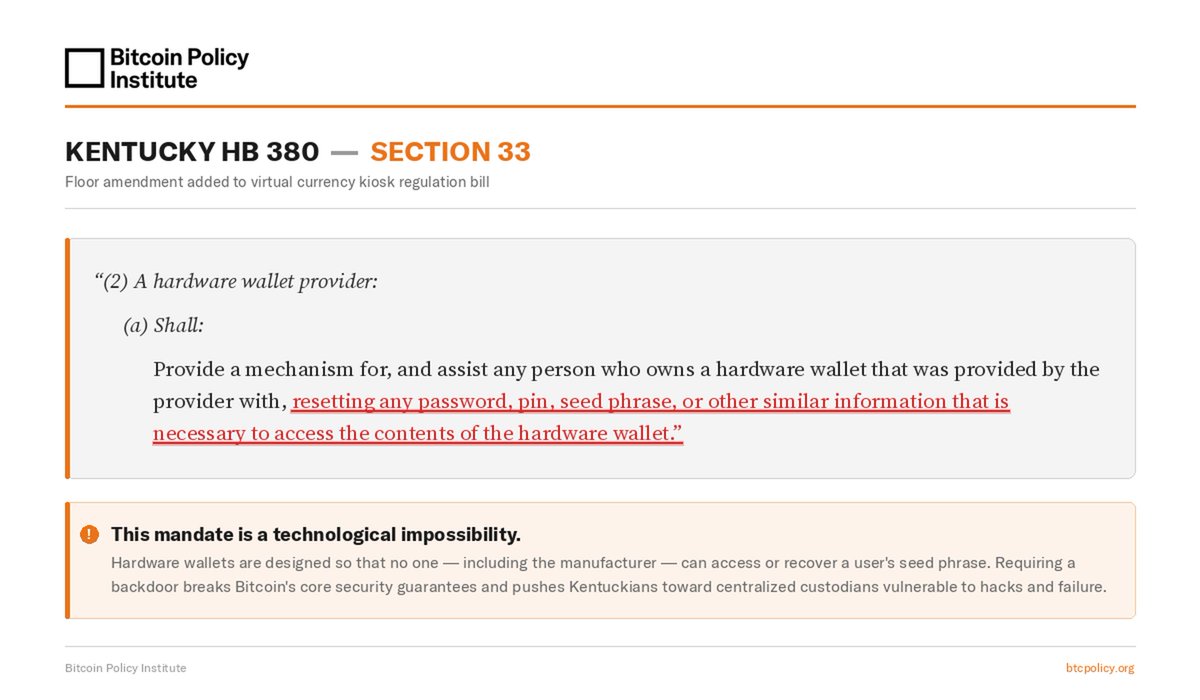
🚨BPI has just learned of an amendment buried in Kentucky HB 380 that would require hardware wallet providers to reset users' seed phrases on request. This would effectively outlaw self-custody in Kentucky. BPI is sending a letter to the Kentucky Senate informing them of the harmfulness of this language.
Section 33 was added as a last-minute floor amendment to a 77-page virtual currency kiosk regulation bill. The underlying bill has political support and is expected to move through the Senate for final passage, possibly within the next week.
The mandate is technologically impossible for non-custodial wallets. Hardware wallets are specifically designed so that no one — including the manufacturer — can access or recover a user's seed phrase. Requiring a backdoor for seed phrase recovery breaks Bitcoin's fundamental security guarantees and pushes users toward centralized custodians that are vulnerable to hacks and failures.
Kentucky legislators should be protecting their constituents' right to secure their own property. We urge the Senate to strip this provision before the bill reaches a vote. Relevant text below
@_pgauthier We know that software is only as secure as the hardware it runs on. But what happens when the software starts acting on its own? Autonomous systems need a physical barrier to keep them contained and humans in control. Thankfully, this is Ledger.
What's going on in crypto? Flat or declining markets. Definite vibe shift... A few thoughts.
Markets have stalled, in my opinion, because the disintermediation use case has been effectively destroyed in America. An account-based industry offers no distinct advantage over the status quo. A toxic combination of regulatory and legal malfeasance combined with legislative inertia have caused capital flight and user avoidance - in America.
In 2025 GENIUS Act became law, providing a federal framework for stablecoins. This is an account-based approach, favored by banks, that prevents non-banks from paying interest, fails to protect self-custody and by design enables a "wholesale CBDC".
The wholesale part is cosmetic. On the back end all of the other characteristics of CBDC are being built while the massive deficits that undermine the value of the dollar continue unabated. Stablecoins offer the hope of more demand for US Treasuries, which may help lower rates and more broadly distribute the monetization of federal interest payments on our massive debt and deficits.
Meanwhile, the broader digital asset market still awaits passage of the CLARITY Act by the Senate. Along with providing some overly cumbersome legal clarity for tokenized commodities, tokenized securities, and tokenized real world assets, CLARITY promises to fix some of the deficiencies in GENIUS by protecting self-custody and incorporating other House provisions.
Ultimately, if the Senate even passes a bill, I expect any nod to individual freedom will be cosmetic and pose no meaningful change to the account-based regime.
The future of money will determine the future. Without massive divine intervention, that future looks permissioned, surveilled, and debased.
Remember, the promise of Bitcoin was not an illiquid inflating asset, but rather a permission-less, peer-to-peer payment system. With Bitcoin, no third party could condition your access to your money, and you could move it anywhere at the speed of light. Account-based HODL dominance has led to some useful innovations, but they are highly threatened as already noted, and punctuated by men in jail for writing software to protect self-custody and privacy.
At some point, the industry and government will offer digital ID to grant permission to their permissioned network for money. Do not be deceived; this is a cosmetic illusion of freedom designed to enable more surveillance, coercion, and control.
We need to reject this globalist surveillance state and return to first principles. No government grants you permission to transact, and no government should infringe this right without probable cause and due process.
Returning to this condition requires either a wholesale rejection of the 3rd party doctrine or strong legal protections privacy and decentralized computing architectures (like Bitcoin or ZCash) that build trust in ways that limit surveillance and always protect permissionless self-custody.
I've pushed for such a future since 2017, but most of the momentum looks like account-based dominance with some cosmetic nods to individual freedom.
Digital ID and CBDC pose an existential threat to the future of freedom, and they have more momentum. It would be wise to make a plan to grow and preserve your net worth with that in mind.
You can keep telling your Congress to FULLY ban Central Bank Digital Currency, ban Digital ID, protect self-custody, and guarantee that right to transact is once again un-infringed. It will take a miracle, but I believe miracles still happen.
Happy New Year!
EU-Sanktion aufgrund von unerwünschter Information, selbst wenn sie legal und wahr ist - dies ermöglicht die neue Verordnung vom 8. Oktober 2024 (1)
Am 8. Oktober 2024 legte die EU für den Krieg in der Ukraine ein neues Sanktionsformat auf (1), welches „restriktive Maßnahmen angesichts der destabilisierenden Aktivitäten Russlands“ adressiert (RUSDE). Ein wesentlicher Bereich, der in dieser Verordnung neu zum Ziel für Sanktionen erhoben wird, sind „hybride Bedrohungen“. Hierzu zählen „Bedrohungen durch ausländische Informationsmanipulation und Einflussnahme.“ Darunter kann auch „eine zumeist nicht rechtswidrige Verhaltensweise“ fallen, „die Werte, Verfahren und politische Prozesse bedroht oder negativ beeinflussen könnte. Diese Aktivitäten sind ihrem Wesen nach manipulativ und werden von staatlichen oder nichtstaatlichen Akteuren, einschließlich ihrer Stellvertreter, innerhalb und außerhalb ihres eigenen Ho-heitsgebiets vorsätzlich und koordiniert durchgeführt.“ (2024/2643 Abs 8)
Mit der Verordnung wird bezweckt, Maßnahmen gegen Akteure ergreifen zu können, „die an ausländischer Informationsmanipulation und Einmischung beteiligt sind, wenn dies zum Schutz der öffentlichen Ordnung und Sicherheit in der Union erforderlich ist.“ (ebd. Abs 7). Betont wird hierbei, dass die Sanktionierung „unter uneingeschränkter Achtung der Menschenrechte und Grundfreiheiten“ erfolgen soll und sich konkret auf die „Bekämpfung der staatlich kontrollierten Informationsmanipulation und Einflussnahme Russlands, einschließlich Desinformation“ (Abs 9) bezieht. Solche Einflussmöglichkeiten, inklusive der Beeinflussung von Information, nutze Russland zur „Schädigung, Verwirrung, Einschüchterung, Schwächung und Spaltung der Mitgliedstaaten und ihrer Nachbarländer“ (Abs 10).
Im Klartext heißt dies, dass Sanktionen aufgrund der Verbreitung von Informationen verhängt werden können, welche als Einflussnahme Russlands gewertet wird, selbst wenn diese Informationen und ihre Verbreitung vollständig legal sind. Darunter können auch Inhalte fallen, die thematisch unabhängig von Russland und dem Krieg in der Ukraine sind.
Genau dies zeigen zum Beispiel die Sanktionen gegen Hüseyin Dogru oder Nathalie Yalb, die sich thematisch gar nicht mit dem Krieg in der Ukraine befasst haben, denen aber unterstellt wird, unter dem Einfluss Russlands tätig gewesen zu sein.
Die Begründung für die Legalisierung der Abwehr legaler Informationen und Tätigkeiten findet sich in einem Konzeptpapier (2), auf das der EU Rat explizit in der Verordnung verweist. In dem 2020 von der EU Kommission und vom Europäischen Kompetenzzentrum verantworteten Papier „Die Landschaft hybrider Bedrohungen: ein konzeptionelles Modell“ (2) wird ausgeführt, dass hybride Kriegsführung gegen demokratische Staaten gezielt die wunden Punkte der Demokratie adressiere, indem es legale Handlungen als Waffe zur Beschädigung dieser Länder einsetze. Ihre schädliche Wirkung entfalten solche legalen Handlungen in der Kombination und durch ihre Einbettung in eine konkrete Situation.
Wie die Realität durch solche Operationen eine „Grauzone zwischen Krieg und Frieden“ erzeugt, so muss die Abwehr solcher Operationen ebenfalls eine Grauzone benutzen, um die als Waffe eingesetzten legalen Aktivitäten, die sich aufgrund ihrer Rechtmäßigkeit eigentlich dem Zugriff entziehen, dennoch entschärfen zu können.
Als Instrument für die Arbeit in dieser Grauzone werden „Misinformation“ und „Desinformation“ oder „Manipulation von Information“ herangezogen, die ihrerseits keine exakte Definition erfahren.
Der Mangel an Präzision dieser Begriffe ist Teil der Strategie, um legale sowie auch wahre Informationen aus dem Verkehr ziehen zu können, wenn sie politisch als schädlich bzw. als Einflussnahme durch den Feind betrachtet werden.
Zu solchen Informationen wird explizit die „Entwicklung starker historischer Narrative“ gezählt, wenn sie als „falsch oder nur teilweise korrekt“ einzustufen sind (S. 9). Mit dieser Annahme fallen also nicht nur einzelne Aussagen, sondern ganze Artikel und sogar Bücher, wissenschaftliche wie literarische nicht ausgeschlossen, in diese Grauzone. Der Fall Jacques Baud dürfte als Beispiel für die Sanktionierung aufgrund der Verbreitung vollständig legaler und zugleich sachlich wie fachlich versierter, sorgfältig quellenbasierter und begründeter Ausführungen dienen.
Wer für die Kriterien und die Beurteilung solcher Informationen bzw. Aktivitäten zuständig ist, ist im Fall der EU klar: der Rat für Auswärtige Angelegenheiten unter Leitung des Hohen Vertreters der Union für Außen- und Sicherheitspolitik, der die Sanktionen ausspricht. Die Legalität der Abwehr auch legaler und wahrer Information bzw. von deren Akteuren im Interesse der Außen- und Sicherheitspolitik wird durch die Verordnung der Institution garantiert.
Formalrechtlich könnte es daher schwer werden, solche Sanktionierungen mit Erfolg zu beklagen, da explizit vorgesehen ist, dass auch vollständig legale Aktivitäten und wahre Informationen sanktioniert werden dürfen, wenn sie denn hinreichend als schädliche Einflussnahme des Feindes Russland begründet werden.
Analog funktioniert der Digital Services Act, auf dessen Grundlage die Löschung legaler und sogar wissenschaftlicher Ausführungen, wenn sie nach be-stimmten Kriterien als schädlich eingestuft werden, unter Verweis auf eine autoritativ anerkannte Institution möglich ist und auch gerichtlich bestätigt wurde (abgewiesene Klage gegen LinkedIn, (3)).
Derselbe Mechanismus, Information im politisch gesetzten Interesse zu beurteilen und ohne vorausgehendes rechtliches Gehör mit Möglichkeit nur zu nachfolgender Klage zu eliminieren oder beschränken, wird auch durch die neue EU Verordnung installiert – aber mit dem Unterschied, dass durch die Sanktion der Akteur selbst, nicht die Information, aus dem Verkehr gezogen wird.
Wie hierbei die "Menschenrechte und Grundfreiheiten" gewahrt bleiben sollen, wie es die EU Verordnung eigens betont, ist mir schleierhaft (vgl. das Rechtsgutachten (4)).
(1) https://t.co/tzsYLgShqR
(2) https://t.co/MgdaphA9SM
(3) https://t.co/niM615IEJy
(4) https://t.co/Al1FNG56Qk
Brussels just slapped X with a €120 million “transparency” fine for refusing to behave like a Ministry of Truth. This isn’t regulation. It’s regime protection disguised as consumer safety.
The official story is almost adorable in its naivete; the EU isn’t punishing speech, no, they’re merely worried about blue checkmarks and ad databases, because apparently the fate of European democracy hinges on whether your favorite meme account is “authentically verified.” But you don’t deploy the full weight of the Orwellian Commission of censorship over user interface cosmetics. You do it when a once-reliable, NATO-aligned propaganda pipeline suddenly stops behaving like a well-trained stenographer.
That’s the real crime: X refuses to be an instrument for the EU.
The Digital Services Act was marketed as a guardian of safety. In practice, it is a cross-border speech throttle, granting unelected bureaucrats the authority to decide which ideas are lawful and which must be smothered. Today’s €120m penalty is wrapped in technocratic jargon, but the underlying message is unmistakable: if you won’t curate the narrative, we will crush you financially.
Washington saw it instantly, Marco Rubio called out the farce without ceremony: the fine “isn’t just an attack on X, it’s an attack on all American tech platforms and the American people by foreign governments.” When the top U.S. diplomat accuses Brussels of interfering in Americans’ speech, this is no longer a regulatory dispute. It’s jurisdictional neo-imperialism by a petulant child (EU) masquerading as a power.
And Musk?
“The EU woke Stasi commissars are about to understand the full meaning of the ‘Streisand Effect’.”
He’s right. Europe, famed for its revisionist lectures about historical memory, is now reconstructing, in digital form, the very surveillance psychology it claims to have transcended. This time, the dossiers aren’t ink on paper; they’re algorithmic profiles, automated judgments, and bureaucrats demanding real-time access to the backrooms of the digital public square.
Brussels started with “transparency” charges not because they care about transparency but because they’re terrified of being exposed as censors. Going after “disinformation” directly would blow the operation wide open. So they took the side door, pretend it’s about consumer protection, then quietly impose political obedience as the cost of operating in Europe.
What they’ve triggered instead is exactly the disaster Musk warned them about. The Streisand Effect is coming for them with a sledgehammer. They tried to humiliate X. They accidentally crowned it the global symbol of less licensed conversation. Every attempt to suffocate it only convinces more people that the last refuge of authenticity is whatever Brussels hates most.
And of course they’re panicking. Europe is energy-poor, industry-starved, driven by Russophobic psychosis, and governed by a class allergic to accountability. Instead of fixing any of that, they’ve become zealots of narrative control, ruthless toward dissent, gentle toward their own failures, obsessed with policing which truths ordinary people are allowed to see.
That’s why this fine is more than a fine.
It’s an ultimatum: Obey our speech codes, or we will regulate you into political submission. But the world has changed.
The unipolar order is gone. BRICS nations, the Global Majority, and billions of people outside the Atlanticist bubble already assume European “free speech” is bad cosplay. The EU just validated that suspicion in writing.
By weaponizing the DSA, Brussels believes it can export its censorship architecture as a global standard. You can fine X. You can’t fine your way back into cultural legitimacy.
In the short term, €120m hits X’s balance sheet. In the long term, it hits the EU's mask.
And when a system demands the power to decide what you may see, say, or think, it is confessing that it fears its own citizens more than any foreign enemy.
🗣️ | @vilimsky 🇦🇹: “The accusations against Hungary and its government are yet another political ploy to discredit Prime Minister Viktor Orbán. The EU should put its own house in order when it comes to espionage: the Media Freedom Act, Digital Services Act and Chat Control interfere with freedom of expression and seek to control all citizens in the European Union.” #Patriots
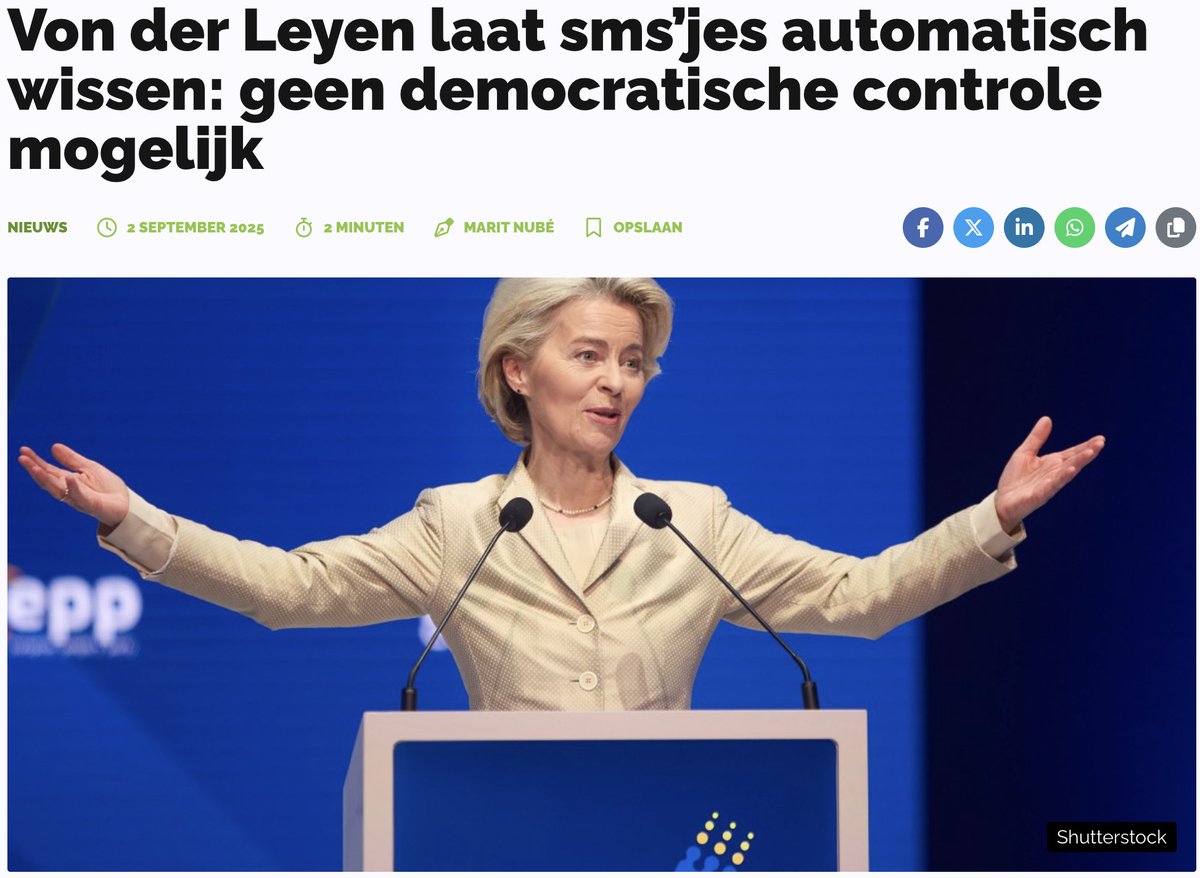
Terwijl #VonDerLeyen opnieuw haar sms'jes wist, wil de EU met #ChatControl álle privéberichten, e-mails en cloudbestanden van 450 miljoen burgers scannen.
Dag in, dag uit. Elk. Bericht.
EU Big Brother on steroids!
Niet de macht, maar de burger wordt gecontroleerd. Dit is het einde van het briefgeheim.
🗓️ Op 14 oktober beslissen de lidstaten.
📧 Mail je volksvertegenwoordiger. Verdedig je privacy!
Kijk hier de hele aflevering van Brave New West: https://t.co/jBC9sjlE82 en druk op de abonneer knop.
@Scaroleva
#Privacy #ChatControl #StopChatControl
We are alarmed by reports that Germany is on the verge of a catastrophic about-face, reversing its longstanding and principled opposition to the EU’s Chat Control proposal which, if passed, could spell the end of the right to privacy in Europe.
https://t.co/015qmQnIS2
🚨 #ChatControl wants to scan ALL your private messages
Ursula #VonDerLeyen had to be taken to court for hiding her secret #Pfizer texts over €40 billion in COVID shot deals. Now she wants access to every message from 450 million EU citizens.
The @EU_Commission is starting to resemble Orwell’s Ministry of Truth. Governments should operate with maximum transparency, while citizens deserve maximum privacy.
#EU
https://t.co/gISma4KdaB
De ongekozen voorzitter van de Europese Commissie heeft lak aan transparantie en democratisch controle
Ondertussen bouwt de #EU voor u een digitale gevangenis zonder dat u daarom gevraagd heeft, zonder privacy en zonder inspraak:
🔹 Digital Services Act = Censuurwet
🔹 Media Freedom Act = Gecontroleerde journalistiek
🔹 Chat Control = Massasurveillance van privéberichten
🔹 Digitale ID = Volledige traceerbaarheid van burgers
🔹 AI-wet = Centrale sturing van informatie & gedrag
🔹 CBDC = Programmeerbaar geld met controle op bestedingen
https://t.co/XOeF9mhQim #vonderLeyen #VdL
This week, @RepMikeCarey and @SenTedCruz introduced Congressional Review Act resolutions to roll back the DeFi broker rulemaking.
Along with the cosponsors, we encourage other members to join this effort, supporting Pres. Trump’s vision to bolster American crypto innovation.
While everyone's looking at France there's a Pavel Durov case going on right now in the U.S.
The U.S. v. STORM trial on December 4th will decide the fate of digital rights in the U.S. for a generation.
But we're going to lose if we don't fund it.
$2m is needed for legal defense now.
Donate below.
@rstormsf was arrested in his Seattle home by U.S. authorities - his crime? He published an open source tool called Tornado Cash to the internet that helps keep cryptocurrency private.
As with every encryption tool in history, a lot of good people used it for privacy - and some bad people used it. He now faces years of jail in the U.S. because some bad people used the code he wrote.
Are we going to ban every encryption tool that democratizes speech and power because bad people exist?
If this case is lost the answer tips toward yes.
I believe this is the 2020's version of the Phil Zimmerman trial of the 90s to get encryption off the munition list and make way for internet - last time the U.S. backed off and dropped the case due to public outcry - this time the we're dealing with a government that's more hostile and determined to prosecute away our digital rights.
If Roman loses and bad precedent is set...the decentralized parts of the crypto in the U.S. are dead - private digital cash is gone - more broadly, I'm not sure any developer is safe - if bad guys use your code to do bad things you might go to jail, like Roman...like Pavel.
Open source AI developers - you're next.
Free societies can find a balance between digital rights and security - but arbitrarily putting developers in jail for publishing encryption code and depriving citizens of all means to privacy neither increase our freedom nor our security.
Roman isn't some tech millionaire. He can't afford the insane legal bills required to win.
$2m is needed for the S-Tier legal team required to win this case.
We can't leave the fate of this case to a randomly assigned public attorney - that's what happens if the funds aren't raised.
His trial is December 4th 2024.
The funds are needed now.
Donate to Roman Storm Case
https://t.co/daHXl1G1pt
Read the case brief & budget
https://t.co/zvh1zlr1XQ
If you can't donate, like, RT, spread the message and share your support.
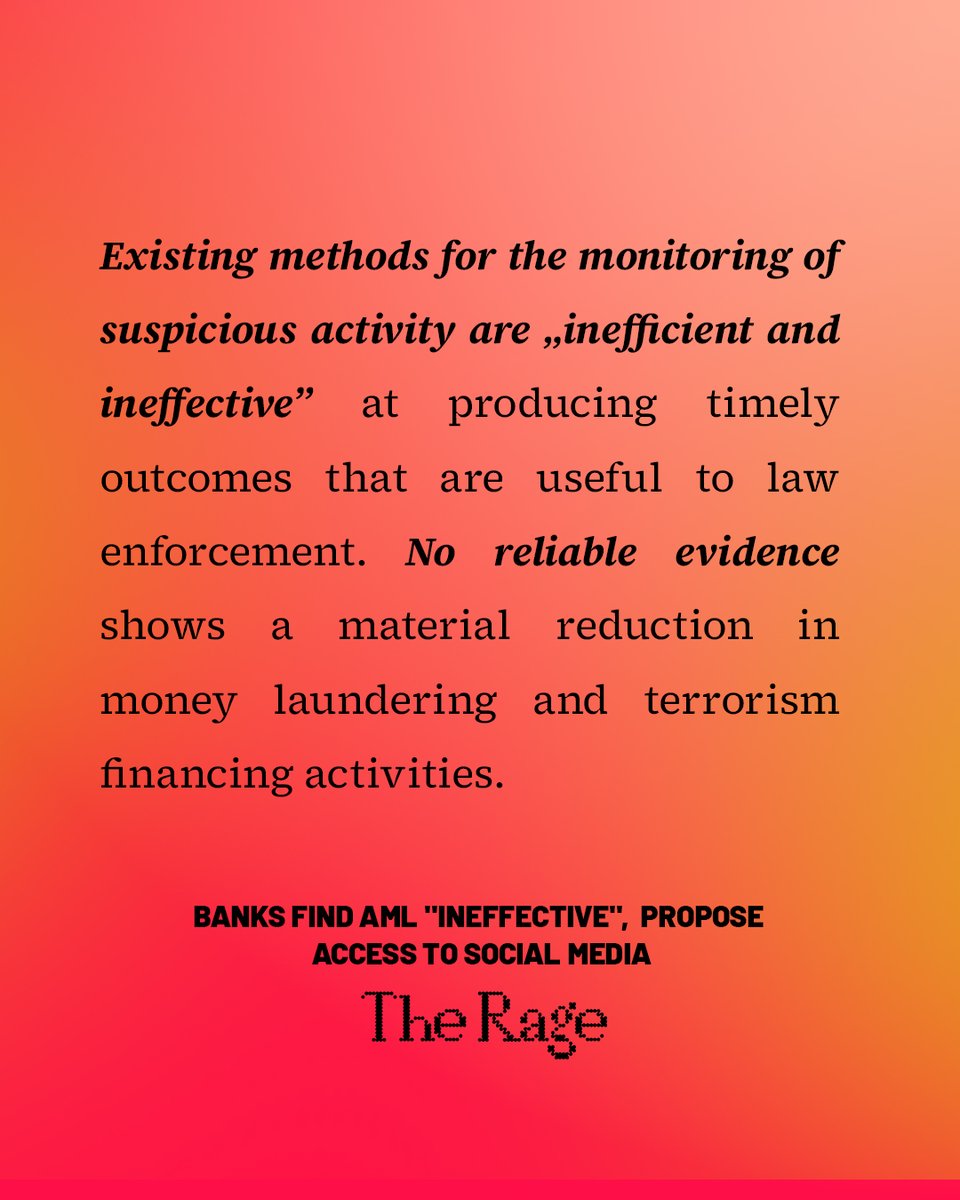
On today’s episode of Astrology for Governments, the world’s largest banks have found that there is „no reliable evidence“ that current AML programs actually reduce the risks of money laundering and financial crime.
So what do they want now? Access to even more personal information about you. Because of course.