Find out why it's so hard to make decisions during time limits in this @UDelaware#ArticleinPress, #Indecision under time pressure arises from suboptimal switching behaviour (Seth R. Sullivan et al.):
https://t.co/QTNDVZRWZS
My research group is looking for a postdoctoral fellow to study the principles of coadaptation between human-human and human-adaptive agent pairs. Ad below. Please retweet!
Our latest paper that we are very excited about is out!
"Online movements reflect ongoing deliberation."
A tour de force effort by the outstanding @Jan_Calalo, with contributions from @carterjmike@NEneeSW.
https://t.co/I9olV6KyyW
Following the recent NSF DARE conference, a large team of us got together and wrote a perspective piece on where and how computational modelling can support neurorehabilitation within a clinical pipeline, by leveraging a 'patient-in-the-loop' framework: https://t.co/F5k5zSHQas
We are excited to share our new paper that dives into the role of reinforcement-based processes in task redundant motor exploration (https://t.co/7CO9T5GIll)!
Roles and interplay between muscular co-contraction and visuomotor feedback responses when regulating movement variability. Nice work by @Jan_Calalo: https://t.co/4vWAMx2FmC
We are excited to share our new paper that predicts the onset timing of multiple motor commands (https://t.co/Ho71upV0DX). The onset timing of muscle is important for coordination and becomes impacted with several neurological disorders.
Are you an aspiring or practicing neuroscientist who wants to learn Python for free? Dr. Mark Kramer and colleagues @BU_Tweets developed a great intro virtual book that uses Jupyter Notebooks with neuro data included. A🧵 of the topics included: @PhDVoice@AcademicChatter
Want to learn Biomechanics? Professor Scott Delp at @StanfordNMBL, and Tom Uchida of University of Ottawa share an entire Biomechanics of Movement course. You can find the course here: https://t.co/FdxPxEmrPG
I am excited to share our new publication in the Journal of Biomechanical Engineering! In this study we developed and validated a framework for predictive simulations of treadmill gait using direct collocation methods and OpenSim Moco. https://t.co/xeFzvnleHm
Over the years, the lab and I have come up with various materials for science process (writing, presenting, reviewing, etc.). Here they are, loosely organized in a Google Doc. Hope it is useful! https://t.co/dYtFtBUpgQ
Matplotlib has two alternatives to create plots and figures.
This can be confusing for beginners…
…from a beginner's perspective, it's best if there's only one way of doing things.
Read on
👇🪡🧵
#python#matplotlib
/1
Today in @SciReports, the graph imputer, a new model that can predict where players will run, on and off-screen, using past and future available observations of subsets of players: https://t.co/5GNn54vliv
#AISports 1/
The full video from Monday's Systems Neuroscience workshop is now available, with Ben Hayden, Luiz Pessoa, Barbara Finlay, Joe LeDoux, Paul Cisek, and Patricia Churchland, and myself. The YouTube page has bookmarks to jump to each talk. https://t.co/WiP7mAwWh6
New #preprint! We tested between OPTIMAL theory and information-processing explanations for the self-controlled learning advantage in two experiments.
https://t.co/SW0ln9Z7CY
#Tweeprint to follow
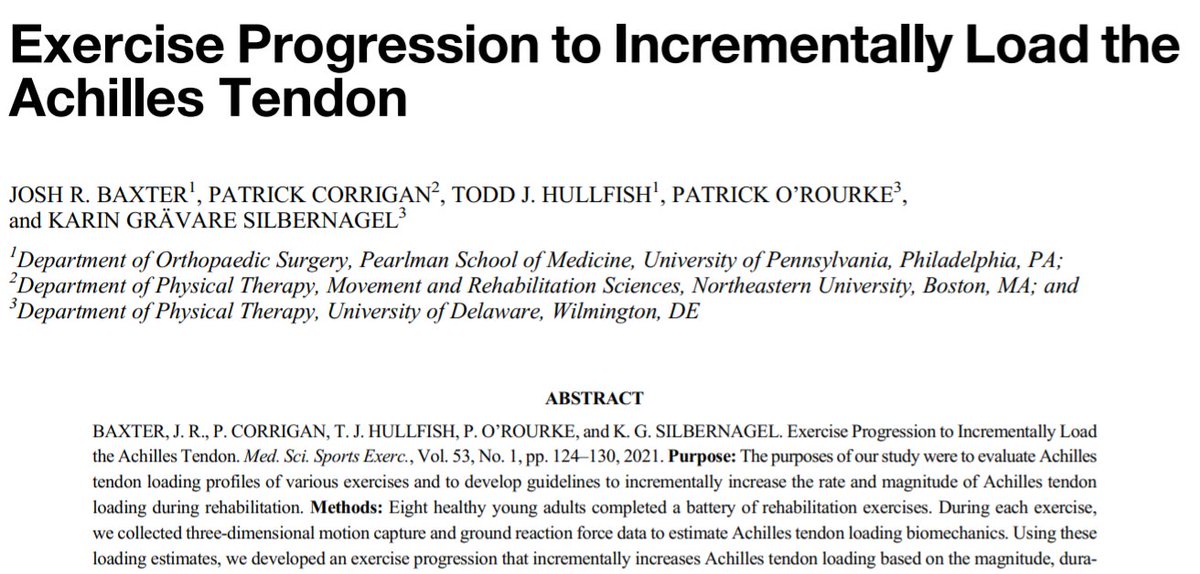
Superb paper by @joshrbaxter et al.
Research that directly informs training prescription
They measured Achilles tendon loading biomechanics in range of exercises to establish a loading index to classify exercises hierarchically
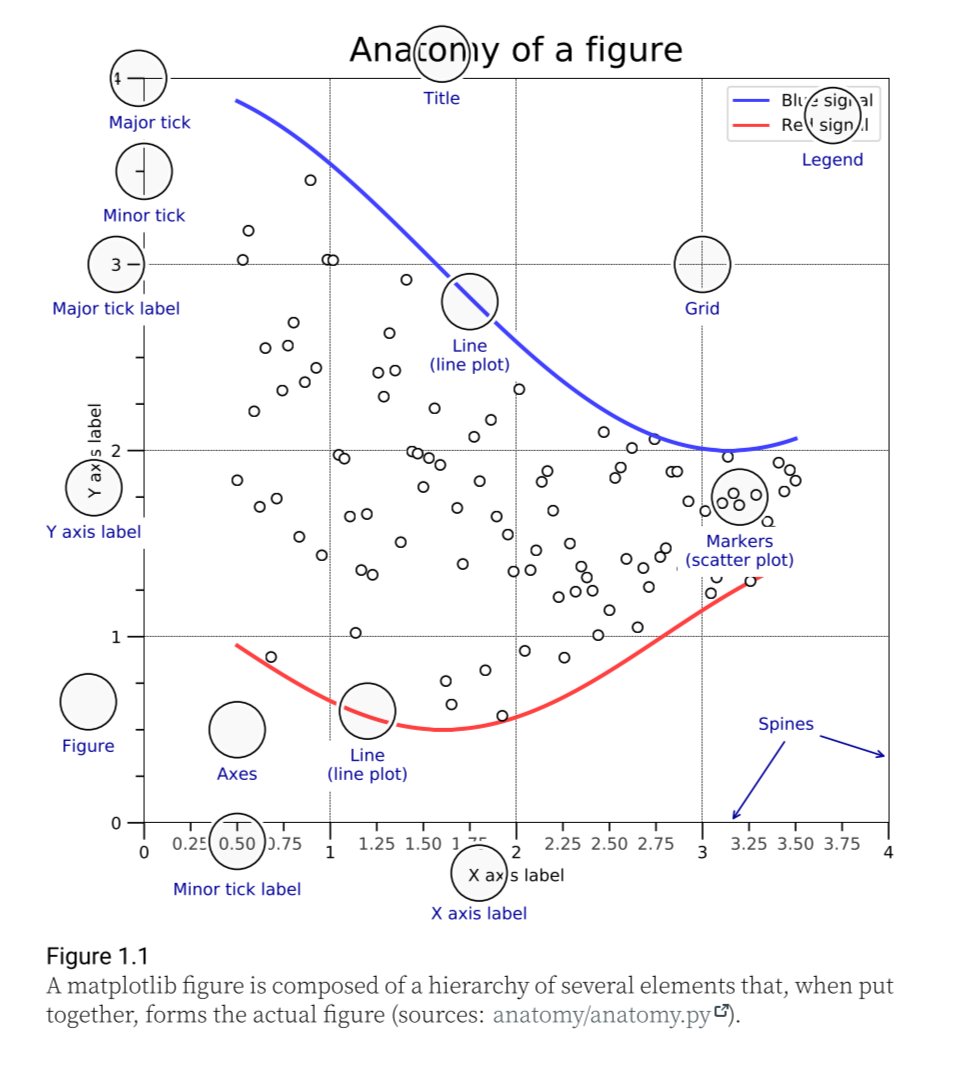
Was reading through @NPRougier 's Scientific Visualization book and found this great figure explaining the anatomy of a matplotlib figure. Highly recommend the book for those wanting to improve their data visualization skills