UNLV BS Public Admin.,M.Ed, USC MSW, Clinical Military, Medical Clinical SW, 🏥Co-Founder of Remy Premier Health & Wellness ♻️AllInClarkCounty 🌏WBENC Certified
Vibe out to Londxxn’s new single
“Mon-Sun” a track written about the overworked and still unapologetically ambitious. 💼🔥A vibe for every day of the week. 💫 @londongyal_
🎧 Streaming now on @SoundCloud!
🎶 Coming soon to all platforms!
The Barack Obama rabbit hole goes so deep
“Did you know that the government co-owns the vaccine? — This is not part of the Trump's thing — This is 2015” TO BARACK OBAMA
“153 pages of the confidential agreement between Moderna and the US government, it goes back to 2015 — what was happening in 2015? Frankenstein coronavirus”
“Published their paper on the new Frankenstein coronavirus. In fact, let's skip down to page 104. It shows that the NIH and Moderna were collaborating”
“The NIH appears to be transferring the mRNA tech to doctor Baric, but look what they want to make clear. Quote, mRNA coronavirus vaccine candidates developed and jointly owned by the NIAID and Moderna.”
Barack Obama was President for the coronavirus confidential agreement
.@HHSGov and @HRSAgov are putting REAL FOOD and prevention back at the center of healthcare — giving health centers the tools to help families eat better, live healthier, and fight chronic disease BEFORE it takes hold.
We’ve been doing the “D” in California for long enough!
Every single day, I’m approached by lifelong Democrats who say they’re voting for me because California needs BALANCE.
That's why I know we CAN win this election.
Remember when they said tariffs would kill jobs?
CNBC reports Trump's tariffs hit Audi with a 1.2 billion euro blow last year, because it imported every car it sold here from Europe or Mexico.
Now Audi is building its FIRST U.S. assembly plant, in Georgia.
Trump in Perry: "Without tariffs, they wouldn't be coming in."
Sen. Bernie Moreno: the plant "would never have happened without tariffs, without common sense regulations and without eliminating California's ability to regulate fuel economy standards."
The experts were wrong.
Again.
Aaron Siri just revealed the real reason why New York launched a massive legal attack on unvaccinated Amish communities.
“These kids are healthy.”
“They don’t suffer from any of the chronic diseases that plague American children.”
“If this was about health, New York State should be looking at these kids as models and asking, why are they healthier?”
“Why do these… Amish children not suffer from the chronic health conditions that are plaguing over 40% [of children] according to the CDC?”
“Some data reflects even higher.”
“This is up from under 10% of kids having a chronic health condition in America in the early ’80s.”
“What’s changed?”
“Maybe they should take a look at this community instead of trying to force upon them the same type of lifestyle that… has resulted in that increase.”
@AaronSiriSG
Elon spent $44 billion buying Twitter and saving free speech so you could say what you think without asking permission.
Best money ever spent on the First Amendment.
Taking on childhood chronic disease with a new food pyramid — and a new chapter for America’s kids. 🍎
Under President Trump and Secretary Kennedy, HHS is putting real, whole, nutrient-dense foods back at the center of nutrition guidance, helping families build healthy habits for the next generation.
Explore the new pyramid at https://t.co/uBadtjjFdJ.
If DMSO was used for strokes and brain injury, millions would be spared from paralysis and death—yet despite thousands studies showing this, the FDA banned it.
Since publishing this article, dozens of readers shared DMSO saved them from a stroke.🧵
https://t.co/9eBEFmSkgk
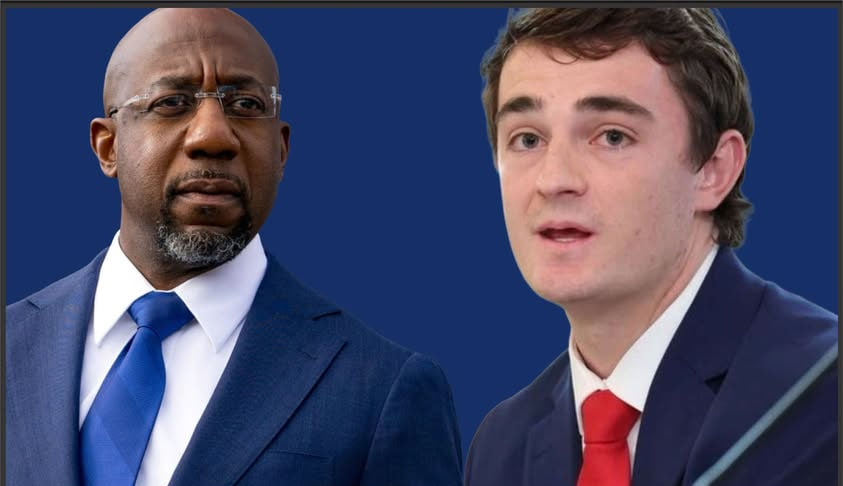
Nick Shirley's Atlanta investigation just uncovered Raphael Warnock's impossible vote totals.
"Warnock got more votes in three counties than those counties have residents," Shirley reported. "I'm surprised nobody found it before."
The Gabbard document dump provided the roadmap.
"Give us more time and we'll break this wide open."
Georgia's Senate seat was stolen. Now we have proof.
What's your response to this......??👀
MAKE THIS GO VIRAL ON X. LET’S GO 👏
🚨 CRIME OF THE CENTURY UNCOVERED 🚨
Robert F. Kennedy Jr. just dropped a BOMBSHELL that should shake America to its core.
When he walked into HHS, he found the ultimate betrayal:
Xavier Becerra and the Biden administration gutted the anti-fraud team that was supposed to protect $2.2 TRILLION in taxpayer money every single year.
There were only 80 people watching over 50 states and 5 territories.
Becerra transferred 76 of them out.
Only 6 people left.
Six.
For 4 MILLION transactions a day.
It was an open invitation for the thieves.
And they came running.
Phony hospices in Los Angeles billing $6,000 a month for patients who didn’t even exist.
Durable medical equipment fraud — tens of billions stolen.
Autism services — tens of billions more looted.
The store was left wide open… and they cleaned it out.
RFK Jr. is calling it exactly what it is: a deliberate dismantling of the last line of defense against the greatest government fraud in modern American history.
This wasn’t incompetence.
This was the crime of the century.
And the American people just found out who left the vault door unlocked.
Chuck Muth posted a blog defending his use of AI on his website, mentioning the traffic of News sites such as Axios.
I’d love to see the traffic numbers for @NevadaNewsViews. Can’t imagine it’d be more than the amount of views they get on their X posts.
https://t.co/dojf465mvW
Obama and Biden connected Peter Neffenger, and Paul DeGregorio, sit at the center of a small circle that shapes how America votes, with ties and employment under the Democrat Party, election companies, and election boards, even with DeGregorio using Covid to push remote voting and mail-in ballots.
Neffenger ran TSA under Obama, joined Biden's 2020 presidential transition team after he chaired Smartmatic's US board with DeGregorio.
DeGregorio chaired the Election Assistance Commission, the agency that certifies voting machines, from 2003 to 2007. He was a top executive at IFES, which helps run elections abroad, and he led a USAID-funded elections project in Bosnia. He later joined Smartmatic USA's board. His earlier company, Everyone Counts, ran the 2008 online presidential primary for Democrats abroad.
In April 2020, as Covid shut down primaries, Smartmatic promoted DeGregorio's push for online and remote voting. The two men also co-wrote a Smartmatic op-ed calling for more EAC funding.
The ties reach Dominion too. DeGregorio steered Scott Leiendecker into election administration. Leiendecker now owns Dominion through Liberty Vote. Coincidence? No.
The question is simple: Should people who sit on voting-machine company boards also be shaping the rules for elections and equipment, when they also have deep ties to globalist and communist political parties, even working for Democrats in office after working at election companies and election regulation agencies?
There's no coincidence that most of these Democrats get elected while these people work for the same election companies that control our elections and then work for them after they get elected.
Look at the Senators and Members of Congress that are currently attacking @Starlink regarding Ukraine. None of these elected officials have engaged in PEACE talks. Now look at who is donating to their campaign and check out their stock portfolios. There is a reason why they want the war to continue. The UNITED STATES HAS SENT BILLIONS TO UKRAINE. 25,000 HUMANS are DYING a month due to the war. We MUST lead the negations to end the war. STARLINK is NOT responsible for the FAILED foreign policy of the previous administration or CONGRESS. There was only ONE Democrat to date, in the entire House of Represenatives that was WILLING to engage in peace talks. END THE WAR!
Bill Maher just WENT OFF on critics of him having dinner with Trump: “I did it again, b*tches. I know I’m the bad guy because I go and say face-to-face with the man the things you write in articles that he’ll never read… F*CK YOU, I like these dinners.”
President Donald Trump's net approval among urban voters climbed 20 points from July to October, a shift that could matter for Democrats' big-city margins in the Nov. 3 midterms. https://t.co/tNR4pa8qre
I have a serious question.
Democrats are anti-oil & natural gas.
How does supporting the democrats bring down the prices of gas & electricity when they are against drilling?