MIT just quietly dropped a free AI curriculum that puts $50,000 university courses to shame.
12 books.
Zero tuition.
From the same institution that produced the people building the models everyone is talking about.
FOUNDATIONS
1. Foundations of Machine Learning — https://t.co/Un6UbjJBMW
2. Understanding Deep Learning — https://t.co/UQxZmyFq2V
3. Machine Learning Systems — https://t.co/YAgrLVH8N1
ADVANCED TECHNIQUES
4. Algorithms for ML — https://t.co/YlBk59oGwX
5. Deep Learning — https://t.co/KMO1uWQ69z
REINFORCEMENT LEARNING
6. RL Basics (Sutton & Barto) — https://t.co/sOZlDXA1Tz
7. Distributional RL — https://t.co/uOkviYj8fF
8. Multi-Agent Systems — https://t.co/Dx9caJW4QL
9. Long Game AI — https://t.co/K9Qm2Tk8FE
ETHICS & PROBABILITY
10. Fairness in ML — https://t.co/MgkLdRvQ2m
11. Probabilistic ML Part 1 — https://t.co/Zz33gQizle
12. Probabilistic ML Part 2 — https://t.co/qBe776ERrO
This is a complete MIT-level AI education.
Not a YouTube playlist.
Not a Twitter thread full of fluff.
Textbooks written by the researchers who built the field.
The people who actually study this will not just understand AI better than their peers.
They will understand it better than most people currently getting paid to work in it.
Most people will bookmark this and never open it.
The ones who open it tonight are the ones who show up in 12 months having built something nobody around them understands yet.
Bookmark this.
Open the first one tonight.
Follow @cyrilXBT for more resources that actually compound.
A man spends 50 years teaching at MIT.
He knows his time is running out.
So he records one last lecture — everything he knows, distilled into a single hour.
He died 5 months later.
This is that lecture.
The most important hour you'll watch this week. 👇
Bookmark it for later
Instead of watching Netflix, watch this 1-hour Yale lecture by Professor Ben Polak.
It will change how you think about decisions in negotiations, business, and everyday life.
Samuel Johnson’s description of the events leading to the Gbánámu War reflects a pro-Oyo perspective that aims to justify the war rather than offer an impartial account. Historical evidence challenges key elements of his account and indicates that the conflict was driven by a power struggle for dominance and the volatile environment of a refugee military camp, rather than a genocidal conspiracy.
For context, I have attached 4 excerpts to this tweet. The first 3 are from Toyin Falola's book, Ibadan: Foundation, Growth and Challenge, 1830-1960, while the 4th is from Olatunji Ojo's article, The Slave Ship Manuelita and the Story of a Yoruba Community, 1833-1834. These excerpts provide important context.
First, early 19th-century Ibadan functioned less as a settled state and more as a bùdó ogun (war camp) defined by a culture of systemic predation. Although Maye Okunade, the Ife military commander, held overall leadership, his authority was structurally limited. He lacked a tax base, had no independent revenue, and governed a population that largely “preferred to be treated as soldiers and colleagues rather than as subjects.” In this environment, no single faction, including the Ife, possessed the centralized power required to execute a systematic campaign of mass enslavement or extermination. Instead, authority was continuously contested by rival groups, particularly the Oyo and Egba factions.
Second, the sources describe a pattern of conflict driven by military opportunism for control rather than ethnic cleansing. The alliance (i.e., of the Ife, Oyo, Ijebu, and Egba warriors) was a marriage of convenience that soured as the Egba and Oyo resisted Ife hegemony - the former on the basis of autochthony and the latter on the basis of their numerical strength. Recognizing his inability to confront both simultaneously, the Maye exploited a dispute involving the murder of an Ife chief by an Egba leader as a pretext to attack and subdue the Egba, prompting their eventual fleeing to Abeokuta. Tensions between the Oyo and Ife, however, continued to escalate, driven in part by the growing influx of Oyo refugees. As Falola notes, it was obvious by 1831, two years before the Gbánámu war, that the Oyos and Ifes were heading for a showdown. Therefore, the trigger event for the conflict - a quarrel between two private soldiers followed by Maye’s killing of the Oyo combatant - was less the execution of a preconceived extermination plan than an excuse for an already inevitable showdown between the ruling Ife minority and the expanding Oyo majority. The objective was dominance, not annihilation.
Third, Falola clearly states that the Maye treated Oyo soldiers "with respect and dignity," while his hostility was directed at Oyo civilian refugees, whom he viewed as inferior and potential slaves. Two important observations emerge from both texts. One concerns the different perspectives of the various sub-groups. For the Ife and Ijebu, their participation in the alliance was driven by participation in a system of predation that characterized the camp. Unlike the Oyo, whose towns had been destroyed and who viewed the camp as a permanent residence and refuge for their fellow citizens fleeing Fulani attacks from the north, the Ife and Ijebu regarded the camp as a temporary base from which they could collectively prey on neighboring towns for profit and territory, with the intention of eventually returning home. It is therefore no surprise that this group treated Oyo civilian refugees with predatory opportunism. The second observation is this: if Maye had truly possessed a grand plan to exterminate or enslave all Oyo, why would he spare and respect Oyo soldiers who posed the greatest military threat while focusing his hostility on unarmed civilians?
Fourth, the so-called “decree” to kill all Oyo appears in the sources not as an official policy but as an alarm raised by an onlooker following Maye’s execution of an Oyo man during a land dispute. The text states that this alarm "forced Oyo people to declare war"; it does not say that Maye actually issued such a decree. Nor do any other sources except Samuel Johnson's provide evidence of mass enslavement or systematic killings of Oyo civilians. As Falola notes, this alarm is best understood as part of a reactionary, pro-Oyo narrative rather than a reflection of any documented administrative policy.
Finally, the population composition contradicts the claim. The Oyo made up the majority of Ibadan's population at that time, outnumbering the Ife. Any effort to wipe out or enslave such a large group within a shared settlement would have been both highly impractical and strategically self-defeating, especially since that majority included armed soldiers who had proven their skill in many campaigns led by the Maye.
Taken together, this evidence portrays a contested political landscape in which an Ife-led military elite sought to maintain authority against a numerically dominant and increasingly assertive Oyo population. The conflict was undoubtedly violent, discriminatory, and shaped by ethnic bias, but it aligns more closely with patterns of selective exploitation and power competition rather than a coordinated attempt at total group destruction.
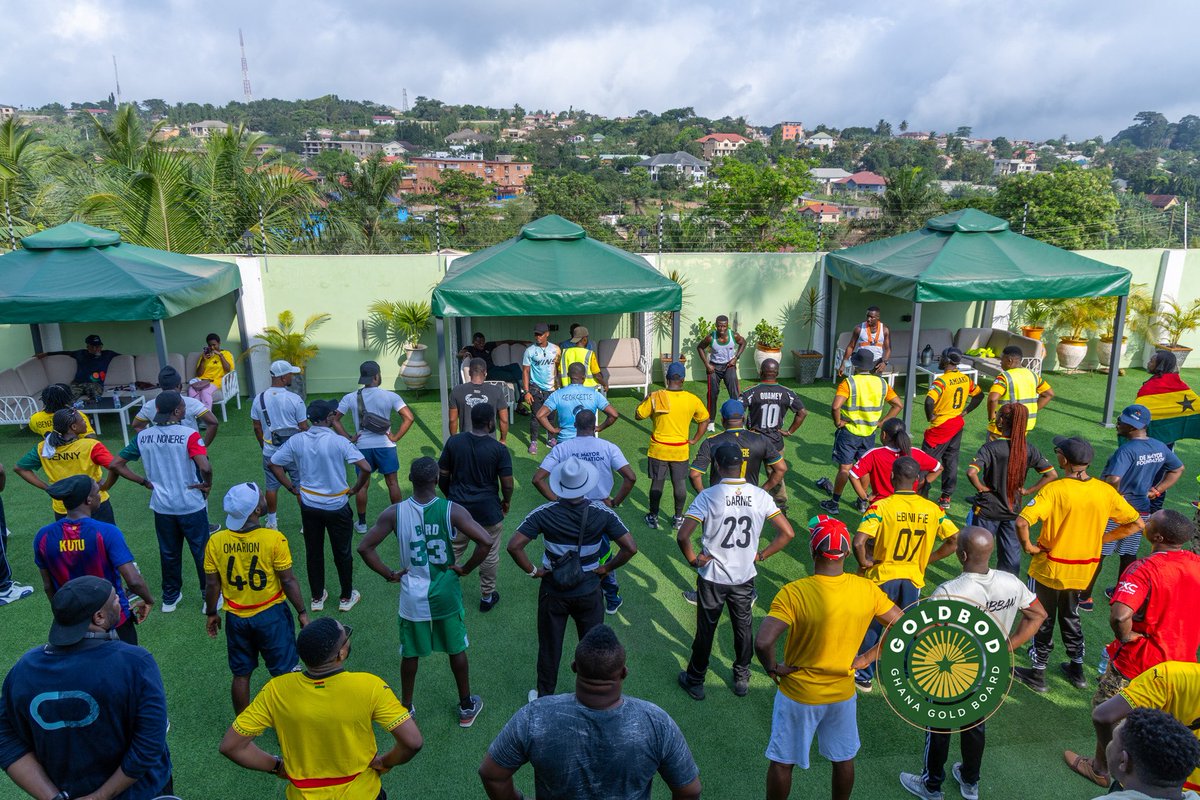
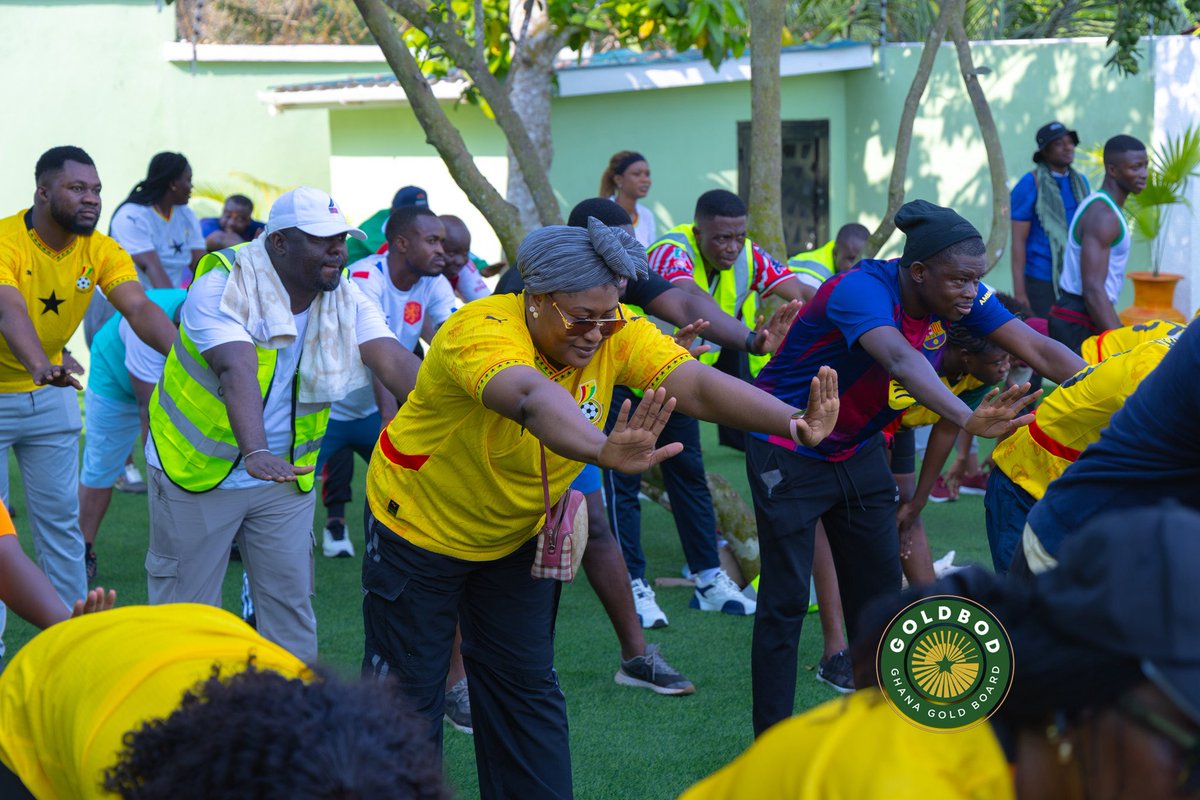
Over the weekend, staff of the Ghana Gold Board, together with members of the public, took part in a Staff Health Walk aimed at promoting wellness, teamwork, and healthy living. 🏃 🏃♀️
I accidentally discovered how to compress a semester of learning into 48 hours.
A grad student at MIT showed me his NotebookLM setup. I thought he was just organized. Then I watched him pass a qualifying exam on a subject he'd never studied before.
Here's exactly what he did:
First: he didn't upload a textbook.
He uploaded 6 textbooks, 15 research papers, and every lecture transcript he could find on the subject.
Then he asked NotebookLM one question:
"What are the 5 core mental models that every expert in this field shares?"
Not "summarize this." Not "explain this topic."
Mental models. The stuff that takes professors years to develop.
But the next part is what broke my brain.
He followed up with:
"Now show me the 3 places where experts in this field fundamentally disagree, and what each side's strongest argument is."
In 20 minutes he had a map of the entire intellectual landscape of the field:
the debates, the consensus, the open questions.
Most students spend a full semester just figuring out what those debates even are.
Then he did something I've never seen before.
He asked:
"Generate 10 questions that would expose whether someone deeply understands this subject versus someone who just memorized facts."
He spent the next 6 hours answering those questions using the source material. Every wrong answer triggered a follow-up:
"Explain why this is wrong and what I'm missing."
By hour 48, he could hold a conversation with his thesis advisor without getting destroyed.
The tool didn't change. The questions did.
Most people treat NotebookLM like a fancy highlighter.
These students are using it like a private tutor who has read everything ever written on the subject.
The difference between a semester and 48 hours isn't the amount of content.
It's knowing which questions to ask.
As 2025 comes to a close, I'm continuing a tradition that I started during my time in the White House: sharing my annual lists of favorite books, movies, and music. I hope you find something new to enjoy—and please send any recommendations for me to check out!