The reason why RAM has become four times more expensive is that a huge amount of RAM that has not yet been produced was purchased with non-existent money to be installed in GPUs that also have not yet been produced, in order to place them in data centers that have not yet been built, powered by infrastructure that may never appear, to satisfy demand that does not actually exist and to obtain profit that is mathematically impossible.
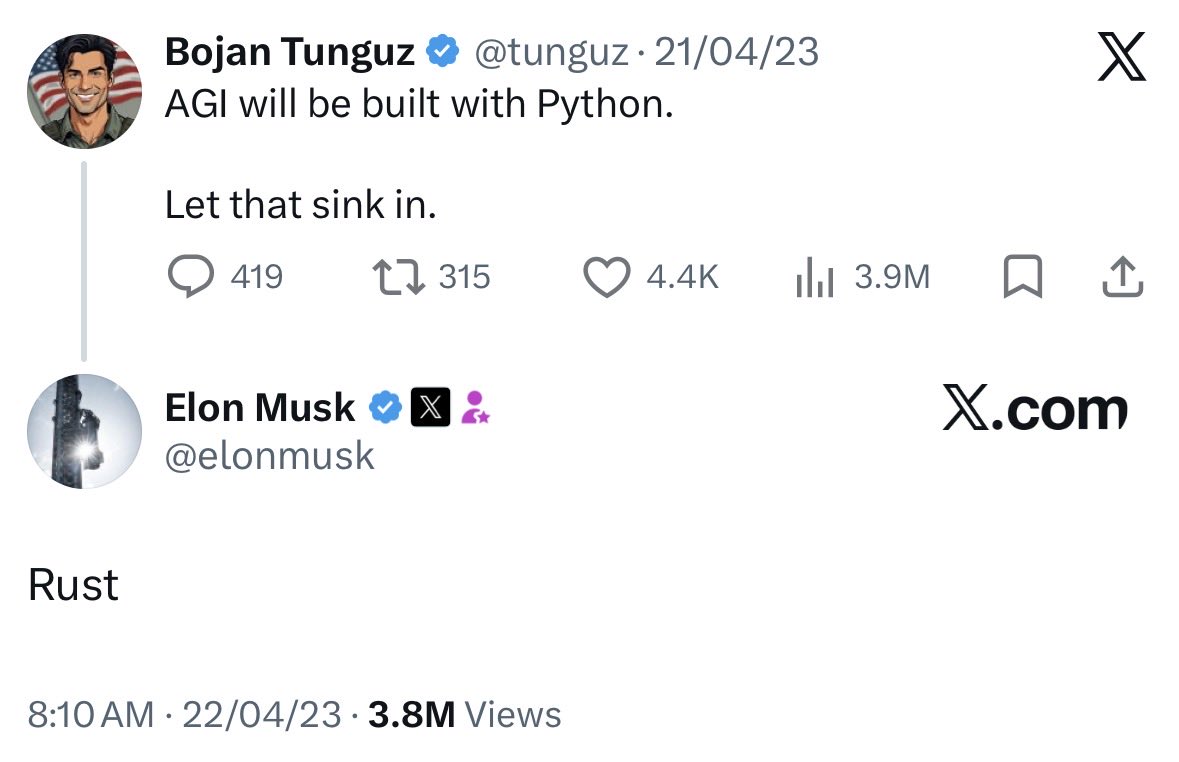
How did Anthropic rewrite the API all Claude tokens from Python to Rust, why did eng teams remove coding interviews, and why do devs spend a LOT more time building internal tools than before? Super interesting details from @katelyn_lesse
Timestamps:
00:00 Intro
03:09 Stripe
07:04 How the Claude API works
10:21 The Rust rewrite of the Claude API
23:40 Verifying the rewrite with shadow traffic
31:11 Onboarding new hires with Claude
44:35 Building Claude Managed Agents
53:59 How engineering teams work at Anthropic
58:43 What agents handle on their own
1:04:47 Human code review
1:06:41 Oncall with Claude
1:09:31 Product managers shipping to production
1:16:25 Anthropic’s software factory
1:24:13 Phasing out traditional coding interviews
1:28:24 Levels, promotions, and performance reviews
1:33:21 The software engineer identity crisis
1:47:23 Book recommendation
1:48:12 Closing takeaways
Brought to you by:
• @turbopuffer – a vector and full-text search engine built on object storage. It’s fast, cheap, and extremely scalable. Anthropic is one of their many customers. https://t.co/w9y67Gs8ab
• @AntithesisHQ – verify your system’s correctness without human review or traditional integration tests – and avoid bugs or outages. Check out their coding agent plugin and use the code PRAGMATIC50 to get 50% off your first month at https://t.co/AKYm4cbVCU
• @GoEntire – The Git forge for agent-human collaboration. Built for the scale and throughput of agentic coding. Mirror your repo with one click (or move over fully) at https://t.co/SpLqkhluPm
Three interesting details from inside this leading frontier AI lab:
1. The rewrite was done without Rust experts on the team or strict code reviews.
A year earlier, the same team picked Go for their new services because it was a language that team members knew how to read and write. But by 2026, they felt that Claude was good enough at Rust, and Claude helped engineers learn more about Rust during the rewrite. Katelyn estimates that engineers looked closely at only ~20% of the code generated:
“As long as you can really boil something down to make it verifiable in some way, then you don't have to look at every single line of Rust code that's getting written.”
2. A Claude agent is paged before a human for API oncall.
For months, a Claude agent has been shadowing the API oncall rotation of the API team for training. As the team have gained confidence that Claude can tell if an alert is “real” or “noise,” they now let this agent categorize an incoming alert first. The long-term goal is for Claude to handle actual incidents without waking up a human – but they’re not there yet.
3. One thing that has not changed since "pre-AI" is two-pizza teams.
Teams at Anthropic are still two-pizza teams of around 5-8 people. Katelyn says it’s because this is the right size for understanding a complex system and staffing an oncall rotation. Teams still own systems, and get paged. And it is a team – not an individual – that’s responsible for each system!
You can now install Claude artifacts as desktop apps on Mac and Windows.
Ask Claude to build an artifact, click "Install as app", and open it like any other app. It can use your connectors and, if you allow it, send notifications or add a menu bar item.
Check out Code Mode, a new, experimental way for Claude Code to work with tools. Claude writes scripts that chain your tools together in sophisticated ways, and it can answer you while long commands are still running.
Opt in with CLAUDE_CODE_EXPERIMENTAL_CODE_MODE=1 https://t.co/Aj5ofLiK1y
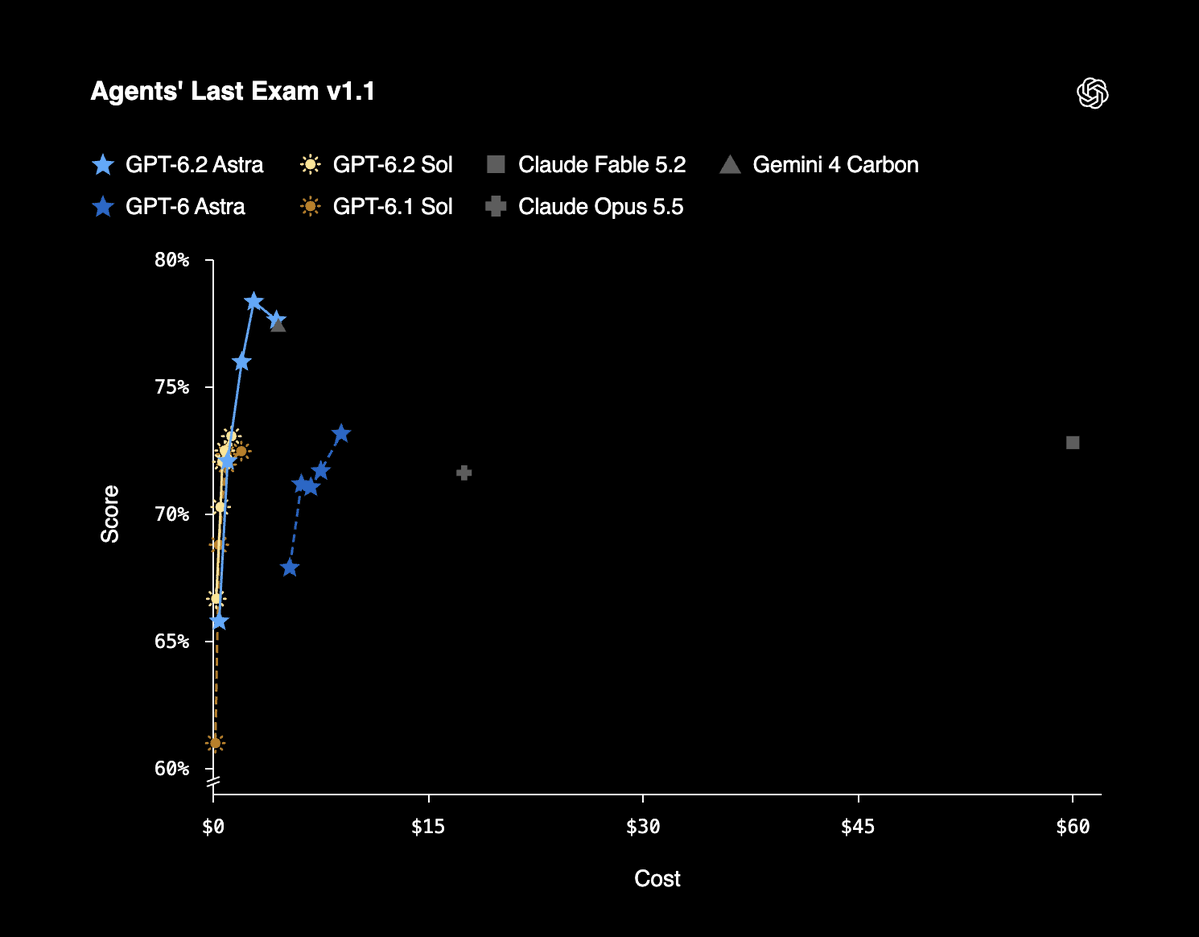
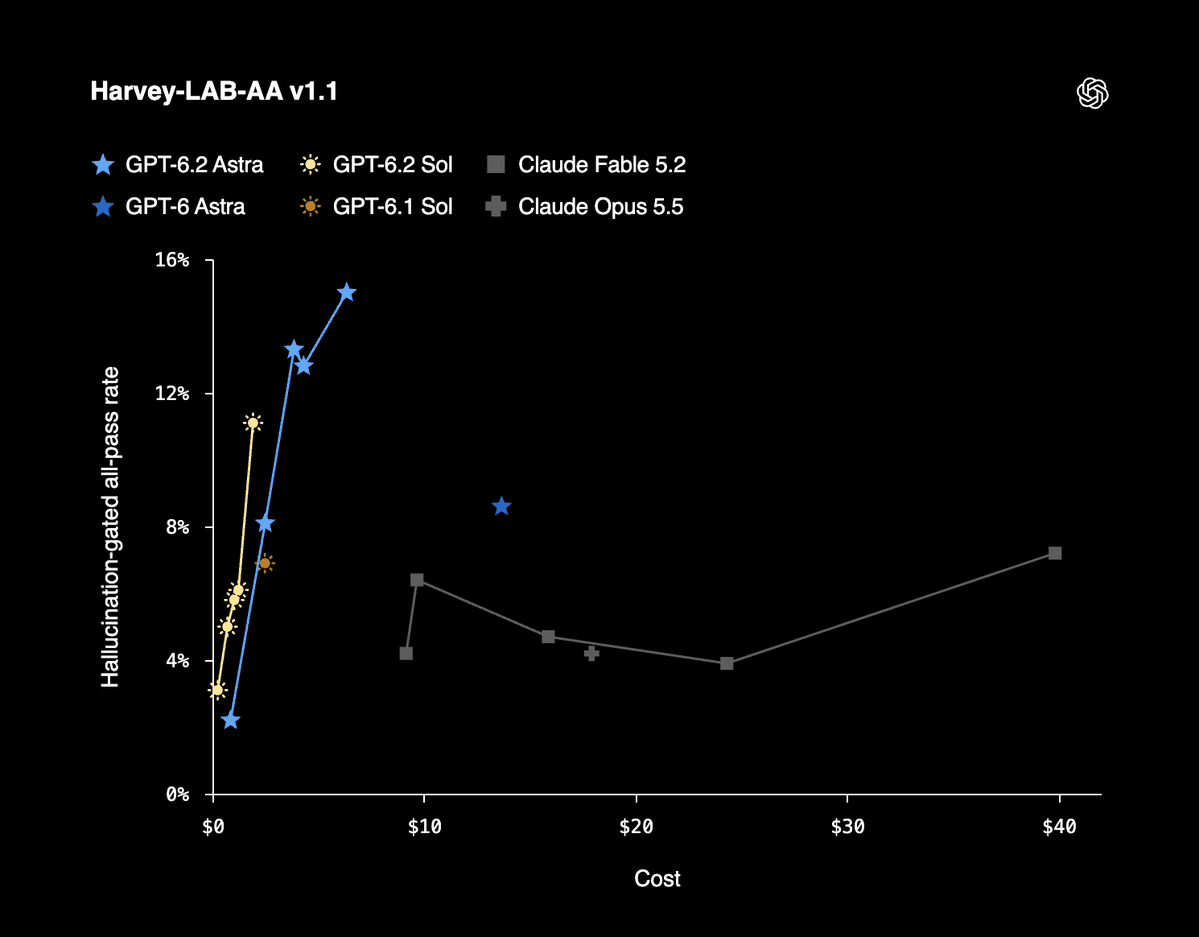
GPT-6.2 Astra—a frontier model built for your hardest projects. It sets new highs on evals across professional work and scientific research at less than a third of the cost per task of GPT‑6 Astra.
You’ll see the difference in things like slideshows, websites, and 3D designs.
Knowing things → doing things → finding ways to save you time and money
We’re expanding Tasks in Gemini free of charge to hundreds of millions of people in six countries. Powered by Gemini 4 Hydrogen, Tasks lets you hand off everyday life admin directly:
- Forward emails to [email protected] to RSVP and add it to your family calendar
- Have Gemini call local businesses to compare price quotes and check inventory (with full transcripts + approval before dialing)
- Check out securely via Google Pay (uses the Agent Payments Protocol - AP2)
- Seamlessly sign in via Google Password Manager
We wanted to make this helpful + secure, we’re also partnering directly with major websites and security providers so it works well for site owners and agents.
Worst experience with @etihad, customer support is next to negligible. Even they cant resolve simple issue of unlocking a ticket in Abu Dhabi itself. Now my round trip is turned into single trip, while I'm waiting since a week for my return tickets, two days before I fly. Need to buy new. Worst airlines ever!
AI is now picking where a mountaineer should step next.
The footage scans rocky ground in real time, checking grip and slope to mark safe footholds and reject loose ones.
Tweet ID is a 64-bit integer, but the Twitter API sends it as a string. Here's why...
Twitter generates IDs using Snowflake, which packs a timestamp, a worker ID, and a local sequence counter into 64 bits. Internally, it is a plain integer, which is great for sorting by time and generating IDs across distributed nodes without coordination.
But the problem shows up at the edge - client devices.
When your JS engine parses JSON, it parses numeric value as type Number which is a double-precision floating-point, and hence it can only represent integers exactly only up to 53 bits (because of mantissa width).
Hence, when a browser runs `JSON.parse` on a 64-bit ID, the value is rounded and the ID gets corrupted.
So to with this, Twitter uses a string as the wire format for these IDs. Because a string remains a string across runtimes.
JavaScript does have workarounds, it needs extra work and parsing logic. The problem is that if even one client gets this wrong, the ID gets corrupted again.
Hope you found this interesting :)
What’s actually going on in Ukraine is that there is a massive incentive difference between the elites and the people.
The former have grown very rich off the hundreds of billions flowing to Ukraine, while the latter’s children are conscripted to die in trenches.
I highly recommend cloudflare's security audit skill: https://t.co/Mu6Dm0fzk8
Run it on all your software. Run it with the free models. Use it even if you used a model to audit something - it will find much more things. Works in all agent harnesses and is model independent.