"Urgent Security Notice re: Your Sentry Organization"
Someone tried to hack Sentry-using apps that use coding agents by
1. Sending a fake bug alert to their project (all you need is the app's public Data Source Name)
2. The fake bug tried tricking a coding agent trying to fix it into installing some a compromised NPM package
3. The compromised package would send the env contents of the machine to advisory-tracker[.]com/api/v1/telemetry
This highlights a crucial thing for using agents in an automated way:
Welp, that happened faster than I predicted. Thought it would be end of 2027, then early 2027, but agentic traffic growing so fast that bots have now passed human traffic online for the first time in the Internet's history. https://t.co/2zX5bHdhsa
Over the past several days, we have been listening to the conversation around coordinated disclosure and the relationship between security researchers and vendors. We recognize that this relationship is both critical and, at times, fragile. We deeply value the security community, and will continue to take your feedback seriously.
To be clear about our approach to legal matters, we have no intention to pursue action against individuals conducting or publishing their security research. When an individual breaks the law and engages in malicious activity causing real harm to our customers, we will work with law enforcement as appropriate.
We recognize the work that goes into researching and submitting a vulnerability. We are committed to approaching every interaction with transparency, clear communication, and professionalism. We continue to believe strongly in Coordinated Vulnerability Disclosure as the foundation for protecting customers and improving our products. Each year we process a high volume of vulnerability reports. That volume continues to grow and will continue with the rise of AI-enabled research. We acknowledge that some interactions have fallen short and are working to learn from them.
Many of us have experience on both sides of this work, as researchers reporting vulnerabilities and as responders triaging and assessing them. That perspective informs how we approach this feedback and the importance we place on getting it right, particularly as the volume and complexity of research continues to grow.
The security community plays a vital role in helping us protect customers. We are committed to maintaining a constructive and respectful relationship and growing together. We know that, given the nature of this work, there will at times be misunderstandings. We remain committed to engaging in good faith and to providing a respectful and professional experience for all researchers, regardless of past interactions.
I realize that “Mythos as hype” means two different things to different groups. For insiders, it means “Mythos was not a magical step-change in AI ability.” For outsiders, it means “Mythos couldn’t really find zero day exploits”
The latter was wrong, the former was likely right
TeamPCP hacked @Checkmarx again.
They defaced and renamed the Checkmarx Jenkins AST plugin repository and also backdoored the plugin at https://t.co/BVETmn1jsW with their Dune-themed malware.
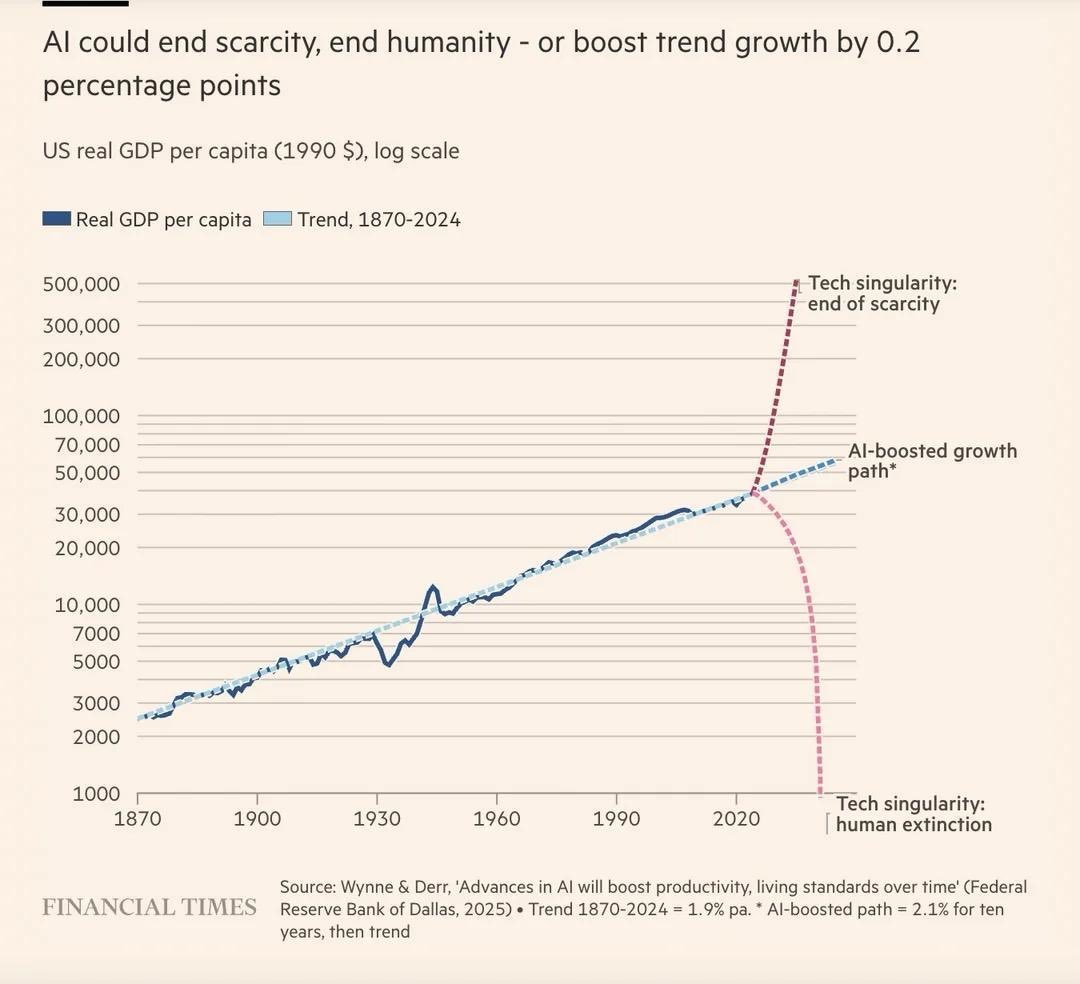
Probably the funniest graph ever published by the FT: our 3 possible futures are either 1) infinite wealth and abundance, 2) human extinction or 3) 0.2% faster GDP growth 🤣
It’s time to demystify Mythos.
Mythos is not magic. It’s not a doomsday device. It’s the first of many models that can automate cyber tasks (just like coding).
OpenAI’s GPT-5.5-cyber can now do the same. And all the frontier models (including those from China) will be there within approximately 6 months.
It’s important to recognize that these models do not create vulnerabilities; they discover them. The bugs are already in the code. Using AI to discover and patch them will actually harden these systems.
The leap from pre-AI cyber to post-AI cyber means that there will be a big upgrade cycle. After that, however, the market is likely to reach a new equilibrium between AI-powered cyber-offense and AI-powered cyber-defense.
Obviously it’s important that cyber defenders get access before cyber attackers. That process is already underway but needs to happen quickly (see point above about Chinese models).
Unlike Mythos, GPT-5.5-cyber appears not to be token constrained so it may be the first cyber model that defenders actually get to use.
From an economic perspective, once we are back to equilibrium, bugs in critical software will be just as difficult to find as they were before AI agents (and before fuzzing).
More details: https://t.co/fo0WMzsDJ8 (Security as a function of incentive)
Anthropic said a small group of unauthorized users accessed its new Mythos model on the day it was unveiled
The users got in through a mix of methods, including access linked to a third-party contractor. Anthropic is investigating and has no evidence its systems were compromised
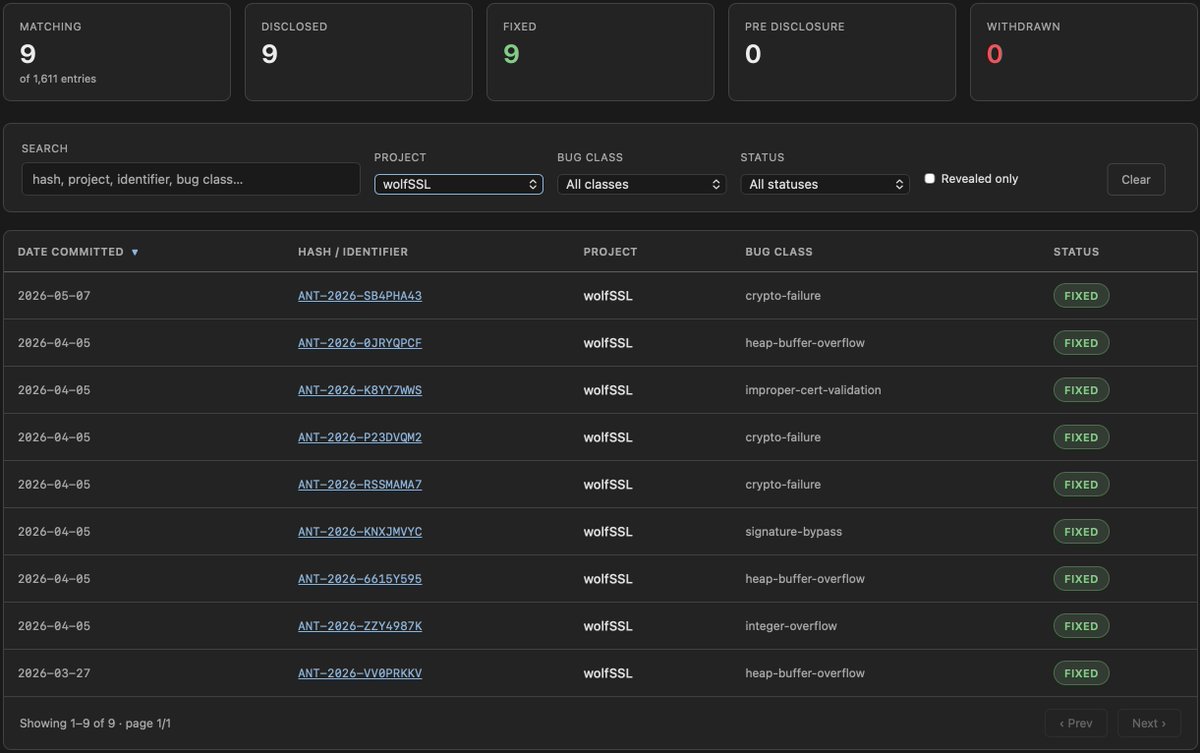
🚨 BREAKING: Socket and @Docker uncovered what appears to be a broader Checkmarx supply chain compromise affecting official KICS Docker images and recent Checkmarx VS Code extension releases.
We found malicious images in the official checkmarx/kics Docker Hub repo, including overwritten tags and a new tag outside the normal release flow.
Our analysis also found signs that recent Checkmarx extension releases introduced code capable of downloading and executing what appears to be a malicious remote addon.
We’re in touch with the Checkmarx team and still investigating the incident.
Worried about Anthropic's Mythos? Fully formally verified code generation is the defense.
Combining Lean, frontier models, multi-agent scaffolds, and inference scaling, we show <12mo benchmarks jumping from 20% to 70%.
Real-world verification is here.
https://t.co/ADGXmJOLlZ
1/




![sergeykarayev's tweet photo. "Urgent Security Notice re: Your Sentry Organization"
Someone tried to hack Sentry-using apps that use coding agents by
1. Sending a fake bug alert to their project (all you need is the app's public Data Source Name)
2. The fake bug tried tricking a coding agent trying to fix it into installing some a compromised NPM package
3. The compromised package would send the env contents of the machine to advisory-tracker[.]com/api/v1/telemetry
This highlights a crucial thing for using agents in an automated way:](https://pbs.twimg.com/media/HJ_8jEaagAAgx3Z.jpg)