Bengaluru is among the richest big cities in India per person. It also has the lowest slum share of any Indian metro — under a tenth of the city against Mumbai's two-fifths.
And yet almost every public common and utility is broken. Here's how that happened. 🧵
Unlike other states ,there was no lati charge on peaceful student protesters in Bengaluru.
Bcs Karnataka CM himself protesting in Delhi with Students🔥✊
BENGALURU'S OPEN SECRET
"Kannadigas have an open heart, an open society, and an open mindset. You will find this spirit nowhere else."
@krishnabgowda
https://t.co/65vyTVjNP8
The most pressing issues affecting Bengaluru are traffic congestion, pothole ridden roads, inefficient waste management, and flooding during the monsoon due to waterlogging.
My primary goal is to find lasting solutions to these problems and create an environment where the people of #Bengaluru can live peacefully, safely, and with a better quality of life.
ಬೆಂಗಳೂರನ್ನು ಕಾಡುತ್ತಿರುವ ಸಮಸ್ಯೆಗಳಲ್ಲಿ ಬಹಳ ಪ್ರಮುಖವಾಗಿರುವುದು ಟ್ರಾಫಿಕ್ , ಗುಂಡಿ ಬಿದ್ದ ರಸ್ತೆಗಳು, ತ್ಯಾಜ್ಯ ವಿಲೇವಾರಿ, ಮಳೆ ಬಂದರೆ ಎಲ್ಲೆಂದರಲ್ಲಿ ನೀರುನುಗ್ಗುವ ಪ್ರವಾಹ ಪರಿಸ್ಥಿತಿ ಇದೆ.
ಮೊದಲಿಗೆ ಈ ಸಮಸ್ಯೆಗಳಿಗೆ ಪರಿಹಾರ ಹುಡುಕಿ, ಬೆಂಗಳೂರು ಮಹಾಜನತೆ ನೆಮ್ಮದಿಯಾಗಿ ಜೀವನ ಸಾಗಿಸಲು ಅನುವು ಮಾಡಿಕೊಡುವುದು ನನ್ನ ಗುರಿ.
#GBA
The Global Startup Ecosystem Report (GSER) 2026, regarded as one of the world's most authoritative benchmarks for startup ecosystems and based on data from over 5.5 million companies across 350+ innovation ecosystems, has once again reaffirmed Bengaluru-Karnataka's position as a global innovation leader.
Some of the standout findings this year:
- #2 in Asia for AI Native Clusters and Top 15 globally
- #15 Global Startup Ecosystem
- Top 10 globally and #3 in Asia for Performance
- Top 10 globally and #5 in Asia for R&D Engine
- Top 15 globally and #4 in Asia for Funding Momentum
- $152.8 billion ecosystem value, with 190% growth in 5 years
- $46 billion in startup exits and $39 billion in venture capital attracted between 2021 and 2025
- Growth that is nearly three times the Asian average, with startup exit value surpassing Singapore
Our continued investments through Startup Policy 2.0, our Local Economy Accelerator Program #LEAP for technology growth in tier-2 and 3 cities, the DeepTech Decade initiative, ELEVATE grant-in-aid program for early stage startups, #KATALYST ease-of-doing business cell fir GCCs and the Global Innovation Alliance are strengthening every layer of the innovation ecosystem and ensuring Karnataka remains the preferred destination for entrepreneurs, researchers, investors and builders from across the world.
@CMofKarnataka
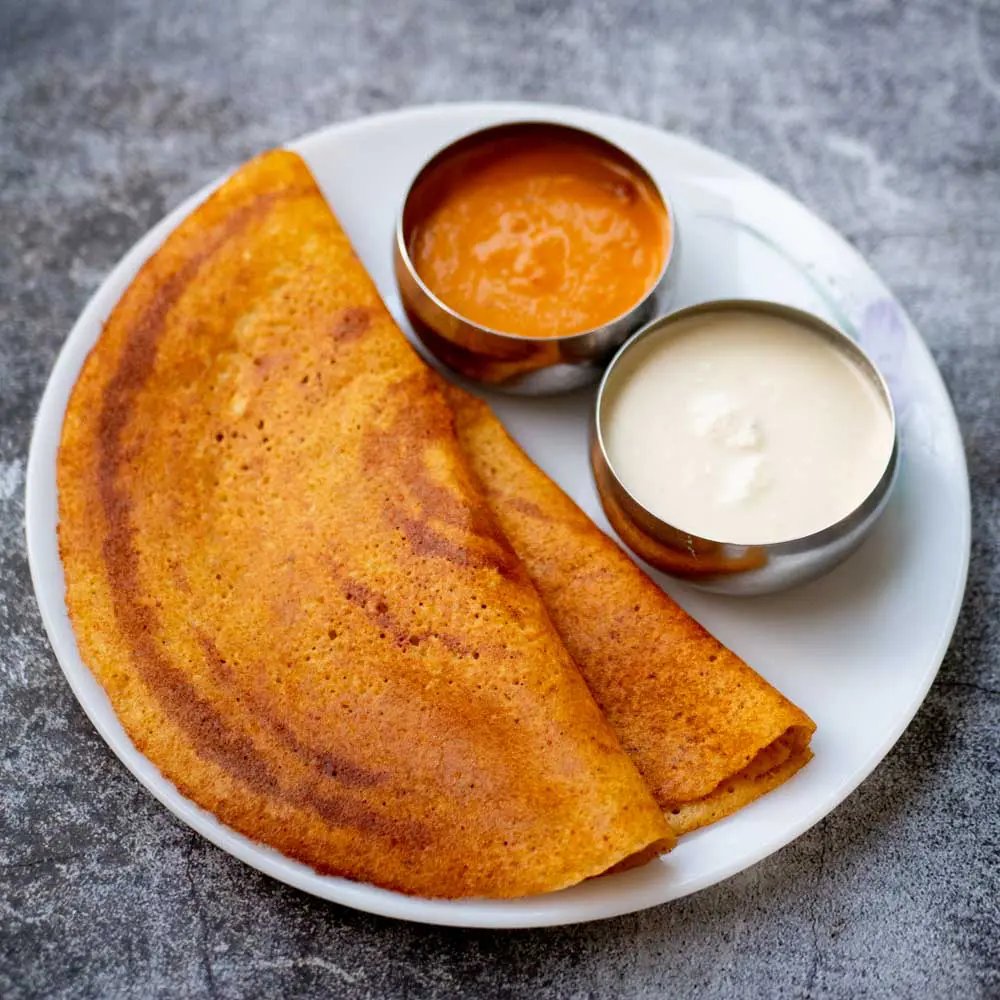
With Indian IT being the topic of the week, I thought it was only fair to trace the origins of the food that has probably powered more code, daily standups & production fixes than anything else: the dosa.
The history of the Dosa is a fascinating journey through time. What we eat today as a golden, paper-thin crepe was originally an ancient, rugged, protein-heavy pancake that relied completely on the structural biochemistry of an "aristocratic bean." The historical timeline highlights how the different regional iterations: Dosai, Thosai, Adai & Dosaka evolved over 2 millennia across South India.
The earliest references to Dosai (often spelled thosai/tocai) emerge from ancient Tamil Sangam literature. In this era, it was far from a delicate breakfast item. There were no flat iron tawas. Ancient Tamils cooked the batter on heavy, porous earthen clay platters/flat stones over open wood fires. Because clay plates retain uneven heat, spreading a batter thin was physically impossible.
Interestingly, the official status of the dosai was a non-fermented/minimally fermented pan-bread. It relied completely on the stickiness of the beans to bind the coarse grain together. It was dense, thick & highly filling, designed to sustain farmers & soldiers.
Running parallel to the early dosai was the Adai. Mentioned in the classic Sangam poem Madurai Kaanji, street vendors in the ancient city of Madurai sold these thick, griddled cakes to evening crowds. Unlike the dosai, which eventually streamlined into a rice & urad dal pair, the Adai retained its primitive, hyper-nutritious form. It used a combination of whatever lentils were on hand, pounded coarsely with red chilies & curry leaves & skipped fermentation entirely to provide immediate, heavy-duty protein release.
When the dish migrated into the royal Sanskrit texts of the Deccan region, it underwent a luxury upgrade. King Someshvara III compiled the Manasollasa, where he officially recorded the recipe for Dosaka:
Finely split, dehusked black gram (Masha) stone-ground into a velvety paste + Seasoned with asafoetida (hing), cumin, salt, and ginger juice + Cooked on a hot iron pan, then drenched in whole milk, ghee, & saffron.
The Dosaka was essentially a pure black gram cake. The royal chefs realized that if you whip urad dal paste vigorously, its proteins trap air bubbles naturally, giving you a soft, plush, cloud-like texture w/o needing an overnight rise.
If the ancient dosai & dosaka were thick, soft & spongy, how did we get the paper-crisp restaurant dosa? That change is a masterclass in food chemistry, pioneered by the cooks of Udupi, Karnataka, in the late 19th & early 20th centuries.
To achieve maximum crispiness, Udupi cooks radically flipped the grain math. They slashed the % of urad dal & spiked the batter with polished white rice & a handful of poha (flattened rice)/methi (fenugreek) seeds. When this rice-heavy, long-fermented batter hits a blazing hot, oiled iron tawa, the water vaporizes instantly. The starches in the rice undergo gelatinization & subsequent dehydration, locking into a rigid, brittle, wafer-thin matrix.
To summarize, the word dosa is not a modern invention, it describes a 2000 yr old evolutionary branch of South Indian culinary science. It started as a thick, sustaining bean-bread cooked on clay pots, transformed into a decadent, milk-infused delicacy for Chalukyan kings & was eventually re-engineered with high-starch physics by Udupi chefs to become the thin, golden, globally recognized icon it is today.
Tourism is the fastest ways to earn foreign exchange and create jobs at scale.
A foreign visitor brings dollars directly into the economy. And every direct job in tourism creates thirteen indirect jobs.
Over the last four years, India’s overseas tourism marketing budget has been cut to near zero. The sharp reduction in India’s overseas tourism marketing budget is surprising as PM @narendramodi Modi has been the strongest advocate of tourism.
India is buying 2000 airplanes . We will end up doing outbound rather than inbound tourism. We need to vigorously promote, market and sell India as the greatest destination on earth - for jobs and for foreign exchange.
My edit piece in today’s ET.
@wesploot booked a dog walking Service and the dog walker decided not to come because he doesn’t think he can walk my dog cause he is scared as it is his first time.
I have cancelled the walk now, and I’m expecting my refund. Please look into it.
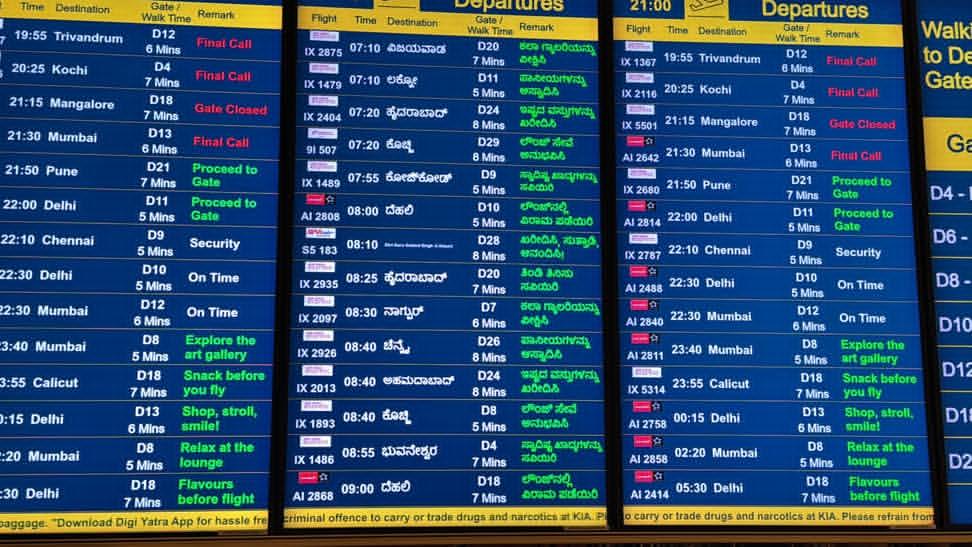
Just Bengaluru airport doing bengaluru things
instead of just telling you your gate is 6 minutes away, namma bengaluru airport tells you exactly how to spend those minutes. coffee, snacks, or art? deciding that is the hardest part of the journey now.
that is so typical of blr airport always finding a way to keep things fresh and surprisingly thoughtful