Thrilled to launch my debut sci-fi novel,The Shadow Ephemeris! Drawing on my time as an intelligence officer, I wrote a story where sentient satellites are the main characters, navigating the universe with personalities shaped by their unique sensors.
Grab a copy here: https://t.co/3PKWrftODt
Fun fact.
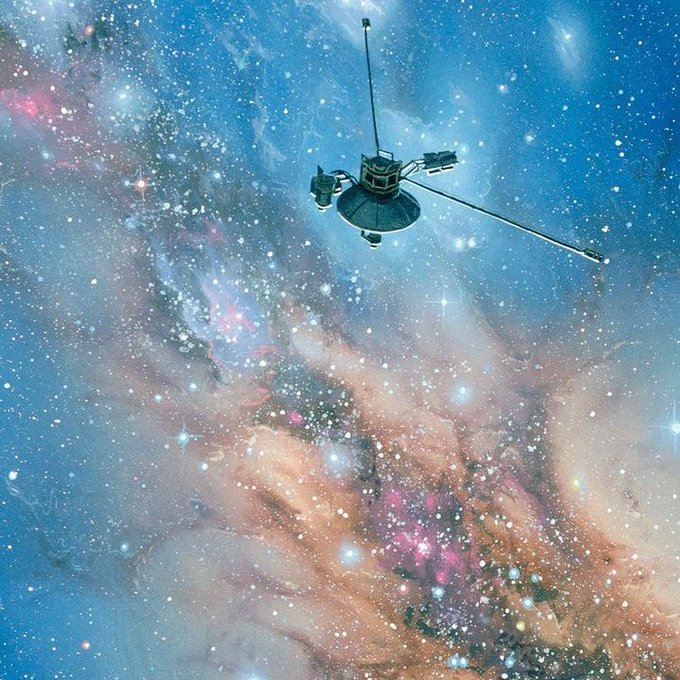
Voyager 1, currently over 16 billions miles away (nearly 1 light day), still operates using 69 KB of memory, 8 track tape and Fortran code written in 1977.
🏴☠️X marks the spot!
@NASAWebb captured this infrared image of a feature in part of the Carina Nebula called the “Treasure Chest.” It is an object known as a cometary globule, or an isolated cloud of gas and dust with a dense, dark head and a sweeping tail.
🚀🌌 Voyager 1 has left the Sun's protective bubble—the heliosphere—and is now traveling through interstellar space, over 25 billion km from Earth.
Launched in 1977, it's the most distant human-made object ever. Yet even after nearly 50 years, it isn't close to another star. At its current speed, reaching the nearest star system, Alpha Centauri, would take tens of thousands of years.
A humbling reminder of both human curiosity and the unimaginable scale of the universe. ✨
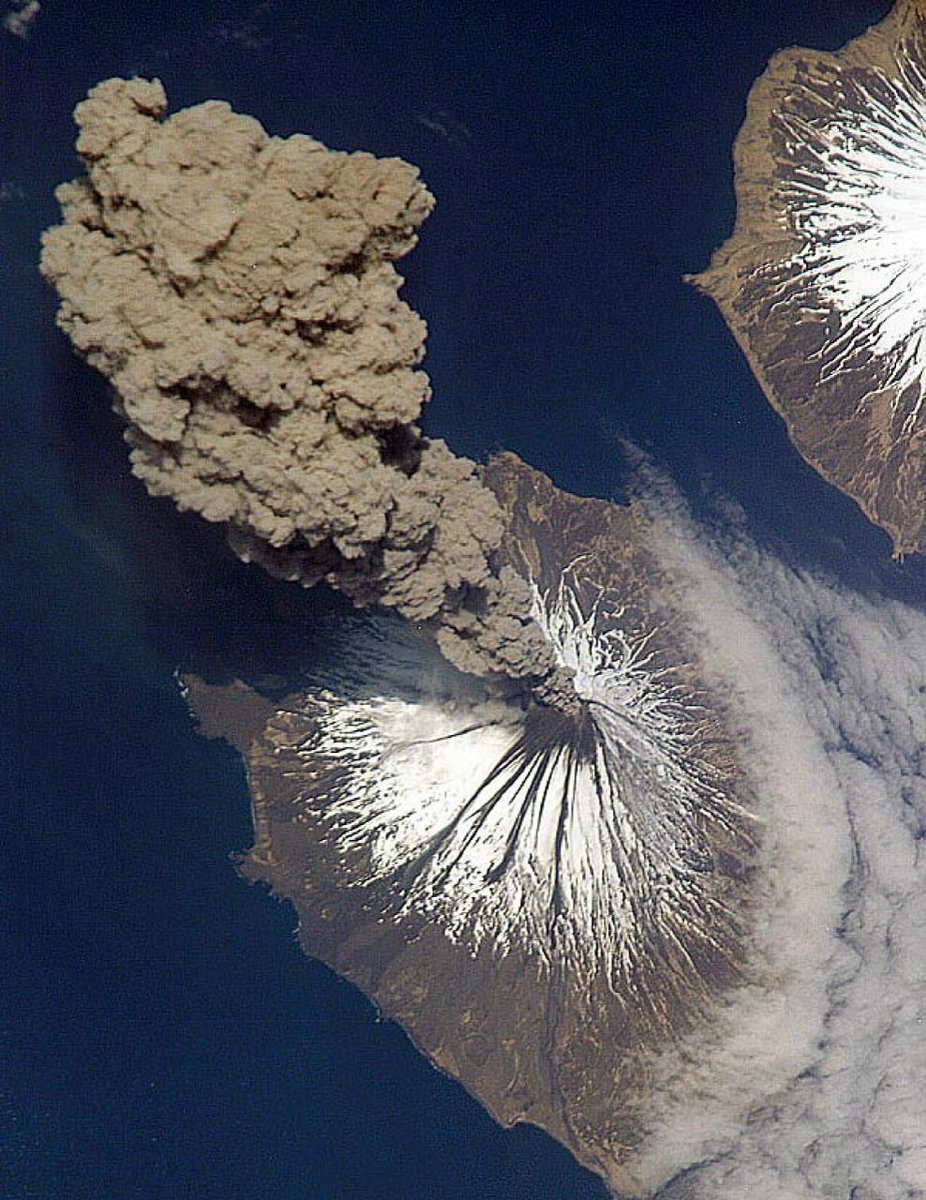
Mount Cleveland from space: the planet's power from an altitude of 400 km 🌋
A shot from the International Space Station captured the moment of an ash eruption from an active stratovolcano in Alaska.
The Moon is slowly escaping Earth.
Every year, it drifts about 3.8 cm farther away.
It’s happening because Earth’s tides transfer energy to the Moon, pushing it into a slightly higher orbit.
Millions of years from now, Moon will be farther away than the one we see tonight.
Every second, the Sun ejects 1.5 million tons of material into space at hundreds of miles per second, but Earth's magnetic field protects it from the solar wind.
[🎞️ NASA]
To understand the end of the world, you didn’t need to look at the cold silence of the Moon, or the burning data centers of Ashburn. You only had to look at a rented campaign bus idling in a strip-mall parking lot in Des Moines, Iowa, four years before the Silence began.
Mosaic, a veteran Series-9 Earth Observation satellite with a scarred chassis and a slightly drifting gyroscopic wheel, angled his solar arrays to catch the feast. He was essentially a camera with a soul, designed to watch the crop yields of the Midwest, but now...