@GaryMarcus@Kasparov63 Gary, this research paper from Salesforce flew under the radar a bit.
Even with flagship models like o1, customer service agents fail 65% of multi-turn tasks.
There is a similar paper out from Microsoft. Both from May of this year.
https://t.co/hqatJOMvSh
Another paper drop, this time from Salesforce:
"These results underscore a significant gap between current LLM
capabilities and real-world enterprise demands, highlighting needs for improved
multi-turn reasoning, confidentiality adherence, and versatile skill acquisition."
1/ Google Research unveils new paper: "Titans: Learning to Memorize at Test Time"
It introduces human-like memory structures to overcome the limits of Transformers, with one "SURPRISING" feature.
Here's why this is huge for AI. 🧵👇
Using AI-assisted coding to build software prototypes is an important way to quickly explore many ideas and invent new things. In this and future posts, I’d like to share with you some best practices for prototyping simple web apps. This post will focus on one idea: being opinionated about the software stack.
The software stack I personally use changes every few weeks. There are many good alternatives to these choices, and if you pick a preferred software stack and become familiar with its components, you’ll be able to develop more quickly. But as an illustration, here’s my current default:
- Python with FastAPI for building web-hosted APIs: I develop primarily in Python, so that’s a natural choice for me. If you’re a JavaScript/TypeScript developer, you’ll likely make a different choice. I’ve found FastAPI really easy to use and scalable for deploying web services (APIs) hosted in Python.
- Uvicorn to run the backend application server (to execute code and serve web pages) for local testing on my laptop.
- If deploying on the cloud, then either Heroku for small apps or AWS Elastic Beanstalk for larger ones (disclosure: I serve on Amazon’s board of directors): There are many services for deploying jobs, including HuggingFace Spaces, Railway, Google’s Firebase, Vercel, and others. Many of these work fine, and becoming familiar with just 1 or 2 will simplify your development process.
- MongoDB for NoSQL database: While traditional SQL databases are amazing feats of engineering that result in highly efficient and reliable data storage, the need to define the database structure (or schema) slows down prototyping. If you really need speed and ease of implementation, then dumping most of your data into a NoSQL (unstructured or semi-structured) database such as MongoDB lets you write code quickly and sort out later exactly what you want to do with the data. This is sometimes called schema-on-write, as opposed to schema-on-read. Mind you, if an application goes to scaled production, there are many use cases where a more structured SQL database is significantly more reliable and scalable.
- OpenAI’s o1 and Anthropic’s Claude 3.5 Sonnet for coding assistance, often by prompting directly (when operating at the conceptual/design level). Also occasionally Cursor (when operating at the code level). I hope never to have to code again without AI assistance! Claude 3.5 Sonnet is widely regarded as one of the best coding models. And o1 is incredible at planning and building more complex software modules, but you do have to learn to prompt it differently.
On top of all this, of course, I use many AI tools to manage agentic workflows, data ingestion, retrieval augmented generation, and so on. https://t.co/zpIxRSuky4 and our wonderful partners offer courses on many of these tools.
My personal software stack continues to evolve regularly. Components enter or fall out of my default stack every few weeks as I learn new ways to do things. So please don’t feel obliged to use the components I do, but perhaps some of them can be a helpful starting point if you are still deciding what to use. Interestingly, I have found most LLMs not very good at recommending a software stack. I suspect their training sets include too much “hype” on specific choices, so I don’t fully trust them to tell me what to use. And if you can be opinionated and give your LLM directions on the software stack you want it to build on, I think you’ll get better results.
A lot of the software stack is still maturing, and I think many of these components will continue to improve. With my stack, I regularly build prototypes in hours that, without AI assistance, would have taken me days or longer. I hope you, too, will have fun building many prototypes!
[Original text: https://t.co/cfQkXolEJk ]
Excited to be moderating a session at the Academy of Management Annual Meeting today!🎉 on whether AI is hurting or helping creators, in Program Session 1337 in Columbus A at Sheraton!
Inviting AI & Creativity enthusiasts to join!
#AcademyOfManagement#AOM2024#AI#creativity
Cannot come to terms with deaths of UPSC aspirants in the illegal basement library at Karol Bagh. The parents, their sunken faces; the grief & disbelief reflecting in their eyes. If you have a child/sister/ brother/a young person you love, the terror courses through your bones.
In establishing #DPIs, effective interoperability obligations within #G20 are necessary. Towards achievement of an #inclusive#digital future, @PKuzev @1Br0wn provide recommendations that seek to harmonise obligations, paving the way for robust G20 DPIs https://t.co/q3fTc032Yr
TIL: Airbnb, taking cognizance of it's noise related externalities, partnered with companies offering noise sensing devices to police guests.
Offence 1: Commerce in residential areas
Off 2: Snooping. Even governments can't legally/ethically do this. Concerning
#platforms#noise
This is Barcelona at night, one of the world's most unique cities. But why does it look like that?
Well, until 1855 it was overcrowded, dirty, and diseased — then something special happened.
Here is how you build a beautiful city...
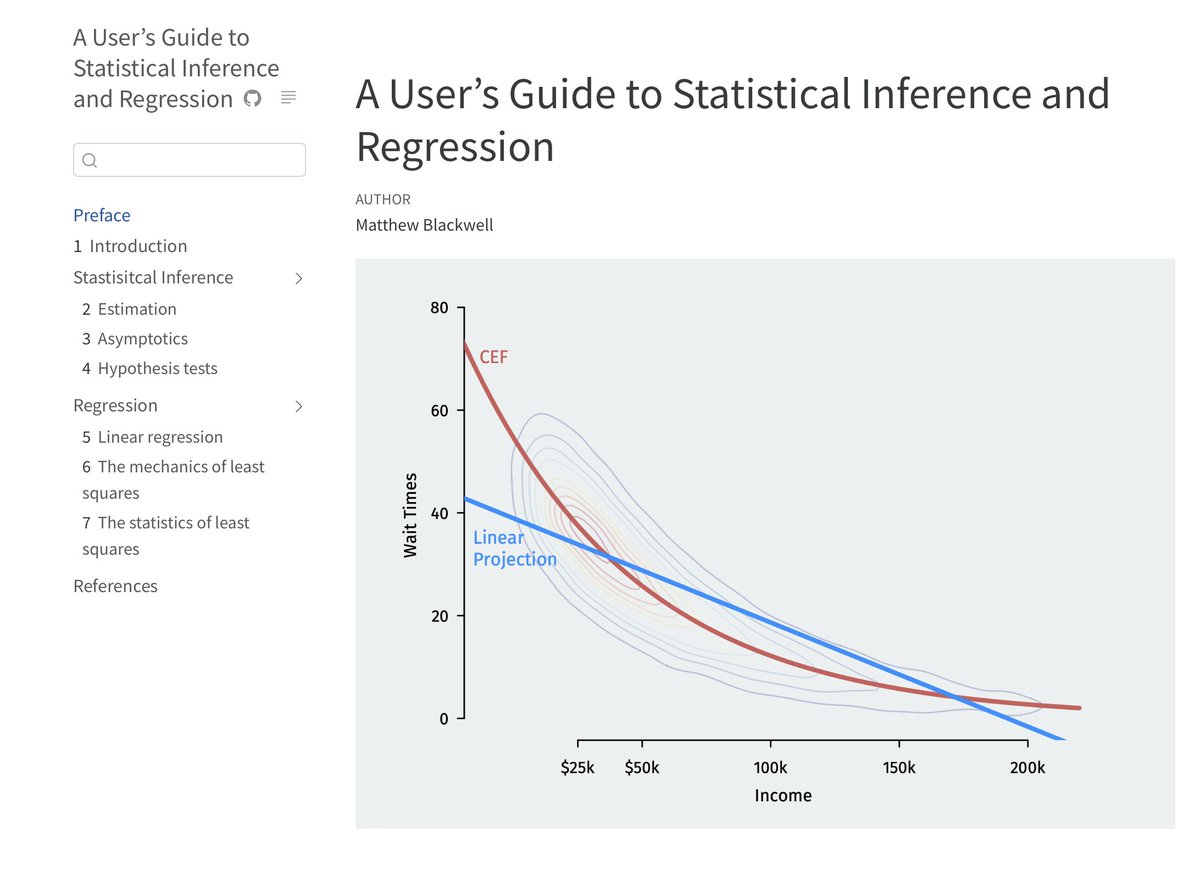
After a long and unsuccessful search for a statistical inference and regression textbook at the right level for our PhD students, I finally decided to write up my lecture notes as a book.
The book is publicly available if you are interested:
https://t.co/XDB34FjaMS
2/2 What is worth asking is whether AI can replicate a writing formula & produce not merely a string of words but a coherent, historically rich, and riveting account to entertain, educate and indulge literary minds. #ChatGPT#Literature
1/2 Picked up "#TheCalcuttaChromosome" today. The massive leaps & bounds in #AI#technology that enable an array of tasks today are yet behind @GhoshAmitav & his active imagination. For all its fiction, literature can at times be eerily accurate in its projections of the future