Heisenberg’s Physics and Philosophy shows how quantum mechanics reshaped our understanding of reality, blending science with deep philosophical questions.
Anthropic just showed a 24-minute workshop on how to actually do prompts for Claude.
Taught by the people who built it.
Free. No registration. No paywall.
I've seen $300 courses that don't cover what they teach in the first 8 minutes.
Watch it and bookmark it now.
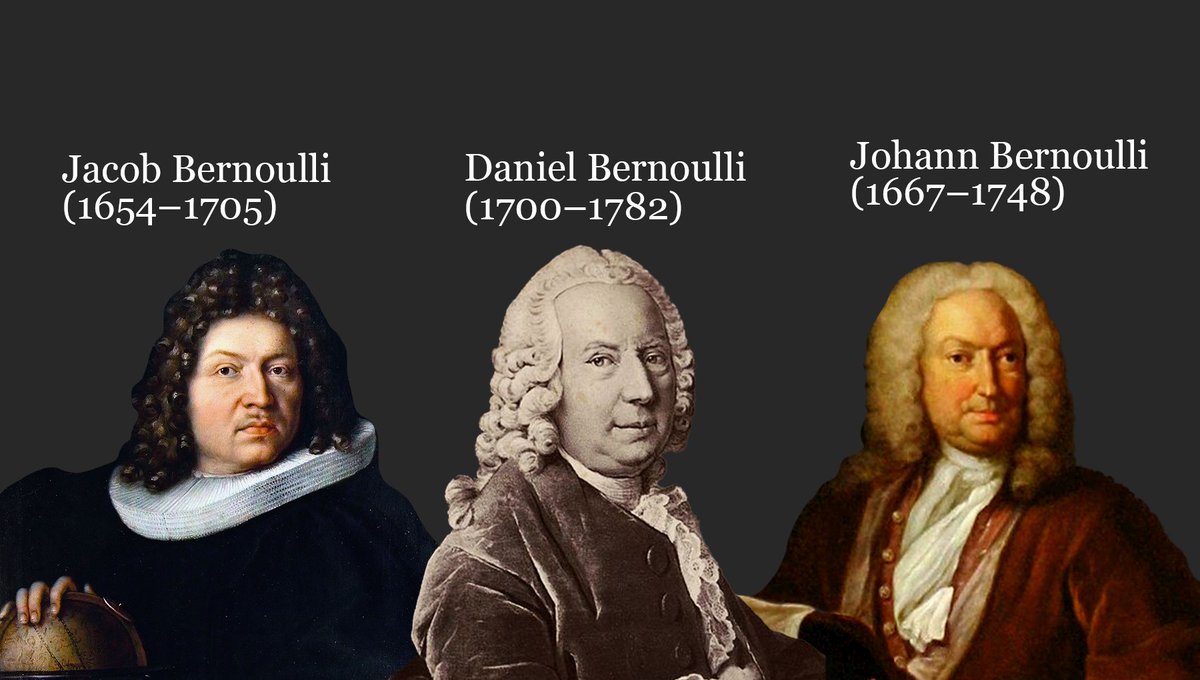
The Bernoulli family was a remarkable dynasty of Swiss mathematicians and physicists who made significant contributions to various fields of science in the 17th and 18th centuries. The family produced 8 prominent academics, most notably Jacob, Johann, and Daniel Bernoulli, who were among the pioneers of calculus, differential equations, probability theory, and fluid mechanics.
Breaking News: The Justice Dept. is planning to drop charges against India’s richest man, Gautam Adani, after a lawyer for the billionaire made an unusual investment offer. https://t.co/08sl331XCJ
“No matter how isolated you are and how lonely you feel, if you do your work truly and conscientiously, unknown friends will come and seek you.” — Carl Jung
Growing up in India, there is a rat race in whatever you do. Competitive exams, higher studies, career, everywhere. I chose academia as a career, but here the rat race to publish in the "top" journals has significantly and adversely affected my personal life, health and peace of mind for over a decade now. Just putting it out there for those who think academia is a cakewalk. For many of us it is not.
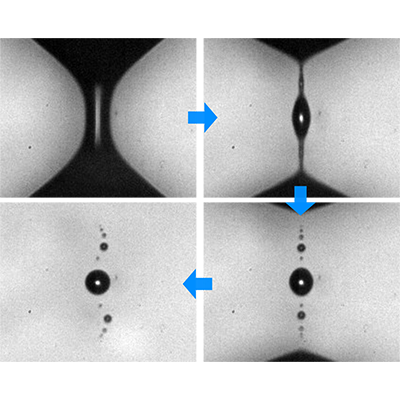
When liquid drops rub on surfaces, they can acquire an electric charge. Evaporation can then concentrate the charge until drops spontaneously emit fine liquid jets that break up into microdroplets—a phenomenon that has industrial implications. In PNAS: https://t.co/eePHj5RNaI
A new study at IISc reveals how specialised host cells transport essential bacterial symbionts into insect embryos. The unique bacterial endosymbiont in scale insects is essential for embryo development and survival.
Read: https://t.co/Zu0iizO4EL
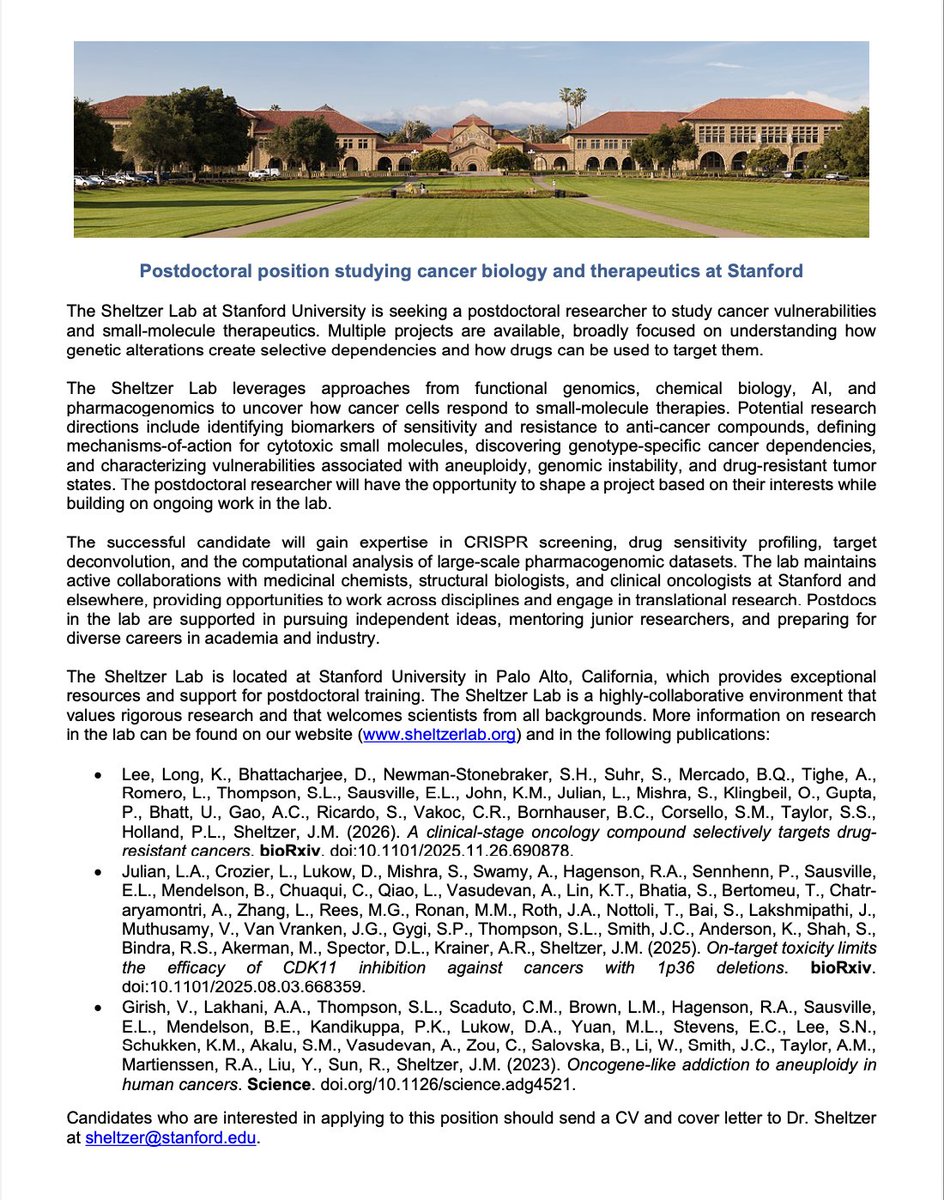
My lab at @Stanford is looking to hire postdocs for multiple projects on cancer biology and therapeutics. Our recent work has uncovered some truly remarkable mechanisms for cytotoxic small molecules and we're looking to build on this research. If interested, see below:
The paper that named carbon’s microtubules…
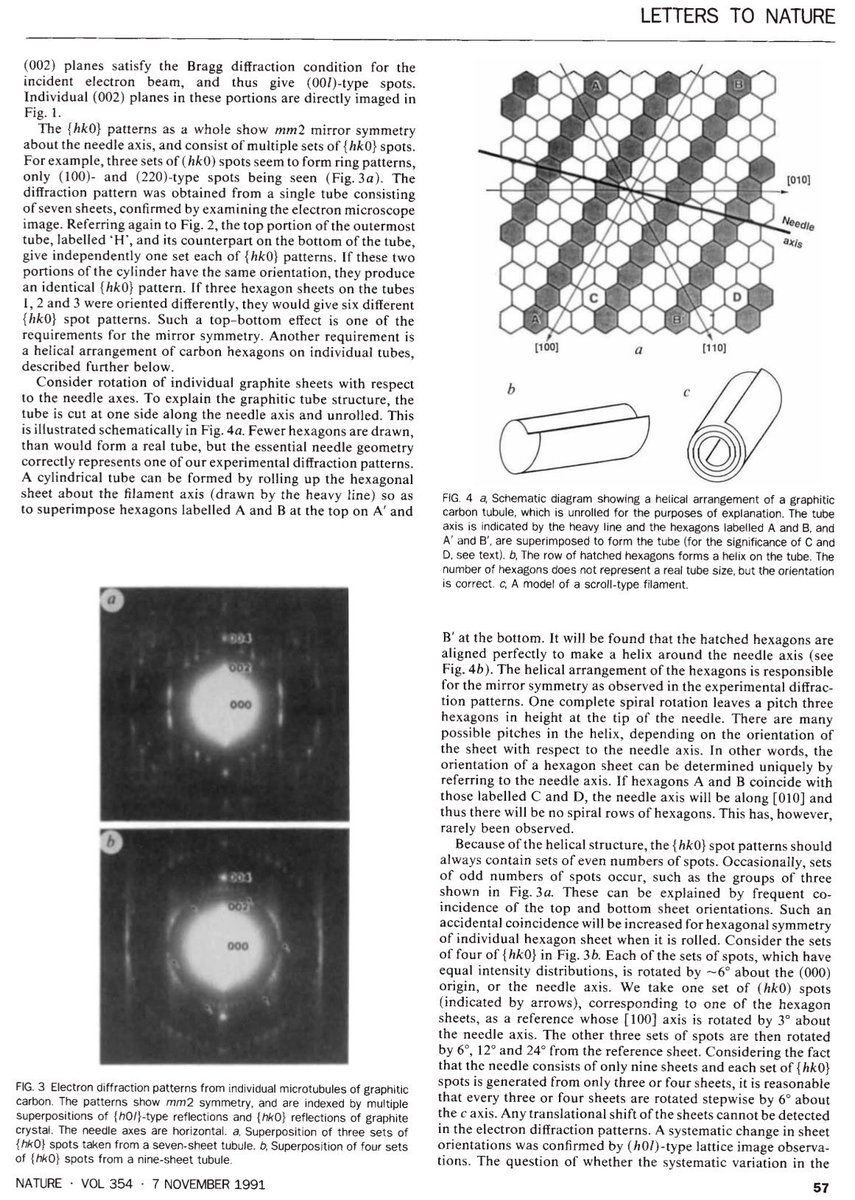
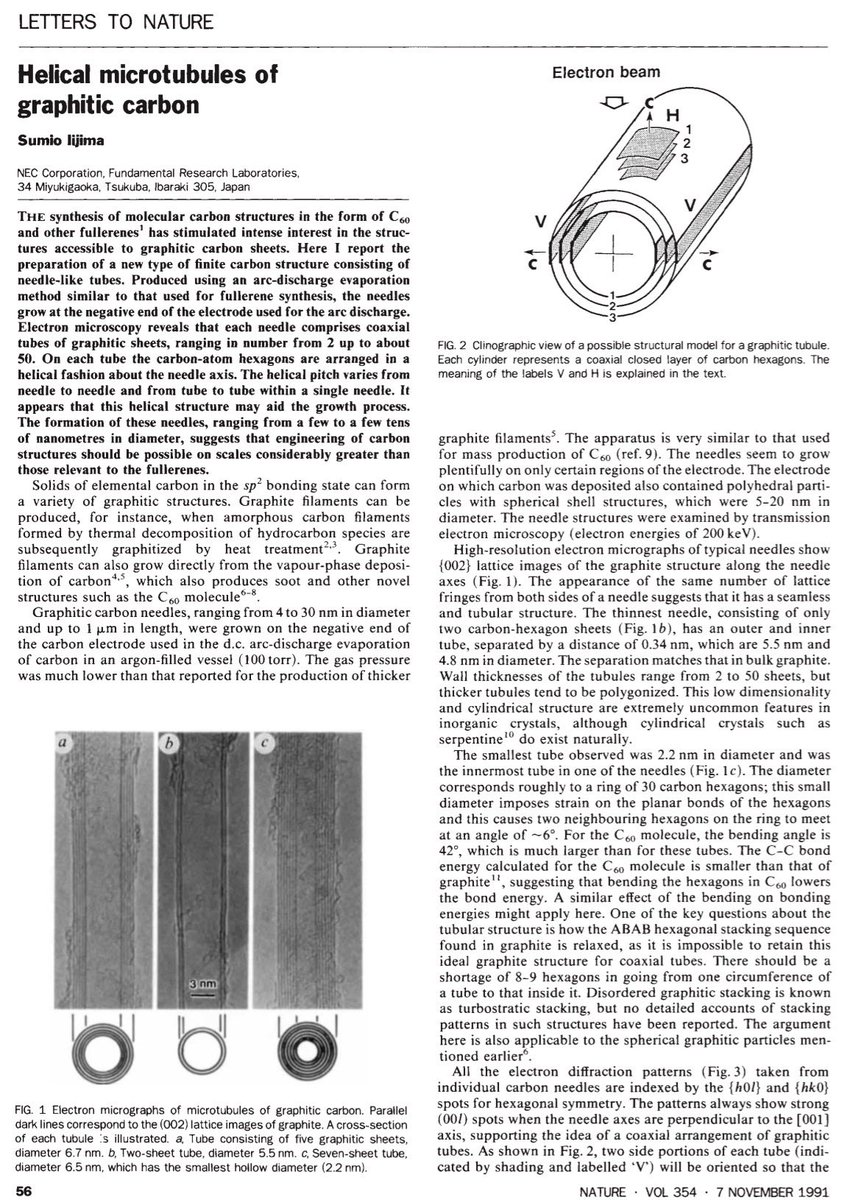
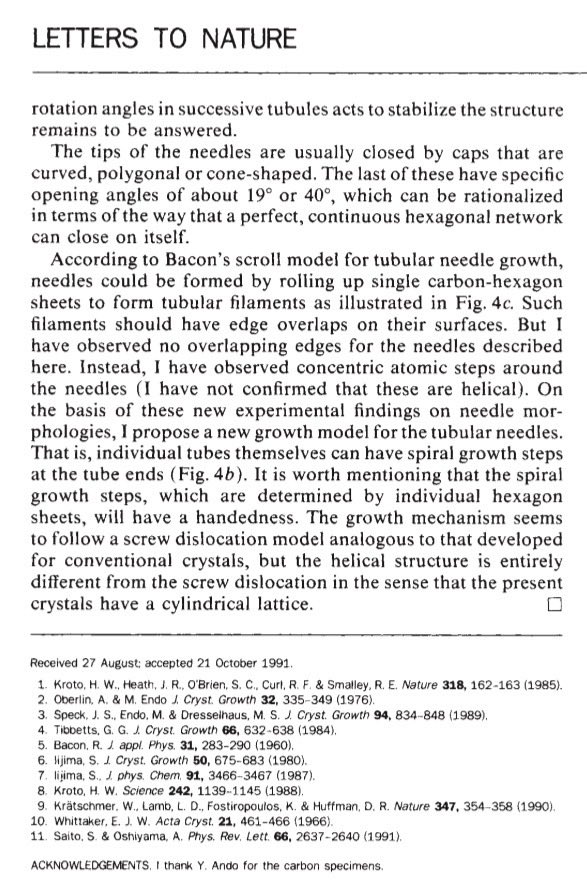
Thirty-five years ago this month, a single-author letter appeared in @Nature that has since gathered nearly 100,000 citations — one of the most-cited physical sciences papers ever written. Sumio Iijima’s “Helical microtubules of graphitic carbon” (Nature 354, 7 November 1991) is the paper that opened the carbon nanotube era. Iijima is the discoverer of CNTs, and this is the document of the discovery.
He took an arc-discharge rig — the same apparatus that had just made C₆₀ mass production possible — and ran it in argon at lower pressure.
On the negative electrode he found needles, 4 to 30 nm wide, up to a micron long. Under the electron microscope, each needle pulled apart into nested concentric tubes, like Russian dolls. Two walls in the thinnest case, fifty in the thickest. The smallest hollow core was 2.2 nm — a ring of about thirty carbon hexagons.
The hexagons on each tube were not in straight rows along the axis. They wound around it in a helix. The pitch varied from needle to needle, and between tubes within a single needle.
He proved it by reading the electron diffraction patterns — the mirror symmetries can only come from helical hexagons paired with top-bottom coincidence of the cylinder walls.
Then he did the move that founded the field: he cut the tube along one side and unrolled it…
Once you see the graphene sheet rolled into a cylinder, you understand that the angle of the roll determines everything about the tube’s electronic and mechanical character.
Figure 4a is the seed of the (n,m) chiral vector formalism that defined nanotube physics.
“Helical microtubules of graphitic carbon” … He didn’t call them tubes or fibers. He called them microtubules — the word borrowed wholesale from cell biology, where it has named tubulin polymers in every living cell since the 1960s.
Biological microtubules are hollow tubes built from repeating protein dimers arranged helically around the lumen, 25 nm in outer diameter, with properties dominated by lattice geometry.
Carbon nanotubes, as Iijima describes them, are hollow tubes built from repeating carbon hexagons arranged helically around the lumen, of comparable diameter, with properties dominated by lattice geometry.
In the early 1990s, Roger Penrose was looking for a biological substrate for objective reduction, and @StuartHameroff was arguing that the brain’s microtubules ran quantum computations along their tubulin lattice. Their first joint Orch-OR paper landed in 1996. Iijima’s landed in 1991.
Two communities found the same shape from opposite ends of the periodic table in the same five years and called it by the same name.
Yesterday, I was giving an intro talk to our dept's new PhD students. Technical things aside, my number 1 suggestion has remained the same over the years: Treat your PhD like a job.
- Avoid 1.5h lunch and three tea breaks.
- Avoid gossiping and loitering at work.
- Lab at 9 am and leave at 6 pm. Being productive till 11 pm in the lab is a lie people till themselves when their day starts at 1 PM.
Everything worth doing can be done with high intensity focus during work hours. And having fun in life is the secret to being productive in a marathon.
Capillary breakup of a liquid bridge wetting a surface leads to electrostatic charging, slowing the dynamics and producing motion of satellite drops, highlighting the role of electrostatics in dewetting processes beyond sliding drops.
Editors' suggestion https://t.co/VR5mBvYrp0
I'm joining Carnegie Mellon's CS Department (and HCII by courtesy) as an assistant professor in Fall 2027!
I'll be recruiting PhD students next cycle. If you're interested in AI systems or human-AI collaboration, list me in your application. Stay tuned for more about my new lab!