We've reached 1.5°C global warming.
With current policies, we're heading for a catastrophic 2.7°C warming.
A new review paper in Science shows: this would change the Arctic 'beyond recognition', with knock-on effects (like rising seas) around the world.
https://t.co/B4gvkQeL48
Ten years ago, in January 2015, the E.U.'s Copernicus climate team registered global average temperatures 1.15 degrees Celsius above the 1850-1900 "preindustrial average." In January 2025, it registered global average temperatures 1.75 degrees Celsius above that average.
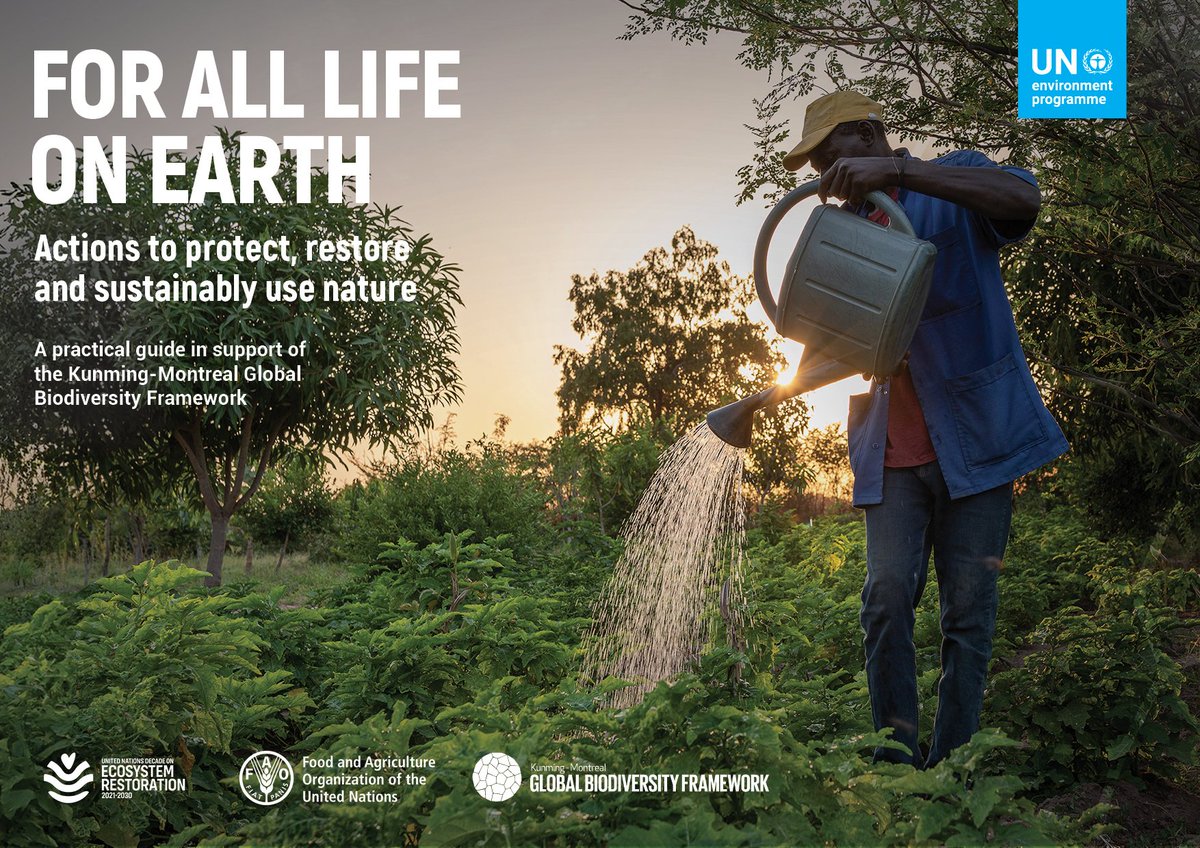
Nature is essential for our survival—it provides the food we eat, the water we drink, the energy we use, and the very foundation of life itself.
But the accelerating nature crisis is unraveling ecosystems, deepening inequalities, and threatening all life on Earth.
Learn actionable steps to address biodiversity loss with UNEP’s new guide: https://t.co/Ws0SgAjYcz
"Across places where a third of humanity lives, actual daily temperature records are outpacing model predictions, according to forthcoming research from Dartmouth’s Alexander Gottlieb and Justin Mankin." https://t.co/K2oorr08yF
“Where people face repression and rights violations every day, activists see a clearer connection... We can’t talk about the climate if we can’t even go out on the street and hold a sign. Climate activism and human rights are united.”
https://t.co/BGsJCMl8h6
Do not pay attention to this if you want to sleep easy tonight
But do pay attention if you want to maximise your chances of sleeping easy in future
The choice should be simple
Such an excellent illustration of how inefficient fossil fuels are and how manufactured our dependency actually is.
Close to half of all shipping traffic worldwide is just moving fossil fuels around
1/ You’ve seen the fires
You seen the floods
You’ve read the news reports
You’re scared
And now you want to do something about it
But what? And how?
A (longish) thread
“We are on the brink of an irreversible climate disaster. This is a global emergency beyond any doubt. Much of the very fabric of life on Earth is imperiled. We are stepping into a critical and unpredictable new phase of the climate crisis.” https://t.co/dFlDchwgyb
Nothing to see here -- just an internal report by Shell from 1989 precisely predicting the "violent weather" and "deluges" that just destroyed half of Appalachia, and summing up expected climate chaos with the comment, "Civilisation could prove a fragile thing."
If everyone was aware of how many flood disasters are ravaging the planet lately, people would have a much better awareness and understanding of the climate challenge humanity faces. This is just the beginning.
The below thread compiles many of them.
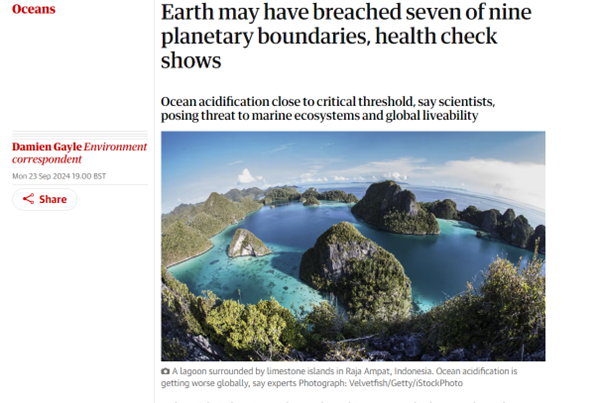
1/ Why is crossing the planetary boundary for ocean acidification so terrifying?
In more acidic oceans, corals, molluscs and crustaceans are less able to produce their calcium carbonate shells
These creatures underpin ocean food webs
Here is my scientific update @TEDTalks of the state of the Planet. The planet is changing faster than expected, hitting harder on people across the world. We must admit we have underestimated risks. Tipping points are approaching fast. Window open? Yes https://t.co/0Vbn9DdjOB