In our study, we showed the optimal cut-off value between high and low TIL levels in triple negative breast cancer. TIL >40% is significantly associated with better event-free survival.
#TILs#TNBC#SABCS24
Impact of Neoadjuvant Carboplatin in Early-Stage Triple-Negative Breast Cancer: A Pooled Analysis of the BrighTNess, Cancer and Leukemia Group B 40603 (Alliance), and GeparSixto Clinical Trials
https://t.co/kQRddHW2B6
In this retrospective study of patients treated with elacestrant, those harboring ESR1 L536 mutations had a shorter time on treatment compared with patients carrying other ESR1 variants. Similarly, patients with multiple ESR1 mutations had a shorter treatment duration than those with a single mutation.
https://t.co/deYpcwbiLU
😳 Disappointing results of T-DXd in large randomized phase III Destiny-Lung04 first line in HER2mut NSCLC vs SoC chemo-pembro. Although control arm outperformed, the lack of translation into OS benefit and the concerning safety issues of this agent warrants a lot of discussion, specially in the upcoming data from selective HER2 TKIs, with are associated with better tolerance and safety profile. #WCLC26 @iasclc #lcsm
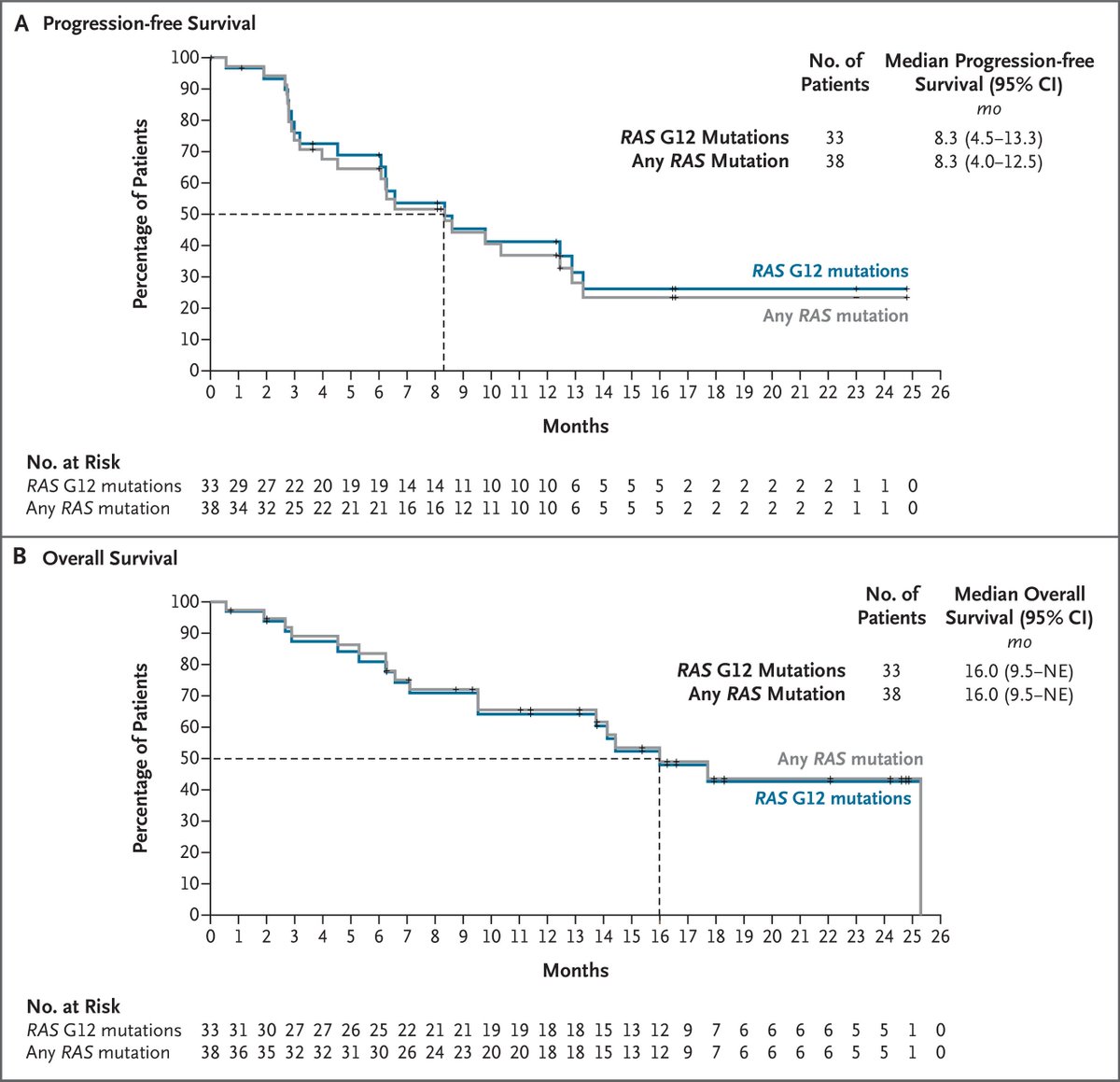
After its success in pancreatic cancer, daraxonrasib’s NSCLC data!
In pretreated non-G12C RAS-mutant NSCLC, ORR was 35% overall; 42% in selected 2L cohort (mPFS 8.3 mo; mOS 16 mo).
Toxicity matters: at 160–220 mg, rash 90%, diarrhea 66%, G≥3 TRAEs 25%; at 300 mg, G≥3 TRAEs 45%. (Four G5 AE / non drug related)
https://t.co/UlCWkGVluU
Adagrasib was just withdrawn by the @FDA in metastatic colorectal cancer based on the negative results in KRYSTAL-10
"A waterfall plot can look impressive, and high response rates can create enthusiasm, but they should not be confused with proven clinical benefit."
From Sahar van Waalwijk, new guest post in
https://t.co/P3NUOebqBF !
🧬 Is TNBC molecular heterogeneity telling us more about treatment opportunities than survival itself?
https://t.co/W5uUGRPDNo
Immunohistochemistry-based molecular subtypes and stromal tumor-infiltrating lymphocytes in triple-negative breast cancer: a chemotherapy-only cohort
Retrospective study of 289 women with triple-negative #BreastCancer found that IHC-defined molecular subtypes 🔬varied substantially across clinical trajectories. Immunomodulatory tumors were more common in non-recurrent disease, while BLIS and unclassifiable subtypes predominated in recurrent and metastatic disease. Higher stromal TILs were independently associated with improved overall survival in early-stage TNBC, but not metastatic disease.
➡️Overall, sTILs and clinicopathological factors remained stronger prognostic markers than IHC molecular subtypes.
@Dra_CVillarreal@mohar_alejandro@tamarapalaciosv@soydanivazquez
#ESMOBreast26 | evERA
Giredestrant + eve after CDK4/6i in ER+/HER2− aBC appears reasonable not only in terms of efficacy, but also tolerability.
→ Adding an oral SERD did not appear to add a meaningful toxicity burden
→ Stomatitis prophylaxis delayed grade ≥2 events (I'm not sure about the reduction)
Gedatolisib now approved for PIK3CAwt ER+ MBC. Very active regimen, many open questions:
- triplet vs doublet. I’d favor doublet to optimize the benefit/risk ratio
- IV infusions clearly add burden, shared decision making is key
- if ESR1 mutant, SERD combos may be prioritized
#SABCS25 Recap #2 | #lidERA
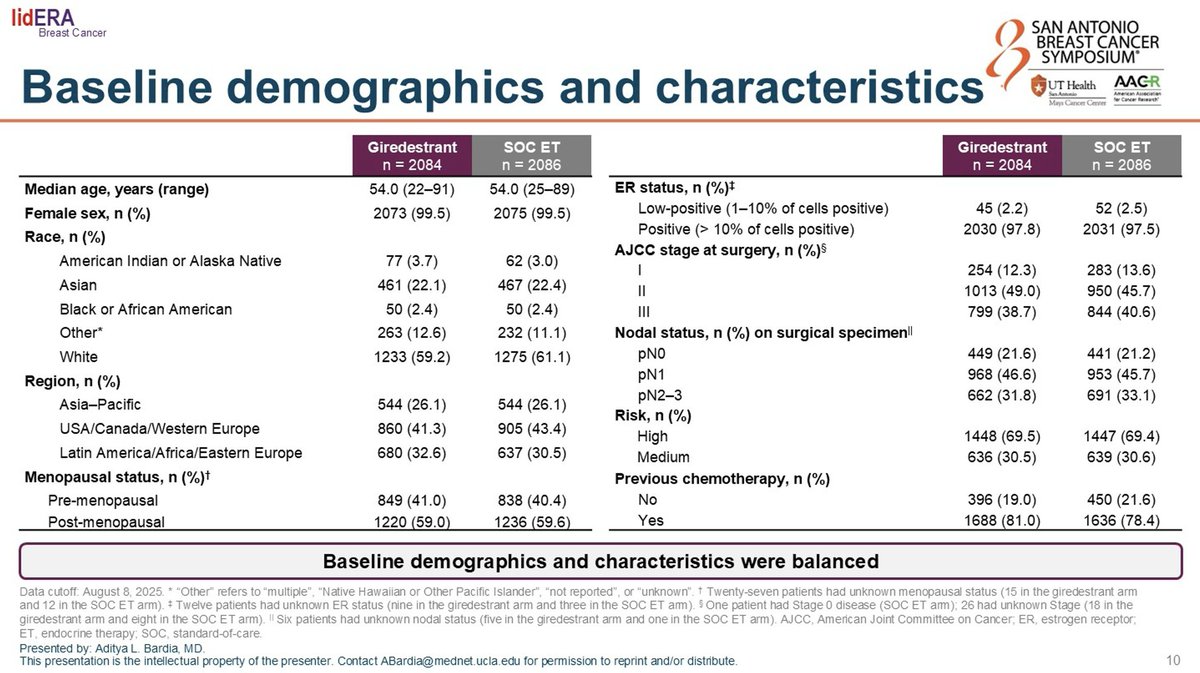
The lidERA trial showed adjuvant oral SERD #giredestrant was superior to SoC ET (AI or TAM) in intermediate–high risk HR+ HER2– EBC.
Here is my take:
1️⃣ A true milestone
After ~20 years, we finally have a better-tolerated adjuvant ET:
Discontinuation: 5% giredestrant vs 8% SoC
This is excellent news for our patients.
2️⃣ Unexpected and impressive
Oral SERDs in MBC mainly benefit #ESR1-mut disease, which is rare (<1%) in early BC , yet lidERA showed clear benefit:
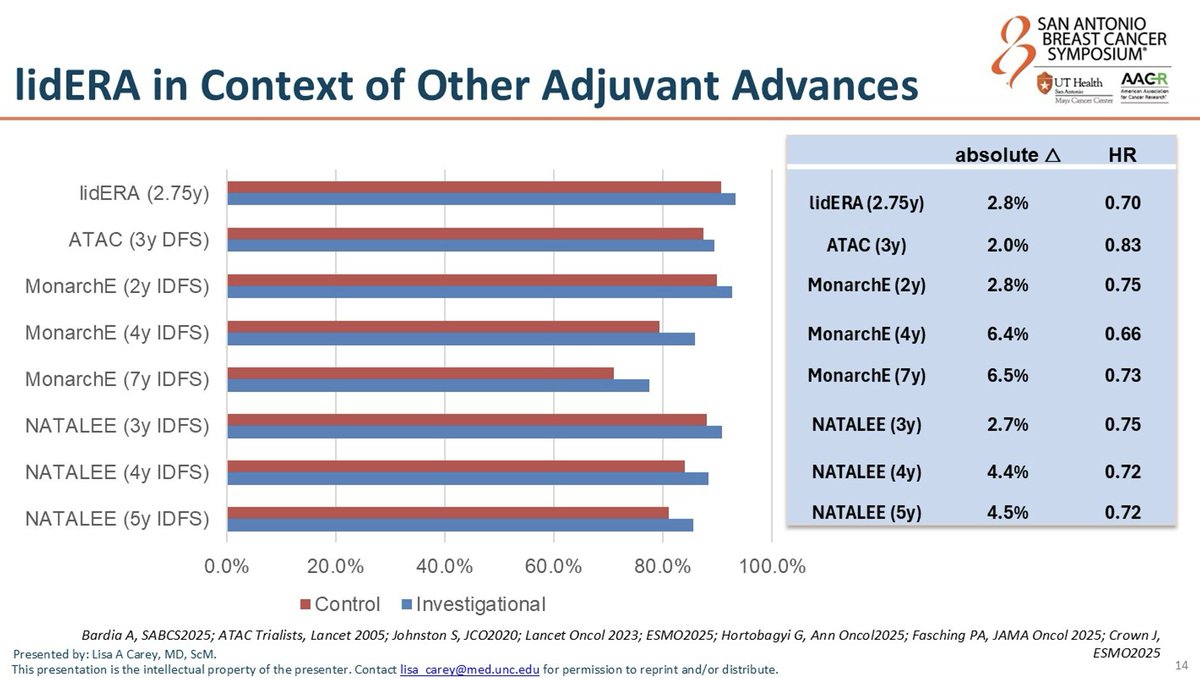
lidERA: 3-yr iDFS ∆ 3%, HR 0.70 (HR vs TAM ~0.5!)
ATAC: ∆ 2%, HR 0.83
BIG 1-98: ∆ 2.5%, HR 0.81
3️⃣ Where CDK4/6i fit
lidERA pts qualify for monarchE/NATALEE, but CDK4/6i were not allowed.
Early benefit is similar:
lidERA: ∆ 3%, HR 0.70
monarchE: ∆ 2.8%, HR 0.75
NATALEE: ∆ 2.7%, HR 0.75
With longer follow-up and OS benefit (monarchE), I currently lean toward 2–3 yrs adjuvant CDK4/6i → then switch to #Gired.
@OncoAlert@OncBrothers@breastfriendspd
Interesting new data from #SERENA6 showing that the cumulative incidence of ESR1 muts rises steadily over time. ctDNA monitoring detected ESR1m in ~20% within 1 year, but the incidence was highest between years 1-4. #ESMOBreast26
#ESMOBreast25
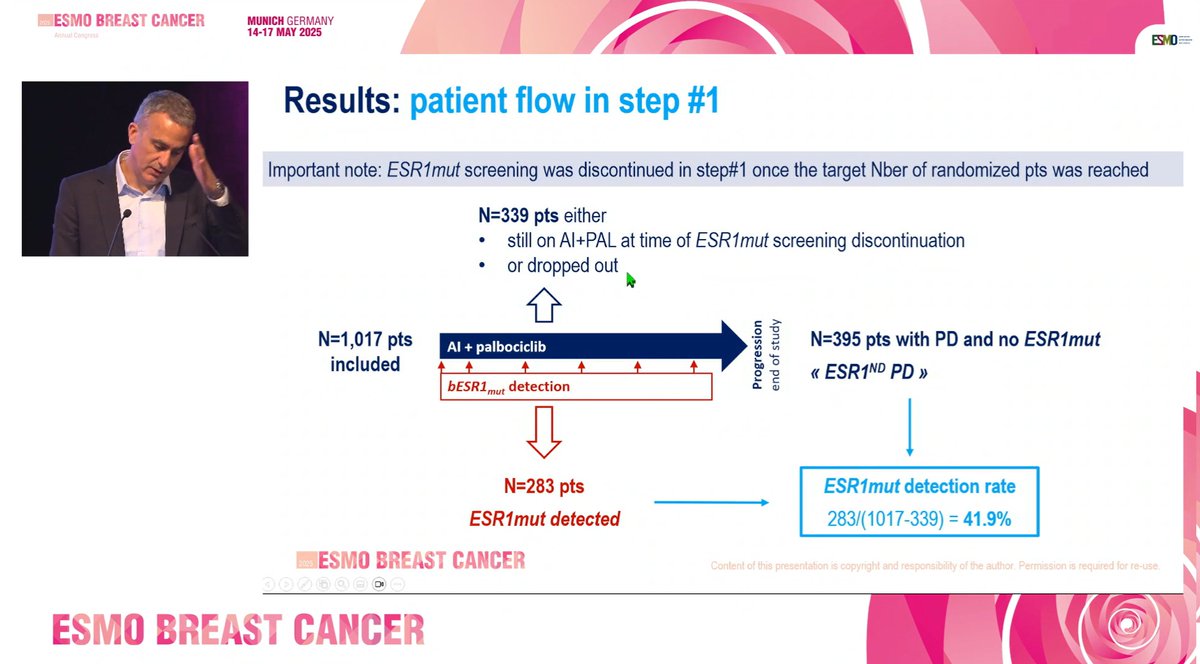
PADA-1: blood ESR1 mut in HR+/HER2- mBC on AI + Palbociclib
📌41.7% develop rising bESR1 mut before/at progression
📌Higher risk in younger pts, high ER expression, bone mets, elevated LDH
#ESMOAmbassadors@myESMO
Unfortunate to see no benefit with 1L giredestrant/palbo (vs AI/palbo) in persevERA — despite a signal for patients with more indolent disease features. The benefit of oral SERDs in metastatic disease remains mostly anchored to ESR1 mutations.
#ASCO26 🔬 ESR1 mutations may no longer mean “wait for progression.”
Updated phase III SERENA-6 data showed that an early switch to camizestrant + continued CDK4/6i after ctDNA-detected ESR1m prolonged benefit well beyond first progression.
📈 Key results:
• PFS: HR 0.45, absolute gain 7.6 mo
• PFS2: 25.7 vs 19.1 mo
HR 0.63 (p=0.0037)
• Chemo/ADC-free survival:
22.6 vs 18.7 mo
HR 0.64
• ctDNA clearance: 51% vs 2%
This is molecular progression-directed therapy becoming real in HR+/HER2- metastatic breast cancer. 🧬
@ASCO@OncoAlert@myesmo@esmo_open #OncoTwitter #BreastCancer
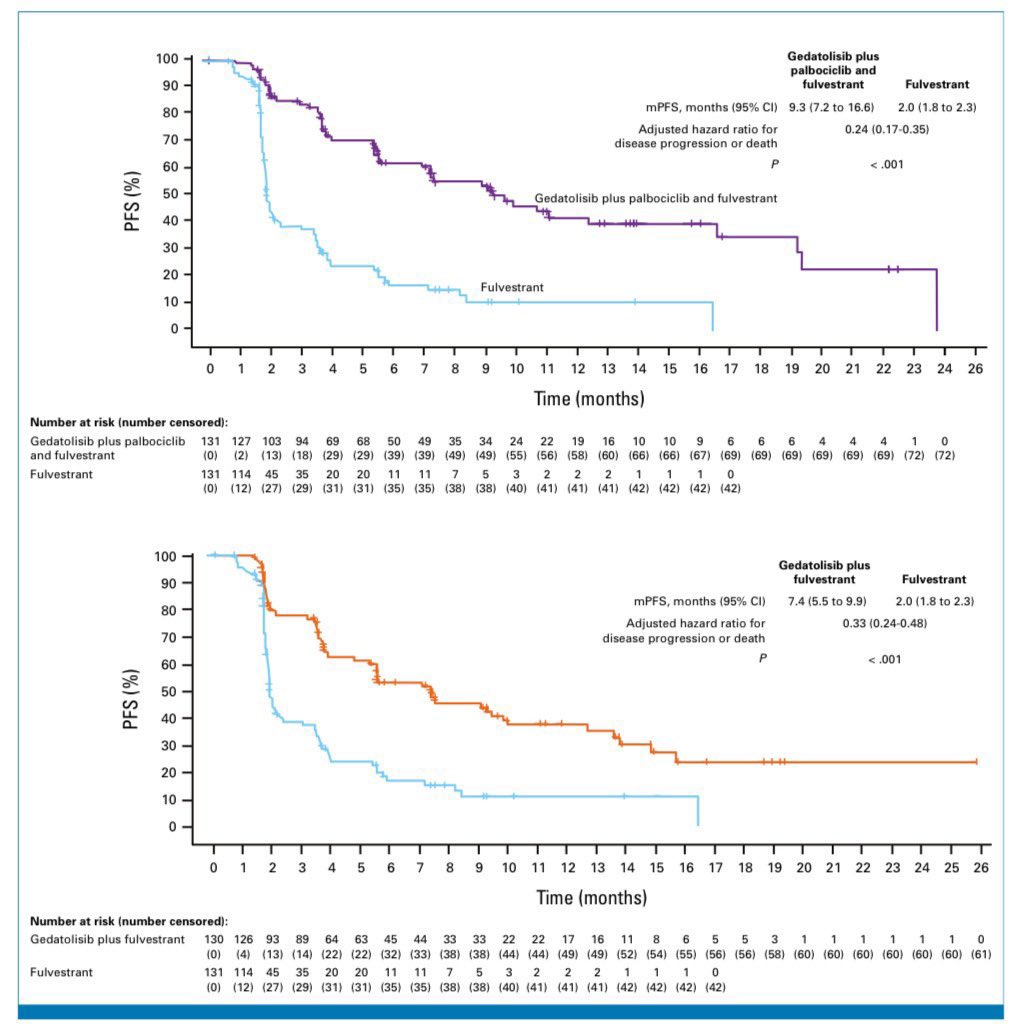
Post-CDK4/6i, PIK3CA-WT HR+/HER2- MBC: how does gedatolisib stack up to other options?
PFS by regimen:
Everolimus + ET: 5.5 mo
Oral SERD alone (ESR1m): 5.5-8 mo
Abema + imlunestrant: 10.9 mo
Gedatolisib + fulv: 7.4 vs 2.0 mo, HR 0.33
Gedatolisib + fulv + palbo: 9.3 vs 2.0 mo, HR 0.24
Not a clean cross-trial comparison, different populations and control arms.
Clearly looks better than everolimus combo, though this should have been control. #bcsm
May use doublet in ESR1 and PIK3CA WT who don’t mind IV therapy.
Shaping CDK4/6 Inhibitor Resistance: BRCA2 Germline Alterations Bias toward RB1 Inactivation—this In the Spotlight commentary by Fabiana Napolitano and Ariella B. Hanker highlights a recent Nature article from Anton Safonov and colleagues. https://t.co/MeHPyHsmMT @md_napolitano
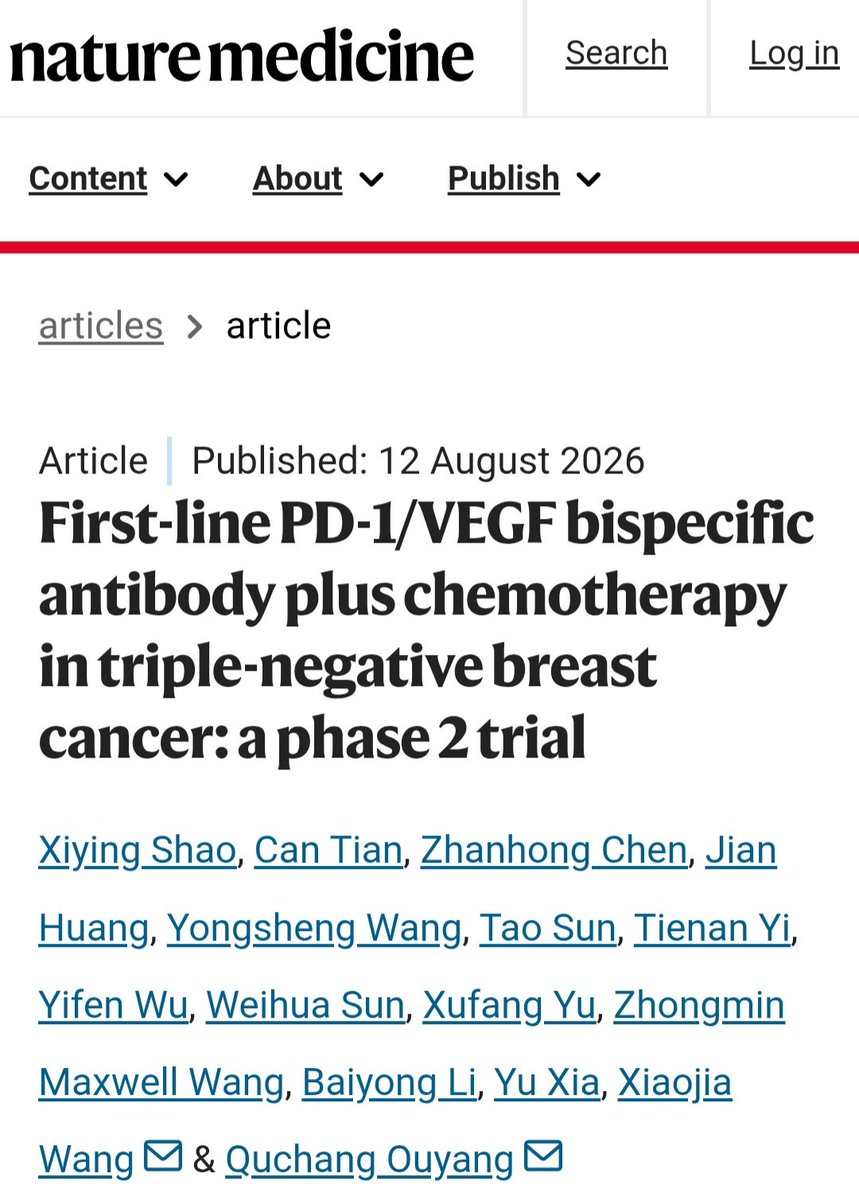
First-line ivonescimab+taxane in advanced TNBC (n=36): ORR 80%, mPFS 15.2 mo. In CPS<10 disease, ORR was 79.3% and mPFS 13 mo—the key signal. Promising, but a small single-arm phase 2. Its place in the ASCENT-03/04 and Dato-DXd era needs phase 3 validation.
https://t.co/5fYxg9bShV
Trastuzumab rezetecan showed striking activity in advanced salivary gland carcinoma: ORR 91.7%‼️ in HER2-high and 45.5% even in HER2-low disease, with median PFS not reached and 12.7 months, respectively.
https://t.co/mjheZYUoX9
Somatic BRCA alterations in BC are associated with distinct biological & clinical patterns according to germline BRCA status in @ESMO_Open. Genomic patterns in sBRCA+ depend on germline status. Only gBRCA linked to shorter CDK4/6i therapy TTD. https://t.co/nLWZDDwrn4
Single-Dose Zoledronate in Early Breast Cancer: Is Less More?
REaCT-ZOL compared a single 4 mg infusion with 6-monthly zoledronate for 3 years in postmenopausal women with early breast cancer.
Comparable 5-year outcomes were observed: • RFS: 88.7% vs 84.1% (HR 0.71) • BMFS: 90.6% vs 86.0% (HR 0.68) • OS: 91.6% vs 88.0% (HR 0.79)
Lower treatment discontinuation: 4.7% vs 37.5%
Lower hypocalcaemia: 0.9% vs 9.6%; no ONJ in either arm.
Interpret with caution: The trial was underpowered to establish noninferiority; findings are hypothesis-generating.
📖 Clemons et al. NEJM Evidence. 2026;5(6). REaCT-ZOL.
#BreastCancer #MedicalOncology #Zoledronate #Deescalation #MVOnco