Everyone wants to put chatbot on a smart speaker.
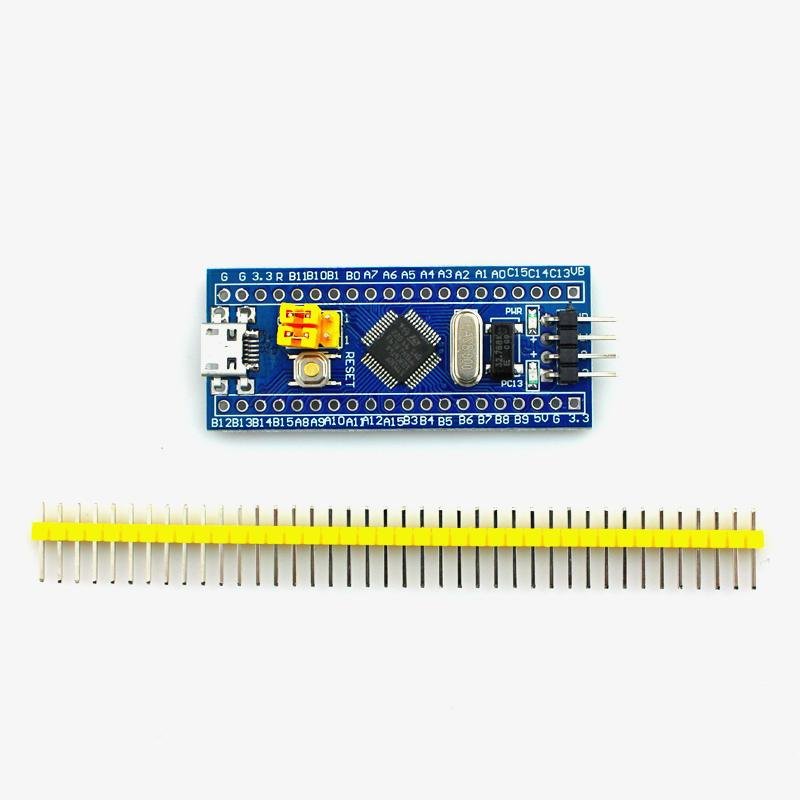
But if you are building hardware, offline voice AI on $6 range microcontrollers like ESP32 or STM32 is where the real money is made.
Why?
1. Zero latency (<100ms response)
2. 100% private
3. Zero Wi-Fi setup needed
4. $0 monthly server costs
The best product opportunities are high-frequency, offline physical actions:
1. Hotel room controls (No privacy fears, no Wi-Fi pairing)
2. Industrial tools & workshops (Glove-friendly, dirty hands)
3. Smart appliances out-of-the-box (Zero setup required)
4. Assistive devices & remotes (Works 100% of the time offline)
Stop forcing cloud subscriptions onto simple physical hardware. Offline voice is the move.
I created a handbook to help you learn AI agents.
It gives you:
• Must-know AI GitHub repos.
• Free courses to master AI agents.
• Papers to understand AI fundamentals.
• Curated videos to learn AI agent foundations.
• Books to get started with AI agent engineering.
• Condensed guides to broaden your AI agent knowledge.
(24 HOURS ONLY!!!)
To get it for free:
1 Follow @systemdesignone [MUST]
2 Like & Retweet to get DM
3 Reply "Handbook"
Then I'll DM you the details.
Announcing the hosted X MCP.
Agents now have access to the best real-time information source in the world.
Connect Grok, Cursor, or any MCP-compatible AI tool to the X API without any setup!
Check it out here: https://t.co/5MzPYwGFzD
A great detailed walkthrough of migrating a project from Gemini CLI to Antigravity CLI ⏩
🪝- Moving skills, hooks, and MCP servers
📑- How to plan and review artifacts
🤖- Dynamic subagents in Antigravity
Check it all out in the blog below 👇
Gemma 4 12B can now run locally on just 8GB RAM via Dynamic GGUFs.
Google's new model, Gemma 4 12B Unified supports image, audio and 256K context.
You can run and train the model via Unsloth Studio.
GGUF: https://t.co/8cL321pVDh
Guide: https://t.co/odRo9WjRpA
Introducing the newest Coral board, for efficient, on-device AI!
Check out the demos in the video:
- On-board speech translation
- Natural language controlling hardware
- Vision & sound generating music
how to become a modern polymath
not by randomly learning everything.
that’s just intellectual hoarding.
a modern polymath needs structure.
what actually matters:
• build a strong spine → math, physics, computer science, writing. these fields compound into everything else
• go deep in one domain → you need one hard skill where you can actually produce real work
• go wide around it → biology, economics, history, design, psychology, philosophy. breadth gives you pattern recognition
• connect fields aggressively → innovation usually happens between domains, not inside clean academic boxes
• build artifacts → apps, essays, robots, diagrams, simulations, systems. knowledge must leave your head
• teach what you learn → if you can’t explain it simply, you don’t own it yet
• study reality, not just books → markets, machines, people, nature, institutions. the world is the real textbook
the goal is not to look smart.
the goal is to become useful across problems.
a polymath is not someone who knows random facts.
it’s someone who can move between domains,
extract principles,
connect patterns,
and build something real from the synthesis.
@ajeetprssingh I really like this kind of learning style, and no information is overloaded, and really enjoy Questions driven style. The best part is that it really give so much result to me, I test with unfamiliar fields with this approach. Yes of course, it was difficult and lately it worked.
having multiple interests is not the problem.
having no structure is the problem.
if you like robotics, physics, biology, history, software, politics, design, economics; good.
that’s raw material.
but without a system, curiosity becomes noise.
how to manage it:
• pick one main project → this becomes the spine. everything else should feed into it.
• create learning buckets → technical, business, health, history, religion, communication. don’t mix everything randomly.
• rotate, don’t abandon → deep work on one thing for weeks, then return to others with fresh eyes.
• connect fields → biology can improve robotics. economics can improve product thinking. physics can improve engineering taste.
• build outputs → posts, notes, prototypes, essays. interests become useful when they turn into artifacts.
• avoid identity hopping → don’t become a new person every week. stay anchored.
multiple interests are powerful when they compound.
dangerous when they scatter you.
the goal is not to kill curiosity.
the goal is to organize it into a system that produces skill, insight, and real work.
When it comes to in-depth technical write-ups, one of my favorite authors is @abhi9u. And this time, he has crafted a beautiful article, "Virtual Memory: A Deep Dive into Page Tables, TLBs, and Linux Internals."
Go, give it a read.
https://t.co/vSum7srMRT
C or Rust for microcontroller firmware development?
https://t.co/i63OpH6Cry
A study published by @Cornell University tries to answer the question. The researchers gathered two teams of engineers working on STM32 MCU firmware. One team worked on C firmware, and the users on Rust firmware using Ariel OS RTOS.
Each team worked separately for 6 weeks, and then in tandem for four more weeks to optimize the results. Rust and C firmware ended up having similar footprints and the exact same performance (when capturing sensor data).
Python made AI accessible.
Rust can make parts of AI understandable.
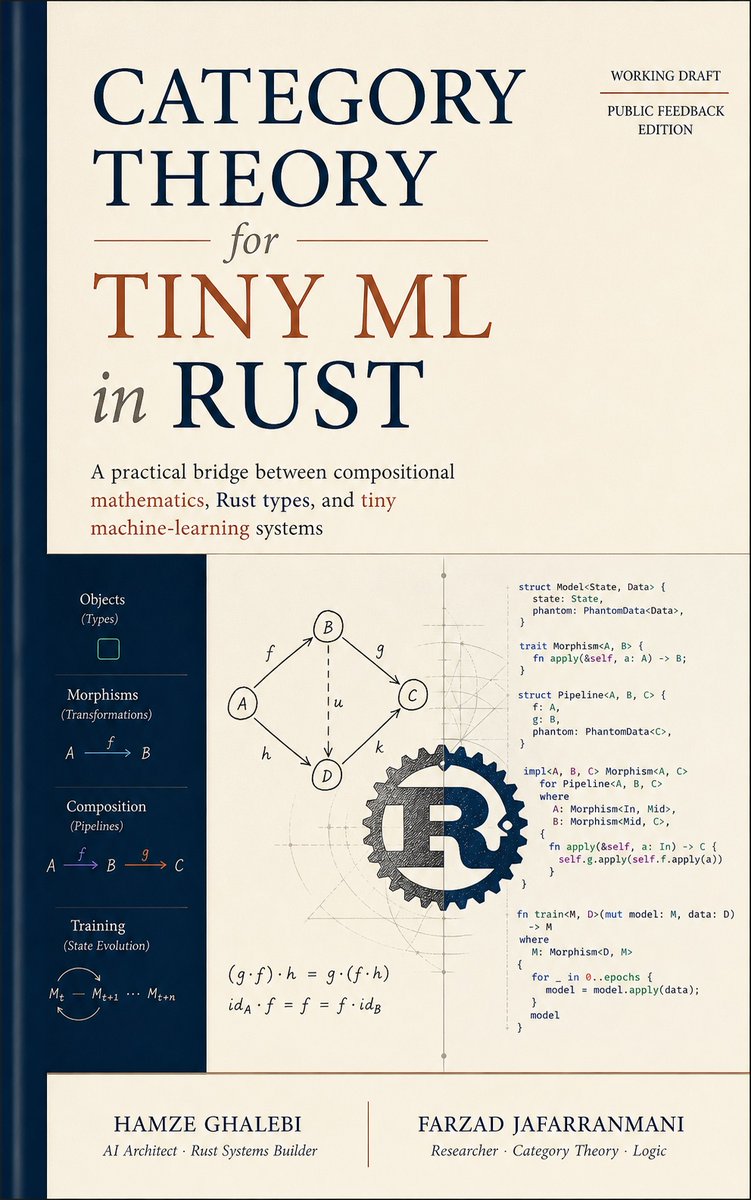
That’s the bet behind Category Theory for Tiny ML in Rust.
We’re building tiny ML systems from first principles using:
Rust types
typed transformations
composition
training loops
category theory as an engineering tool
Not abstraction cosplay.
Executable structure.
Working draft. Public feedback welcome.




![systemdesignone's tweet photo. I created a handbook to help you learn AI agents.
It gives you:
• Must-know AI GitHub repos.
• Free courses to master AI agents.
• Papers to understand AI fundamentals.
• Curated videos to learn AI agent foundations.
• Books to get started with AI agent engineering.
• Condensed guides to broaden your AI agent knowledge.
(24 HOURS ONLY!!!)
To get it for free:
1 Follow @systemdesignone [MUST]
2 Like & Retweet to get DM
3 Reply "Handbook"
Then I'll DM you the details.](https://pbs.twimg.com/media/HOExcDrWYAAUTMM.jpg)