Private equity spent 40 years perfecting financial engineering.
AI just made operational engineering 10x more valuable. The next Blackstone won't be built by bankers.
It'll be built by operators who understand and leverage AI.
IP and software have been worthless since Claude cowork.
The value in software companies the future:
brand -> distribution (cash flow /users) -> data
That's it...
Higher rates have been leading to more inflation for several years now, IMO. Much of our inflation is being driven by a shortage of supply (e.g. housing, computing resources, healthcare) not an excess of demand. Higher rates inhibit supply, which further increases shortages, and thus adds to inflation.
What's going on with interest rates and why does it matter?
First of all, interest rates matter to the global economy because they set the price of money, and almost every economic decision is made with that price in mind. Borrowing vs. saving vs. spending, asset prices, currency values and capital flows, government finances, etc.
Rates have been moving higher (particularly at the long end) for several reasons (most of which are related):
Massive and growing global fiscal deficits. Higher deficits mean more bond issuance to fund those deficits. More bond issuance leads to greater supply. Greater supply without a corresponding increase in demand leads to a lower bond price. Bond prices move inversely with yields - so lower bond prices = higher yields.
The most important factor (by far) is the general idea of investors demanding more return (term premium) for the risk of doing business with the United States of America. Our deficit to GDP ratio is ~6% right now and likely to go higher. This is where you'd expect deficit to GDP to be in a recession, not under the backdrop of a (close to) fully employed workforce (you could argue that the employment picture has been aided by government spending / deficits). And in a recession (when tax receipts fall and spending rises to stimulate growth) deficit to GDP typically moves materially higher. So, at some point, government revenue (tax receipts) is eaten up by interest expense, and we need to issue more debt in order to fund our obligations. The US has had the luxury of being the world's reserve currency, which means (among other things) that when global growth slows, investors buy US treasuries / dollars as protection (flight to safety). When investors buy treasuries, prices go up and interest rates go down, lowering borrowing costs. The existential risk is that someday, global growth slows and investors decide to sell treasuries (given our current fiscal position), driving borrowing costs up at just the time we need them to go down. This is the debt spiral / doom loop, and while I don't actually expect this outcome, higher rates on treasuries are Mr. Market's way of discounting a greater chance of this happening.
Likely the end of central bank quantitative easing (QE - the Fed buying treasuries on its own balance sheet and creating new money) under Kevin Warsh. In fact, Warsh has signaled that he intends to make balance sheet reduction a primary tool. So, if Warsh lets bonds mature and run off, that removes the Fed as a buyer and forces the private market to absorb more of the existing supply, which leads to lower prices and higher yields. Quasi tightening. What Bessent did this week with treasury buybacks was not QE. This was the treasury issuing other securities to fund the buybacks. Simply rearranging the maturity schedule, with no new money entering the system. By taking out long bonds and funding with shorter issuance, Bessent pulls duration off the market in an attempt to ease the term premium pressure that is driving long yields up.
Also, nominal GDP growth (real GDP growth + inflation) is ~5-6%, so it makes sense that the long bond is in a similar range. Nominal GDP is basically the economy's rate of return. Buying a long bond (like the 30-year) means you are lending money to the government for a long period of time. As an investor, it wouldn't make sense to accept a fixed yield below how fast the economy is growing (despite this being the case for several years post GFC) if you could earn more investing in the growing economy (like the stock market). Investing involves understanding the opportunity costs of every decision.
On the other hand, there are reasonable arguments for lower rates as well:
Productivity. AI should give us the economic holy grail, which is to do more with less, and grow without a corresponding inflationary impulse. This will drive down the cost of goods and services - and this deflationary / disinflationary impulse should drag rates down with it. This is key to Kevin Warsh's belief that we can have an environment of high employment and low inflation against a backdrop of productive economic growth.
Demographics. The population is aging. As people age, they save more. Higher savings rates is a deflationary phenomenon (see economies like China and Japan).
We are likely closer to late cycle than early cycle. And when you are late cycle, the bias toward growth and inflation (assuming its demand driven) is decelerating vs. accelerating.
I don't think anyone can accurately predict the macro with any degree of consistency - it's a fool's errand, given there are too many random / unknowable variables that are subject to change at any given time. However, it's important to contextualize material moves in macro variables, particularly when that variable sets the price of money.
Never sit at the Jane Street table.
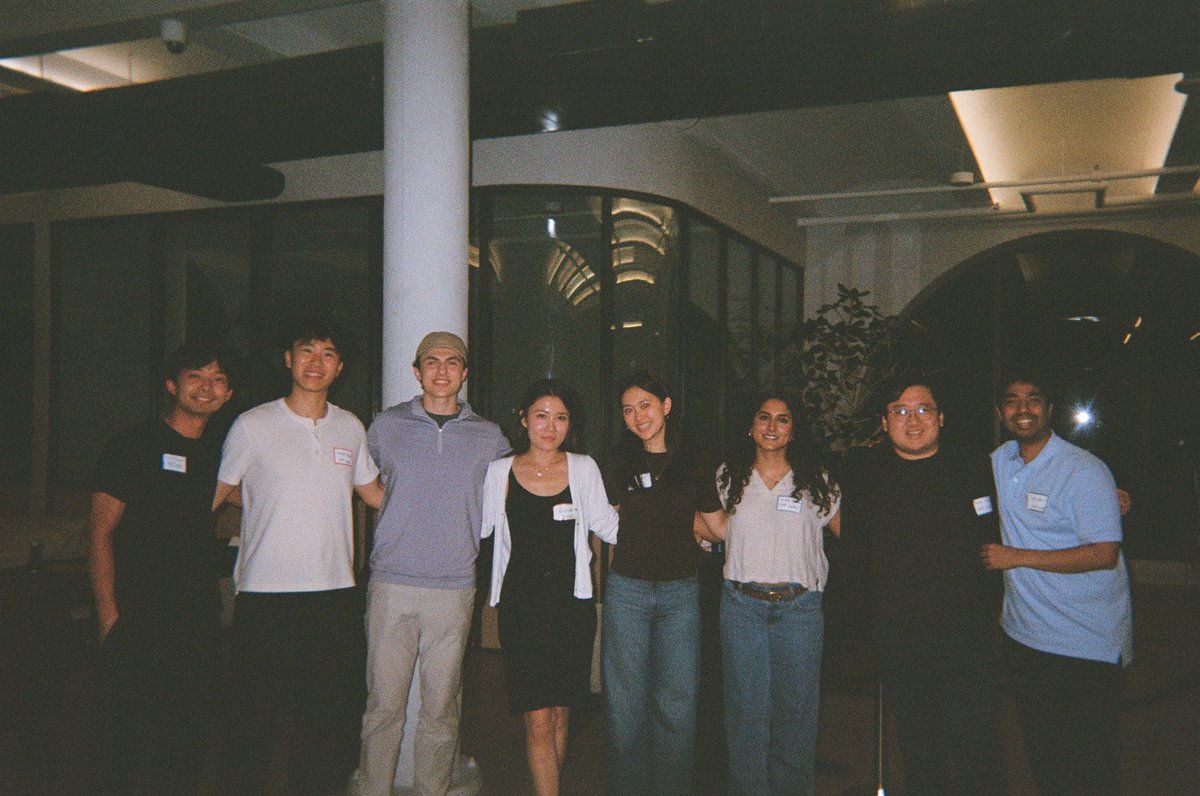
Great night hosting poker with @HOFCapital last week. Loved meeting all the founders and students interning in NYC this summer!
Shoutout to all the winners!
Chaelsey, Point72, UPenn '27
James, Jane Street, UPenn '27
David, Jane Street, Yale '28
Luke, Founder, Stanford '26
Prrash, Founder, UCLA '27
Thoughts on Airtable:
1) $480m ARR growing 20%, unicorn exit, many very satisfied customers (including me for years!). Fantastic run.
2) Never underestimate how much VCs love products that make “everyone a builder.” The wrinkle is that one-player products are high churn.
3) Gross retention remains the single greatest predictive variable of terminal value for any business that doesn’t have a scale effect or network effect. It dictates, somewhat mathematically, what folks like BendingSpoons will pay.
4) Great to see employees get liquid, but perhaps sad that some are learning about liq pref/SaaS multiples to their disappointment. Silicon Valley can do a better job talking to employees about what stock is worth in various scenarios l, but no one is incentivized to do it.
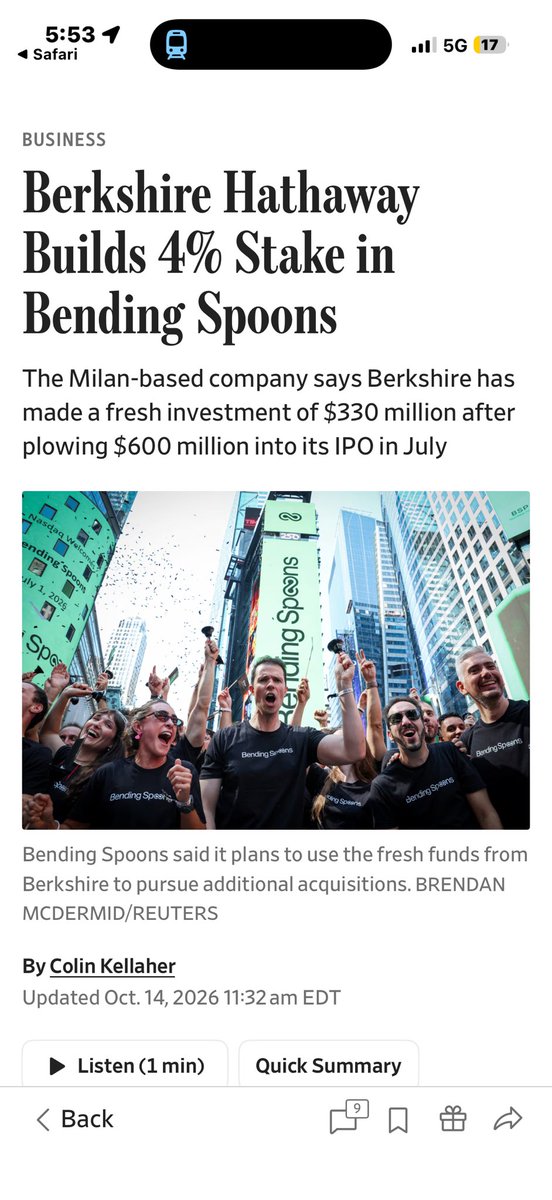
5) Bending Spoons emerging as the Constellation Software of prosumer/higher churn SaaS is a fascinating turn of events and a good thing for pref stacks everywhere.
Congrats to Bending Spoons on a successful IPO.
This may be one of the most bullish moments in history to own an acquisition driven holding company. Bending Spoons went public at roughly a 10x revenue multiple on a $2.4B run rate. Adjusting for its approximately $10B of debt, the equity is effectively being valued closer to 14x revenue.
Why?
Because the market is rewarding the acquisition engine.
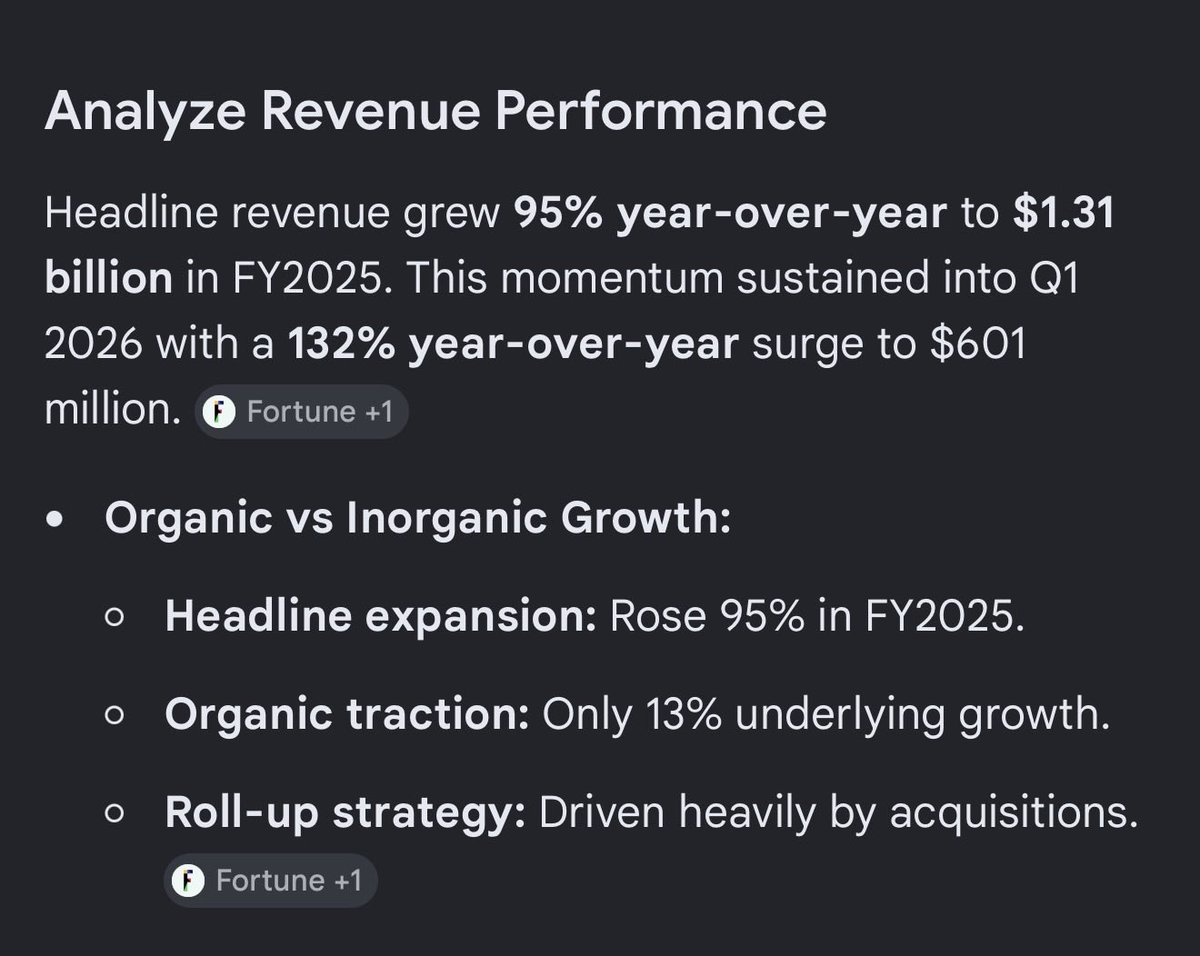
Bending Spoons has grown revenue more than 100% year over year, generates EBITDA equal to roughly 33% of revenue, and is still producing approximately 13% underlying organic growth.
Now put that in perspective:
Mainstreet has grown more than 300% year over year for four consecutive years. We are projected to reach a $1B revenue run rate by December.
- Zero debt.
- Zero outside equity raised.
- Valued at $4.5 Billion in July 2026
The market is finally beginning to understand what we have believed for years: In fragmented and forgotten industries (hello SaaS), buying is often faster, cheaper, and less risky than building.
Bending Spoons is the first of many.
SpaceX bought Cursor for $60B in stock. Four days after going public.
That sounds insane until you do the math. SpaceX is worth $2.5T. Cursor was 2.4% dilution. Basically a rounding error on the cap table.
This is the playbook now.
When you're a mega-cap with publicly traded stock, you have fully liquid currency. You can buy $60B companies the way normal companies buy software subscriptions. OpenAI has done 17 acquisitions in 3 years. Seventeen.
And it makes sense. When your TAM is already half the planet, organic growth gets harder every quarter. You can't 10x revenue by getting more efficient. You 10x by absorbing entire companies that already have the customers, the talent, and the product.
SpaceX told IPO investors they see a $26T addressable market in AI. At that scale, buying Cursor sized companies is how you fill in the map. One acquisition at a time until you own the whole stack.
Public stock is the weapon and acquisitions are the strategy. The biggest AI companies are about to go on shopping sprees that make the 2000s tech rollups look like garage sales.
Buying a services leader at a non-premium multiple (~2x Sales / 10x FY’26 EBITDA) is a smart strategy because Long Lake has margin of safety in a base case outcome of 10-12% earnings CAGR + potential convergence to a Navan-like multiple (~4-5x Sales) in an upside case where you can agentify and accelerate growth
The male urge to own a diversified HoldCo with multiple cash flowing businesses that dividend proceeds back to the parent company for capital redeployment
Sequoia’s @JulienBek says many of their founders are now wondering if they’re “just an iteration away” from AI labs destroying their business.
He says the most defensible companies - and potentially the next trillion-dollar company - will be “a software business that masquerades as a services firm.”
“If you sell tools today, you’re really in the line of sight for the models and you’re effectively competing with the next generation that they’re going to launch.”
“Whereas if you sell the work, you’re actually benefiting from what the models are doing and all the billions of dollars that are going towards AI.”
If you want to be an innovator, you have to be comfortable looking stupid for a long time.
You’re going to piss some people off and you’re going to get a lot of nos. That’s the only way to start having valuable breakthroughs.