1/13
A man is admitted with acute abdominal pain, nausea, vomiting, and diarrhea. HR 130, BP 90/52.
You walk into the room to meet the patient. What do you notice? This should generate at least one hypothesis.
1/ Septal Flash (SF) on echo = a powerful clinical clue!
Seen in LBBB, it shows a jerky septal motion: early leftward then rightward.
Why should you care? Let’s dive in.
#CardioTwitter#Echo
How do we measure the severity of Mitral Regurgitation (MR)? Enter the PISA method.
1/
PISA = Proximal Isovelocity Surface Area
It's a hemispheric zone of blood flow seen on color Doppler as it rushes toward a leaky mitral valve. The faster the flow, the more curved (and larger) this shell becomes.
2/
By adjusting the Doppler baseline toward the MR jet, we get a clearer PISA "dome." Measure the radius (r) of this dome—from the valve to the first color change (aliasing point).
3/
Use this formula to calculate the size of the leaky opening:
EROA = (2πr² × Valiasing) / Vmax(MR jet)
EROA = Effective Regurgitant Orifice Area
A larger EROA = more severe MR.
4/
To calculate how much blood is leaking:
Regurgitant Volume = EROA × VTI(MR)
(VTI = total flow over time from the MR jet)
5/
Why it matters:
- Helps assess MR severity
- Guides treatment decisions
- Combines well with other echo findings
#Echo #Cardiology #PISA #MitralRegurgitation #CardioTwitter
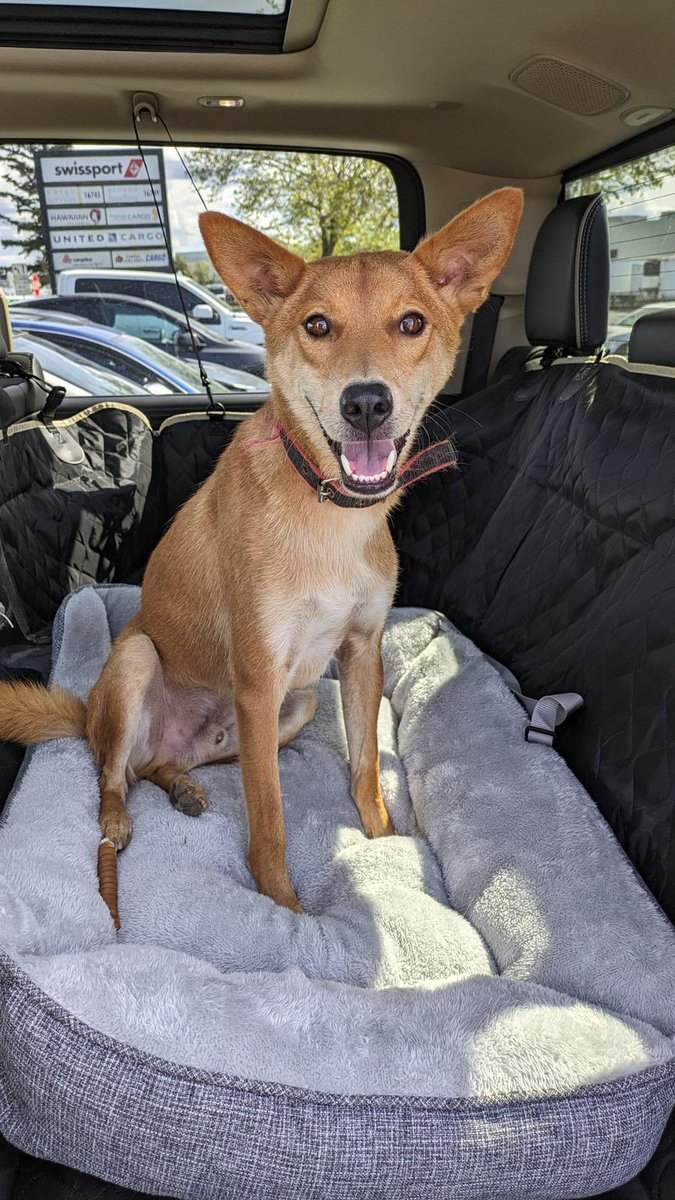
This is Mr Fox 🦊. He’s a street dog from Thailand but he just landed in America.
He’s just completed…
✈️ 8000 mile trip from Bangkok to Seattle
🇯🇵 Layover in Japan
🚘 8 hour road trip Seattle to Montana.
This is his story about the ultimate happy ending (1/7) 🧵
1/16
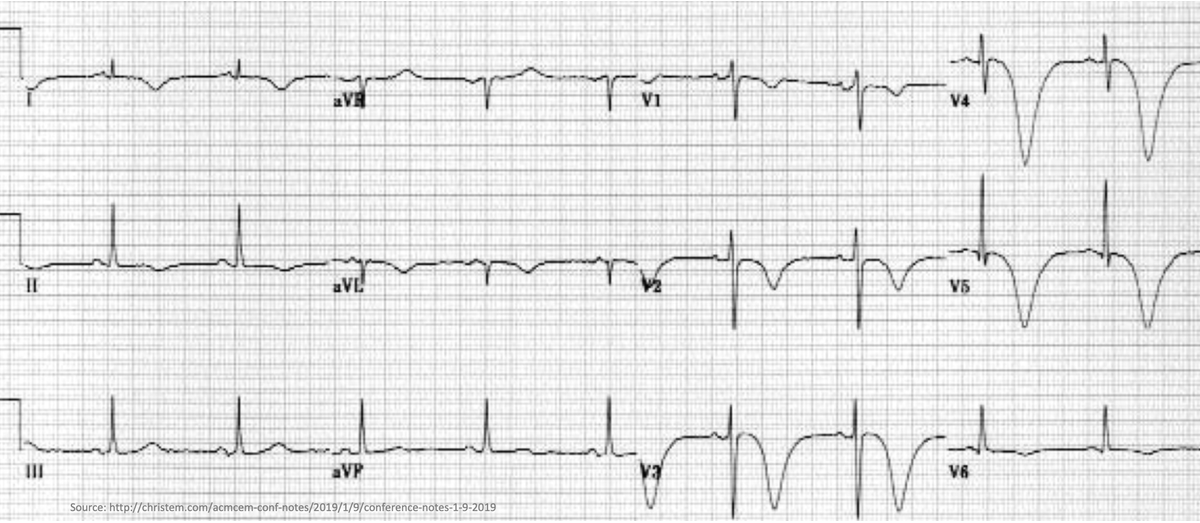
🤔Why does subarachnoid hemorrhage lead to deep/inverted "cerebral T-waves"?
This ECG finding is so dramatic. But as we will see, these patients often have normal hearts.
Why does an issue in the brain manifest on a test of the heart?
What’s a stronger regimen of furosemide, 40 daily or 20 bid?
I ask this question often on rounds. The answer: it depends.
Understanding what it depends ON is really helpful for dosing decisions.
Let’s explore. #tweetorial 1/
🧵regarding the technique of 2-handed knot tying:
This one is for students and 1st-year residents. 2-handed tying is becoming a lost art in surgery, but I believe it is important to learn.
We'll start here with just the basic steps. More advanced concepts will come later.
(1/)
ICU Hemodynamics - Return to the Classics:
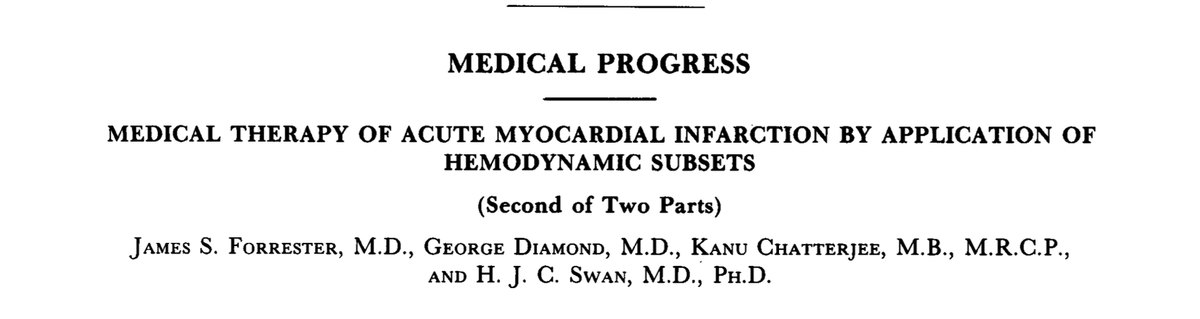
Approximately 50 years ago Forrester, Diamond, Chatterjee and Swan (yes, this Swan!) published 2 papers in NEJM addressing the medical therapy of acute myocardial infarction:
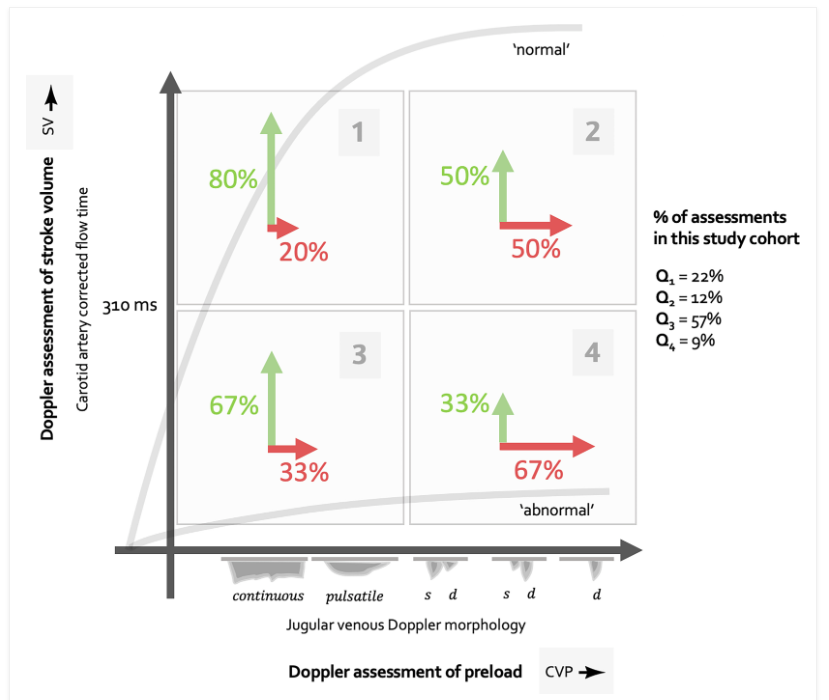
(1/7) We previously proposed a 4 quadrant approach to phenotyping shock based on stroke volume and markers of venous congestion. Check out our study of hypoperfused ED patients that helps support this paradigm. A 🧵
TLDR:❌Low preload does NOT mean fluid responsive!
https://t.co/IBP1LIvn8o
#medtwiter #meded #foamed #foamcc #pocus #echofirst #sepsis
For medical students, SRs, fellows. See apex beat. Hyperdynamic impulse, indicating volume overloaded left ventricle. Indicate that either MR or AR is severe. If eccentric jets lead to confusion for echocardiographer leading to erroneous assessment, for a clinician this is enough
(1/7) We often talk a lot about dynamic LVOT obstruction and intracavitary gradients, but what can the shape of the waveform tell you where in the left ventricle the gradient is coming from? A 🧵#echofirst#pocus#CardioTwitter#MedTwitter#foamed
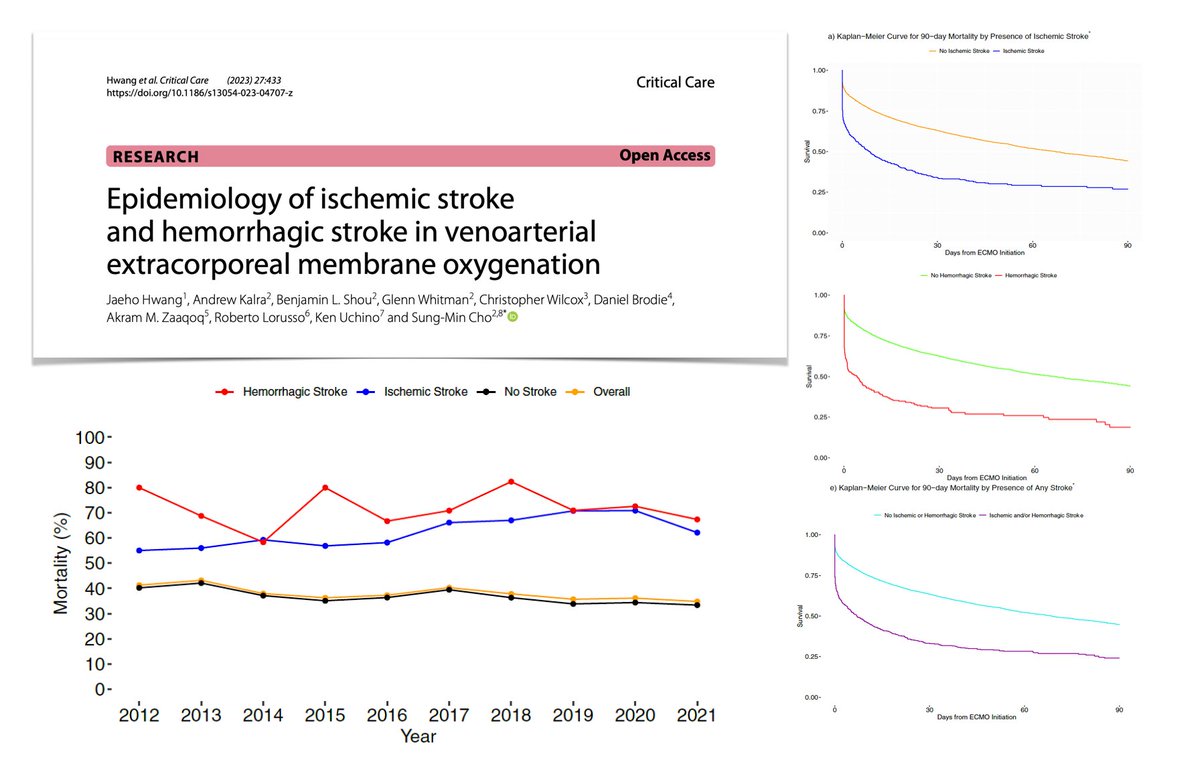
🧠 Strokes in adults on VA #ECMO, @ELSOOrg Registry analysis 2012-21
📈 ischemic stroke incidence ⬆️ while hemorrhagic stroke remained stable
📈 ⬆️ 24h PaO2 & ⬆️ PaCO2 decrease pre/post (24h) cannulation associated w ⬆️ ischemic stroke incidence
📉 case volume not associated with risk of stroke, but ⬇️ mortality if ⬆️ volume
📈 strokes associated with ⬆️ mortality; risk ⬆️ in first #ECLS days
📉 ⬇️ overall mortality: increased awareness, detection, &/or improved management of complications??
#FOAMcc #FOAMecmo on @Crit_Care
🖇️ https://t.co/rK3yL3uhqp
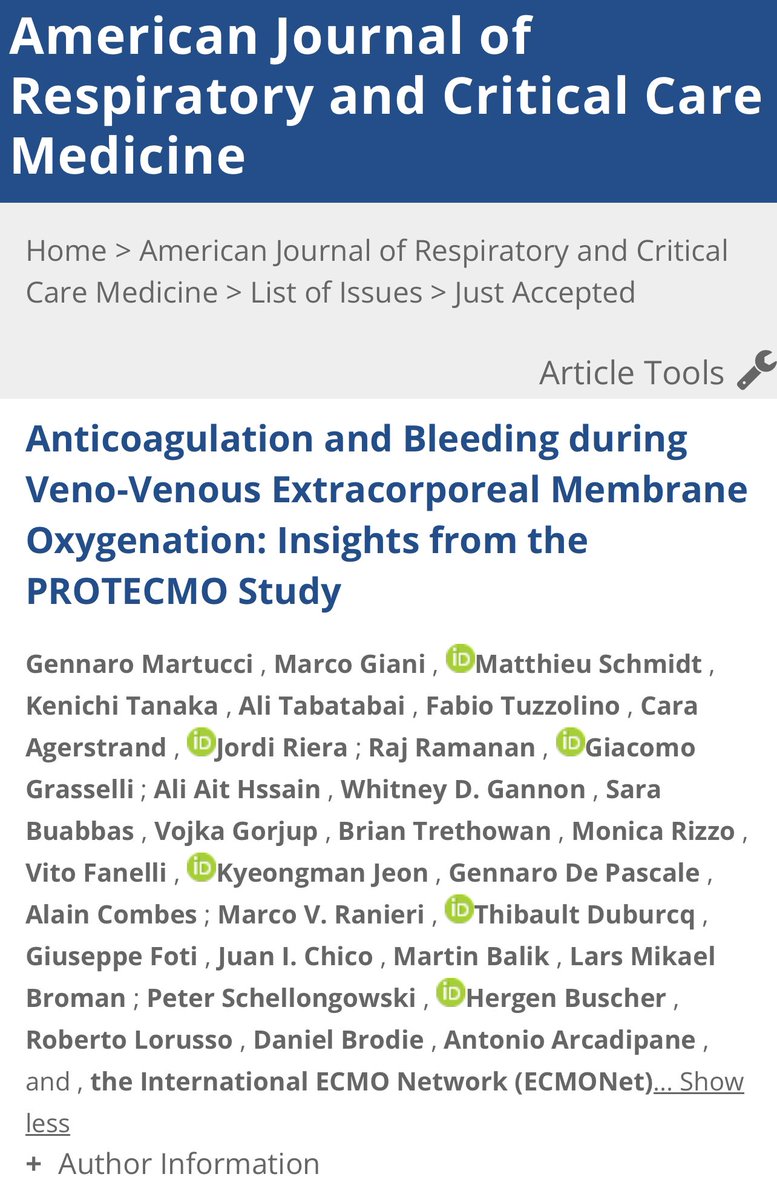
Anticoagulation modalities & bleeding events in adults on VV #ECMO, insights from PROTECMO, large international study, illustrating actual daily practice:
💉UFH main anticoagulant used, targeted on aPTT usually between 40-60’'
🩸bleeding events occurred in about 50% of patients, fatal in only about 1% of cases
🧪 higher aPTT major determinant for first bleeding episode
Reducing targets may be effective in minimizing risk of hemorrhages?? @ATSBlueEditor
🖇️ https://t.co/mrELvhMvm0
🩸Concordance between anti-Xa & aPTT in adults in #ECMO on heparin anticoagulation, secondary analysis of HELP-ECMO RCT
🧪more than ⅓ of paired aPTT/anti-Xa discordant: coagulopathy? heparin resistance??
🧪aPTT should not be used alone on #ECLS: routinely monitor both!
Open access #FOAMcc #FOAMecmo @CritCareExplore
🔓 https://t.co/qDX4nJ1v0y
🌋 LAVA #ECMO as bridge to surgical treatment for cardiogenic/septic shock complicated by MRSA endocarditis–related severe acute AR
🫀left atrial-veno arterial #ECLS cost-effective + not technically demanding strategy
🫀LV unloading through LA inflow cannula provided window of hemodynamic stability allowing for optimization of #MOF & infectious source control before surgical AVR
Open access #FOAMcc #FOAMecmo @ASAIOJournal
🔓 https://t.co/dcpATpsosN