Tengo 31 años. El cansancio crónico y el estrés me costaron una década de mi vida. Dormía 8 horas cada noche, pero estaba constantemente agotada y ansiosa.
Pero después de más de 2000 horas estudiando biología, finalmente comprendí el motivo. Mi sistema nervioso estaba atrapado en un estado crónico de lucha o huida.
Aquí te explico cómo regular tu sistema nervioso y recuperar tu energía para siempre (con respaldo científico):
5 lines. 2 minutes. Most managers think delegation requires control. What's really required is clarity.
Turns out, you got exactly what you asked for.
Helpful? RT and follow @dklineii for more.
You can make Claude, ChatGPT, and Gemini
feel 20x smarter… just by adding a single sentence
Here are 10 “decisive” and powerful prompts that almost no one uses:
[Save them for when you need them]
@MillieMarconnni This is amazing, thank you - I picked up 2 books on finance ('Money' Rob Moore and 'Mind over Money' by C. Hammond), this has been great to understand the differences, link the ideas together and cross reference the frameworks and psychology, will apply the next prompts as I go👍
Charles Schwab ran the largest steel company in the world.
He had access to every consultant, every system, every productivity tool available in 1918.
He said a 15-minute conversation with a man named Ivy Lee was the most valuable business advice he ever received.
He paid him $25,000 for it. The advice fit on an index card.
Ivy Lee was not famous. He was not a philosopher or a scientist or a professor at a prestigious institution. He was a productivity consultant who had spent years watching extremely capable people fail to do their most important work, and he had developed a precise theory about why.
The theory was not complicated. It was uncomfortable.
The reason most people never do their most important work is not that they lack time. It is that they never decide what their most important work actually is. They arrive each morning at a pile of tasks with roughly equal claim on their attention, choose based on whatever feels most urgent or easiest in that moment, and spend the day moving through a list that was never designed to move them forward. They are busy in a way that feels productive and accomplishes far less than it should.
Lee asked Schwab for 15 minutes with his executive team. Schwab agreed. Lee walked them through six steps. He asked them to try it for three months and pay him whatever they thought it was worth.
Here is the system.
At the end of every workday, write down the six most important things you need to accomplish tomorrow. Not ten. Not twenty. Six. If you cannot decide what matters enough to make that list, you have already identified the real problem.
Prioritize those six items in order of their true importance. Not urgency. Not ease. Importance. The thing that will matter most three months from now goes first, regardless of how uncomfortable it is to start.
When you arrive the next morning, begin immediately on item one. Work on it until it is finished. Do not touch item two until item one is complete. Do not check email. Do not attend to whatever walked through the door. Item one, until it is done.
Move through the list in order. If you reach the end of the day and items four, five, and six remain untouched, move them to the next day's list without guilt. They were not the most important things. The most important things got done.
Repeat this process every day for the rest of your working life.
That is the entire system. Six steps. Four minutes the night before. No app required. No morning ritual. No tracking software. An index card and a pen.
What Lee understood that most productivity systems miss entirely is that the bottleneck in human performance is almost never capacity. It is prioritization. The average knowledge worker has more than enough hours in the day to accomplish something significant. What they do not have is a forcing function that makes them decide, the night before, in a calm moment free from the noise of the incoming day, what significant actually means for them tomorrow.
The morning is the worst possible time to make this decision. The morning brings email and notifications and other people's priorities and the accumulated urgency of everything that did not get done yesterday. By the time most people have decided what to work on, an hour is gone and the decision was made by their inbox rather than by them.
Lee's method moves the decision to the evening, when the day's noise has settled and the mind can assess without distraction. The prioritization is done before the chaos begins. Which means the next morning, there is no decision to make. There is only execution.
The second insight embedded in the system is the single-tasking constraint. Item one, until it is finished. Not item one until something more urgent appears. Not item one until you have checked in on items two through six. Item one, finished, before anything else receives your attention.
This runs against every instinct that modern work has trained into people. The entire infrastructure of the contemporary workplace is designed to fragment attention. Email expects a response within hours. Slack expects a response within minutes. The open office assumes that any question is more important than whatever the person being asked is currently doing. The result is a workforce that is in constant motion and making almost no progress on anything that actually matters.
Lee's method is a direct refusal of this dynamic. It does not negotiate with urgency. It does not make exceptions for whoever shouts loudest. It asks you to decide, once, what matters most, and then protect that decision from everything that will try to override it the next morning.
Charles Schwab ran Bethlehem Steel. He had seven hundred employees. He had more operational complexity, more competing demands, more legitimate urgency than most people reading this will ever face.
He tried the system for three months.
Then he sent Ivy Lee a check for $25,000 and a note saying it was the most valuable business advice he had ever received.
The system has not changed. The morning has not gotten less chaotic. The inbox has not gotten smaller.
The only variable that was ever under your control was what you decided the night before.
Six things. In order. Starting with the first.
The most valuable productivity advice in history is still free.
Most people will read it, find it obvious, and go back to checking email.
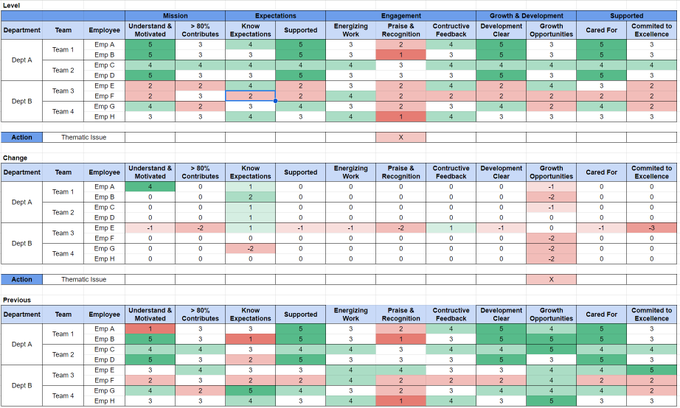
Do you know what's actually going on with your team? Most managers don't. I got surprised more times than I care to admit. That stopped when I created my quarterly pulse check. Here are the 11 questions I used:
You make a LIVING from 9-5.
You make a LIFE from 5-9.
Being a parent is the most import job in the world.
We are raising the next generation of men.
Here's 30 short lessons I'm teaching my sons.
1) Never inch into the pool.
Jump right in!
(Yes, that's my son in the picture!)
@DavidDack "Every pace has a place." 👟
Saw this on a tee at a recent half marathon and it’s been stuck in my head since. The perfect reminder that we’re all running our own race.
You finally delegated important work. Now what? How do you know it’s being done right without diving back in yourself? Here are the 5 steps we train leaders on to drive great outcomes w/o micromanaging:
Victoria Park Half Marathon: 02:07:48 🏁
Huge vibes today. Loved pushing the pace—thanks
@runthroughuk
and the marshals for a top-tier event.
On to the next! 😎🏃♂️
@ginacostag_ Huge thanks for this! Having all my accounts (CC, debit, PayPal) categorized in one view is incredibly useful. It gave me the clarity to finally: 1. Delete those forgotten DDs
2. Stop fragmented spending across different cards/accounts to get a clearer picture thanks so much 🥰
BREAKING: Most people are still watching random YouTube tutorials.
Khan Academy is now inside ChatGPT. You can master any skill in 30 days.
Here’s how to start for free: (Save for later)
@GeniusGTX Great thread thx. We play not to lose, rather than playing to win is a useful prompt going forward i.e. don't always play it safe in, life we are optimised to play safe.
Also the framing something I've been studying to improve - using BLUF and pyramid to present information.


![primemans's tweet photo. You can make Claude, ChatGPT, and Gemini
feel 20x smarter… just by adding a single sentence
Here are 10 “decisive” and powerful prompts that almost no one uses:
[Save them for when you need them] https://t.co/EaaFUEzi2b](https://pbs.twimg.com/media/HHKKU8sbsAAjEPT.jpg)
![primemans's tweet photo. You can make Claude, ChatGPT, and Gemini
feel 20x smarter… just by adding a single sentence
Here are 10 “decisive” and powerful prompts that almost no one uses:
[Save them for when you need them] https://t.co/EaaFUEzi2b](https://pbs.twimg.com/media/HHKKU8nawAAhcsB.jpg)


![primemans's tweet photo. You can make Claude, ChatGPT, and Gemini
feel 20x smarter… just by adding a single sentence
Here are 10 “decisive” and powerful prompts that almost no one uses:
[Save them for when you need them] https://t.co/EaaFUEzi2b](https://pbs.twimg.com/media/HHKKU8ubMAA90_L.jpg)