𝗦𝗶𝗳𝘁 𝗔𝗴𝗲𝗻𝘁𝘀 is here.
Why did the temperature spike during that test? Which other channels changed at the same time? Did the same pattern appear in earlier runs?
Bring those questions to 𝗦𝗶𝗳𝘁 𝗔𝗴𝗲𝗻𝘁𝘀. It investigates test, flight, and production telemetry using the assets, runs, channels, and rules already in your Sift environment.
The findings become reusable rules and reports: a rule your team can run to check for the same behavior, a report they can share, and an investigation they can build on.
Your data stays inside Sift, supporting export-controlled programs on GovCloud. Agents inherits your permissions and requires human approval before making changes.
Request Access today. Link in the reply.
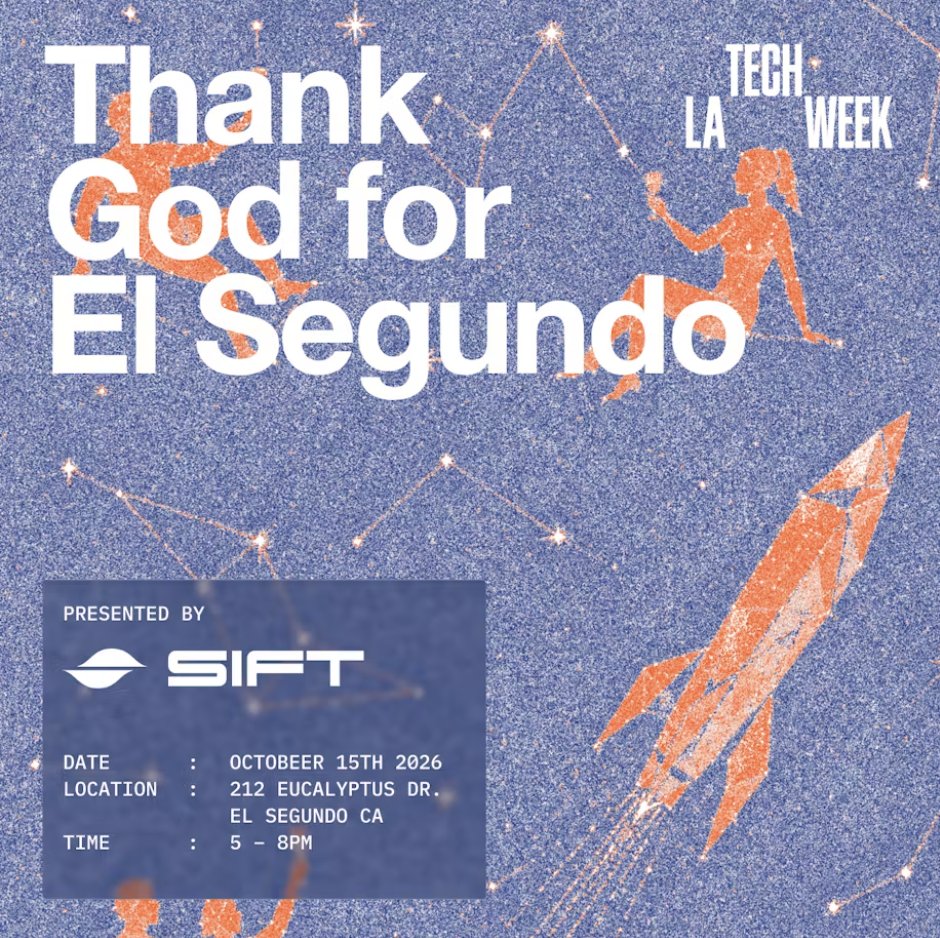
Thank God for El Segundo returned for year three, bringing the South Bay’s hardware community together for #LATechWeek.
Thank you to everyone who joined us to celebrate the engineers, founders, and machinists building here. And thank you to our co-host @Castelion and sponsors @awscloud, Riot Ventures, Goodwin, and @jpmorgan for making the night possible.
See you next year!
Hardware testing has to keep pace with software changes.
At Sepang, a combination of slow speeds, wet-weather settings, and circuit-specific restrictions triggered a software lockout. F1 drivers pressed the throttle and got no response.
The FIA wrote a fix in about 20 minutes. Validating a change that quickly is a challenge hardware teams know well.
Each update means rerunning checks across different operating conditions. When every run requires manual review, testing becomes harder to keep up with.
Sift lets engineers turn expected behavior into rules that check each run automatically, reducing the manual analysis needed to expand coverage and validate changes.
Our latest article explores what happened at Sepang and what hardware teams can learn from it.
Read more in the reply.
Next week, we’re back on the roof for year three of Thank God for El Segundo during #LATechWeek.
Presented by Sift and @Castelion , with support from our sponsors @awscloud, Riot Ventures, Goodwin Law and @jpmorgan.
Join engineers, founders, investors, machinists and friends for a night with a full bar, Roy Choi’s Kogi food truck and limited-run merch.
📍City of El Segundo
🗓 Thursday, October 15 | 5–8 p.m. PT
RSVP in the reply.
Sift is one of Fast Company’s Next Big Things in Tech for 2026.
Sift gives engineering teams the tools to understand and validate their hardware. Our platform brings high-fidelity telemetry and automated test review into one workflow, helping engineers trace anomalies and turn findings into reusable checks as their hardware evolves.
We’re proud to see this work recognized. Thank you to our customers and everyone at Sift.
Learn more about Sift. Link in the reply.
#FCTechAwards
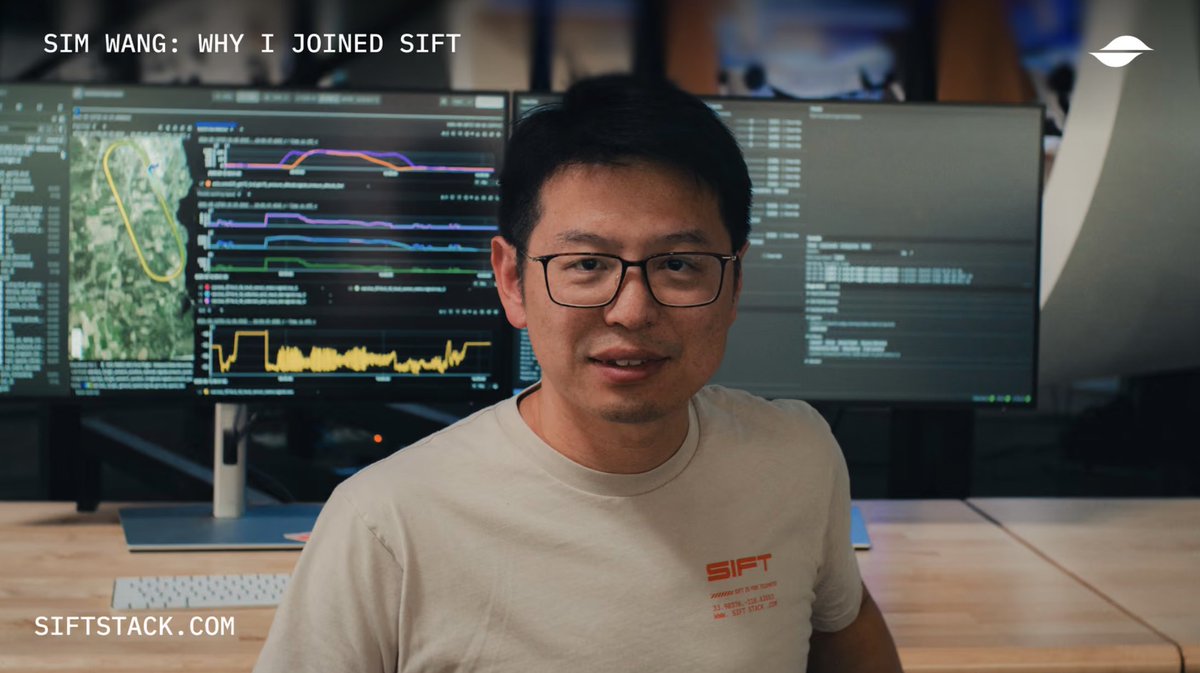
Sim Wang joined Sift to help engineers turn ambitious ideas into hardware that works in the real world.
From developing simulation algorithms to working on autonomous driving, he’s been drawn to complex engineering and understanding how the technology holds up in practice.
That curiosity shapes how he leads deployment at Sift. He approaches the work as a partner to engineering teams, taking the time to understand their systems and what they’re trying to accomplish. For Sim, earning trust means going deep technically and helping teams put their data to work.
In our latest “Why I Joined Sift” story, Sim shares what brought him here and how the work connects back to his original ambition to build rockets.
Read more in the reply.
Join Matt Barr, Process Engineer at Plantd, and Rowen Wu, Product Lead for Agentics at Sift, tomorrow October 1'st at 2 p.m. PT / 5 p.m. ET for a 30-minute webinar on how Plantd automates data analysis with Sift MCP.
Matt will share how he uses Sift MCP and Claude skills to find the right data, refine an analysis, and turn recurring work into repeatable engineering reviews. Rowen will demonstrate the tools behind that workflow.
For a sneak peek, watch the short intro below. Rowen walks through using an AI agent to investigate hardware test data and turn findings into reusable checks.
Register for the webinar using the link in the comments.
Hardware development moves as fast as teams can test, learn, and act. As the pace of testing increases, review and collaboration have to keep up.
Sift’s cloud platform runs on AWS, with infrastructure that scales as test campaigns ramp up. Engineers can turn review criteria into automated checks across tests and units, catching regressions early and freeing up time to investigate unexpected behavior and refine designs.
A shared link brings colleagues straight to the relevant signals, time range, and annotations, without exporting files or rebuilding the plots. What one engineer learns becomes something the whole team can act on.
AWS took a closer look at how Sift and AWS support that work, from handling growing telemetry volumes to keeping findings accessible to the right people.
Read the full feature.
@DustMoto has built an incredible electric dirt bike. Here’s a look at the engineering behind the ride.
Rider and engineer @RonnyVena takes us from full-throttle field testing to the telemetry in Sift, checking RPM stability and how the electric powertrain responds to rapid throttle changes.
Using annotations, rules, and calculated channels, he creates insights his teammates can explore themselves. One shared link opens the exact data he’s looking at.
Proud to support Colin Godby, Ronny, and the Dust Moto crew.
Read more in the reply about how Dust Moto uses Sift to analyze field tests and share findings across its engineering team.
Last week we brought everyone at Sift together for Collab Week, four days dedicated to building, learning from our customers, and getting to know each other better.
Working with colleagues we don’t collaborate with every day, we dug into how customers work and built prototypes around real challenges, from getting test data into Sift to helping new engineers get started.
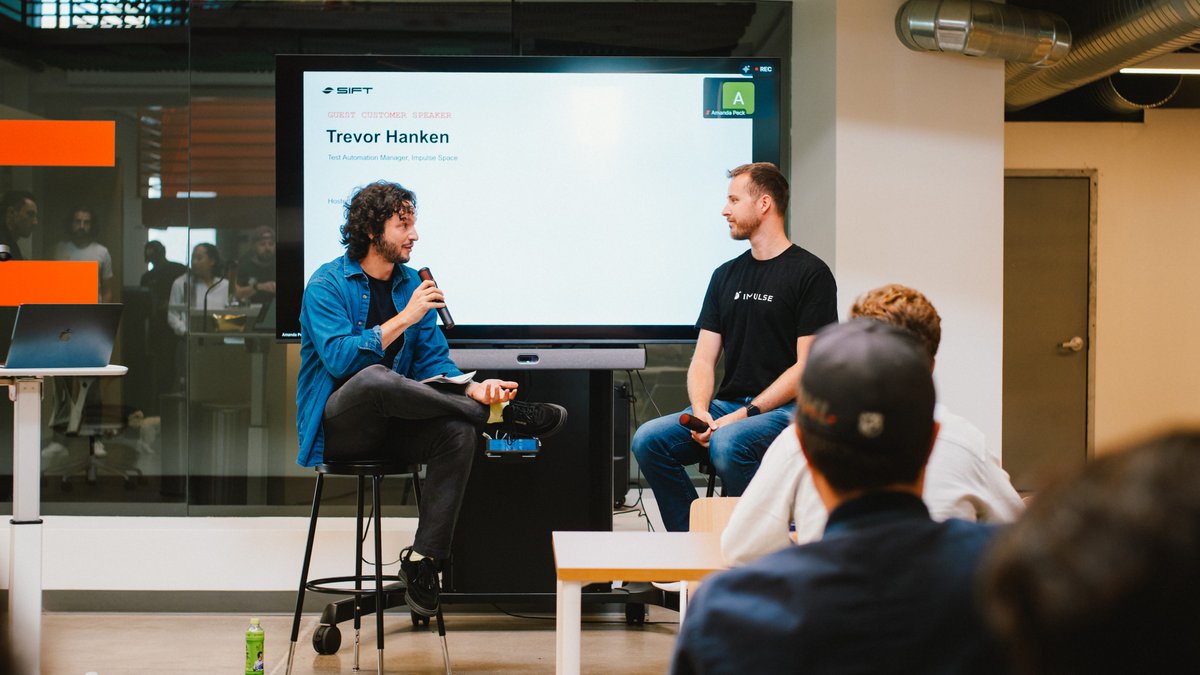
We also welcomed Impulse Space’s Trevor Hanken, who shared how @GoToImpulse uses Sift for test and flight data. Hearing directly from someone using what we build brought the purpose behind that work into the room.
And we packed in plenty beyond the workshops, with Barry’s, go-karting, tacos, dinners, and a rooftop party to finish the week.
As Sift grows, we want everyone to feel connected to the people they work with and the engineers they build for. Collab Week gives us time to build those connections and bring fresh ideas back to our everyday work.
Our annual #LATechWeek rooftop party, Thank God for El Segundo, is back for year three!
El Segundo builds rockets a mile from the beach, where aerospace labs, machine shops, and ambitious startups share the same stretch of South Bay.
Sift got its start here, and so much of our ecosystem is still rooted in the City of El Segundo. We host this every year to bring together our team, friends, and the people behind the hardware for a night on the roof. Join engineers, founders, and machinists under the LAX flight path. Catch up with familiar faces and meet the people building down the street.
We’ll have a full bar and Roy Choi’s Kogi food truck waiting.
📍 El Segundo
🗓 Thursday, October 15 | 5–8 p.m. PT
Co-sponsors announced soon. Join the invite list and RSVP in the reply.
Real-time observability, no firmware changes.
📊QNX and Sift are enabling engineers to stream live telemetry from QNX-powered systems into Sift and query machine data within one second.
Learn more: https://t.co/67kA1Wo6bk
Sift is teaming up with QNX, whose technology is embedded in more than 275 million vehicles worldwide.
QNX is trusted by automakers including BMW, Toyota, Mercedes-Benz, and Volvo. Its technology also supports robotics, industrial automation, and other Physical AI systems.
The partnership brings live telemetry from QNX-powered systems directly into Sift for near real-time analysis. Devices running QNX OS 8.0 can stream telemetry through an existing MQTT broker into Sift, where engineers can query the data using standard SQL within one second of it leaving the device, without changes to device software.
More information in the reply.