Excited this is finally out as @nberpubs working paper. New results in this updated version where we decompose welfare effects into distinct qualitative transportation channels. Read the paper and learn about what exactly drives the welfare effects of transport investments.
Examining how multimodal transport networks shape the economic and environmental impacts of infrastructure investments and disruptions, from @simonfuchs4 and @WoanFoongWong https://t.co/Sz6L0GpOAn
In our latest @stlouisfed blog post, we document using data from Global Trade Alert, how export controls, licensing requirements, and other targeted trade measures have expanded sharply since 2019, especially in strategic and high-technology sectors.
https://t.co/ZWOAFeRW6F
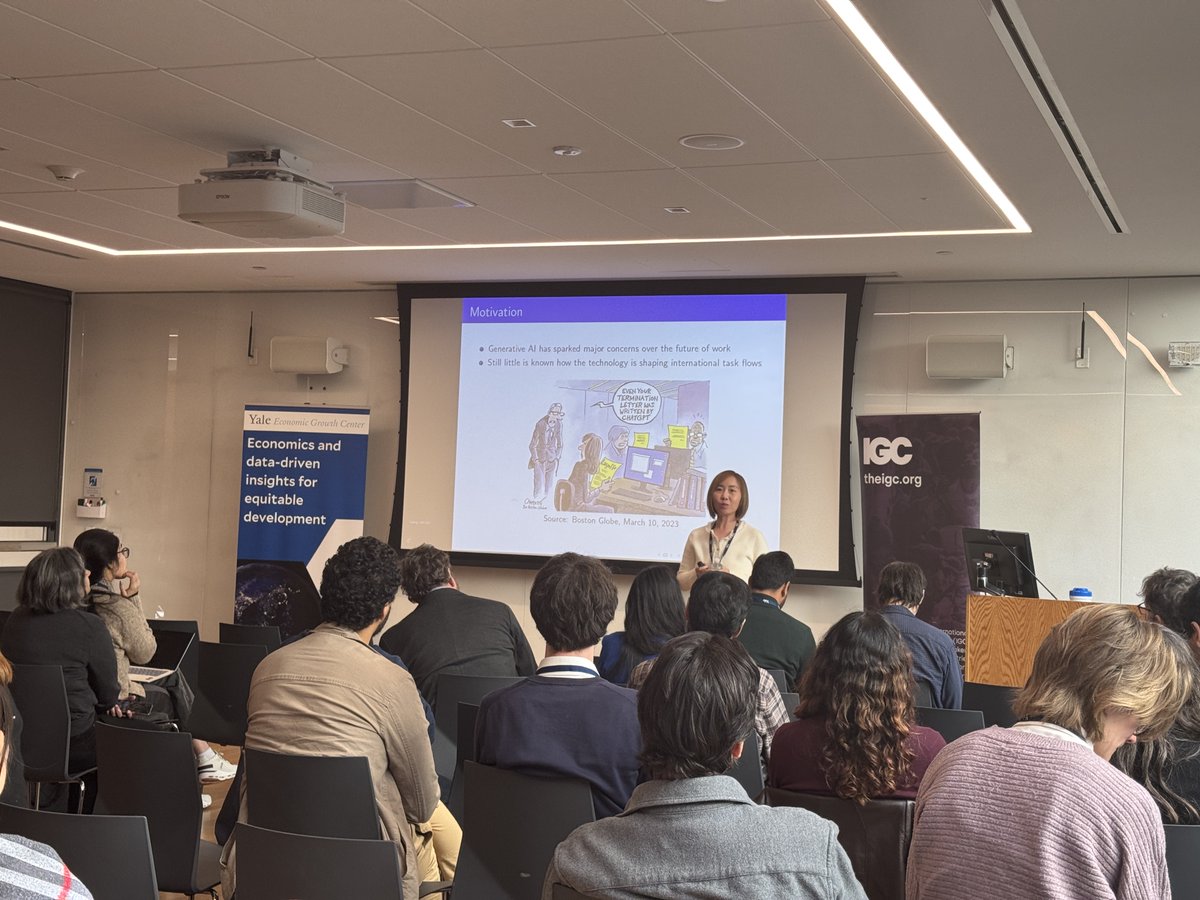
Looking forward to TIGN 2026 in Santiago! I will be presenting my new paper on "Geopolitical Risk and Foreign Dependence in Global Shipping" (joint with @SimonFuchs4 and @WoanFoongWong )
Grateful to the organizers for including my paper in a really great program!
Today is the submission deadline for the Urban Economics Association meeting in Chicago, September 25-26. Please send your best urban-related work for our program committee to consider.
https://t.co/9VbCdSgr8h
@UrbanEconomics
1/7 Industrial Policies in a Globalized and Financialized World starts at the Federal Reserve Bank of Atlanta on May 7.
Co-organized with @chenzix and Tim Schmidt-Eisenlohr of @federalreserve.
Full program: https://t.co/kRxZEZltSW @AtlantaFed
🎓Early-career researchers: PEDL is hosting a workshop on 10 Sept 2026, on firms, trade & dev.
We welcome work-in-progress & full papers for 25-min presentations, with feedback from leading academics.
Travel funded
🗓 Deadline: 1 June 2026
👉 Apply: https://t.co/aL9ZbMJTi8
U.S. freight is a network of networks.
This figure from @SimonFuchs4 and @WoanFoongWong's "Multimodal Transport Networks" paper shows traffic across rail, roads, waterways, and ports.
More than half of distance-weighted U.S. freight uses multiple modes.
They show the most important bottlenecks are not always on the road or rail line itself, but at the places where goods switch between them.
Check out the paper: https://t.co/MDblyqhjan
2026 SMU-Jinan Conference on Urban and Regional Economics joint with 11th WB-GWU Urbanization and Development Conference (Submission Deadline: September 4, 2026) https://t.co/l7KwRWKdvW
@pspdead@AtlantaFed Hi there. I’m on the road, but my understanding is that we are finalizing decisions and letting accepted applicants know in the next week or so!
As in previous years, the @AtlantaFed is running a visiting program for PhD student. Come and join us for an exciting summer full of economics and fried chicken! Deadline soon: April 4th! https://t.co/903hRcEOBB
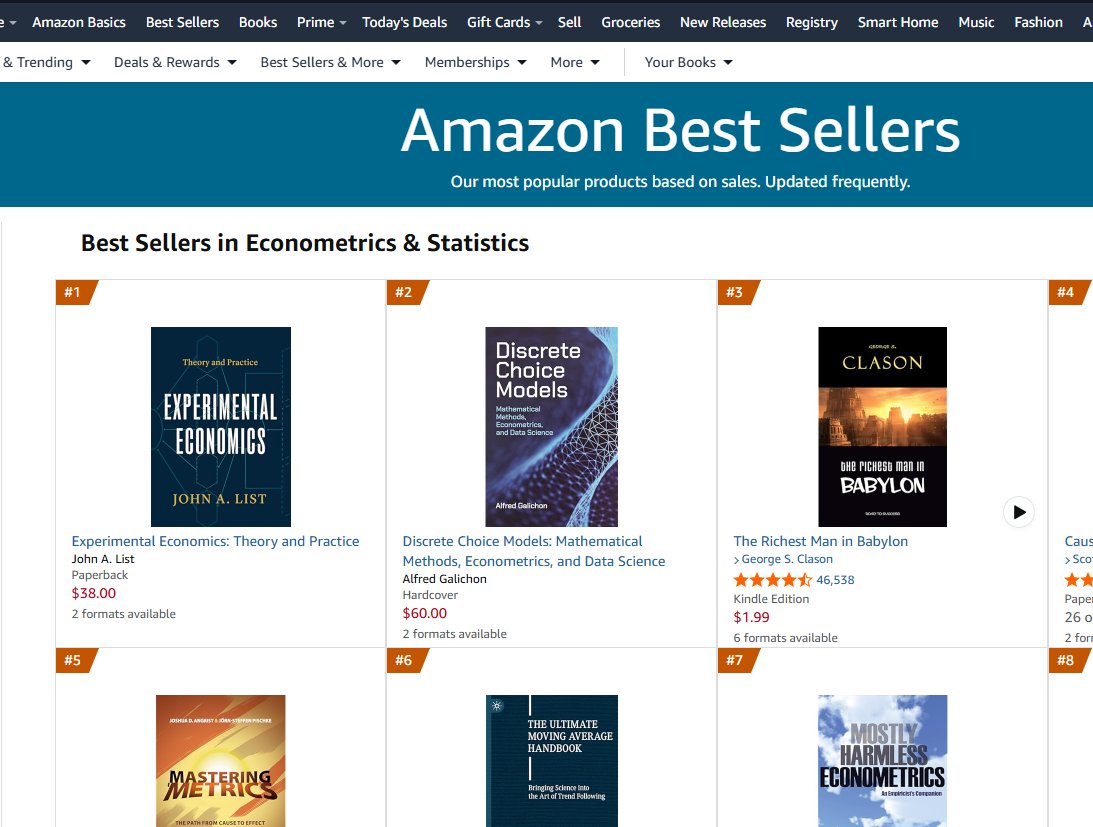
Yes, one can always carve out a category. But #2 in Amazon's Econometrics & Statistics — behind @JohnAList's book — is real enough for me.
Discrete Choice Models, released just two days ago via @PrincetonUPress. I have to admit: this feels pretty awesome.
Excited this is finally out as @nberpubs working paper. New results in this updated version where we decompose welfare effects into distinct qualitative transportation channels. Read the paper and learn about what exactly drives the welfare effects of transport investments.
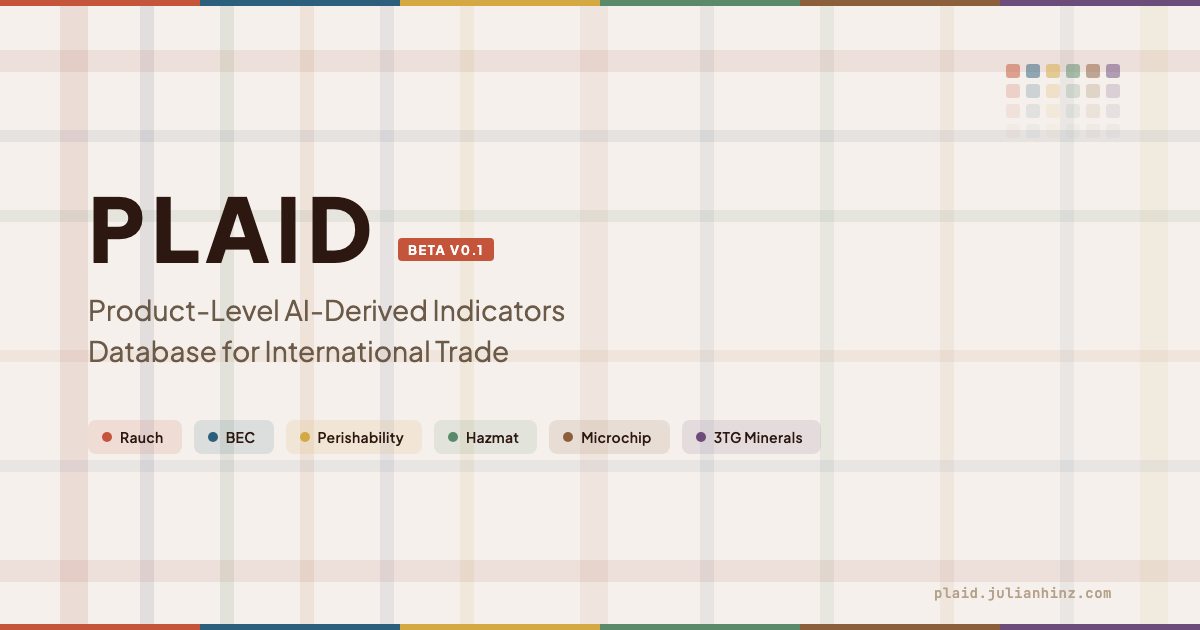
Today we're releasing PLAID — an open database of six product-level trade indicators, generated by an ensemble of frontier LLMs. Covers ~5,400 HS-6 products across all revisions since 1992.
Paper: https://t.co/4jtWrHTIpx
Data: https://t.co/9XRq4r08CJ
@kielinstitute@unibielefeld