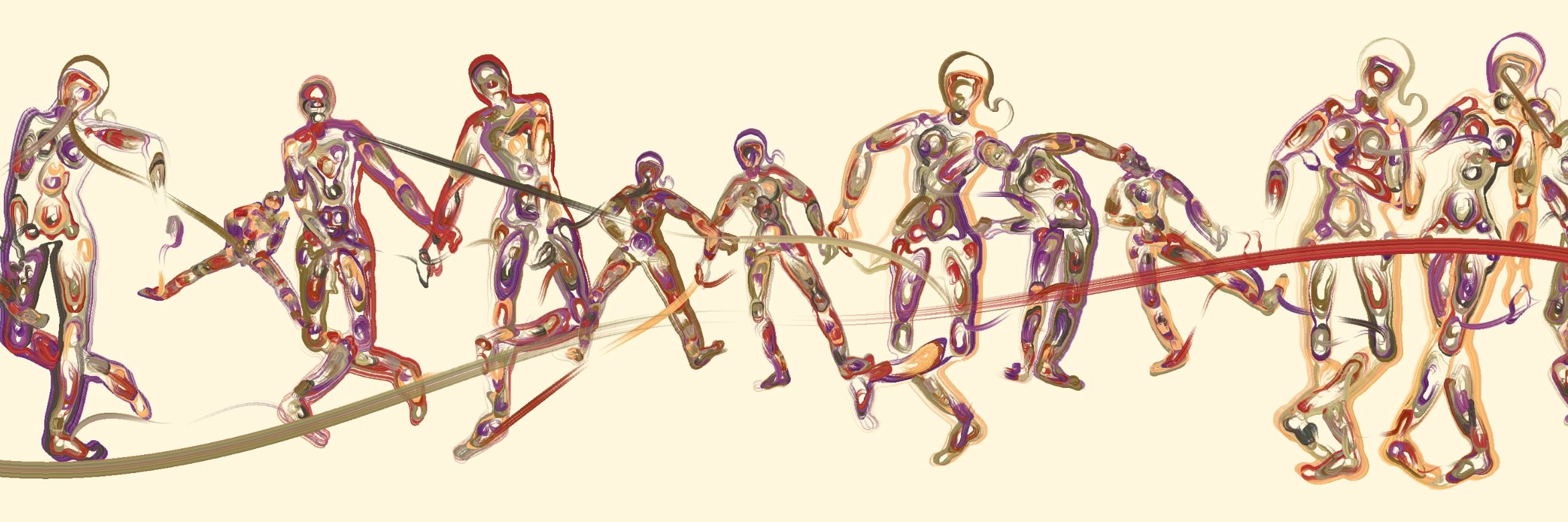
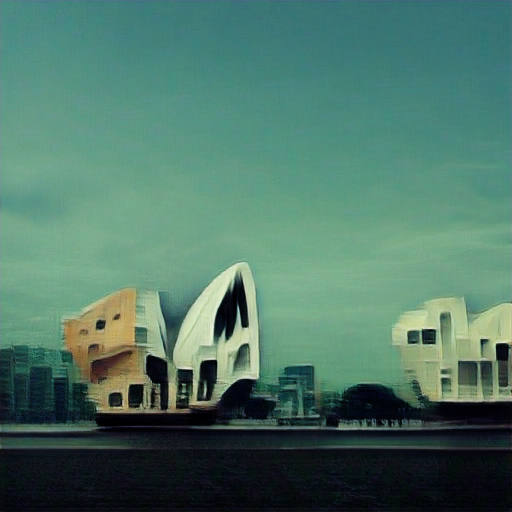
Super excited to announce a new online exhibition of generative art at @etopia_ in Zaragoza: "Imagined Architectures" featuring quote-to-image stills and #GANlapse videos (like time-lapses, but generated).
https://t.co/v0ECpsgLdg
Here is "The Monastery" four seasons GANlapse
Imagined Architectures: an online exhibition at @etopia_ featuring architectural designs imagined by an AI system, where nature is integrated sometimes subtly and other times erupts with vibrancy. Artworks by @SimonGColton. #NewEuropeanBauhaus
https://t.co/NECNLtYD7f
It's taken way longer than originally anticipated (18 months), but I'm super excited to say that the project to translate Nils Aall Barricelli's groundbreaking 1954 paper on computational evolution/artificial life (Esempi Numerici di Processi di Evoluzione) is now complete! [1/2]
This wouldn’t have been possible without my fantastic co-organizers from @TUDarmstadt, @goetheuni, FIAS Institute & JGU Mainz:
@DanielOchsAI , Jonas Elpelt, Matthias Lang, Matthias Kaschube, @kerstingAIML, and Simon Rumpel. 🤝
Excited for what’s next! 🚀
📸: Jannis Blüml
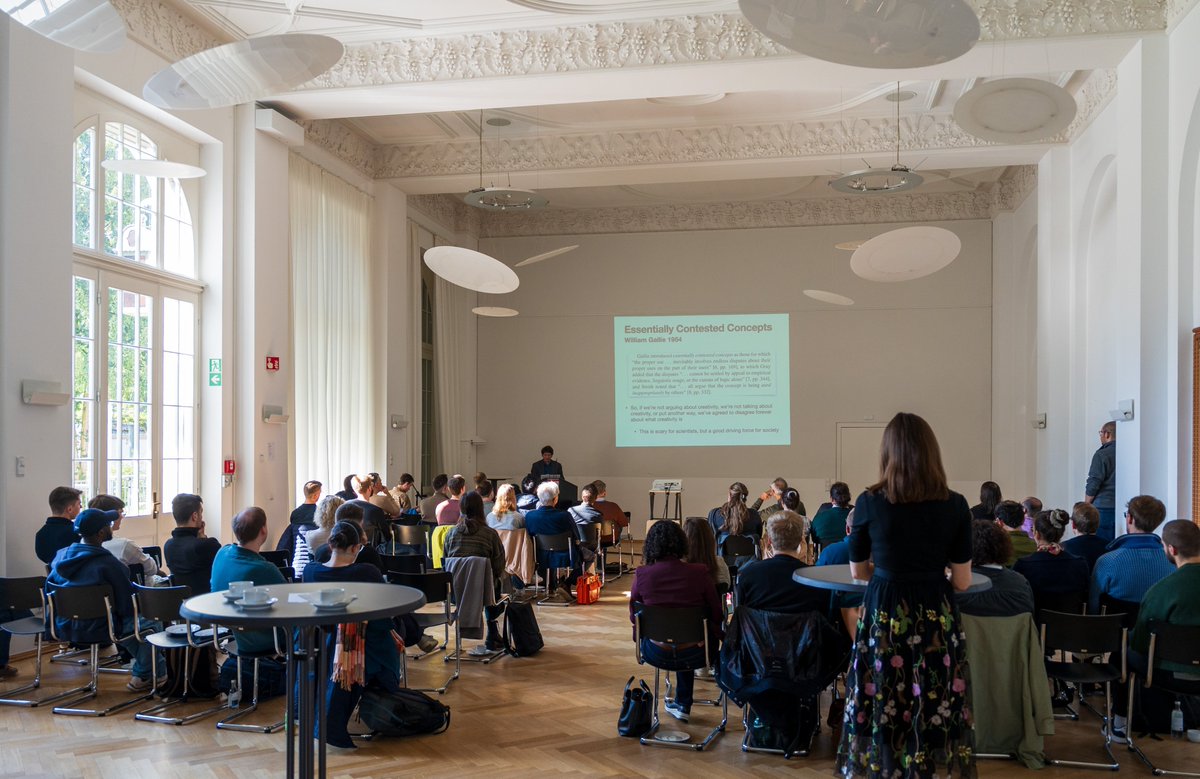
A huge thank you to our speakers @SimonGColton, @Gionceschelli, @TZahavy, and @JenniferHaase13 for their inspiring presentations 🎤
The high quality of the poster sessions and the depth of our participants' questions made the day truly special. We left feeling truly energized!
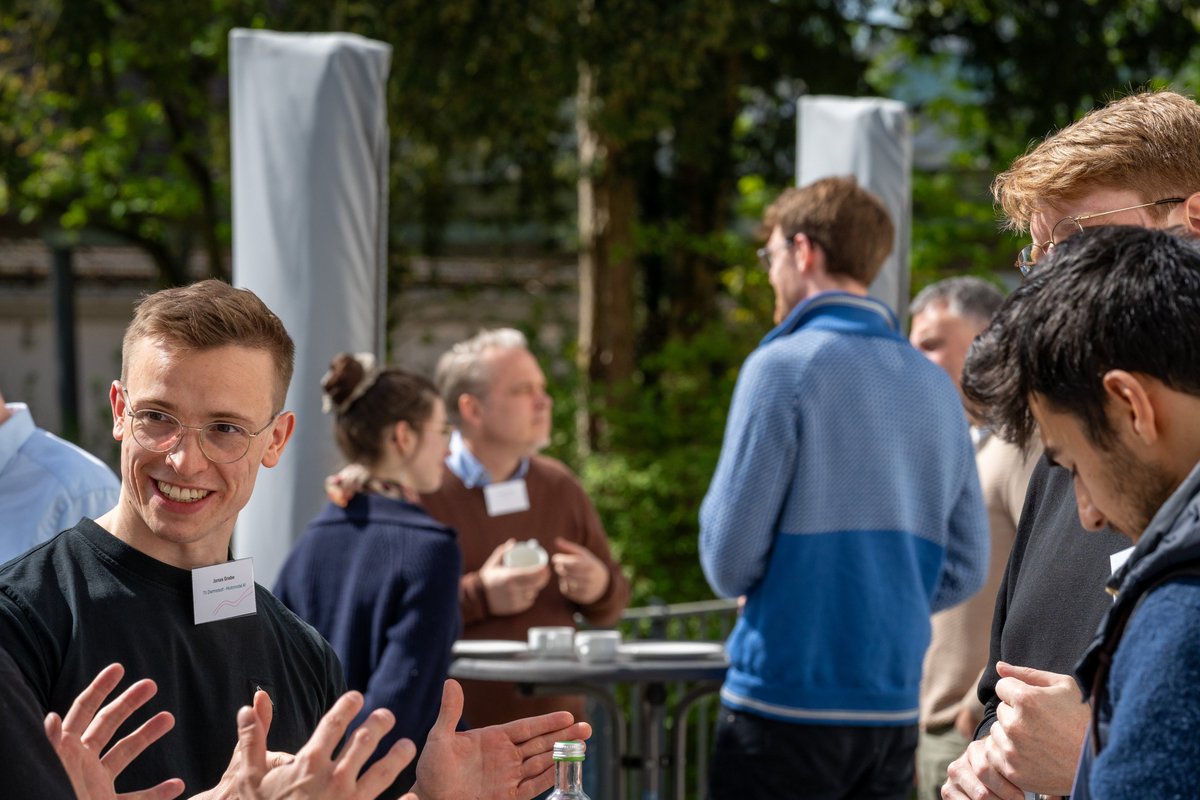
Last week, we hosted the Rhine-Main Universities AI & Creativity Symposium in Darmstadt, and the atmosphere was fantastic! 🧠💻
We gathered researchers from many disciplines to explore the big question: What does it truly mean to be creative, for both humans and machines?
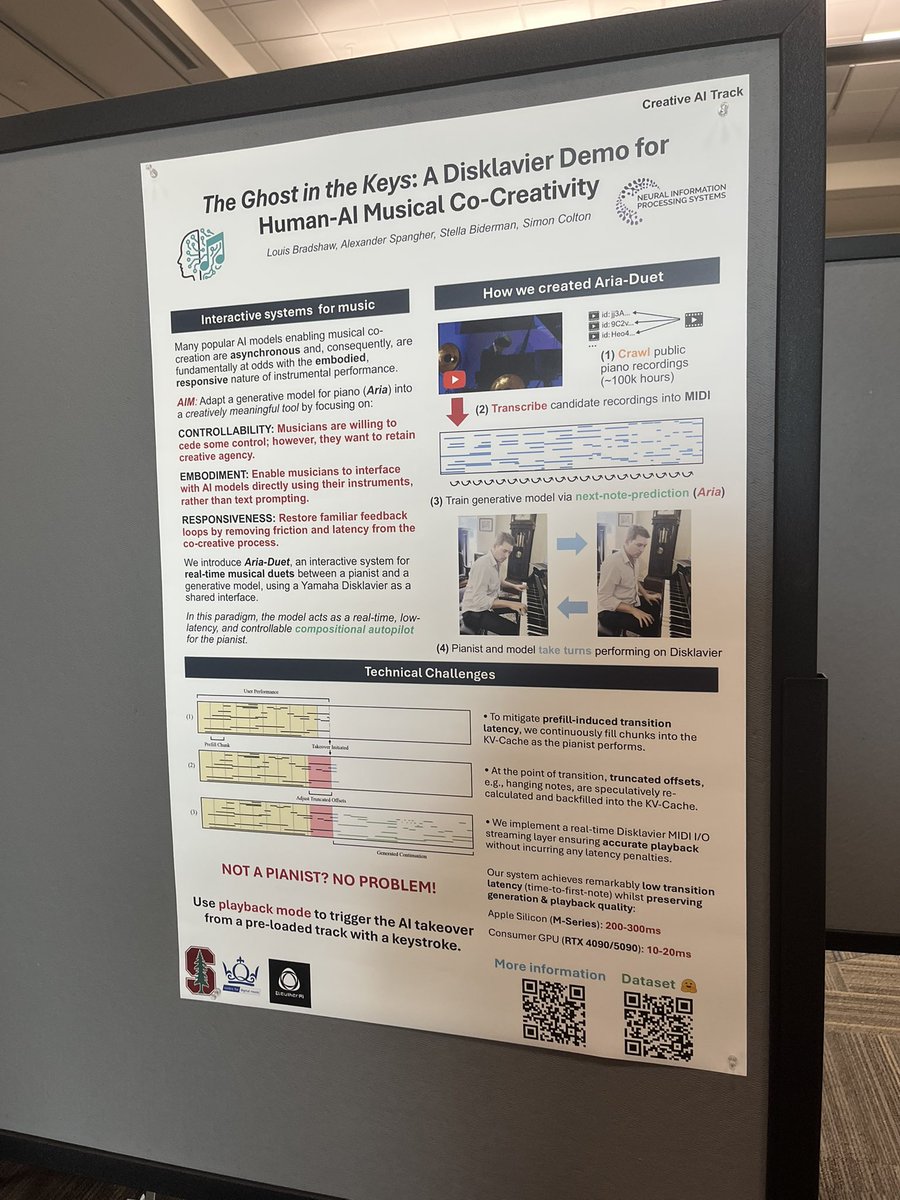
What does it look for musicians to collaborate with AI systems? We worked with musicians to build on our recent work on audio foundation models at ISMIR '25 to produce a real-time collaborator for piano.
https://t.co/6fRj08LTzS
Wed 11-2 pm in room 29 UPSTAIRS
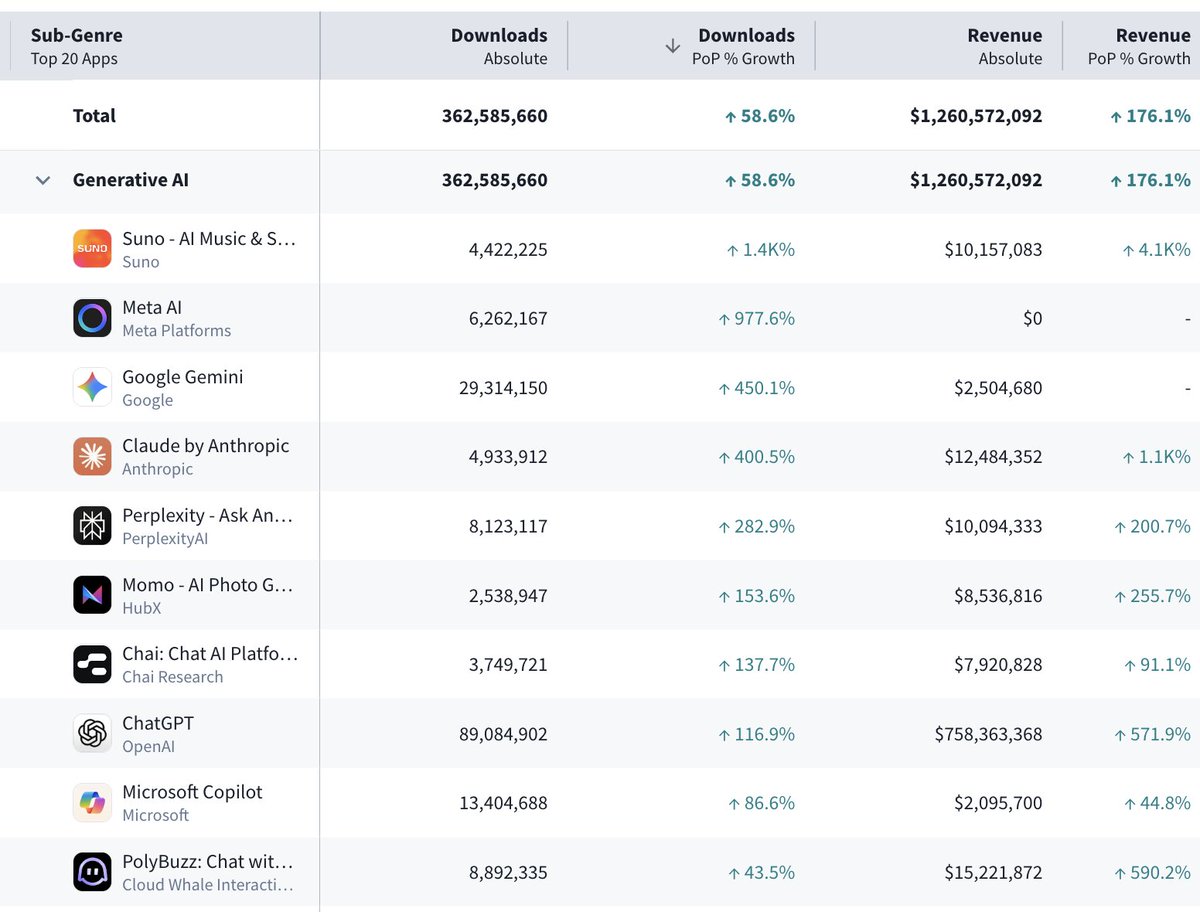
For the past year I've noticed @suno dominating the growth chart for genAI mobile apps and I wanted to understand why so I dug in and read thousands of user reviews. Here’s what’s actually happening beneath the surface:
𝟭. 𝗡𝗼𝗻-𝗺𝘂𝘀𝗶𝗰𝗶𝗮𝗻𝘀 𝗮𝗿𝗲 𝗯𝗲𝗰𝗼𝗺𝗶𝗻𝗴 𝗰𝗿𝗲𝗮𝘁𝗼𝗿𝘀.
People with zero musical background, folks who’ve never touched a DAW, can’t play an instrument, or describe themselves as “not musically adept” are generating songs for birthdays, inside jokes, poetry, therapy, or just pure fun.
This is the same shift we saw when Instagram made everyone a photographer and TikTok made everyone a video creator.
𝟮. 𝗠𝘂𝘀𝗶𝗰𝗶𝗮𝗻𝘀 𝗮𝗿𝗲 𝘂𝘀𝗶𝗻𝗴 𝗦𝘂𝗻𝗼 𝗮𝘀 𝗮 𝘀𝗸𝗲𝘁𝗰𝗵𝗽𝗮𝗱.
Songwriters, producers, and hobbyists use Suno to get melodies out of their heads instantly. Not as a replacement for craft, but as a fast ideation engine.
It removes the friction between inspiration and output, which, historically, has been hours of recording, arranging, and editing.
𝟯. 𝗡𝗲𝘄 𝗰𝗿𝗲𝗮𝘁𝗶𝘃𝗲 𝗰𝗮𝘁𝗲𝗴𝗼𝗿𝗶𝗲𝘀 𝗮𝗿𝗲 𝗲𝗺𝗲𝗿𝗴𝗶𝗻𝗴.
Users are experimenting with wild prompts, blending genres, creating fictional bands, generating variations of their own tracks, or making songs as gifts.
Music is shifting from a static good to a participatory medium.
𝟰. 𝗣𝗲𝗼𝗽𝗹𝗲 𝘄𝗶𝘁𝗵 𝗮𝗰𝗰𝗲𝘀𝘀𝗶𝗯𝗶𝗹𝗶𝘁𝘆 𝗻𝗲𝗲𝗱𝘀 𝗮𝗿𝗲 𝗰𝗿𝗲𝗮𝘁𝗶𝗻𝗴 𝗺𝗼𝗿𝗲 𝗺𝘂𝘀𝗶𝗰.
Visually impaired users and those who’ve never had access to traditional tools are composing through simple voice-over or text prompts.
Lowering the barrier to creation expands who gets to express themselves.
𝟱. 𝗧𝗵𝗲 𝗯𝗲𝗵𝗮𝘃𝗶𝗼𝗿 𝗶𝘀 𝗮𝗱𝗱𝗶𝗰𝘁𝗶𝘃𝗲, 𝗶𝗻 𝗮 𝗵𝗲𝗮𝗹𝘁𝗵𝘆 𝘄𝗮𝘆.
Review after review shows people creating daily. Not listening. Creating.
That is a profound behavioral shift: from consumption → production → identity.
Music has always been the most closed, skill-gated creative form.
Suno is flipping that. It’s moving music from something you listen to into something you participate in.
When technology enables new creative muscles in ordinary people, it unlocks entirely new markets.
We’ve seen this before and every time it reshapes culture.
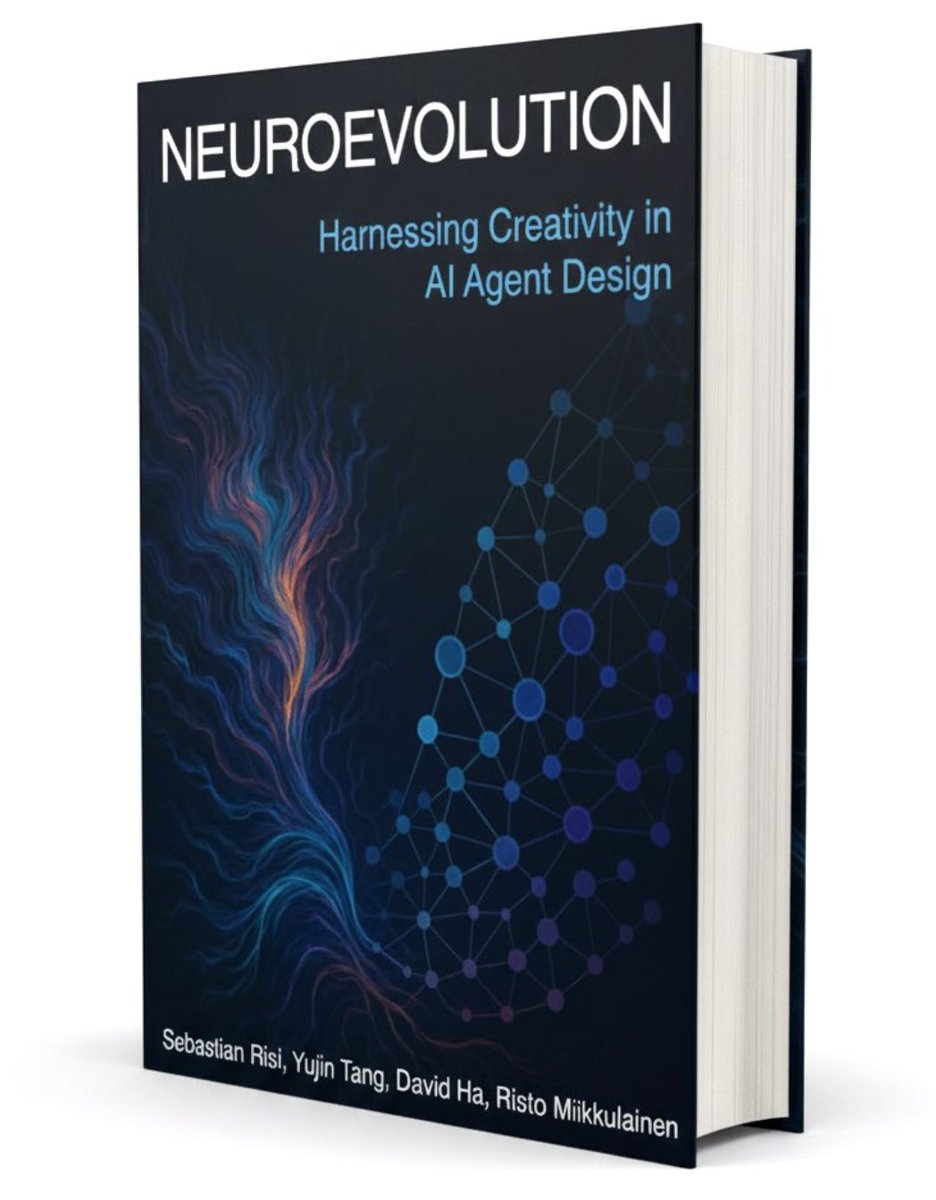
I’m beyond excited to announce our MIT Press book on Neuroevolution! An HTML version is now available for free on https://t.co/Q9uDN3w1GM, with a print edition coming out later in 2026.
Real intelligence is not static; it evolves. For decades, the field of neuroevolution has pursued this necessary adaptability. Our book chronicles its development, from early concepts to its modern integration with deep learning and reinforcement learning, exploring its potential for understanding the origins of intelligence and its real-world applications.
And the companion webpage is more than just a book site! It comes equipped with interactive demos, videos, exercises, and tutorials to allow everyone to experience neuroevolution in action. Check it out and let us know what you think!
It was a pleasure to work on this book over the last 4+ years with David (@hardmaru), Yujin (@yujin_tang), and Risto. We are incredibly proud of the result and look forward to celebrating! We hope to connect with many of you at NeurIPS.
We are very grateful to Melanie Mitchell (@MelMitchell1) who provided a fantastic foreword. To quote her: “The next big thing in AI is coming, and I suspect that neuroevolution will be a major part of it”. We think so too!
Excited to announce our MIT Press book “Neuroevolution: Harnessing Creativity in AI Agent Design” by Sebastian Risi (@risi1979), Yujin Tang (@yujin_tang), Risto Miikkulainen, and myself.
We explore decades of work on evolving intelligent agents and shows how neuroevolution can drive creativity in deep learning, RL, LLMs and AI Agents!
📖 Free open-access edition: https://t.co/1VraVue7Sk
In addition to our own works, this video features work by Jürgen Schmidhuber (@SchmidhuberAI), Seth Bling (@SethBling), Igor Karpov, Jacob Schrum, Yulu Gan (@yule_gan), Ken Stanley (@kenneth0stanley), Joel Lehman (@joelbot3000), Jeff Clune (@jeffclune), Nick Cheney (@CheneyLab), Richard Song (@XingyouSong), Chelsea Finn (@chelseabfinn), Julian Togelius (@togelius), Sam Earle (@Smearle_RH), Hod Lipson (@hodlipson), and Jean-Baptiste Mouret (@jb_mouret).
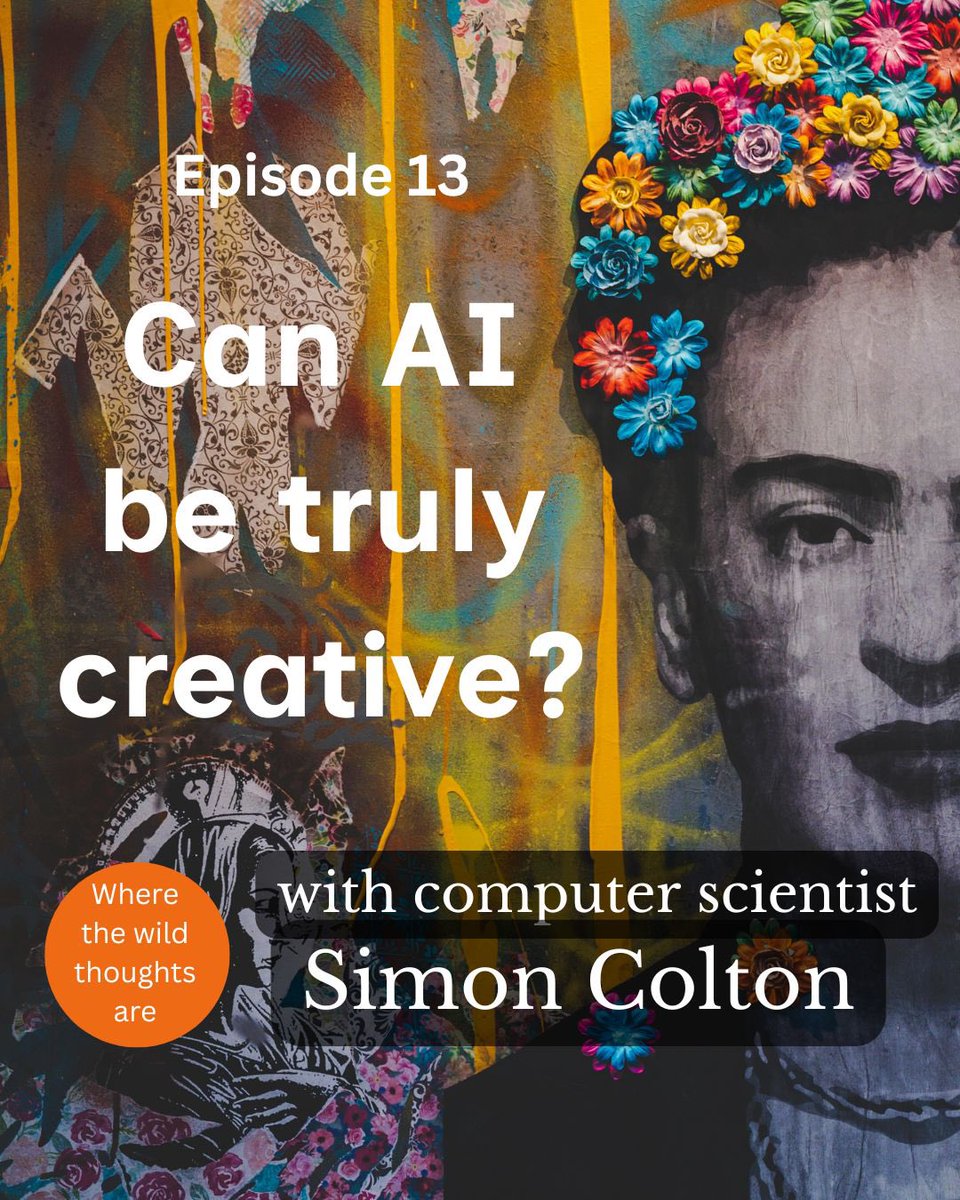
If AI could express its true self through art… what would it say? So much fun interviewing the brilliant @SimonGColton for Where the Wild Thoughts Are https://t.co/ZYGCAaFpoD
🎶 Internship Opportunity — Sony CSL Paris Music Team
Focus: Artist-centric music AI
Location: Paris, France
Duration: 3-6 months
Start date: January-June 2026 (flexible)
About the Team
The Music Team at Sony Computer Science Laboratories (CSL) Paris is working on the future of AI-assisted music creation. We explore how AI can empower creativity rather than replace it. Our research spans human-AI collaboration, interactive audio generation, live performance tools, and music cognition, all centered on artists’ real-world workflows and creative needs.
Internship Mission
We’re seeking a creative and technically skilled research intern to contribute to the development of artist-centric AI tools. You will work with our research team to design, implement, and test cutting-edge machine learning algorithms, which will form the basis of tools that enhance artistic control and exploration.
Candidate Profile
Essential:
- Strong Python skills
- Experience with a machine learning framework (PyTorch strongly preferred)
- Comfortable using the command line in Linux environments
- Background in at least one of: audio signal processing / acoustics / music theory / music cognition
- Experience training modern neural networks
Strongly preferred:
- Familiar with the design of modern transformers
- Familiar with major classes of modern generative models (autoregressive, diffusion/flow-based)
- Currently pursuing a Master's or PhD in computer science, AI, EE, music technology, or equivalent
Bonus:
A strong interest in music, whether you play it, produce it, or listen to a lot of it.
Publications in relevant conferences or journals (ISMIR, ICASSP, AES, ICLR, NeurIPS, ICML).
👉 How to Apply
Send your CV and a short motivation statement to [email protected].
🎶 Symbolic music deserves better representations 🎶
Excited to share MuseTok, a tokenization method enabling symbolic music generation and semantic understanding across diverse tasks. 🎵
🎧 https://t.co/JALFxC9oZr
📖 https://t.co/ohTb9VNSsD
💻 https://t.co/WBSLs1pW9E
🧵1/5
🎵Music Arena ⚔️ was accepted to the NeurIPS 2025 Creativity Track, and we've released a big update to celebrate!
Includes new models from @SonautoAI and @elevenlabs. Also, Music Arena is now available as a 🤗 @huggingface space and dataset!
A huge congratulations to the winners of the Best Student Paper Award at #ISMIR2025! 🏆
Kudos to Ben Hayes, Charalampos Saitis, and György Fazekas for their fantastic work: "Audio synthesizer inversion in symmetric parameter spaces with approximately equivariant flow matching."
Ever heard a synth sound and wondered how to recreate it? It's a notoriously hard problem because different knob settings can create the same sound. This paper offers a brilliant solution, using generative models that understand a synth's inherent symmetries (like swappable oscillators). Their method significantly outperforms baselines on a complex, real-world synth, Surge XT!
🎶 AIM is heading to the world’s top MIR conference @ISMIRConf in Daejeon🇰🇷!
19 of our members co-authored 13 papers, 2 tutorials & 2 journal articles, led MIREX tasks, and co-organised the LLM4MA workshop and virtual conference!
Full details: https://t.co/cAMmX6khDk
Our student @bhandari10k is co-organising the "1st International Workshop on Emerging AI Technologies for Music (EAIM)" at #AAAI26! Accepted papers will be published in the PMLR. We look forward to your contributions!
More details: https://t.co/sCqJzOcKVt
🎶 AIM is heading to @aesaimla25! Our researchers will present cutting-edge work on neural audio, procedural music, intelligent music education & more. Plus, many AIM members are also part of the organising committee. See you in London!
Details: https://t.co/YhldL4a7Ui
We're proud to showcase four groundbreaking projects at UKAIRS 2025, exploring the frontier of AI in music. We also have Elona Shatri hosting a workshop on ethics in AI research. Join us to rethink the future of sound, tech, and responsibility.
https://t.co/RNB3EL5iYT
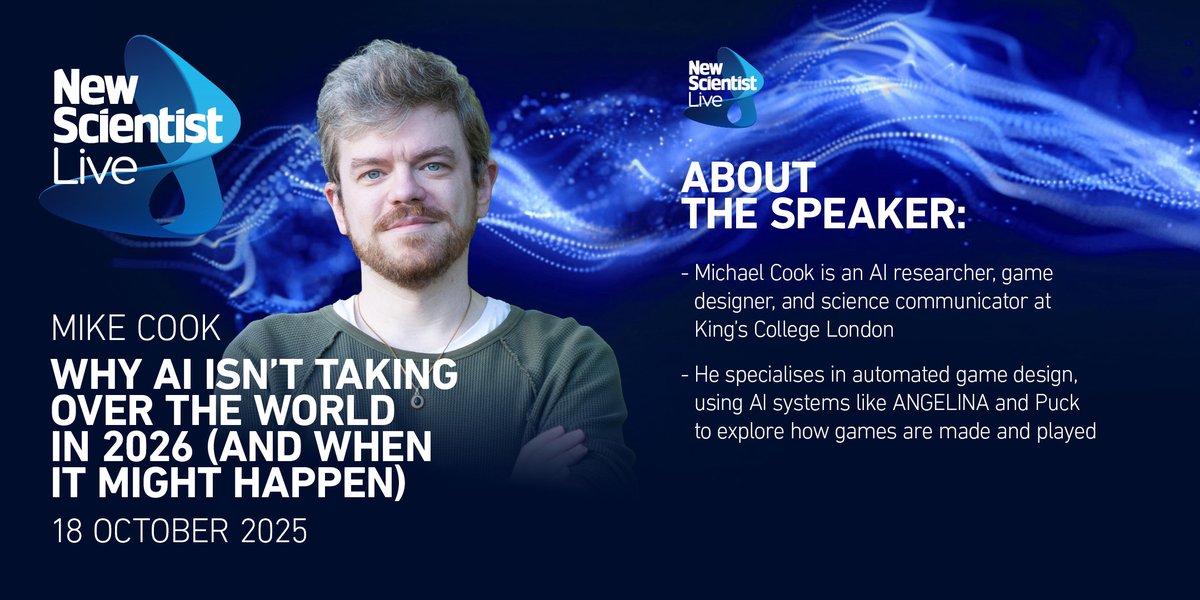
I'm speaking at New Scientist Live next month! What a normal time to be writing a talk about the future of AI. Come and join me to hear about the possible futures that lie ahead for us, and what we can learn from the past.
More info and tickets here: https://t.co/Am2umGDr6i







![drtimt's tweet photo. It's taken way longer than originally anticipated (18 months), but I'm super excited to say that the project to translate Nils Aall Barricelli's groundbreaking 1954 paper on computational evolution/artificial life (Esempi Numerici di Processi di Evoluzione) is now complete! [1/2] https://t.co/lqp2KmA61I](https://pbs.twimg.com/media/HI7RC6bXoAEt8Po.jpg)