(It's a book, but worth it)
Before I respond to our main topic, I am going to take your first point and reflect it in the same way you did. I'm going to rephrase this purposely from your own words. I am aiming at kindness and respect. I am curious to see if you see what I saw.
Your first paragraph argument could be treated the same way back to you.
***I hear you (skip10), but you keep trying to analyze the past through the lens of "Mainstream Christianity". If you believe that nothing was lost after the death of the apostles, then everything you dwell on will support that worldview. You cannot just view the facts by their merits.***
There is an assumption portrayed in this. You appear to have assumed I have always accepted the Mormon worldview, or have never questioned the Mormon view on these points. It's an easy mistake. I see this often when conversing with people online. It is a mistake.
Also, when you say "you cannot just view the facts by their merits", what other way(s) do you suggest if not following the trail of facts to natural conclusions the merit itself leads?
Now back to the main topic:
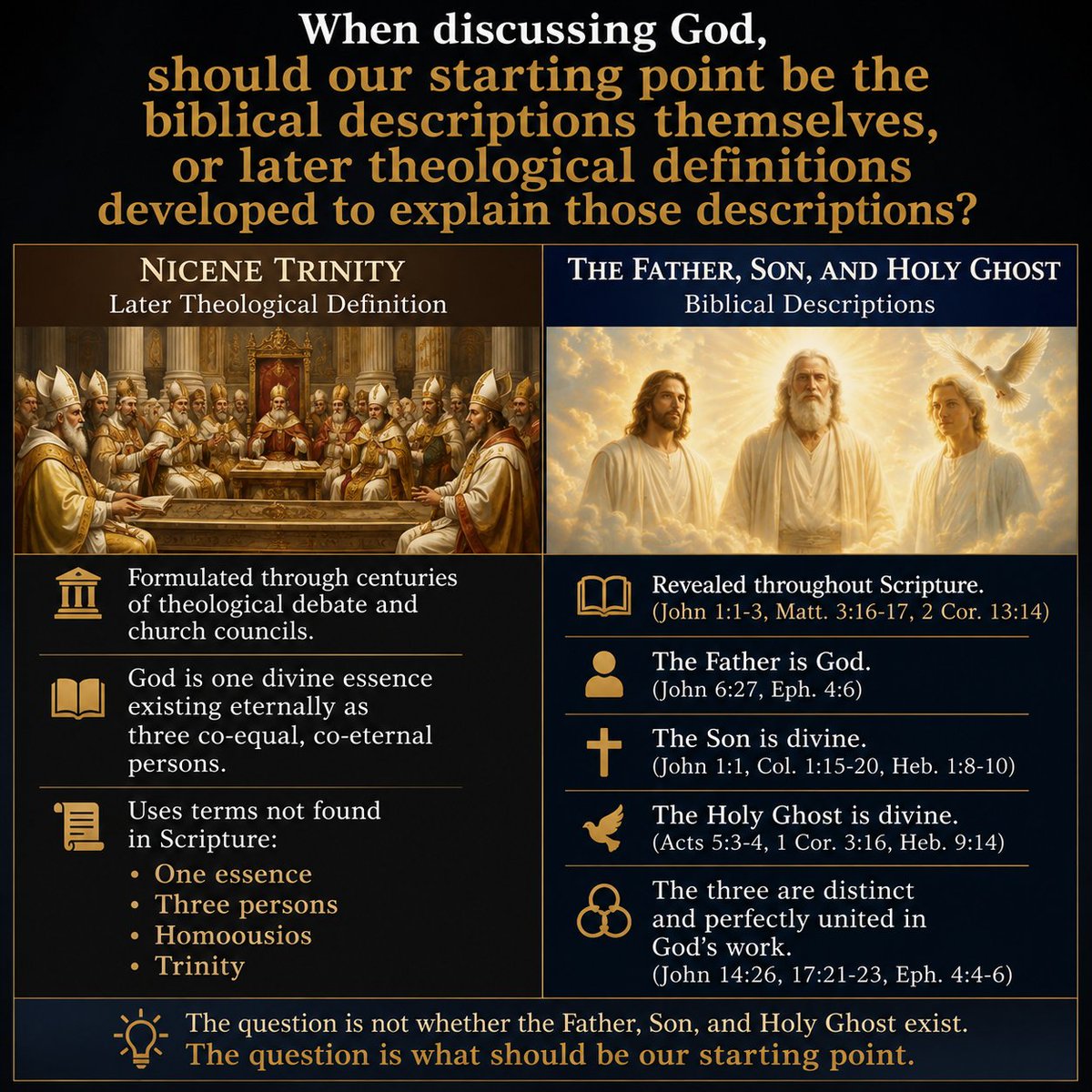
"They developed a concept that remained true to the OT, accommodated the NT, and made sense." This is exactly what I said happened earlier in our dialogue. The doctrine "emerged through centuries of theological reflection as church leaders sought to reconcile biblical monotheism, the divinity of Christ, the distinction between Father, Son, and Holy Spirit, and passages describing Christ in subordinate relation to the Father."
The result was an interpretation. They attempted to logically demonstrate how both monotheism and the divinity of Christ can coexist as true. What they concluded was the doctrine of the Trinity.
Would you agree with this recap? If not, what would you add or change? Fill me in. It may not be elaborate, but it hits the main points.
Here is a brief recap of the before, during, and after of the Council of Nicaea as I understand the historical events.
In the early 300s, Arius taught that Jesus (the Son) was created by God the Father and was not fully equal to Him. This teaching split the church.
To restore unity, Emperor Constantine called the Council of Nicaea in 325 AD. About 300 bishops attended.
The main debate: Is Jesus fully God and of the same substance as the Father, or a lesser, created being?
Broadly speaking, three major tendencies emerged:
• Group 1 Strong Anti-Arians
- Small minority (~15–20 persons)
-Full homoousios (“same substance”)
• Group 2 Largest Majority
- A large middle group preferred biblical language, such as ‘like the Father,’ and were cautious about homoousios.
• Group 3 Pro-Arian Small minority (~20 persons)
- Son is created / subordinate
The smaller group of bishops pushed for the word homoousios (“same substance”). Most bishops were uncomfortable with it because it was non-biblical terminology with philosophical and controversial theological baggage.
Constantine strongly favored the term as a means of achieving doctrinal unity and imperial stability. The council adopted the Nicene Creed with homoousios. Those unwilling to sign the creed or condemn Arius faced exile or removal from communion, indicating substantial political and ecclesiastical pressure toward unity.
The controversy did not end in Nicaea. For the next 50+ years, emperors, exiles, and new councils swung back and forth between Arian and Nicene views.
Finally, in 381 AD, the Council of Constantinople reaffirmed and expanded the Nicene Creed, and under Emperor Theodosius, Nicene Christianity became the official imperial orthodoxy.
Summary: Nicaea declared Jesus fully God, but it took over 50 years of debate and political pressure before that belief fully prevailed.
Again, would you agree with this recap? Does this miss anything? What would you add?
Knowing this, as I see it, critics expect Latter-day Saints to accept as essential Christian doctrine a formulation that:
1. Was formalized centuries after the apostles.
2. Relied on philosophical terminology not found in scripture (homoousios).
3. Emerged in a politically charged environment under Constantine, where unity and stability often appear to have taken precedence over arriving at a universally satisfying theological formulation.
4. It was controversial among bishops at the time and not embraced without resistance.
5. Was ultimately enforced through councils, creeds, exile, and ecclesiastical pressure.
Yet Latter-day Saints are criticized for questioning whether this represents the original apostolic faith in its pure form.
On top of all that, if nothing else, the Council of Nicaea evidences a profound shift in how doctrine was established.
In the New Testament, doctrine came through apostles receiving revelation from Jesus Christ. By Nicaea, doctrine was being defined through episcopal debate, philosophical terminology, imperial pressure, and majority agreement rather than new public revelation.
This is what naturally occurs when revelatory apostolic authority is no longer present: theological disputes are settled through councils, argumentation, politics, and consensus rather than prophets receiving revelation from God.
The Old Testament repeatedly shows that when prophetic revelation diminished or was rejected, God’s people did not cease being religious. Rather, authority shifted toward institutional leadership, interpretation, tradition, and political power struggles — precisely the kind of transition many argue became visible in the post-apostolic councils.
Amos 8:11–12 presents a biblical pattern of what happens when revelation withdraws from a people. Religious life may continue, but there is a “famine” of the word of the Lord — people seek divine guidance yet cannot find it.
11 ¶ Behold, the days come, saith the Lord GOD, that I will send a famine in the land, not a famine of bread, nor a thirst for water, but of hearing the words of the LORD:
12 And they shall wander from sea to sea, and from the north even to the east, they shall run to and fro to seek the word of the LORD, and shall not find it. Amos 8:11-12
After a thorough study, I have yet to find any period where God is pleased not to have prophets on the earth. Jesus does warn us about the false prophets who would come and lead many astray. Yet, he also armed us how to know the true from the false.
If prophets or apostles were to end forever, Jesus didn't express it.
Historically, many Christians later concluded that public revelation or apostolic office ceased after the apostolic age. But that conclusion is post-biblical theological development rather than a direct statement from Jesus Himself.
The New Testament does not prepare believers for a permanent absence of prophets. Rather, it repeatedly warns them to discern between false and true ones.
Avoiding all prophetic claims because some may be false is not the pattern taught by Christ or His apostles. The New Testament instructs believers to discern, test, and judge prophetic claims — not reject the possibility of prophets altogether.
What did Jesus establish?
Commissioned apostles and prophets. Paul calls the number 1 and 2 parts of the body of Christ. He also calls them the foundation on which everything ties in.
Christ did not establish a church built merely on scholars, councils, or inherited tradition. He established apostles and prophets.
Paul even lists them first in the body of Christ and says the household of God is built upon their foundation, with Jesus Christ as the chief cornerstone.
Through the apostles, bishops and elders were called to lead local communities in the way. They also ordained seventy, deacons, teachers, and evangelists. This was the organization and everything flowed from them as they were guided by revelation from Jesus Christ.
Were the apostles mean to be "foundational only"?
The NT repeatedly presents apostles and prophets as integral to the Church’s structure and unity, yet nowhere clearly outlines a long-term model for a fully post-apostolic Church operating without revelatory leadership.
That silence is telling.
The earliest Christian movement appears structured around living apostolic authority, not around a future model dependent primarily on councils, creeds, and inherited institutional interpretation after apostles disappeared.
That does not prove apostasy or restoration by itself. But it does create historical and theological tension for later models that assume:
- apostles were temporary,
- revelation largely ceased, and institutional succession alone was expected to carry the Church indefinitely.
The silence is especially notable because the NT does prepare believers for many future issues:
- false teachers
- persecution
- apostasy
- division
- wolves entering the flock
- deception
Yet it gives comparatively little direct instruction like:
“After the apostles die, bishops alone will govern universally.”
“Ecumenical councils will define doctrine.”
“Public revelation will cease.”
“Creeds formulated centuries later will become the doctrinal standard.”
Then again, you are asking LDS not to question this, but fall in line when there are obvious flaws to all this history.
LDS and the restoration falls in lock-step with the NT organization, set up with apostles and prophets. It returns the fundamental roots.
Scholars are also finding out that pre-Josiah reform there wasn't a hard monotheism structure like what came after. Which is interesting and leaning toward a council of gods leadership.
Again, I not stating this to convince you. I am giving you a window in the logical process as I see it. You can see it completely different, that's okay. But I cannot ignore these things. Mainstream Christianity has not resolved the tensions in simple terms. I find the LDS argument and position relatable, logical, and defensible.
@JasminRappleye This is the one I believe is most likely. It shows his tooth and hair missing, likely from the Kirtland mob attack.
https://t.co/0svgJXZjIB
Check out the work of Wayne May. He gets into language, artifacts, fortifications, cities, and more.
https://t.co/FuBTNvOSY2
https://t.co/o0NvGAUzuu
This guy Ryan Ingram has an interesting take on the geography: https://t.co/u2LGIZzIzJ
Your thoughts, @JasminRappleye, will be welcome.
Under the Law of Moses, animal sacrifices were ordinarily administered through the Aaronic priesthood.
However, the Bible records many non-Levites offering sacrifices, including Abel, Noah, Abraham, Isaac, Jacob, and Job, before the Levitical system was established.
Even after the Law was given, individuals such as Gideon, David, and Elijah offered sacrifices under special circumstances or divine authorization.
Thus, while the Levitical priesthood was the normal covenant order, Scripture demonstrates that God was not absolutely restricted to Levites when authorizing sacrifices.
Next point:
Animal sacrifices were part of the Law of Moses and the Old Covenant. It was fulfilled by Christ's last sacrifice. Jesus gave a new covenant for followers to keep.
3 Nephi 9:18-20
18 I am the light and the life of the world. I am Alpha and Omega, the beginning and the end.
19 And ye shall offer up unto me no more the shedding of blood; yea, your sacrifices and your burnt offerings shall be done away, for I will accept none of your sacrifices and your burnt offerings.
20 And ye shall offer for a sacrifice unto me a broken heart and a contrite spirit. And whoso cometh unto me with a broken heart and a contrite spirit, him will I baptize with fire and with the Holy Ghost, even as the Lamanites, because of their faith in me at the time of their conversion, were baptized with fire and with the Holy Ghost, and they knew it not.
I think you're actually proving Jacob's original point.
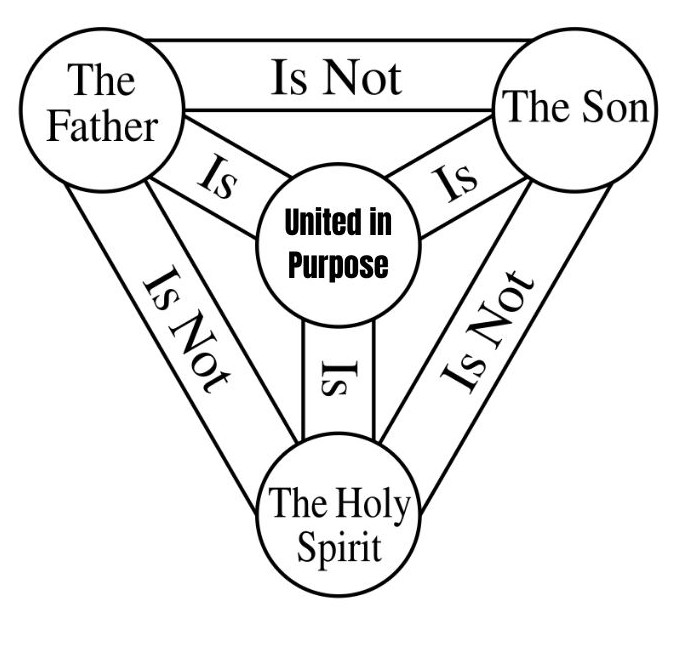
The question is not whether the beliefs that later contributed to Trinitarian doctrine existed in the first century. Most Christians, including Latter-day Saints, agree that the Father is divine, the Son is divine, the Holy Spirit is divine, and that they are one. (We differ on the context of what "one" is meant.)
The question is whether first-century Christians believed the specific doctrine later defined at Nicaea and Constantinople: three co-equal, co-eternal persons sharing one divine essence.
Saying the New Testament contains the "seeds" of a doctrine is not the same as demonstrating that the doctrine itself was taught by the apostles.
Many theological systems claim to grow from "biblical seeds". The real issue is whether the Trinity is the only valid conclusion from those seeds or a later theological interpretation of them.
So if your argument is that the first century contained beliefs that eventually gave rise to Trinitarian doctrine, I agree.
But that is different from proving that first-century Christians themselves held the fully developed doctrine of the Trinity.
I agree that first-century Christians held beliefs that later contributed to Trinitarian doctrine. But if the doctrine itself required centuries of debate and philosophical definition to emerge, then it is historically accurate to say the doctrine developed later. The question is whether that development clarified apostolic teaching or went beyond it.
Then that also logically leads to:
In scripture, major doctrinal disputes are consistently resolved through living prophets and apostles receiving revelation from God.
The post-apostolic councils primarily appealed to theological reasoning, scriptural interpretation, and ecclesiastical authority. The question is whether that process reflects the biblical pattern of revelation or a different model of doctrinal development.
To me, the biblical pattern is that doctrinal disputes are ultimately settled through revelation given to living prophets and apostles, not merely through theological debate or ecclesiastical authority. While scripture certainly contains reasoning and discussion, the final authority consistently rests on divine revelation.
By contrast, the post-apostolic councils appear to rely primarily on interpretation, philosophy, and institutional authority. That looks less like the pattern I see in scripture and more like a different model of resolving doctrine.
Where do the apostles teach that, after their deaths, doctrinal disputes should be settled by councils and theological interpretation rather than by living prophets and apostles receiving revelation?
I guess you can't believe Paul's take on the fruits of the Spirit in Galatians 5 or 1 Corinthians 2.
11 For what man knoweth the things of a man, save the spirit of man which is in him? Even so the things of God knoweth no man, but the Spirit of God.
12 Now we have received, not the spirit of the world, but the spirit which is of God; that we might know the things that are freely given to us of God.
13 Which things also we speak, not in the words which man’s wisdom teacheth, but which the Holy Ghost teacheth; comparing spiritual things with spiritual.
14 But the natural man receiveth not the things of the Spirit of God: for they are foolishness unto him: neither can he know them, because they are spiritually discerned. 1 Corinthians 2:11-14
Test and try, yes, without asking for the light and guidance from God, we are cutting off the giver of light and truth.
These experiences invite a personal connection with God, an intimate bond between you and Him alone.
With all the various religions and every spin on the bible, reliance on it alone isn't very helpful for sincere people.
God knows the truth. God wants us to have the truth. God wants us to ask.
You are saying you are to trust in your own wisdom and in that of men rather than in the spiritual wisdom gained by communing with God.
That is a mistake.
I say this after years of believing the Meso-American model.
This is why the heartland model speaks to me. It self-identifies more with the U.S. than any other country. Specifically, the New Jerusalem and where the record was came forth.
Also, investigate the origin of the word "niagra" in Iroquoian langauge. The origins of the Algonquin people.
The timeline of the Hopewell and Adena cultures are very close to Book of Mormon timelines.
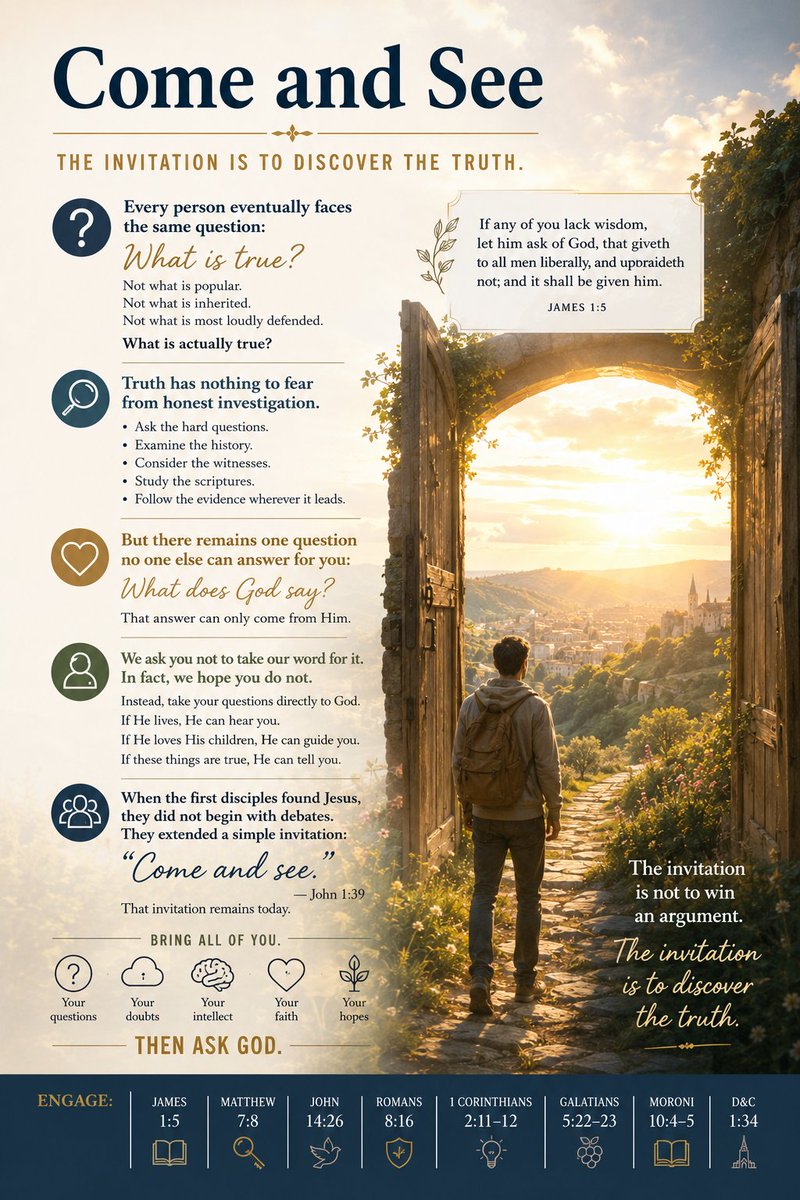
I see how many Christian dogmas can create Athiests because of Creation Ex Nihilo. The Church of Jesus Christ of Latter-day Saints resolves many of these and more. Come and See!
How do you reconcile these?
Questions Creation ex Nihilo Struggles to Answer
• Why create people God knows will be eternally lost?
- If God knows the future perfectly, He knew before creation who would reject Him.
- Why create those individuals anyway?
• Why not create only those who will freely choose Him?
- Free will alone does not answer why God chose to create people whose final destiny He already knew.
• How is God not ultimately responsible?
- If God created everything from nothing, then every lost soul exists because God chose to create them despite knowing the outcome.
• Why create a system of eternal punishment?
- Why should finite mortal sins result in infinite suffering?
• What about people who never had a fair chance to know Christ?
- Billions lived and died without hearing the gospel.
LDS Answers to These Questions
• God did not create us from nothing.
- Intelligence is eternal (D&C 93:29).
- God organized and nurtured eternal beings rather than creating them ex nihilo.
• Agency is an eternal principle.
- God did not manufacture every future choice.
- Individuals possess genuine moral agency.
• Mortality was part of a premortal plan.
- God's children existed before birth.
- They accepted the opportunity to come to earth and progress.
• Very few are eternally damned.
- Nearly everyone inherits a kingdom of glory (D&C 76).
- Eternal torment is not the final destiny of most of humanity.
• Everyone receives a fair opportunity to accept Christ.
- The gospel is preached in the spirit world.
- Temple work is performed on behalf of the dead.
- No one is condemned merely because they lacked opportunity in mortality.
The LDS view reconcile God's foreknowledge, justice, love, agency, and salvation without requiring God to create beings from nothing whom He knows will suffer eternally.
@nazjavladimir I remember the stories of Jesus saying be believing. Not only after the full rundown the doctrine of trinity, homoousious philosophy, and more. In fact He put more emphasis on love one another than have the theology intact.
Could you take a look at 'What did Jesus actually establish and for how long?'
Here are 4 examples worth noting:
1. Paul defines the Church as being "built" upon the foundation of apostles and prophets (Ephesians 2:19–20), with Christ himself as the cornerstone.
A foundation is not a phase or a metaphor; it is constitutive of what the structure is.
If that foundation was later altered or removed, only three possibilities exist:
a. Christ authorized the change
b. The apostles authorized the change
c. The change occurred without divine authority.
Scripture attests to none of the first two.
Therefore, the claim that the Church continues unchanged while its defining foundation has been replaced "is not a biblical claim"—it is a post-apostolic reinterpretation.
2. The NT body of Christ had many members, but Paul named parts 1 and 2 as: 1st apostles and 2 prophets.
- Is it logical to remove parts 1 and 2 of the body and still call it a whole? Or, one may ask, how important are parts 1 and 2 to the body? (1 Corinthians 12:28) If Jesus set these offices, who has the authority to unset them?
3. In Ephesians 4:11–13, Paul presents apostles and prophets as means to a clearly defined end: unity of the faith, full knowledge of the Son of God, and collective maturity unto the fullness of Christ.
This is "not" a temporal marker but a conditional one. If that condition has not been met—and the persistent doctrinal fragmentation of Christianity suggests it has not—then the offices Paul identifies cannot be said to have completed their purpose.
Any claim that they were divinely withdrawn, therefore, requires evidence that the condition Paul set was fulfilled. Paul presents these offices as necessary until unity is achieved, not merely until Scripture is written or institutional structures evolve.
4. If Jesus intended bishops to succeed the Twelve as apostles, the apostles themselves never say so. They consistently describe the Church as founded on apostles and prophets, not bishops-as-apostles.
Bishops are mentioned, but always as local officers—not as successors to apostolic authority.
Given how carefully the apostles taught church order, doctrine, and leadership, the complete absence of any instruction on replacing apostles is not incidental—it is decisive.
No. In my experience, people stand on the caricatures and don't care for the response they get. They prefer the caricature regardless of the response they get.
For example, "Mormons aren't Christians".
"Mormons don't believe the bible"
"Different Gospel"
"Different Jesus"
"Mormons are demonic"
"Mormon Jesus is demonic"
"Mormons believe works will save them"
"You don't read the bible"
"You're brainwashed"
Just to name a few.
However, it does not bother me at all. It brings more of the honest at heart to the waters of baptism.