https://t.co/B8YJYiBr3O new paper in @JAppliedEcology. Main findings: (i) better matrix -> better value of fragmented habitat; (ii) little evidence of extinction debt. Results consistent with a need to maximize habitat area for biodiversity, even if habitat exists fragmented.
🚨NEW PAPER ALERT🚨
In this #GCB study we used 1327 time series of freshwater macroinvertebrate communities across Europe to investigate whether dispersal capacity changes with the ecological quality of rivers. @geobiodiversity@Senckenberg
https://t.co/mq59JAzOhH
Wildlife trade is known to represent one of the greatest threats to the survival of many species; yet most species are traded legally with virtually no data
We show that over 22 years the US imported almost 30,000 wild species, & billions of individuals
https://t.co/RfvnNcUEcy
🎉 Congratulations to Dr. Shelley Arnott, Professor at @queensu, on receiving the 2025 Rigler Award!
@ShelleyArnott studies aquatic ecology, focusing on how plankton communities respond to environmental change. Read the announcement here: https://t.co/zOSOem7Oel
🧵...
However, biological traits tend to be the most important (e.g., changing feeding guilds altering energy flow). If these responses are inconsistent across regions, then they are less broadly predictive and may only be useful on a region-by-region basis /end
Really nice to get this published in one of my favorite journals! We looked at how consistently different traits describing river invertebrate habitat preferences and characteristics (e.g., body size) responded to human impacts across Europe /1
https://t.co/96MYraY6qL
These results contain both good and less good messages. Consistent changes in habitat preferences means we can use these traits to measure and predict the degree of community change in more versus less impacted habitats regardless of the region /3
„Is it worth the extra mile? Comparing environmental DNA & RNA metabarcoding for vertebrate and invertebrate biodiversity surveys in a lowland stream“
New @unidue study by @TillMacher@SchuetzRobin & more as part of the @Umweltbundesamt project „GeDNA“.
https://t.co/PxBL4cLVPD 🎉
Today is World Wombat Day so I must again say that my favourite ever blessing is an Indigenous Australian one and it goes "may the wombat of happiness snuffle through your underbrush"
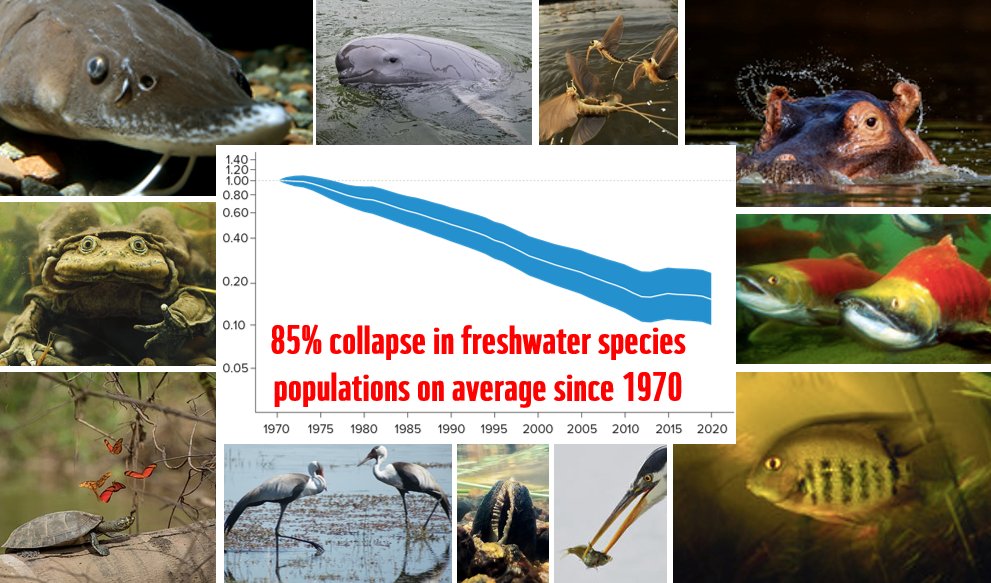
BREAKING: Freshwater species populations have crashed by 85% on average since 1970 - finds new @WWF & @ZSLconservation report!
We must scale up investment NOW in protecting and restoring our rivers, lakes and wetlands - for nature & people
https://t.co/q7pW8e1w92