Evolutionary paleobiologist interested in Cenozoic large terrestrial mammals | tenured scientist @mncn_csic @CSIC | head of @Canta_Lab | member @GloCEE_EcoEvo
1/7
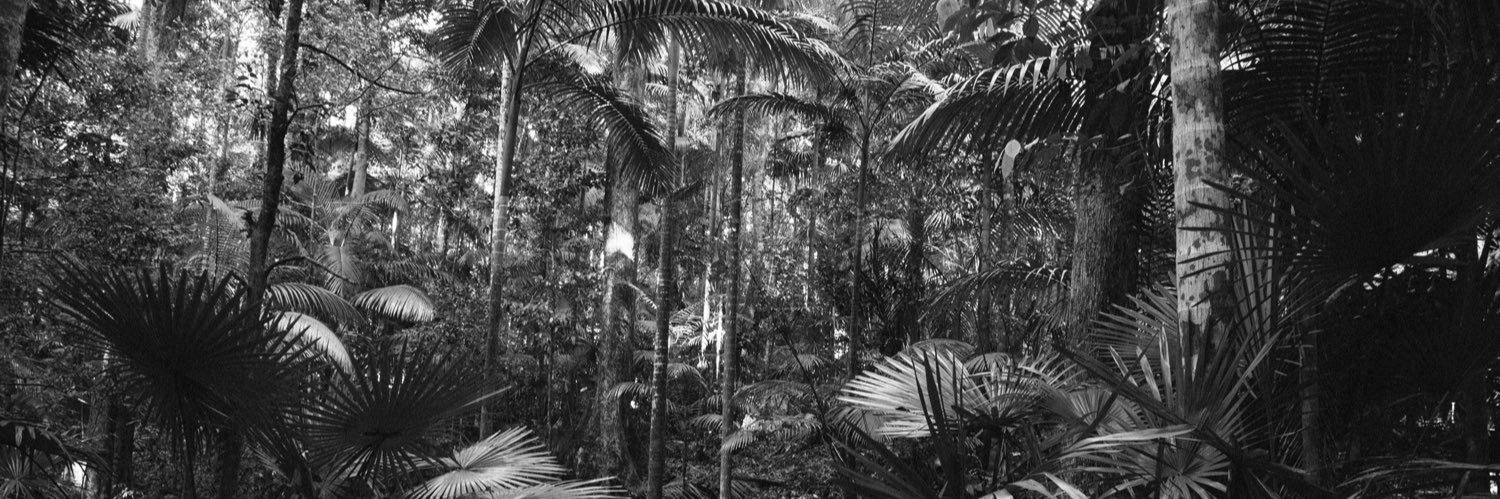
🦏🐘 Our latest paper just dropped in @NatureComms! A surprising discovery about the decline of Africa's megaherbivores. Why did the continent lose most of these giants? The answer isn't what most people assumed.
[all photos my own]
Thread 🧵👇
🔗 https://t.co/SLWthTnFD0
Mi amigo @Nunodomin me vuelve a desconcertar con hallazgos prehistóricos. Otra vez los neandertales:
Un enigmático cráneo de hace 200.000 años hallado en Ciudad Real complica aún más “el lío en el medio” de la evolución humana https://t.co/v9Mj8ZwTaj vía @el_pais
7/7
Our results offer new insights into how we interpret the disappearance of large-bodied taxa in the context of biotic crises.
[And yes, we're also waiting for the pretty version of the paper to come out 😅]
🔗 https://t.co/SLWthTnFD0
1/7
🦏🐘 Our latest paper just dropped in @NatureComms! A surprising discovery about the decline of Africa's megaherbivores. Why did the continent lose most of these giants? The answer isn't what most people assumed.
[all photos my own]
Thread 🧵👇
🔗 https://t.co/SLWthTnFD0
6/7
We also found that high-crowned teeth (hypsodonty), adapted to hard, abrasive diets, are linked to lower extinction rates, making the macroevolutionary story behind megaherbivore decline far more complex than expected.
Proud to share our latest paper in out in @Nature today on the origin of #snakes. We present Tametara mirim, an articulated 3D preserved stem snake from the Late Cretaceous of Brazil.
https://t.co/xDpmasr9E7
Excited to share our latest study highlighted on the cover of @ScienceMagazine🥳Combining a 3D dataset of 250 taxa, 3D modelling & printing and material testing; we deciphered the form-function relationship in the lower🦷of mammals 1/16🧵https://t.co/Jnd5Ovu60A
#naturalmente💀'El surgimiento de Homo sapiens'. En este artículo Antonio Rosas explica cómo ha ido cambiando nuestro conocimiento en torno a nuestro origen y cuál es, a día de hoy, la hipótesis más plausible de cómo apareció Homo sapiens en el planeta. https://t.co/DzicOACkt8
@Pulgar_Panda@RichardDawkins Siendo el nombre de El Pulgar del panda tan gouldiano, creo en alguna ocasión futura estaría guay profundizar en las críticas de Gould a las ideas de Dawkins. Pueden seleccionarse los genes si no pueden interaccionar directamente con el ambiente como entes individuales?
New paper out in @JVP_vertpaleo📖While at @AMNH in '22 I found a skull labelled Pseudaelurus, a wastebasket genus for felid which turned out to be the most complete cranium of Adelphailurus kansensis, an early-diverging machairodont🦁🔪
https://t.co/gWVBr2y2x8
🎨by @Gamarraptor



![singerstone's tweet photo. 1/7
🦏🐘 Our latest paper just dropped in @NatureComms! A surprising discovery about the decline of Africa's megaherbivores. Why did the continent lose most of these giants? The answer isn't what most people assumed.
[all photos my own]
Thread 🧵👇
🔗 https://t.co/SLWthTnFD0 https://t.co/PnjtwPrsiA](https://pbs.twimg.com/media/HOlP5asWwAEi0eG.jpg)


![singerstone's tweet photo. 7/7
Our results offer new insights into how we interpret the disappearance of large-bodied taxa in the context of biotic crises.
[And yes, we're also waiting for the pretty version of the paper to come out 😅]
🔗 https://t.co/SLWthTnFD0 https://t.co/z0v9pbdh6R](https://pbs.twimg.com/media/HOlQYzBWgAAWXDL.jpg)





