Budget FY27: Fiscal Discipline at Human Cost
The books may be balanced.
The people are not.
Pakistan's FY27 budget delivers the fiscal consolidation required under the IMF programme — but at what cost to human development?
At the 3rd @SZABISTKarachi International Conference 2026, I joined Dr @kaiserbengali and Mr Asif Iqbal for a panel discussion on "Budget FY27: Policy, Growth and Competitiveness," moderated by Prof Dr. Lakhi Muhammad.
My central concern was simple:
Fiscal discipline at the cost of human capital is not reform.
Achieving a primary surplus of 2% and restricting the fiscal deficit to 3.6% are welcome. But at what cost?
In FY26, public spending collapsed to:
Education: 0.8% of GDP
Health: 0.8% of GDP
The government's own Vision 2025 commitment — and UNESCO's minimum benchmark — is 4% of GDP for education alone. We are at one-fifth of that.
Meanwhile, provinces are expected to generate Rs1.8 trillion in mandated cash surpluses, alongside Rs960 billion in grants to the federal government — a combined Rs2.76 trillion extracted from the provincial of governments constitutionally responsible for education, healthcare, and skills development.
Fiscal discipline may be necessary. But starving human development to balance the present is not a strategy. It is a debt of a different kind — one that compounds silently, and falls due on the next generation.
The books may be balanced.
The people are not.
@altafmukati
📺 Watch the full session:
https://t.co/wBfiMDL5Y8
A good turnaround story: ZTBL has fixed the past — now it must build the future.
Credit is due to the current leadership, especially its President, for a serious operational cleanup. Aggressive recoveries — including written-off loans — have turned accumulated losses into profits.
But the real issue is scale.
With agricultural lending of around Rs115 billion and a deposit base of barely Rs50 billion, ZTBL’s contribution to Pakistan’s vast agriculture sector remains minuscule.
The real opportunity lies in privatisation with the right structure and credible sponsors — requiring meaningful agricultural lending (say at least 20% of advances) while allowing the institution to grow into a full-scale commercial bank.
Only then can ZTBL build a deposit base of Rs1 trillion or more and become a serious engine for agricultural finance.
That kind of scale is unlikely under continued public sector ownership, where bureaucratic constraints often discourage the bold thinking and risk-taking needed to build institutions of national importance.
A regional bank quietly delivering national-level performance.
The Bank of Khyber’s FY2025 results - over 60% increase profit and EPS- reflect strong growth and improvement in operational & financial performance — the outcome of disciplined strategy and focused execution by management, employees, the Board and all stakeholders.
Equally important has been the continued support of its major shareholder, the Government of Khyber Pakhtunkhwa. BoK stands as a strong example of how an effective public–private partnership can build a resilient financial institution in Pakistan.
@TheBankofKhyber
The math is simple:
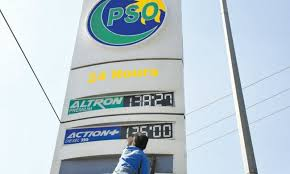
1. Oil purchased 45 days ago at ~$60/barrel
2. Sold to you today at ~Rs327/L
3. That's a Rs113 billion inventory profit — on oil already paid for
4. Who pockets the Rs113 billion?
CRISES DON’T JUST TEST A NATION — THEY EXPOSE ITS STRATEGIC FAILURES.
Pakistan has just witnessed petrol and diesel prices surge by ~Rs55 per litre (around 20%) overnight, driven by escalating tensions in the Middle East and risks to oil flows through the Strait of Hormuz.
And Rs55 may just be the beginning.
If the conflict escalates or prolongs, more price shocks may follow.
For Pakistan, the consequences are immediate:
• transport costs surge
• food prices rise
• cost of doing business increases
• industry loses competitiveness
• inflation accelerates
With IMF rules requiring full pass-through of global prices, the government has limited room to cushion the impact.
But this crisis exposes something deeper.
Pakistan built its energy system around imported fuel.
So every geopolitical conflict quickly becomes an economic crisis at home.
This is not an energy shortage.
It is a strategic design failure.
Pakistan sits on enormous indigenous energy resources:
• Thar coal — among the largest reserves in the world
• Hydropower — over 60,000 MW potential
• Solar and wind — world-class renewable resources
• Domestic gas — significantly underexplored basins
Yet policy choices have kept the country dependent on imported oil, LNG and coal, leaving the economy permanently exposed to global shocks.
At the same time, Pakistan’s deeper constraint remains governance.
Pakistan’s problem is not lack of reform plans — it is lack of intent to implement them.
This fuel shock should therefore trigger first-principles thinking.
Pakistan must fundamentally rethink its energy policy and rebuild it around three foundations:
- Energy security as a national security imperative
- Indigenous resources first — hydro, Thar coal, solar, wind and domestic gas
- Transparent governance and competitive energy markets
Crises sometimes force the future to arrive faster.
The real question is whether Pakistan will use this moment to redesign its energy system — or once again manage the crisis while preserving the status quo.
When MNAs become glorified councilors, who governs the country?
Impressive grassroots work by @KasimGillani—commendable dedication to the people of NA-148. But it also exposes a deeper dysfunction in our governance model. As Oscar Wilde said, “My own business bores me to death. I am only interested in other people’s business.” Our MNAs act like local councilors—cutting ribbons and fixing roads—while their actual constitutional duties of legislation, fiscal oversight, and executive accountability are sidelined. If MNAs do the work of local councils, who will do the work of MNAs? It’s time we revive and empower local governments so national legislators can focus on the job they were elected to do. Until then, Pakistan’s governance crisis will only deepen.
My amendment in #RulesofProcedure proposes a system for admitting and processing Public petitions through a Petitions Committee, which is one of the oldest methods through which Parliaments engage with citizens and resolve their problems. I hope the #NationalAssembly will amend the Rules to enhance both its power and profile. #PublicPetitions
AI darling Nvidia's shares jumped to $135.58/share on Tuesday, pushing its market valuation to $3.34 triln, surpassing Apple & Microsoft to become the world's most valuable company. Microsoft is now in 2nd place with a valuation of $3.32 triln, followed by Apple at $3.28 triln.
Hajj and Eid mubarak with special prayers for #Gaza where live the bravest people of the world, who from their besieged land have faced endless occupation, war and violence, hunger and poverty, disease and death, but continue to fight for freedom no matter what the cost. Eidul Azha calls for readiness to sacrifice loved ones in the way of truth and its message resonates with the Palestinian struggle whose sacrifice has few parallels in our life and times. This endless sacrifice must win freedom. #HajjMubarak #EidwithGaza
How #GenerativeAI is revolutionizing healthcare!
Improved productivity of healthcare professionals, accuracy in diagnostics, patient outcomes, and reduced workload.
Watch the video by @BernardMarr to learn more! #HealthcareRevolution#AIinHealthcare
https://t.co/NsMOmJWBQ9
Police placed Shaheed BB under house arrest for three months.
On May 31, 1979 - after release from Sahala, she addresses to the workers, "I salute you all who came here for condolence during the hottest days of Summer." @BBhuttoZardari@BakhtawarBZ
🇺🇸 In an unprecedented turn, former President Trump has been convicted of falsifying documents in connection with a hush money payment. Despite the 34-count guilty verdict, Trump can still run for the 2024 election. The question looms: Could the US see a President ruling from prison? The political landscape is more unpredictable than ever. 🗳️ #TrumpConviction #Election2024 #USPolitics
https://t.co/vKuYN621ho
As against minimum price of Rs. 4000 per md in Sindh & Balochistan and Rs. 3900 in Punjab & Passco (fed govt), the market price for farmers has plunged to Rs. 3000.
European Research Council (ERC) gives a Starting Grant of €1.5 million for a period of 5 years.
I am attending a masterclass on how to write a competitive proposal to win an ERC grant.
I'll be live-tweeting the proceedings of the masterclass.
Follow along to learn more:
https://t.co/miv7zC6g9o
Critical thinking is a valuable skill in today's world. It involves thinking about your thinking, challenging existing norms, and analyzing all the facts and evidence before making a decision. In contrast, a normal thinker may accept facts based on faith alone without examining them. Critical thinkers ask questions, consider all possibilities, and use clarifying and probing questions to formulate their arguments. They do not jump to conclusions and are well-informed before making a decision. In critical thinking, self-questioning is also important, and individuals often ask themselves "why" to better understand a situation. By thinking critically, we can make better decisions and solve problems more effectively.
#thinking #criticalthinking
The future of customer engagement is here, and it's AI-enabled.
As businesses strive to meet evolving consumer demands, AI emerges as a pivotal solution to enhance engagement and loyalty. Here are a few reasons why embracing AI in customer service is essential:
- Personalized Service: AI delivers tailored experiences, anticipating needs before they're even expressed, increasing engagement and potential sales.
- Cross-Channel Consistency: Customers expect seamless service across all platforms, and AI facilitates these real-time, consistent interactions.
- Efficiency & Cost Reduction: AI can significantly reduce costs and improve efficiency, adding up to $1 trillion annually in value in global banking alone.
- Complex Needs Handling: AI navigates the complexities of modern customer service, transforming every interaction into an engagement opportunity.
- Human Touch: Despite AI's rise, human interaction remains crucial, with AI supporting staff to enhance issue resolution and customer relationships.
- Future Vision: Leaders are redefining customer service by investing in AI, aiming for proactive and virtually autonomous customer interactions.
To successfully implement AI in customer service, nine critical components must be considered, including integration with existing channels, proactive service, personalized interactions, real-time response capabilities, consistent cross-channel experience, advanced analytics, employee empowerment, scalability, and continuous learning and improvement.
The strategic implementation of AI in customer service is not just transforming operations; it's revolutionizing how businesses engage with customers for a sustainable competitive advantage. For more details, read the article from McKinsey & Company here: https://t.co/WEBK0mN4Id
#CustomerEngagement #AI #Innovation #BusinessTransformation
@Asad_Ashah Sir, You are doing well for public interest. The Issue is we are unable to implements policies specially in public institutions. I learned many things from your experiences and leads.
We are just highlighting the core issues but couldn't implement pathway to good governance.
Why I Write on matters of Public Interest?
People often ask me why I choose to write on topics that touch on public interest. For me, the essence of writing transcends merely capturing fleeting thoughts. It serves as a profound journey into the depths of complex issues, offering a platform to rigorously test the resilience of my ideas against the stark light of scrutiny.
Writing, in my experience, is far from a solitary pursuit. It acts as a bridge to connect with those who harbor a deep affinity for critical thinking and learning. Through articulation of my views on various subjects, I not only capture the attention of thought leaders and experts but also engage in enriching dialogues that enhance our collective understanding of significant matters. Moreover, the process of writing empowers me with a clearer understanding of the topics at hand. It compels me to dissect and scrutinize my knowledge base, ensuring a better comprehension that extends beyond surface-level awareness.
The precision and clarity demanded by writing are not just stylistic choices but necessities. They force me to distill my thoughts and organize them in a manner that confronts and navigates through complex issues. I believe, this requirement for clear articulation and structured thinking is crucial, especially for leaders tasked with addressing the substantial challenges that affect the public sphere.
In essence, writing is a tool for clarity, a means to connect and engage with the intellectually curious, and a method to refine one's understanding and approach towards solving the big problems of our time.