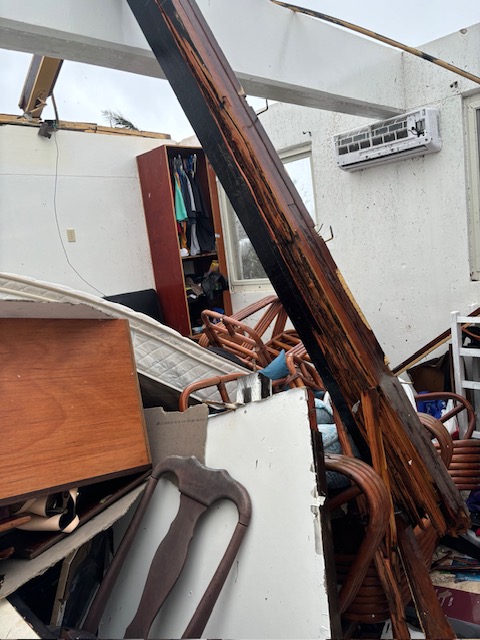
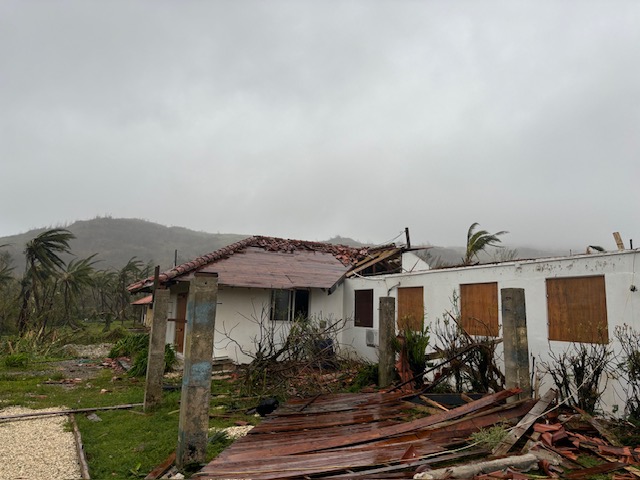
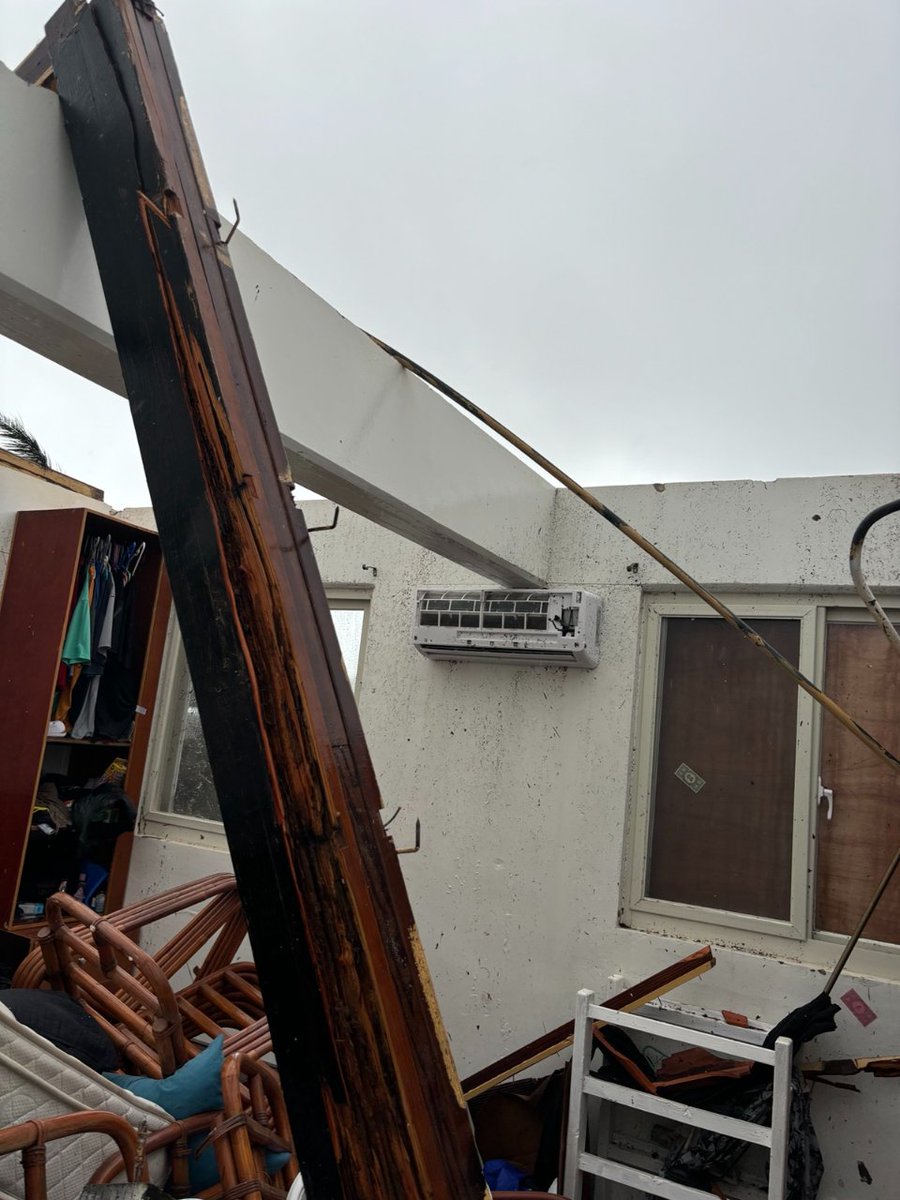
Heartbreaking images/reports from Typhoon Sinlaku's hit on Northern Marianas (US territory). A friend's home destroyed - one of many.
@POTUS declared emergency, now for @fema@INDOPACOM response - with oversight/accountability to ensure help gets quickly to where it is needed.
Main pier in Tinian, US territory of Commonwealth of Northern Mariana Islands (CNMI) today. There are major US military construction projects on Tinian.
Footage by Keith Nabors, Tinian clinic director (please stay safe, Sir!). #TyphoonSinlaku.
Thank you @SolliesSurgery
Report on US military vets from Palau, Federated States of Micronesia & Marshall Islands not getting the care they were promised, and earned, in spite of Congressional efforts to honor promises. @SecVetAffairs
Thanks @Bannons_WarRoom & @nataliegwinters.
https://t.co/VbwkD1JbXo
#Echevarria argues that U.S. strategy documents have blurred “competition” and “rivalry” into a single fuzzy category, and that the sloppiness has real cost. Competitors pursue incompatible interests; rivals pursue the same interest, undermining each other’s capacity to compete at all. He names three current U.S. rivals (China, Russia, Iran), marshals the international relations literature showing rivalries account for roughly 80 percent of history’s wars and end peacefully only 55 percent of the time, and calls for a strategy combining containment and preclusion. The conceptual move is sharp and worth absorbing. The prescription is not. Echevarria diagnoses a doctrinal disease (vague language producing vague strategy), then writes a prescription (revise the Joint Concept for Competing, add an annex, size the force against three named adversaries) that is far smaller than the diagnosis demands. The piece earns its argument that words matter. It does not earn its claim that better words produce better strategy. IMO, read it for the framework, not the fix.
Using Sun Tzu as a lens to analyze contemporary war is an exercise fraught with peril. Neither our available translations nor PME instruction adequately conveys the ambiguity inherent in the book. You end up just molding the text to make it validate what you want it to validate.
If China moves on Taiwan, it will have to take the relatively nearby US territories of Guam and Commonwealth of Northern Mariana Islands (CNMI) 'offline'. China is working on it. https://t.co/2RzbUYYuKn
Volt Typhoon, for example, is already in Guam's critical infrastructure. According to CISA: "Volt Typhoon’s choice of targets and pattern of behavior is not consistent with traditional cyber espionage or intelligence gathering operations, and the U.S. authoring agencies assess with high confidence that Volt Typhoon actors are pre-positioning themselves on IT networks to enable lateral movement to OT assets to disrupt functions. The U.S. authoring agencies are concerned about the potential for these actors to use their network access for disruptive effects in the event of potential geopolitical tensions and/or military conflicts." https://t.co/hqdUfERviP
There also seem to be human assets on the ground. The article below is just the most recent example of Chinese being caught spying in Guam. There has been concern for years that Chinese can still arrive in CNMI without a visa, where at least in the hundreds they have illegally gone the 60 miles to Guam and some have been found near the bases. https://t.co/sNRHBd0ZxF
Meanwhile, in 2023, the woman who ran the Bureau of Motor Vehicles in Saipan (CNMI) was convicted with a Chinese co-conspirator of illegally selling US driver's licenses to Chinese. https://t.co/qsMplL0jow
The situation is urgent, yet even when caught this is what happens to the spies:
"Feng was given a term of time served and upon release from imprisonment, he will be placed on supervised release for 60 days and ordered to pay a special assessment fee of $25....He agreed to leave the U.S. within one month of the date of sentencing in the case."
https://t.co/2RzbUYYuKn
Chinese influence operations in, and penetration of, Guam and (especially) CNMI require immediate attention. The situation is bad, and the Americans of Guam and CNMI deserve to get the federal help they need (and the late CNMI Governor Palacios repeatedly requested) to free themselves from Beijing's tightening grasp.
What are the best and worst US foreign policy decisions in history?
On the latest episode of #JAWbone, we evaluate the Council on Foreign Relations' recent survey of historians and add some of our own.
@CFR_org
https://t.co/2aJgPTeIPF
On the latest episode of #JAWbone@Slavoshek and I consider the past, present, and future of @SMH_Historians with their VP Bryon Greenwald
https://t.co/OWz4iYpXVM