@brianmolyvade@poe_collector@shesbonky Oh sweetie, you're so close. Do you think we've never been talked down to before? You'll live thru this, I promise. Maybe try smiling more, men say that helps.
“can i start you off with an appetizer, maybe 30 tortillas?”
“god no, i can’t eat that many tortillas!”
“how about if cut them up into triangles, fry them in seed oil, & serve them with some salsa?”
“omg that sounds delightful”.
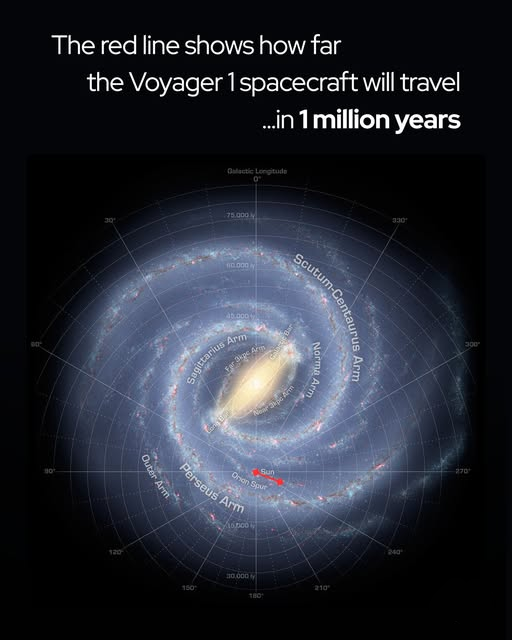
Voyager 1 is humanity’s most distant spacecraft.
But even after a million years, it will barely have scratched the surface of the galaxy.
Launched in 1977, Voyager 1 has been speeding away from Earth for 48 years. It now travels through interstellar space at about 38,000 miles per hour (61,000 km/h) – fast enough to circle the Earth in 40 minutes. Yet, space is so vast that this blistering speed barely makes a dent.
In one million years, Voyager 1 will cover about 330 trillion miles (530 trillion km). That sounds enormous – until you realize it’s only about 56 light-years. For comparison, the Milky Way is roughly 100,000 light-years across. After a million years, Voyager 1 won’t even have crossed one-tenth of one percent of our galaxy.
It will pass its first star encounter, a faint red dwarf called Gliese 445, in about 40,000 years – and then keep drifting silently onward. By then, its instruments will have long since gone dark, but the spacecraft itself, along with its golden record carrying sounds and images of Earth, will continue its lonely journey.
- Just one dragonfly can consume over 100 mosquitos a day
- They can fly backwards
- They have nearly 360-degree vision
- Their wings inhibit bacterial growth due to their natural structures
- They're actually beautiful
[📹 malbafont_macrophotography]
I'm begging the internet to stop showing me 5 to 9 morning routines where someone drinks structured water, journals for an hour, and does ice plunges before sunrise. My morning routine is hitting snooze until the fear of homelessness physically drags me out of bed.
Welcome home Reid, Victor, Christina, and Jeremy! 🫶
The Artemis II astronauts have splashed down at 8:07pm ET (0007 UTC April 11), bringing their historic 10-day mission around the Moon to an end.
LIVE: They are coming home.
Watch as the Artemis II crew returns to Earth, splashing down at around 8:07pm ET (0007 UTC April 11). https://t.co/n3vZE2rcFv
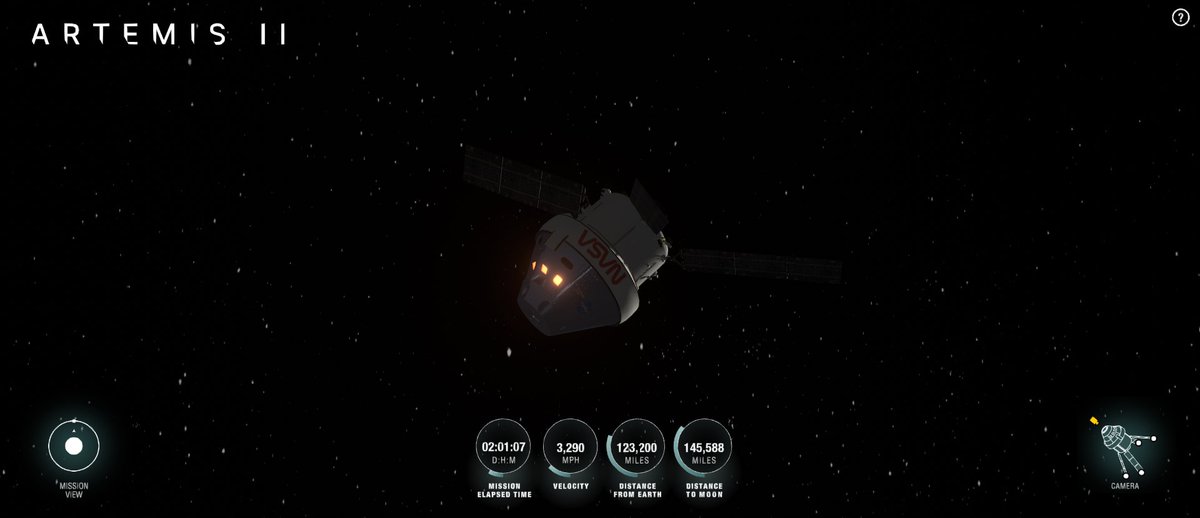
The Moon astronauts shared their location…with all of us!
Follow the crew in real-time on their journey around the far side of the Moon and back to Earth. https://t.co/KitoqI4s4a
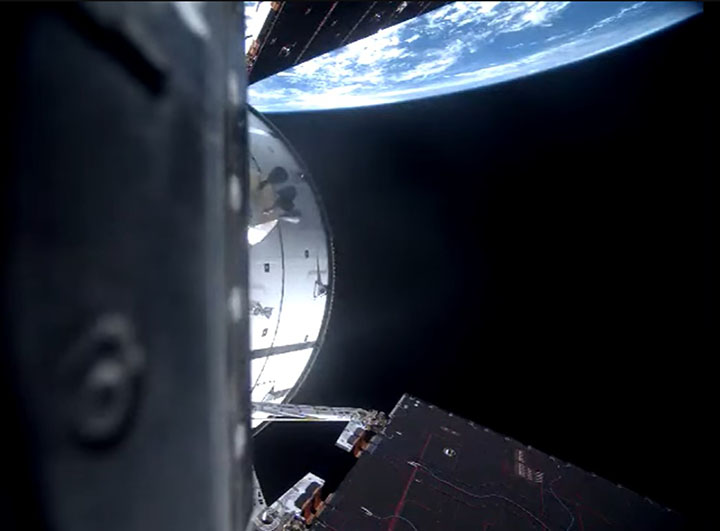
That's us! 🌍
The Artemis II crew captured beautiful, high-resolution images of our home planet during their journey to the Moon. As @Astro_Christina put it: "You guys look great."
Signal acquired! 📡
Engineers at @NASAJPL have confirmed that the Orion spacecraft is communicating with the Deep Space Network. For the first time in over 50 years, we’re receiving a signal from a spacecraft carrying humans toward the Moon.