Eritrean Community Festival in Western Canada
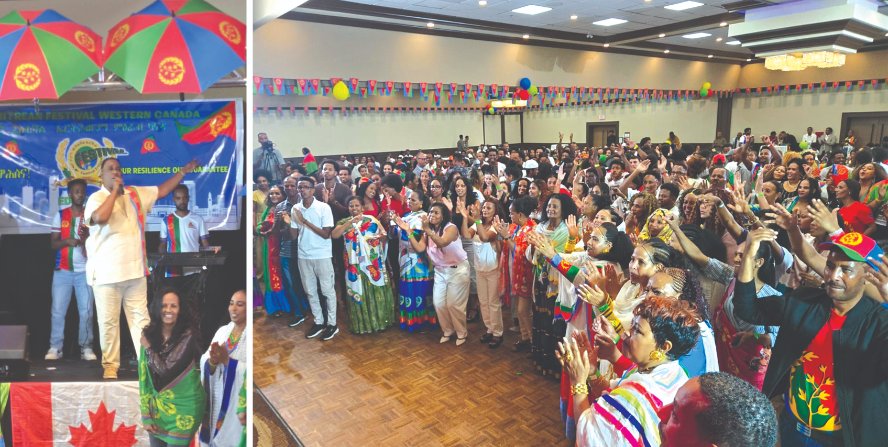
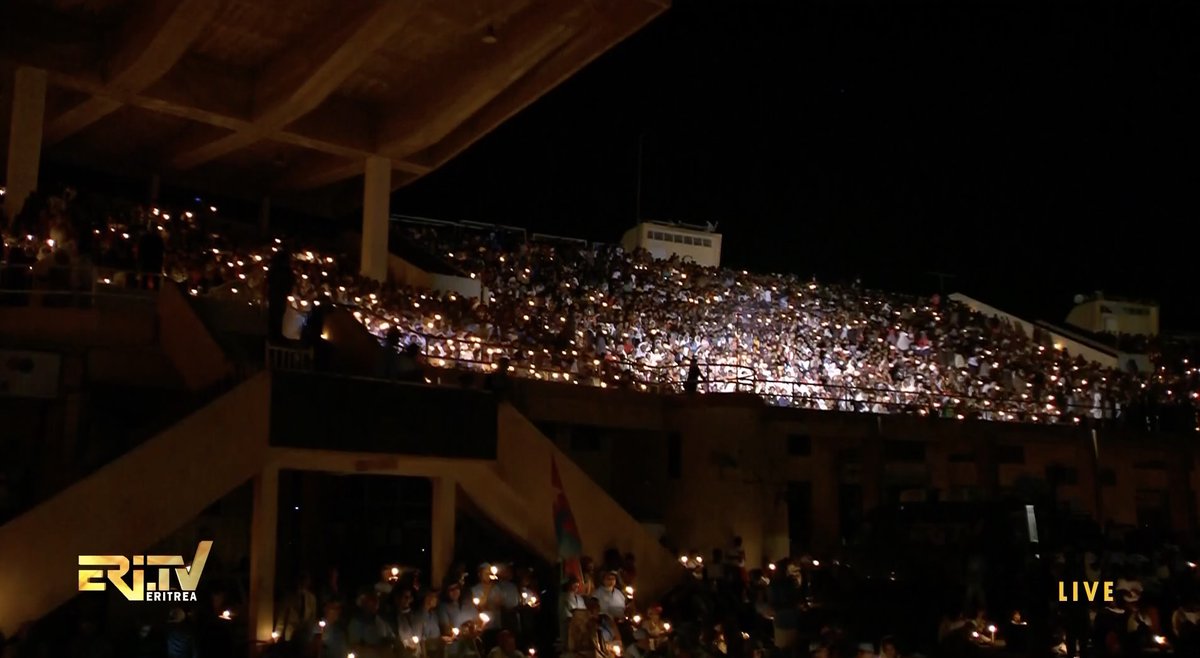
The Eritrean community festival in Western Canada was colorfully celebrated in Edmonton on 1 and 2 August under the theme “Our Resilience: Our Guarantee.”
The festival was attended by numerous nationals from the Canadian cities of Edmonton, Calgary, Saskatoon, Winnipeg, Vancouver, Regina, and Toronto, as well as from various cities in the United States. It featured cultural and artistic performances, sports competitions, and displays by members of the Red Flowers.
Noting that the Eritrean community festival in Western Canada has a history of about 40 years, Mr. Okbai Tesfaselasie, Chairman of the Holidays Coordinating Committee, said that the festival, which began with a clear vision and love of country, is a heritage of every Eritrean.
At the event, Mr. Elias Amare, the guest of honor, conducted a seminar for participants focusing on the objective situation in the homeland, as well as regional and global developments.
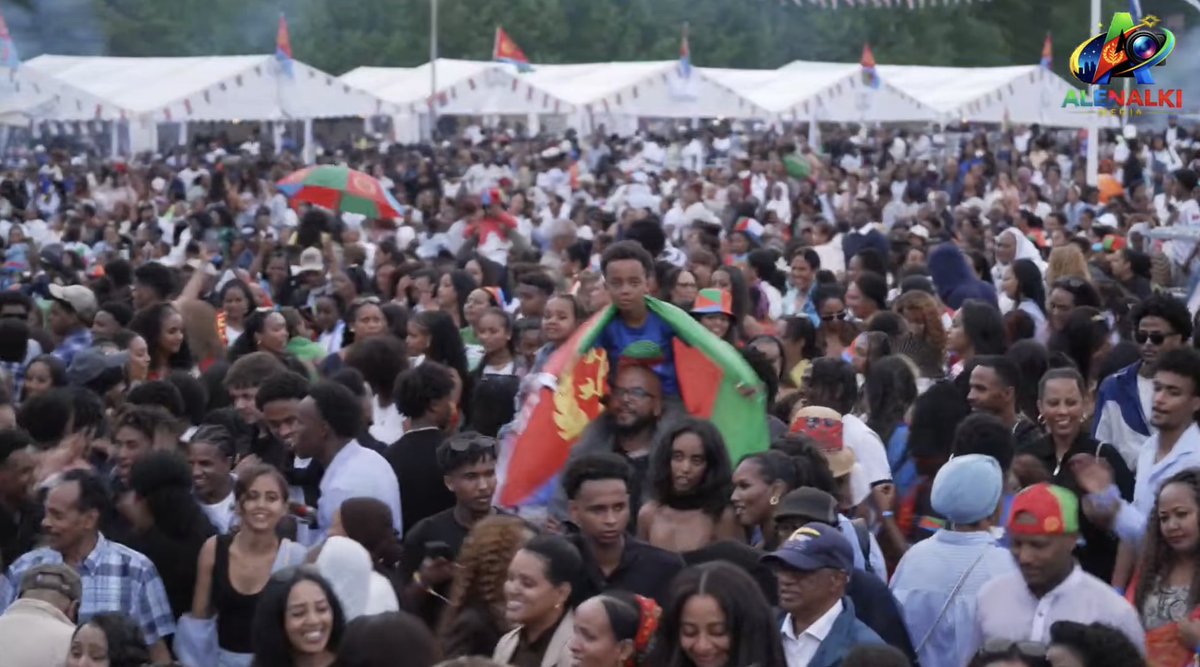
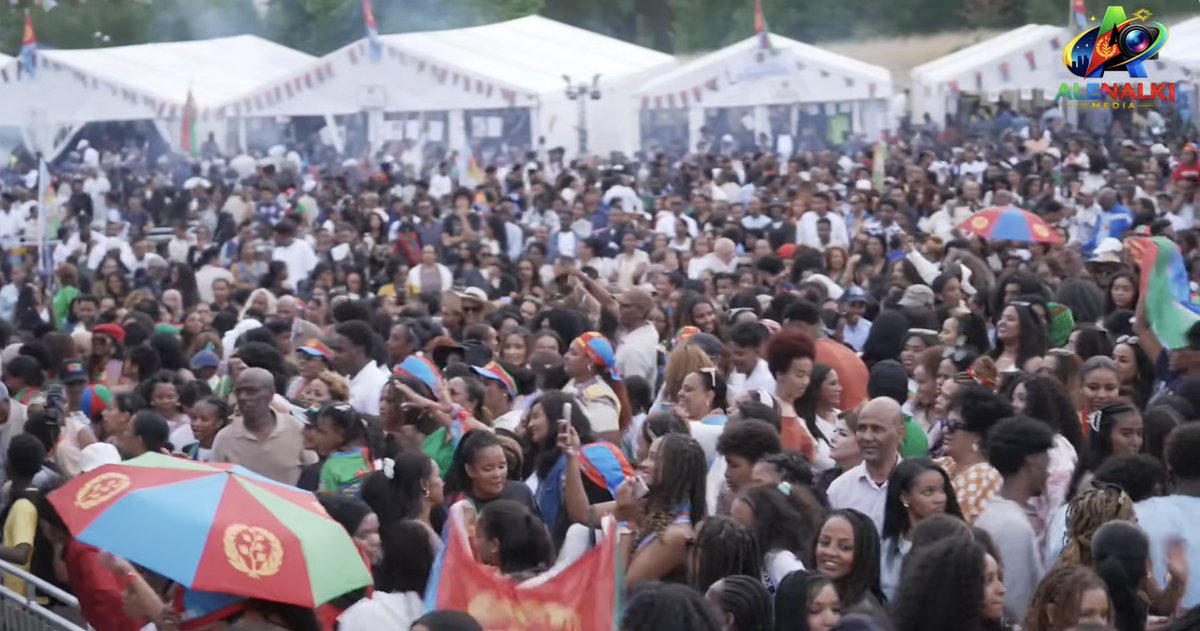
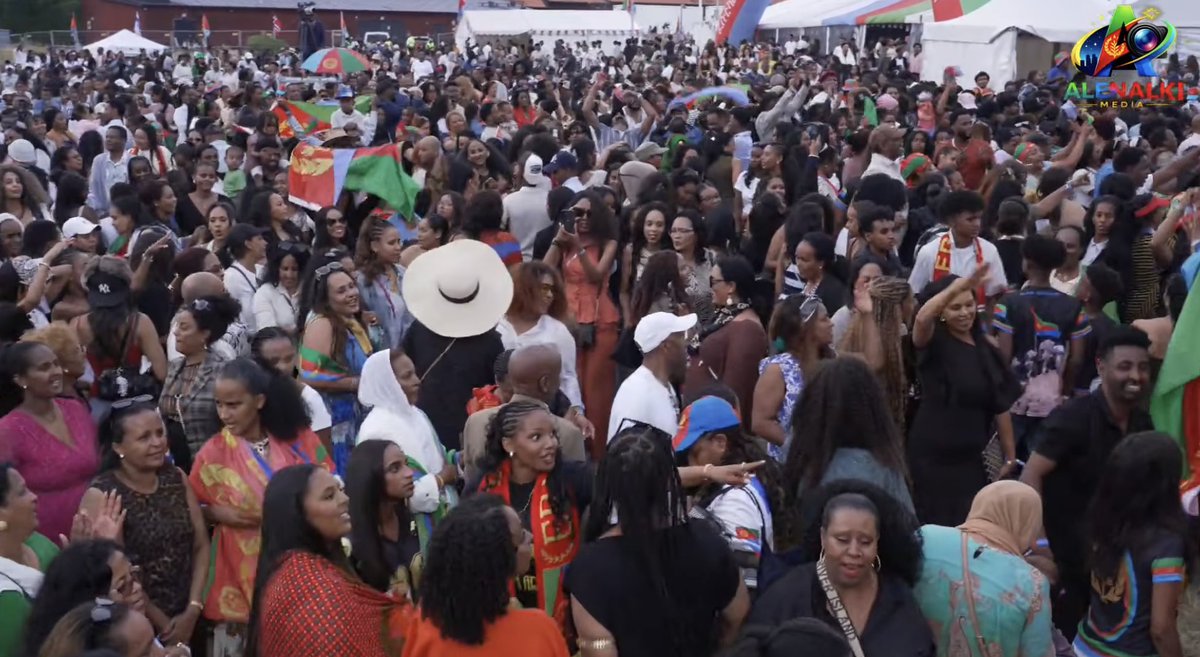
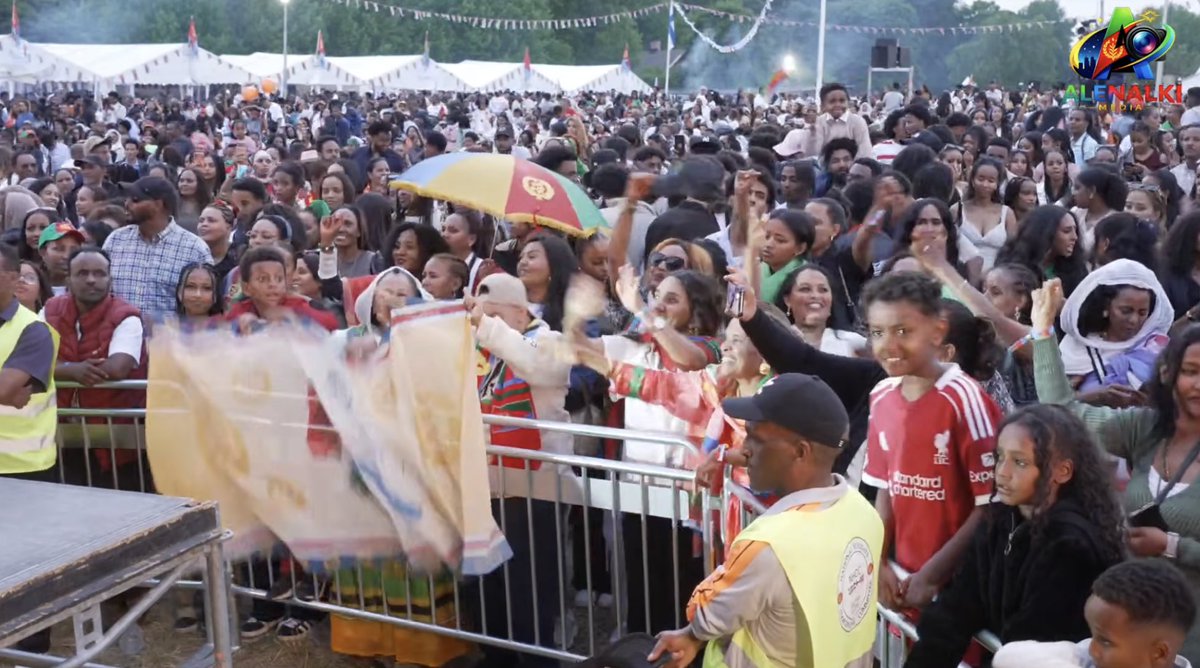
Eritrean Festival 2026 kicks off in style in Stockholm, Sweden!
A vibrant sea of flags, music, and community spirit fills the grounds as thousands come together to celebrate Eritrean culture.
https://t.co/ZO6ISfCadn
A Journey of Identity and Transformation: The Story of Two Sisters
Habtom Tesfamichael
In today’s edition, Eritrea Profile brings you a conversation with two sisters, Dliet and Lwam Tesfaendrias, who traveled from Edmonton, Canada, to join the 38th Round National Service. Dliet, 25, holds a diploma in accounting, while her younger sister Lwam, 19, recently completed high school. Their journey from the cold winters of Alberta to the intense heat of Sawa is a story of rediscovering roots, overcoming diaspora-born misconceptions, and building a stronger sense of self. We spoke to them about their experiences, the challenges of military training, and the life lessons they are taking back with them.
First, could you please introduce yourselves to our readers and share your backgrounds?
Dliet: We came from Edmonton, Canada, though we were born and raised here in Eritrea. I left the country after finishing seventh grade. I always dreamed of going to Sawa. When I was a little girl, people would ask what I wanted to be; while I would say “a pilot” because I liked flying, I always insisted that I wanted to go to Sawa first. I was inspired by a young woman who rented a house from us in Mendefera—she was a Sawa graduate and a parade leader for a military demonstration. Seeing her made me feel that one day, I should do exactly what she did.
After finishing high school in Canada, I asked my father to let me go. He was surprised that I still wanted to go even after moving to Canada, but he used it to motivate me, saying that if I got good grades, he would let me go. I got all A’s! Later, he suggested I finish college first so I could serve professionally. I agreed and earned my diploma in accounting. By the time I finished, Lwam had just graduated high school, so it was the perfect time for us to come together.
Lwam: well, I didn’t initially plan to come. I left Eritrea when I was only five years old. As a child, I didn’t go out much, and I hadn’t even learned Tigrinya properly. The idea was entirely my older sister’s. When she first suggested it, I didn’t think it would actually happen, but once the process started, I realized it was becoming a reality.
So, Dliet, how did you convince Lwam, and what challenges did you face regarding Sawa’s perception abroad?
Dliet: Many people abroad hold a negative view of Sawa. I wanted to bring Lwam so she could experience true Eritrean identity firsthand. She was hesitant because she had never been away from our mother or our home before. She only knew Sawa as a military facility and had heard many negative political rumors. She even spoke to Eritrean friends at her high school who told her discouraging things.
To convince her, I showed her everything—documentaries and videos about national service— and had her talk to friends who had already gone through Sawa. I told her the truth about both the rewarding aspects and the challenges. Eventually, she agreed.
Lwam: It was hard because of what I heard from friends. I was worried about the military aspect and the political rumors. But Dliet was persistent and showed me reality through others’ firsthand experiences. I decided to trust her and see it for myself.
What were your first impressions upon arriving in Sawa, and how did you begin your service?
Dliet: Because we had already completed our secondary education, we weren’t sent straight to the academic halls. Instead, we were stationed with the finance department at the training center to work there until the military training cycle began. It was a great experience; the staff showed us around and helped us understand Eritrea much better. The most difficult adjustment was the weather. Coming from Canada, the heat is intense—it is still hard for me to get used to it!
Lwam: At first, I was stressed because we had already finished school, and I didn’t know what we would be doing. But working in the finance office was a nice transition as we adapted to the climate. When the military training finally started, we were excited. It was strange at first— doing everything collectively and sharing communal showers with so many people—but our company-mates were so cooperative that I adapted very quickly.
Sawa is often described as a “melting pot.” How has the military training and collective living shaped your understanding of the country?
Dliet: “Melting pot” is a very accurate description. You meet people from all cultures, regions, and backgrounds. Sawa changes your habits; you learn to correct yourself immediately and avoid repeating mistakes. In our oath, we pledge to serve free of narrow regional or tribal sentiments, and you see that principle in action in every movement we do.
The combination of the climate and military training really tests your limits. I remember our battalion commander telling us: “At first, it might be tough for you. But the harder you train, the easier it becomes for you in challenging conditions—like, God forbid, during conflict.” That helped me understand the true purpose of being here. I don’t think people fully realize how fortunate we are to have Sawa.
How has Sawa changed you both, mentally and physically?
Lwam: It made me realize how much I took for granted back in Canada. It taught me to use the opportunities I have more wisely and to value things I didn’t pay attention to before.
Dliet: Mentally, it was a complete digital detox. In Canada, I was addicted to my phone; I was only away from it while sleeping. Here, I’ve learned to be truly present. Physically, I’ve become much stronger. I used to be “squeamish” and couldn’t even carry a heavy bucket of water. Now, I have built real muscle and stamina! Our company was very competitive. Being around strong people motivates you. We used to lag during morning runs, but we have improved so much.
What are the most important life lessons you will take back to Canada?
Dliet: Time management is the biggest lesson. What I used to do in an entire day in Canada, I now accomplish in an hour here. At home, doing laundry could take three days from washing to putting it away in the closet. Here, you exercise, clean your quarters, and wash your clothes all within a tiny window of time. There is no lazy person in Sawa—we are amazed by our own efficiency!
Lwam: I learned that you have to do things at the right time. You can’t procrastinate. You don’t know when you will be called for the next task, so you must make the most of the time you have right now.
What is your message to the diaspora and to those who might be uncertain about coming to Sawa?
Dliet: Many in the diaspora think Sawa is a “correction center” for youth with behavioral issues. That is not the purpose of Sawa at all. It is where true Eritrean identity is built—willingly and consciously. It brings together people from all walks of life. It is a place to learn, grow physically and mentally, and understand Eritrea as a microcosm of our whole nation.
Lwam: It almost feels like a movie experience, but it is a powerful reality for us. I believe our embassies and consular affairs offices should play a greater role in providing people with detailed information. By pooling the skills and capacity of the diaspora, we can create even more opportunities to contribute. My goal now is to pursue further education to serve my country better in the future.
Egypt's Coach Hossam Hassan CALLS OUT FIFA & INFANTINO:
'I will say what's on my mind... REGARDLESS of CONSEQUENCES:
This was CLEARLY A RIGGED MATCH — THE WHOLE WORLD SAW IT'
Questions WHY everyone was invited to compete if Messi & Argentina were MEANT TO WIN
By the way, following Trumps pre-genocide announcement, what has the UN said? Or they are waiting to 'regret'...
I wont even mention the AU.
Most useless organisations.
Ethiopia’s Responsibility for Eritrea’s Suffering: 85 Years of Violations, Harm, and Unpaid Debt
March 27, 2026
By David Yeh
@RedSeaBeacon
Introduction: A History That Refuses to Stay Buried
Some histories fade into archives. Others refuse to die because their consequences are still being lived. The relationship between Eritrea and Ethiopia belongs to the latter.
This is not a story of mutual misunderstanding or equal miscalculation. It is a record of decisions imposed from without, agreements violated from within Ethiopia, and a sustained pattern of destabilization that has shaped the fate of millions of Eritreans and Ethiopians for nearly a century. From the era of the British Military Administration to the geopolitical engineering of the United Nations, from annexation to prolonged war, the thread that runs through this history is not ambiguity, it is asymmetry. Eritrea has consistently sought peace and a stable neighborhood; Ethiopia, by contrast, has repeatedly chosen disruption, advancing its interests through pressure, coercion, and revision. Eritrea did not choose this trajectory, it was forced into it, step by step, by a neighbor whose conduct has been deliberate, and too often violent.
To speak of this history is not to indulge sentiment or nationalism. It is to confront a record grounded in law, evidence, and lived experience. Eighty-five years of imposed arrangements, suppressed voices, and denial of sovereignty cannot be dismissed as complexity. They demand clarity, and they demand accountability.
The Architecture of Injustice: From Imposition to Annexation
The roots of the Eritrea–Ethiopia conflict were not planted in 1952; they were already taking hold during the British Military Administration. Even then, Eritrean aspirations for independence were met not with dialogue but with intimidation. Armed groups (shifta bandits), operating with tacit tolerance, crossed borders to silence pro-independence voices. The assassination of figures such as Abdulqadir Kebire and Berhe Gebrekidan, Kahsay Malu and others along with repeated attempts on Weldeab Weldemariam’s life, were not isolated incidents. They formed part of a deliberate Ethiopia’s campaign to dismantle Eritrea’s emerging political consciousness before it could consolidate.
This campaign extended beyond physical violence. It reached into the spiritual fabric of Eritrean society. Religious authority was weaponized. Church members were denied burial rites, christenings, and communal belonging by figures such as Abune Markos and Qeshi Dimetros, not for theological reasons, but for political conformity. This was not merely coercion; it was desecration. All interested in the details must read “An African People’s Quest for Freedom and Justice: A Political History of Eritrea, 1941-1962” by Alemseged Tesfai.
It is against this backdrop that the 1952 federation must be understood. Presented as a diplomatic compromise by the United Nations, it was in reality a geopolitical arrangement that sidelined Eritrean self-determination and right to decolonization. The structure was flawed from inception: it lacked enforceable safeguards and created a pathway for absorption rather than coexistence.
That pathway was fully realized in 1962, when Ethiopia unilaterally dissolved the federation and annexed Eritrea. This was not a breakdown of an agreement; it was its culmination. A legal framework imposed without consent became a mechanism for its own violation.
The consequences were
ReadMore @RedSeaBeacon@hawelti@Sudan #Djibouti #Somalia #Egypt #SaudiArabia #Turkey #Qatar #UAE
@EmbassyEritrea@hadnetkeleta@SirakBahlbi@EliasAmare@Ghidewon@Yehdavid@GhideonMusa@SharronYemane@PMEthiopia@MFAEthiopia@MOFAEGYPT@AfricanUnion@antonioguterres@cnni@AJEnglish@BBCWorld@Reuters@AFP@AlAhramWeekly@FT@latimes@nytimes@BBCWorld@AlJazeera@tberhan0437898@Shabait@ERiTV_Official@AmbassadorEstif
https://t.co/RtCUvRIpxo
Please respect your self and stop replying to this subhuman. All you’re doing is feeding his nonsense and giving him the attention he’s begging for. #Eritrea