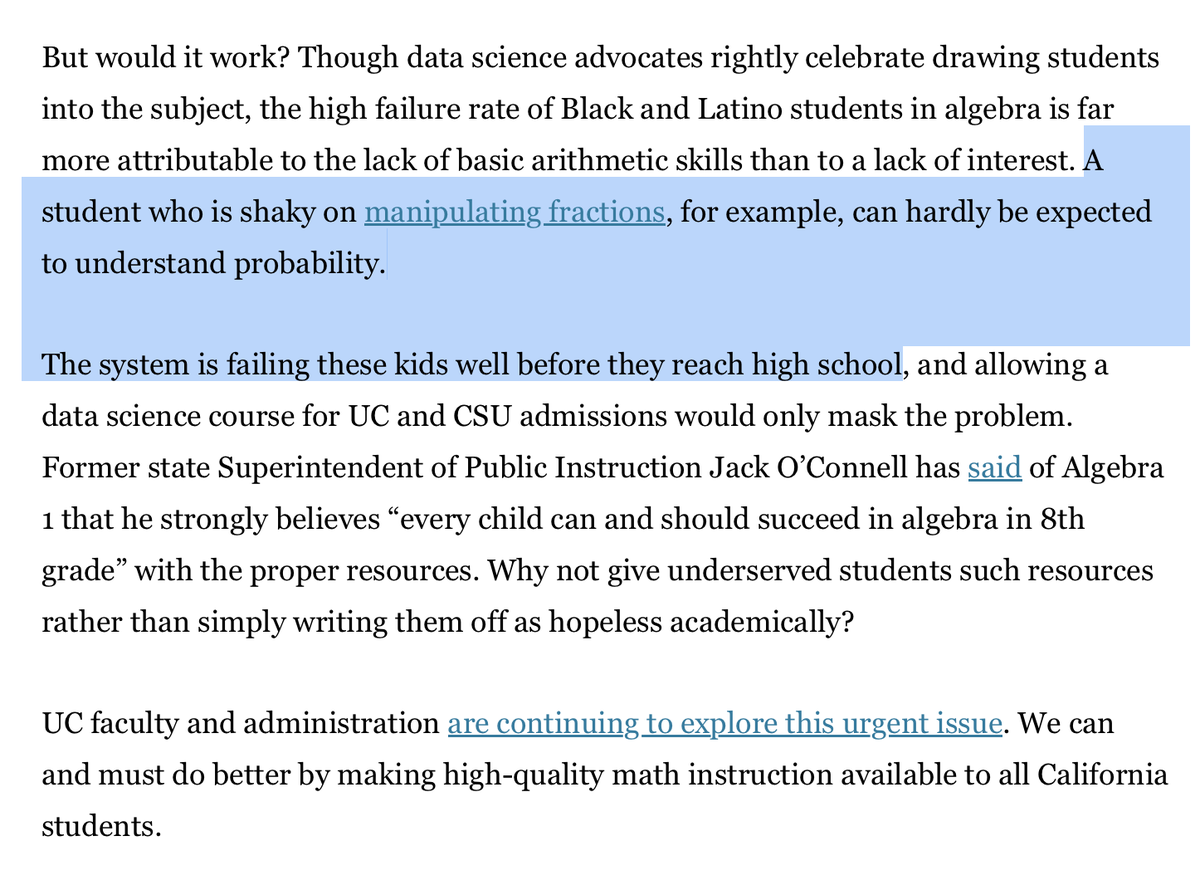
"during the last school year, a council of educators at both Palo Alto high schools rejected the [advanced math] course, arguing it would serve few students and set back equity and students’ well-being"
Right, math is harmful. Come on! What are we doing?
“If teaching math can harm students, then we have a lot bigger issues to talk about than whether to offer this course,” Nguyen told the Chronicle.
Indeed.
Brian Conrad, a Stanford mathematician, told the Chronicle that he felt math was treated as a “punching bag” for equity and mental health concerns.
“The school doesn’t cut sports teams simply because some kids are far more talented at sports,” he said.
“Why is it that the teaching of math generates much more controversy than other subjects?”
https://t.co/9oGxlz96WJ
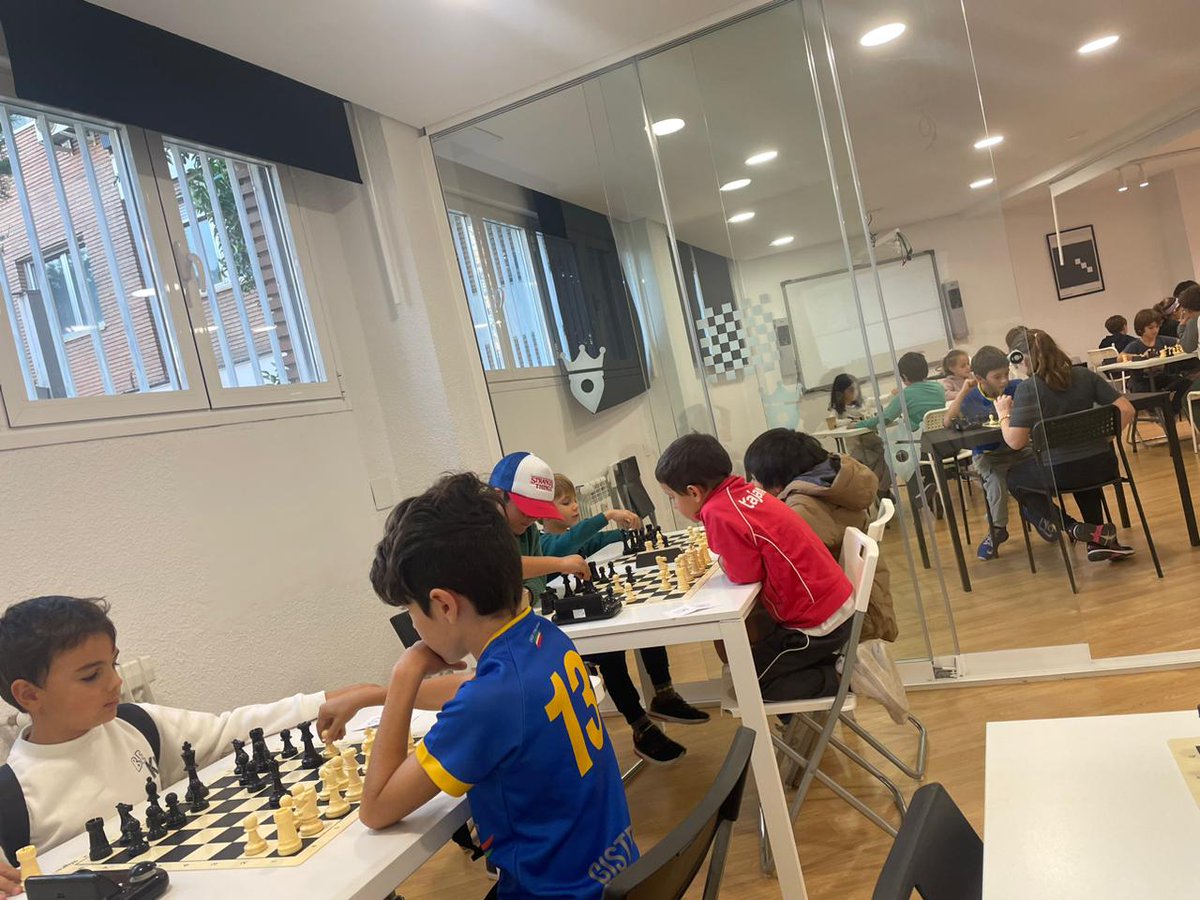
♟️ TORNEO INFANTIL EN AJEDREZ CON CABEZA
📅 Sábado 24 de octubre
🕓 Primera ronda: 16:00 h
⏱️ Final aproximado: 17:45 h
♟️ 6 partidas. Todos juegan todas las partidas, nadie se elimina
🎁 ¡Todos los participantes se llevan un obsequio!
Toda la info en https://t.co/kM9dZ84jmw
@rastokke The same applies to us. Technology allows us to provide immediate feedback, adapt more closely to each child’s level, and deliver well-designed, well-timed interleaving and retrieval practice.
@New_Old_Paul@Educhatter Very interesting, but as often happens, the risk is throwing the baby out with the bathwater. Teachers are crucial, but something like Smartick, which adapts math sessions to each child's level, corrects them, and uses interleaving and spaced retrieval, can be a huge help.
@DrCamiloOrtiz or keeping it appropriately challenging in the learning process. That's what we do: figure out the child's level and, from there, set challenges they can handle but that still push them.
The great sociologist James Coleman came to this conclusion in 1967. Family is what made the difference. The Johnson administration was so disappointed that the solution was not some public policy, that they released the Coleman Report on the Friday night of a holiday weekend.
I am very sorry to hear of Norm's passing. Although I didn't have the chance to meet him in person, I enjoyed his writing on math education in California; e.g., he wrote this excellent article in the LA Times. My condolences to his family. https://t.co/MiTeyW26qo
@natwexler Tests aren´t everything, and the humanities are, of course, extremely important. But when it comes to strengthening maths learning, deliberate, focused practice in sessions like ours is the most effective approach.
https://t.co/erKHxcBtDt
All of these are aspects that we have always taken into account when designing Smartick sessions. If you would like to try it this summer, here is our offer: 15 minutes a day. Inspired by ideas shared by people like Barbara Oakley and @rastokke https://t.co/erKHxcBtDt
Just spoke to the most incredible group of Stanford/MIT interns at @gauntletai about the science of learning and the future of adaptive learning platforms. Brilliant questions and thinking about hard problems around retrieval, spacing, interleaving, cognitive load and elaboration. The kids are alright 👏
Just 37% of 9-year-olds, and 14% of 13-year-olds, said they read for fun “almost every day” in 2025; those numbers peaked at 53% and 35%, respectively, over 40 years ago. https://t.co/flnlxDzFd2