In the screaming, blood-slicked labor wards of colonial Calcutta, young mothers were dying by the 1000s in absolute, unmentioned agony. The heavy, crude steel instruments imported from Europe were designed exclusively for Western anatomy, turning a difficult childbirth into a literal death sentence for Indian women until a quiet Bengali daaktar stepped out of the ward, walked into a local forge & picked up a blacksmith’s hammer.
Long before he became the silent savior of the unborn, Kedarnath Das was just a quiet, intensely observant boy navigating the dusty lanes of mid 19th century Bengal. Born in 1867 into a modest middle-class family, Kedarnath did not possess a lineage of wealth, but he inherited a sharp, analytical mind. He watched a changing India, a nation adapting to Western education while its people quietly starved under colonial economic policies.
He fought his way into the prestigious Calcutta Medical College, graduating in 1892 with a brilliant academic record that forced the British faculty to take notice. While his peers chased lucrative private practices/drifted toward general medicine, Kedarnath chose the messy, chaotic & deeply tragic world of obstetrics. He did not just want to treat disease; he wanted to stand at the very threshold of human life.
By the turn of the century, Kedarnath was appointed as an obstetrician at the Eden Hospital in Calcutta. It was here that he walked into a silent, horrifying epidemic. When a baby was stuck in the birth canal, doctors had to rely on obstetric forceps: metal tongs used to gently guide the child into the world. But the British Empire supplied only British tools, specifically the massive, heavy Simpson & Barnes forceps.
These instruments were engineered for the larger pelvic structures of European women. When British doctors/trained mid-wives applied these brutal, oversized steel clamps to the smaller, deeply delicate & often malnourished frames of Indian mothers, the results were catastrophic. The heavy steel routinely crushed the fragile skulls of the infants or caused fatal, uncontrollable internal hemorrhaging in the mothers.
To the colonial medical establishment, these deaths were dismissed as a mere statistical byproduct of native frailty. But to Kedarnath, it was systemic, mechanical slaughter. He realized a truth that the entire British Empire was too arrogant to see: colonial medicine assumed that 1 imperial size fitted the entire human race.
Kedarnath executed an audacious, decade-long anthropological crusade. Working in absolute silence, away from the prying eyes of British supervisors, he manually measured the pelvic dimensions of 1000s of Indian women across different regions & backgrounds. He compiled a mountain of unprecedented, raw anatomical data.
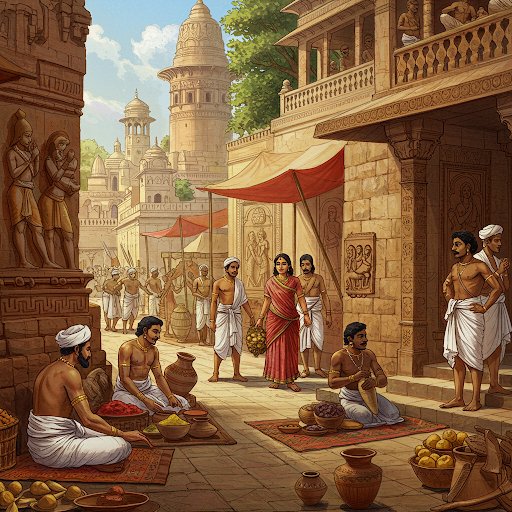
Armed with his sketches & calculations, Kedarnath bypassed the elite British medical supply chains. He walked into a local Calcutta forge. Amidst the roaring fire, the flying sparks & the rhythmic clang of iron, he instructed the local blacksmith to shape a completely new weapon of survival.
He threw out the heavy, overbearing British design. He forged a pair of forceps that were significantly shorter, lighter & featured a precision-engineered, gentler curve that perfectly cradled the smaller, delicate anatomy of native mothers. Symmetrical, elegant & minimalist, it became known to a handful of stunned specialists as the "Bengal Forceps/the Das Forceps."
When he introduced his handmade prototype into the labor wards of Calcutta, the mortality rates plummeted overnight. Lives that would have vanished into the cold statistics of colonial neglect were suddenly walking out of the hospital doors, healthy & breathing.
The Western world was stunned. British manufacturers in London, who had initially dismissed Indian medical minds, were suddenly forced to mass-produce Kedarnath’s precise design in their factories, exporting the "Das Forceps" across the British Empire & the Americas to save women of similar petite statures worldwide. In 1928, he published Obstetric Forceps: Its History & Evolution, a monumental, 900 page masterpiece that became the definitive global textbook on the subject for half a century. He was knighted for his genius, yet he remained fiercely dedicated to his soil, eventually helping found the indigenous Carmichael Medical College to train Indian doctors on their own terms.
As the 20th century roared forward, bringing partition, independence & the high-tech digital revolution, the memory of Sir Kedarnath Das was quietly, systematically erased. The textbook he authored vanished from modern curriculums. The local forges that once pounded out his life-saving steel were replaced by modern pharmaceutical corporations.
Today, his name does not line our textbooks, nor are there massive national monuments erected in his honor. He has become a complete phantom, a ghost of Indian scientific brilliance. Yet, if you walk into the dusty archive rooms of old medical colleges/look through the vintage surgical kits of vintage rural clinics, you will find a pair of short, elegantly curved, unmarked steel forceps resting in the dark.
Empires have crumbled into the dust of textbooks, & the names of the kings who ruled us have faded from the wind, yet every single time an Indian child is born healthy into a world that once tried to gatekeep its survival, the silent hammer of Kedarnath Das still echoes in the room proving that the ultimate act of freedom is not taking a life, but having the courage to forge the tools that save it.
I was horrified when a close relative — whom I shall refrain from naming — casually remarked that Bhagwan Shiva was blue, probably influenced by comic books and calendar art. That one offhand comment revealed how far we have drifted from our own aesthetic vocabulary.
Almost instinctively, I found myself reciting:
कर्पूरगौरं करुणावतारं
karpūra-gauraṁ karuṇā-avatāram
He whose form is white and translucent like camphor, the embodiment of compassion.
Shiva, in our earliest imagination, is not blue in the literal sense. He is camphor-white — clear, luminous, almost translucent. His form dissolves into light the way camphor does. Somewhere along the way, symbolism became pigment, and depth became surface. That small moment stayed with me, because it opened up a larger question: how did our sense of beauty become so narrowly defined?
Before all this, India saw beauty everywhere
If we turn to our epics and poetry, we meet a civilisation that never believed beauty had to look one particular way.
Rama is described as:
श्यामः पीताम्बरधरः
śyāmaḥ pītāmbaradharaḥ
Dark-complexioned, radiant in bearing.
Krishna is loved as:
मेघश्यामं
megha-śyāmaṁ
Dark like a monsoon cloud.
Draupadi, born of fire yet dusky, is named Krishnaa:
कृष्णा मनोज्ञा
kṛṣṇā mano-jñā
The dark one, deeply captivating.
Sita, daughter of the earth, is remembered as:
काञ्चनप्रभाम्
kāñcana-prabhām
She who shines with a warm, golden radiance.
And Ulupi, the Nāga princess, brings in an entirely different geography and aesthetic:
नागकन्या रूपयुवती
nāga-kanyā rūpa-yuvatī
The beautiful young maiden of the Nāgas.
These descriptions are not just about skin tone. They speak of presence, grace, strength, virtue, and harmony with nature. Beauty was not uniform; it was regional, seasonal, and deeply human. Sangam poets adored ebony skin. Sculptors carved bodies full of vitality and sensual confidence. Nothing about our aesthetic imagination was apologetic or narrow.
Parvati, and the reminder that beauty is not skin deep
As I reflected further, I was reminded of the old adage that beauty is not skin deep — especially when I thought about Maa Parvati and how she has been described.
Parvati does not belong to one shade. She moves freely across the entire spectrum.
As Gauri, she is gentle and luminous:
उमा गौरी जगन्माता
umā gaurī jagan-mātā
Uma, the radiant mother of the world.
As Shyama or Kali, she becomes the deep, protective dark:
श्यामा रूपं धृतवती
śyāmā rūpaṁ dhṛtavatī
She who has assumed the dark form.
As Annapurna, she carries the warmth of grain and nourishment:
अन्नपूर्णे सदापूर्णे
annapūrṇe sadā-pūrṇe
O ever-nourishing goddess.
And as Tripurasundari, beauty transcends colour altogether:
मुखचन्द्रकला
mukha-candra-kalā
Her face shines like the crescent moon.
Parvati makes something unmistakably clear: beauty was never a single complexion. It was Shakti — strength, compassion, nourishment, radiance — expressed differently depending on the moment and the need.
When colonialism narrowed our gaze
Colonial rule quietly introduced a hierarchy where fairness became aspiration and power. Over time, this seeped into cinema, advertising, and even family conversations. Gods grew lighter on calendars. Heroines were softened on screen. A civilisation that once celebrated dark gods and earth-toned goddesses began to doubt its own reflection.
The loss wasn’t dramatic — it was subtle, and therefore deeper.
Coming home to our own way of seeing
India’s older imagination still whispers to us — in verses
Did you know that ancient Greeks described Indian society as a land with no slaves, no written laws, and a king guarded by elite women warriors? When the Greek ambassador Megasthenes lived in India around 300 BC, what he saw completely amazed him.
One of his most shocking observations was how safely farmers lived. Megasthenes wrote that even during the bloodiest wars, farmers were treated as sacred. While armies fought nearby, soldiers would leave farmers completely alone to work their fields in peace.
Equally mind-blowing was the king’s security team. Emperor Chandragupta did not trust regular male soldiers to protect him. Instead, his inner palace corridors were guarded by a highly trained troop of armed women warriors.
Even the smartest people faced strict rules. The highest social class belonged to the Philosophers, whose job was to predict the weather and monsoons for the government. But there was a catch: if a philosopher’s predictions failed three times, they were legally banned from speaking for the rest of their life.
Furthermore, Megasthenes was stunned by how much Indians valued freedom. Coming from Greece and Rome, where slavery was brutal and widespread, he wrote in awe that all Indians were free and no one was treated as a slave.
Finally, the honesty of the people surprised him. He noted that in a massive military camp of 400,000 men, thefts almost never happened. Because people trusted each other so deeply, society ran smoothly without written contracts or law books, relying entirely on custom and word of mouth.
#archaeohistories
Hey @support@premium:
@TheEmissaryCo's account has been hacked for 2 weeks.
One of the most interesting accounts this side of twitter; we'd all greatly appreciate you attending to his case.
Case no: 13227752
What a Mango Taught Me About the Limits of Colonial History
For years, whenever I bought a mango in the United States, I felt a quiet disappointment that I could not quite name. The fruit looked right: golden skin, a yielding give when pressed, the familiar kidney shape stacked in bins at the grocery store. But when I cut it open and took the first bite, something essential was missing. The sweetness was thin, the aroma polite, the juice barely enough to run down a wrist. On any honest scale of mango quality, those Mexican mangoes of the early 2000s were perhaps a one out of ten. Not inedible. Not joyless. But compared to the mangoes I had known growing up, they were a shadow of a fruit.
Over the following two and a half decades, something began to shift. Slowly, incrementally, the mangoes in American stores improved. The Ataulfo arrived and was noticeably better than the old Tommy Atkins, which had been bred for shelf life and color rather than flavor. By 2026 I would place the best Mexican mangoes available in the United States at perhaps a two out of ten on that same scale. That is genuine progress. It is also, when you stop to think about it, one of the most revealing data points in the history of fruit.
Because two out of ten is what you get after two centuries of cultivation and roughly fifty to seventy years of serious grafting work. Mexico received the mango only around 1779, when it arrived via the Philippines, and widespread commercial cultivation developed even later. The Ataulfo itself, now considered Mexico's finest contribution to mango culture, is a mid-twentieth century selection that gained international attention only in recent decades. If you measure Mexico's mango journey in horticultural time, you are looking at an experiment that is still in its early rounds.
India, by contrast, has been running this experiment for four to six thousand years.
That fact alone should give pause to anyone who repeats the popular claim that the Portuguese introduced grafting to India and thereby created the conditions for its great mangoes. But the science of how mangoes reproduce makes the claim even harder to sustain, because the science reveals that India's finest varieties could not exist without a long, disciplined tradition of vegetative propagation that has nothing to do with Portuguese missionaries.
To understand why, you have to understand the difference between polyembryonic and monoembryonic mango seeds. Most mangoes grown outside India are polyembryonic, meaning each seed contains multiple embryos. Most of them are nucellar embryos produced asexually from the mother plant's own tissue, making them genetic clones of the mother tree. A farmer who finds a polyembryonic tree she likes can plant its seeds and expect most of the resulting seedlings to faithfully reproduce her favorite tree's traits. This is enormously convenient for building consistent orchards quickly. Plant the seeds, cull the odd one out, and you have reliable copies at relatively low effort. Like Mendal's peas!
Indian elite mango varieties work completely differently. They are monoembryonic, meaning each seed contains a single embryo produced by sexual reproduction, a genetic shuffle of two parents. Plant the seed of a Hapus and you will not get another Hapus. You will get something new and probably ordinary, because the particular combination of genes that makes a Hapus what it is will almost certainly be broken apart in the lottery of recombination. The only way to preserve a monoembryonic variety is to take living material from the original tree and graft it onto a rootstock, bypassing sexual reproduction entirely and cloning the desired genotype directly. If you do not graft, the variety dies with the tree.
This means that every elite Indian mango variety you can name today exists because someone, at some point many generations ago, recognized a singular tree, decided it was worth preserving, and found a way to keep it alive through vegetative propagation.
And then someone else did the same thing for the next generation. And the next. The scientific literature confirms that major Indian cultivars such as the Dashehari, the Langra, and what we know as the Alphonso are selections that were already being propagated vegetatively by the time of the Mughal emperor Akbar in the sixteenth century, meaning the grafting tradition that maintains them is at minimum several hundred years old and in all likelihood far older.
The current monetary value placed on India's grafting knowledge runs into figures that make the colonial narrative even harder to defend. The accumulated expertise, the rootstock knowledge, the timing of cuts, the specific techniques of approach grafting and inarching and veneer grafting developed and refined over generations in Indian orchards, represents an economic inheritance worth billions. Estimates of the grafted mango industry's knowledge base place the value of India's cultivar and propagation heritage at roughly 3,600 crore rupees or more in annual economic output tied specifically to grafted premium varieties. That kind of value does not emerge from a technique introduced by outsiders in the sixteenth century. It is the compounded return on a very long investment.
Ancient India had texts to prove it. The Vrikshayurveda tradition, a formal science of plant life recorded in Sanskrit manuscripts over many centuries, describes vegetative propagation through scions well before the Common Era. Surapala's Vrikshayurveda, written around 1000 CE, is five centuries older than the Jesuit grafting stories and contains explicit prescriptions for mango cultivation and fruit quality improvement. Kautilya's Arthashastra, composed around 300 BCE, already references the tradition as established practice. The Mughals kept extraordinarily detailed records of their mango obsession, with courtiers cataloguing varieties by name, flavor, and provenance, and Akbar commissioning an orchard of one hundred thousand grafted trees near Darbhanga to experiment with new cultivars. This is not the behavior of a civilization recently introduced to the concept of good mangoes by Portuguese missionaries.
Then there is the word itself. In Marathi and Konkani, my mother tongue, the Alphonso mango is called Hapus or Apoos. The standard colonial explanation is that this is simply a phonetic corruption of the Portuguese name Alfonso, the consonants softened and the vowels shifted by local tongues. But this etymology dissolves under scrutiny. In Goa, where Konkani speakers live, two separate names coexist in active use: Afons for the Portuguese associated commercial variety, and Appus or Goa Appus for a completely different traditional variety whose name is now appropriated. If Apoos were merely a local rendering of Afons, these two names would not survive independently in the same linguistic community pointing to two different fruits. Their coexistence is strong evidence that Apoos had its own origin, rooted in the ancient Sanskrit and Prakrit vocabulary of the mango, where amra becomes amba becomes ambo in the Konkan dialects, and where local farmers had already named and celebrated specific cherished varieties long before any Portuguese ship rounded the cape.
The more historically grounded view, supported by scholars working on Goan and colonial botanical history, is that the mango we call the Alphonso was almost certainly named after Nicolau Alfonso, a Jesuit horticulturist who was grafting mangoes in Goa around 1550, and not after Afonso de Albuquerque, the Portuguese general who seized Goa in 1510 and died five years later, well before the serious Jesuit grafting work began. The Jesuits routinely named cultivars after themselves and their colleagues. The confusion between Nicolau Alfonso and Afonso de Albuquerque, two names sharing a root, produced a narrative in which an ancient indigenous fruit was retrospectively credited to a conquistador who almost certainly never grafted a single tree.
What the Jesuits did contribute was real but narrow. They applied approach grafting techniques, themselves derived from Arab agricultural science and transmitted through Moorish influence in Iberia, to produce mango varieties in Goa that were firm enough for European tables and sturdy enough for sea transit. India's beloved sucking mangoes, the intensely aromatic pulpy varieties that collapse with sweetness in your hand, were unsuitable for export. The Jesuits solved a packaging problem. They did not solve a flavor problem, because the flavor was already solved. The raw material they worked with was Indian. The soil was Indian. The genetic heritage was Indian. The millennium of selection that produced the sweetness was Indian. They improved a commercial pathway for a fruit that was already, by any measure, at the summit of what human cultivation had achieved.
The Mexican mango of 2026, sitting at perhaps two out of ten on a quality scale measured against that summit, tells this story more honestly than any colonial account. Two centuries of cultivation, fifty years of serious grafting, modern horticultural science freely available and actively applied, and the result is still a fruit that tastes like a distant cousin of what grows in Ratnagiri or Lucknow. The gap is not a matter of technique alone. It is a matter of time, selection depth, accumulated genetic knowledge, and the particular obsession of a civilization that spent thousands of years treating one fruit as a sacred object worthy of the most serious human attention. That is not something you acquire from missionaries. You earn it across generations, one remarkable tree at a time.
Picture Courtesy: Wikipedia
The man's software runs in over 10 million cars on the road right now. That alone deserves a tribute.
Here is the great man's story.
Ravi Pandit co-founded KPIT in Pune in 1990, two years before liberalisation, when nobody in India was building software for cars. He came from a family Chartered Accountancy practice, did his master's at MIT Sloan, and instead of staying in finance or moving abroad, he chose to build engineering software for an industry India didn't really have yet.
What he built ended up running inside vehicles made by BMW, Ford, Honda, GM, and most major global automakers. Indian companies usually get to do the back-office work for global firms. KPIT got to do the safety-critical work, the kind of code that has to be reliable enough to not kill people. He spent 35 years earning that level of trust, project by project, contract by contract.
He saw the EV and autonomous mobility shift years before it became obvious. KPIT pivoted hard into software-defined vehicles when most peers were still chasing pure IT services contracts.
The best part was that he kept Pune at the centre of it all. He didn't move the company to Bangalore or to the US. He co-founded the Pune International Centre, which became one of India's most respected policy institutions. He started Janwani and the Zero Garbage Project, which genuinely changed how Pune handled its waste. He supported the Gokhale Institute and the Aga Khan Rural Support Programme. He was the only private-sector member on the National Green Hydrogen Mission's Empowered Group, and recently launched HRIDAY to push hydrogen adoption in India.
He wasn't too social, didn't do podcasts, didn't tweet but he did do was co-write a book called "Leapfrogging to Pole-Vaulting" with R. A. Mashelkar, about how India could skip stages of development instead of just catching up.
I read that book a few years ago and a lot of how I think about Indian companies competing globally came from it.
A genuine builder is gone. The kind who picked unsexy industries, stayed put in his city, did civic work that lasted, and kept his name out of the headlines while doing some of the most consequential engineering work this country has produced.
Rest in peace, sir. Thank you for everything you built, and for showing what was possible from Pune, India. 🇮🇳
"Once this interpretation hardened,it became embedded in doctrine, policy & public morality...Hindutva responses...are characterized as emotionally reactive rather than systemically analytical...insufficient for envisioning what India’s future institutional order ought to be"
Powerful:
"...if the imposed institutional structure was not continuous with the traditional Hindu social order, on what basis can that social order be held causally responsible for social outcomes produced during the century or more of centralized colonial rule?..."
How indeed!
Regardless of where you are in the Hindu thought and affiliation spectrum, please take time to read this article the rest that will follow in the series.
As Einstein famously remarked, hoping to resolve problems from the same level that created those in the first place is insanity.
@SkandaVeera provides a frame to get out of this self imputed insanity. Essential work to even debate, disagree and learn together.
"Rethinking Social Injury and Historical Causation:
This methodological distinction is especially important in the Indian context. Much modern discourse on colonial India begins with visible social outcomes and then imputes causation retrospectively.
Bhārata, once one of the most populous and prosperous geo-cultural entities in the seventeenth and eighteenth centuries, was reduced within a relatively short period to an impoverished society under colonial rule.
Yet the interpretation of this transformation has often been framed narrowly in economic terms and attributed to internal moral failures of Hindu society.
In this way, systemic subjugation came to be reinterpreted as a society oppressing itself. Once this reframing was accepted, the entire oppressor-victim lens was altered.
This interpretive shift continues to influence policymaking by justifying a transformative state that assumes a permanent role in reshaping society according to an inherited narrative."
"India’s...history has been fundamentally misread because systemic causation has been ignored...injuries produced by conquest,political centralization, transformed legal orders...and distorted resource management...interpreted as self-generated defects within Hindu society"
@vjgtweets@AatishTaseer Like the bronzes, Mr. Taseer's essay is a work of art.
Words worthy of a Nobel laureate; that Feynmanesque scientist of civilizational abstraction;
one who'd attempted to define an indefinite integral of Indianness, for our post-colonial differentiated belonging
@brhat_in@SkandaVeera Outstanding read !
The kind of civilizational clarity in desperate need today. Yet elusive - to devastating consequence - as we need only look around to see.
May these seeds of righteous thought take root in collective psyche! May we flower again ~
Fantastic @AatishTaseer essay about his visit to the National Museum to see the Chola Bronzes with VS Naipaul:
"To be a provincial in Naipaul’s view is not to be ignorant about this or that thing—the world is wide and various, and no one can know everything—it is rather to be so secure in what one does know that you are never forced to examine the nature and causes of what you don’t know. He is curious about incuriosity, especially the programmatic kind, because it gives him an insight into how the world is configured. Not just the make-up of an individual, but what a group chooses to neglect, or turn its attention to. Exile is his fate, but it is also an opportunity, a privilege. It allows him to “look” in ways that others more complacent in their rootedness can never hope to do. He is a student of how power shapes the world and one of the many things he abhors is the systematic incuriosity of those who are so safe in the world, that they render invisible what they ought to see. 'And it seemed, in a strange way,' he would write in a book of essays that appeared the following year, “'that at the end, when the dust settled, the people who wrote as though they were at the centre of things might be revealed as the provincials.'"